Dusk or Dawn | An Optimist’s Guide to the Planet
10 Feb 2024 · 2 years ago
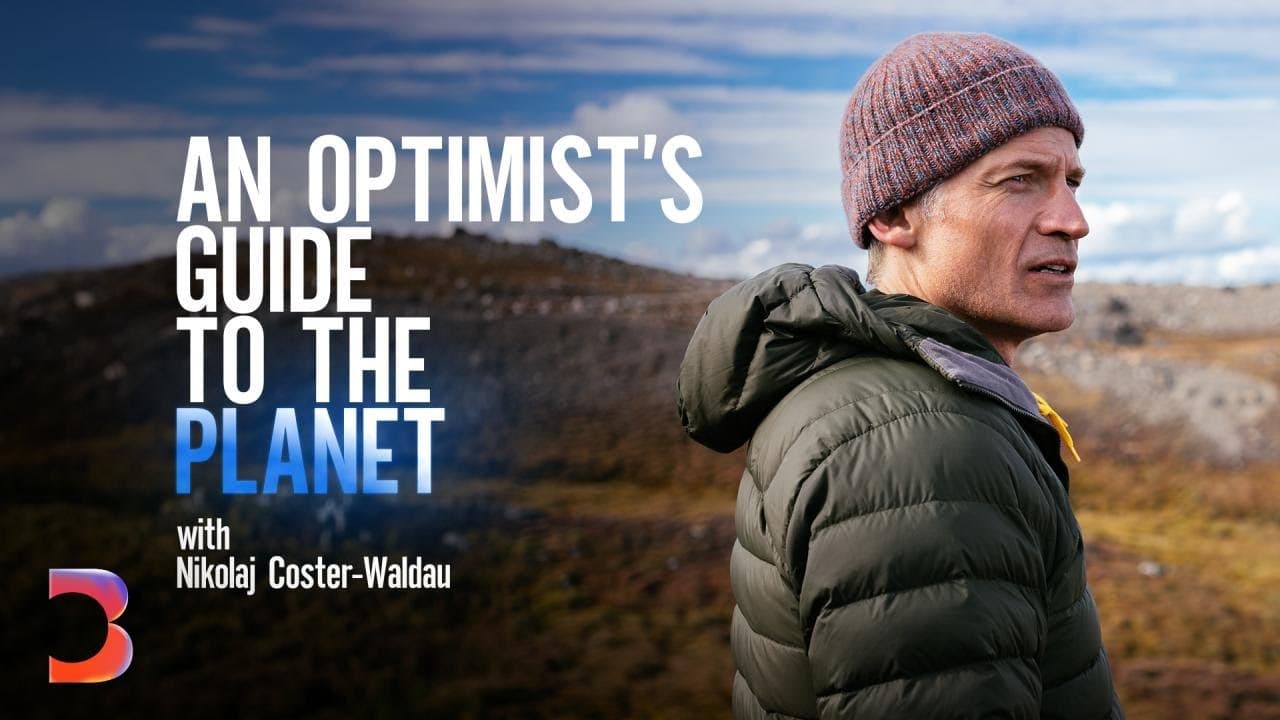
Climate Change Solutions
- Nikolaj Coster-Waldau introduces the show, "An Optimist's Guide to the Planet," which focuses on solutions to climate change and the people behind them.
- The show visits Greenland, where climate change is evident in the melting ice cap.
- Minik Rosing, a Greenland native, explains how the meltwater from the ice cap carries sediment rich in nutrients.
- This sediment, called silt, can be used as a natural fertilizer and carbon capture solution.
- Rosing and his wife, Louise Hand, discuss the potential of silt to improve food security and combat climate change.
- The show highlights the need to overcome practical obstacles to make the use of silt feasible on a large scale.
- Minik Rosing and Nikolaj Coster-Waldau discuss the benefits of using silt as a natural fertilizer in Greenland.
- Silt has been shown to increase crop yields by up to 100% and can help suck CO₂ from the atmosphere.
- Rosing hopes to transport millions of tons of silt from Greenland to other parts of the world to help combat climate change.
- Coster-Waldau visits his family's home in Igaliku, Greenland, and reflects on the changes he has seen in the climate over the years.
- He visits the local school and talks to students about climate change and their hopes for the future.
- Coster-Waldau travels to Australia to learn about how scientists are trying to save the coral reefs, which are threatened by climate change.
- The video discusses the issue of coral bleaching caused by rising sea temperatures and explores potential solutions.
- Coral bleaching occurs when corals lose their symbiotic algae, causing them to turn white and eventually die if the stress persists.
- Marine biologist Daniel Harrison introduces the concept of cloud brightening, a method of creating artificial clouds to shield the water from the sun and reduce coral bleaching.
- Cloud brightening involves spraying seawater into the air to create more cloud condensation nuclei, which leads to the formation of brighter clouds that reflect sunlight.
- The team uses specialized equipment, including air compressors and lasers, to generate and monitor the artificial clouds.
- Ceylena Holloway, a member of the research team, emphasizes the novelty and excitement of being at the forefront of this new scientific endeavor.
- Zoran Ristovski highlights the importance of carefully considering the potential consequences of cloud brightening, such as its impact on rainfall patterns.
- While cloud brightening can provide temporary relief, it is not a long-term solution to climate change. Reducing carbon emissions remains critical.
- The video also explores the concept of creating a fossil fuel substitute by recycling CO₂ from the atmosphere, showcasing the work of the company Twelve in the Bay Area.
- Nikolaj Coster-Waldau visited Twelve, a company that is developing technology to transform CO₂ into useful products.
- Twelve's technology uses a catalyst-coated membrane to break apart CO₂ and recombine it into syngas, which can then be used to make various products such as fuel, materials, and plastics.
- The company's goal is to create a petroleum substitute by pulling carbon out of the atmosphere and turning it into a petroleum substitute.
- Twelve's technology has the potential to be very valuable, and the company is protecting its intellectual property by keeping some of its processes a secret.
- The company's employees are passionate about their work and believe that they are helping to address the climate crisis.
- Twelve has already produced several products using its technology, including polycarbonate molded into the shape of an internal car cover, polyurethane foam, and jet fuel.
- The company is also working on developing a vegan, gluten-free, nut-free chocolate tart using its technology.
- Despite the challenges facing the world, Twelve's employees remain optimistic about the future and believe that their work can make a difference.
Zero-Waste Living
- Kamikatsu, a village in Japan, has become a zero-waste village by implementing a strict waste separation system with 45 different categories.
- Residents of Kamikatsu bring their trash to a central location and separate it by hand, promoting a sense of community and environmental responsibility.
- Nikolaj Coster-Waldau visits Kamikatsu, a town in Japan known for its zero-waste initiatives.
- Momona Otuka, a worker at the town's recycling center, explains the process of separating different types of waste.
- Kana Watando, a resident of Kamikatsu, shows Nikolaj how to disassemble a child car seat to separate its different materials.
- Nikolaj meets Osamu Nakamura, a local artist who lives in a renovated house with minimal electricity usage and gets his water from a nearby stream.
- Osamu's heating comes from a stove sent to him by a friend, and he rarely produces any waste, with pickups from the town office only occurring once every two months.
Browse more from
Climate Change
Why Does Everyone Believe The World Is Doomed? - Hannah Ritchie
Social Dimensions of Climate Change | Sharmeen Tariq | TEDxBGTL Youth
Climate Change | Dr Naumana Amjad | TEDxBGTL Youth
How green is the energy revolution really?
WE ARE ALL RESPONSIBLE FOR CLIMATE CHANGE | Emmanuel Joel | TEDxAnchor University
La fisica dei cambiamenti climatici | Gabriella Greison | TEDxPaviaStudio
Ready to get started?
Save, summarize & chat with your content.
GET STARTED
IT'S FREE
No credit card required · 30 Day Refund on Premium · 24 Hour Support