Is Money Really the Best Measure of Value? with Mohammad Akbarpour
06 Apr 2024 · 2 years ago
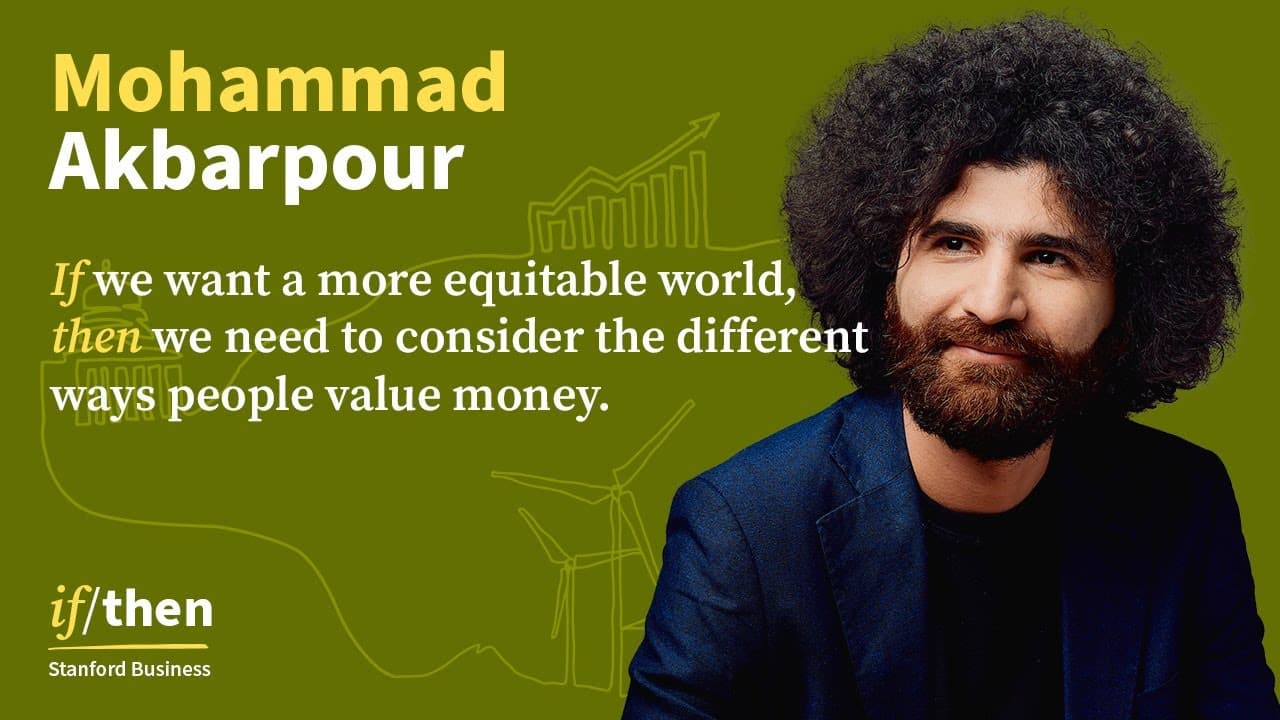
Market Dynamics and Different Valuations of Money
- Different individuals place varying values on money, impacting market dynamics.
- The traditional economic model assumes equal valuation of money, which may not always hold true.
- Variations in marginal values for money can lead to inefficiencies and unfairness in the free market.
- Non-market allocation mechanisms, such as rationing or lotteries, may be more suitable in certain cases.
Examples of Market Failures
- The Taylor Swift concert ticket example demonstrates the market's inability to allocate tickets to those who value them the most.
- Ride-sharing companies illustrate cross-side inequality (between drivers and riders) and within-side inequality (among riders), affecting market dynamics.
Policies for Efficiency and Fairness
- Policies that consider different marginal values for money can enhance efficiency and fairness.
- Distorting markets to achieve social goals, such as reducing inequality, can be economically beneficial.
- Public transportation pricing can be adjusted to ensure accessibility for all socioeconomic groups.
- Private information about individual preferences should be considered to avoid market distortions.
Addressing Inequality through Market Distortions
- Inequality requires a comprehensive societal approach, but market distortions can provide partial solutions.
- Policymakers and regulators can be persuaded to adopt fairer market policies.
- Data and analysis can aid in identifying optimal policies.
The Speaker's Motivation and Research
- The speaker's interest in economics stems from a love of mathematics, fascination with human behavior, and a desire to address inequality.
- The speaker and co-authors explored interpersonal utility comparison, comparing well-being across individuals.
- Despite potential criticism, they pursued this innovative research topic.
- The speaker's friend predicted a 5% chance of groundbreaking impact and a 95% chance of ridicule, but the speaker embraced the risk for intellectual fulfillment.
Podcast Information
- The podcast, "If Then", produced by Stanford Graduate School of Business, features conversations with professors about their research and ideas.
Browse more from
Economics
Business Government and Society Forum Conversation with Jerome Powell, Federal Reserve Chair
Fed Holds Rates Steady, Still Sees Three Interest-Rate Cuts This Year | WSJ
Power to Truth: Straight Talk with Luigi Zingales and Anat Admati
China’s Looming Crises | CNBC Marathon
Chase Bank CEO on Economic and Geopolitical Risks: Full Interview | WSJ
LIVE: Jerome Powell testifies on monetary policy in Senate hearing
Ready to get started?
Save, summarize & chat with your content.
GET STARTED
IT'S FREE
No credit card required · 30 Day Refund on Premium · 24 Hour Support