Bringing down sky scrapers sky-high carbon footprint with Joselyn Lai from Bedrock
23 Apr 2024 · 2 years ago

Introduction (0s)
- Many skyscrapers still use natural gas for heating and cooling, leading to large carbon footprints.
- Geothermal heat pumps offer a solution for decarbonizing climate control in buildings.
- Joselyn Lai, co-founder and CEO of Bedrock Energy, joins the discussion to talk about geothermal systems.
Starting Bedrock Energy (1m51s)
- Joselyn Lai met her co-founder, Sylvia Lecue, who had expertise in oil and gas extraction technologies.
- Lecue saw the potential to redesign these technologies for clean geothermal direct use for heating and cooling.
- Lai was drawn to the scalability, efficiency, and societal benefits of geothermal heating and cooling.
- The near-term impact and adoption of clean technologies motivated Lai to enter the field.
- Geothermal has been gaining attention lately with significant funding rounds and media coverage.
- The Inflation Reduction Act (IRA) provides incentives that recognize the value of geothermal for society and the economy.
- Geothermal's clean and baseload nature makes it valuable for the grid and energy systems.
- The IRA incentivizes various forms of geothermal, including power production and direct use for heating and cooling.
Closed loop vs open loop systems (3m59s)
- Bedrock focuses on closed-loop geothermal systems, while other companies construct and install geothermal systems.
- Bedrock's approach is to use technology to model and maximize the depth of the heat exchange systems while minimizing the space needed.
- Bedrock's drilling process is faster, more cost-effective, and less risky due to real-time subsurface data collection.
- Bedrock's closed-loop systems do not interfere with groundwater or inject foreign substances into the ground, making them more scalable and environmentally friendly compared to open-loop systems.
- Closed-loop systems are geothermal heat exchangers in the ground that use a single pipe that goes down and up the same bore hole, exchanging heat with water flowing through it.
- Open-loop systems require access to an open body of water, which limits their scalability and can impact wildlife.
Building a customer base (8m16s)
- Bedrock's first customers were those interested in more efficient systems, such as the real estate fund, CIM Group, which has a Net Zero goal.
- Geothermal heating and cooling is attractive to real estate owners because it electrifies HVAC while reducing energy bills, making it valuable for achieving Net Zero or high energy efficiency standards.
- Another customer profile interested in Bedrock is those with power constraints, such as commercial or industrial assets in high-growth areas where utility power is limited.
- Bedrock's solution reduces power demand, allowing businesses to have the buildings they need in these areas.
- Unlike solar or other distributed energy resources, geothermal heating and cooling doesn't need to interconnect with the grid or sell kilowatt-hours back to the grid, simplifying the process.
- Geothermal systems reduce power demand at peak times, benefiting both the building owner (through cost savings) and the utility (by reducing the need for additional power generation).
- There is interest from utilities, including ConEd, in large-scale district geothermal systems as a solution for reducing power demand and decarbonizing the grid.
Working with and around utility companies (12m50s)
- Geothermal energy can be seen as a non-wired alternative to managing demand, reducing the need for new distribution, transmission, and generation.
- Some states, like those in the Northeast, need clean heat solutions as heat is a major driver of carbon emissions.
- Electrifying all heat would strain the grid and disrupt the business models of gas utilities.
- Utilities can provide clean heat as a new business in the energy transition by owning geothermal heating and cooling networks.
- Bedrock aims to be the company that enables cost-effective construction of geothermal fields for utilities in the future.
- Bedrock's core technology is transferable, whether delivering geothermal fields for small buildings, large campuses, or utility-scale systems.
- The company is looking to scale up to meet the needs of utilities, but not necessarily scale down for single-family homes.
- Bedrock sees single-family homes as a potential market through partnerships with utilities or towns that are implementing geothermal systems at scale.
Clean jobs for oil and gas workers (17m8s)
- Bedrock hires engineers and field operational talent from the oil and gas industry.
- Oil and gas workers have transferable skills that are valuable in the geothermal heating and cooling industry.
- The clean energy industry offers stable jobs that are not subject to the feast and famine cycles of the oil and gas industry.
- Bedrock's pitch to oil and gas workers emphasizes the stability and domestic nature of clean energy jobs.
- Bedrock receives a good number of applicants for its specialized roles.
- Testing the technology requires drilling into the ground, which is an expensive proposition.
Decarbonizing the built environment (21m24s)
- Bedrock conducted an R&D field trial in Austin, drilling several thousand feet and collecting data to compare their speed advantages to conventional technologies.
- Their first commercial project was on an occupied office building site, where they drilled in the parking lot while people were working inside.
- The geothermal heating and cooling system installed in the office building is more efficient than normal HVAC and is considered healthy and sustainable.
- Joselyn Lai, the founder of Bedrock, always wanted to do things that had a positive social impact.
- She wrote her senior thesis on regenerative agriculture and later moved into doing startups.
- She merged her interest in sustainability with her experience in startups to co-found Bedrock, a decarbonization-oriented sustainability startup.
- Joselyn's interest in sustainability was a constant theme throughout her career.
- She wanted to use technology to make sustainable solutions more viable, commercializable, and scalable.
- After gaining experience in several startups, she felt ready to start her own company.
- She believes there is a moment when one has the energy and drive to try and get something off the ground, and for her, that moment came two years ago.
Fundraising (26m30s)
- Bedrock is developing a more efficient and cost-effective way to construct geothermal heat exchangers, making geothermal a viable option for a wider range of real estate properties.
- Geothermal energy has the potential to significantly reduce the carbon footprint of the real estate industry.
- Bedrock aims to make geothermal a financial no-brainer for real estate owners, even without considering energy efficiency or climate benefits.
- Fundraising for climate-related startups is easier in the early stages due to the high interest in climate solutions.
- Bedrock is exploring shifting away from equity dollars to balance venture equity with project deployment capital and equipment financing to ease its growth in the future.
Host discussion (34m58s)
- Bedrock, a company founded by Joselyn Lai, utilizes geothermal energy to efficiently heat and cool large buildings.
- The technology, derived from advancements in oil and gas drilling techniques, involves drilling deep boreholes for heat storage in summer and extraction in winter, acting as a large-scale battery.
- While there are limitations on borehole placement due to efficiency and potential seismic impacts, the potential for reducing carbon emissions in cities is significant.
- Retrofitting skyscrapers in New York City poses challenges due to space constraints and drilling requirements, and regulations on drilling may vary in different countries.
- The primary risks for geothermal companies lie in customer acquisition and long-term technology validation.
- The podcast episode, hosted by Becca Scac and Dominic Madori Davis and produced by Maggie Stamitz, discusses these topics in detail.
Browse more from
Energy
Business Government and Society Forum Conversation with Patti Poppe, PG&E CEO
2024 Business, Government & Society Forum Closing Conversation
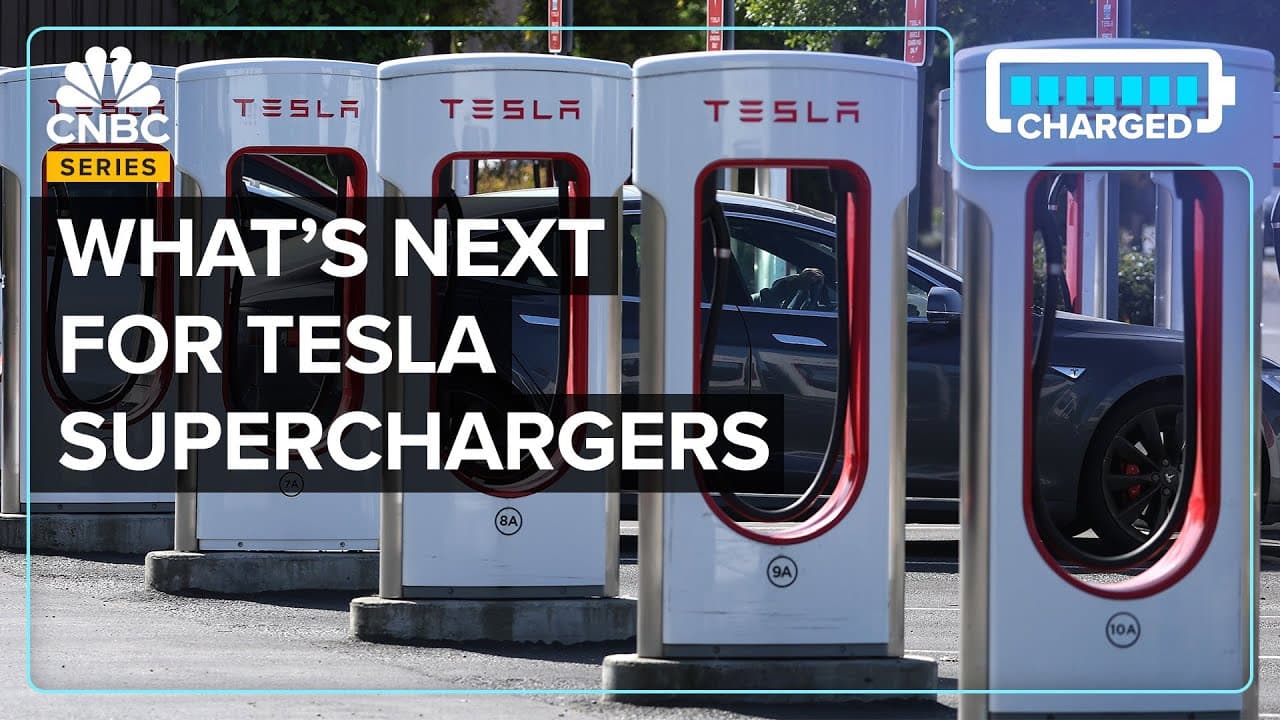
What’s Next For Tesla Superchargers After Elon Musk Laid Off The Entire Team
Texas energy grid challenges and solutions with Base Power’s Justin Lopas | E1960

The Harsh Realities of Energy in the Developing World | Scott Tinker | EP 419
Data Centers and Energy with Phil Deutch | E2015
Ready to get started?
Save, summarize & chat with your content.
GET STARTED
IT'S FREE
No credit card required · 30 Day Refund on Premium · 24 Hour Support