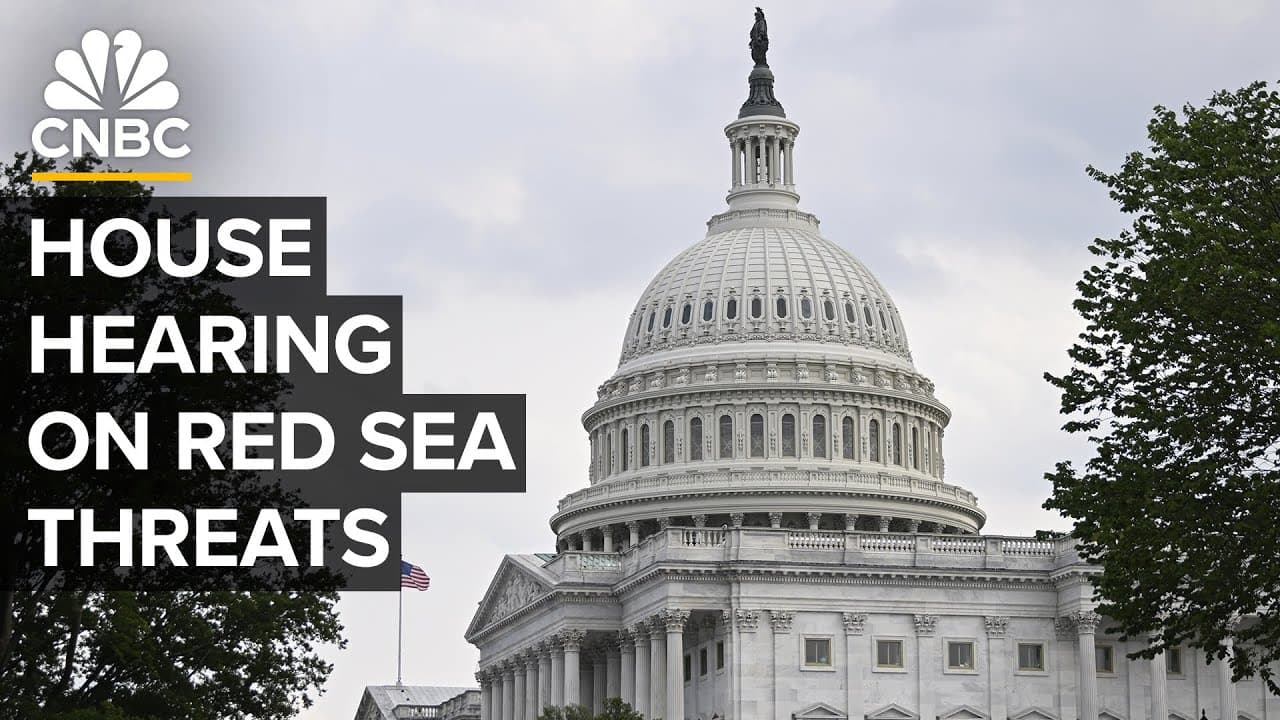
House holds hearing on securing shipping against threats in the Red Sea — 1/30/24
31 Jan 2024 · over 2 years ago
Impact on the Economy
- The Red Sea route is crucial for global trade and supply chains.
- Disrupting 30% of global container traffic through the Red Sea will have a greater impact on the economy than disrupting 10% of oil traffic.
- Delayed shipments of specific goods with specific delivery times can have significant effects on the global economy and commerce.
- The full extent of the economic impact is yet to be seen.
Infrastructure Investments
- Investments in port and landside infrastructure can increase capacity and resiliency.
- Densifying operations in terminals and making them more efficient can help cope with disruptions.
- Road and rail infrastructures also need improvements to meet increased demands and avoid stressing roads.
- Building relationships and improving communication between all stakeholders in the supply chain is crucial for better preparedness.
Negotiations with the Houthis
- The Houthis have a history of being untrustworthy negotiators, often reneging on agreements.
- Drawing the Houthis' attention away from attacking global maritime commerce is necessary to prevent further attacks.
- International efforts and support from neighboring countries are needed to help Yemen's government regain control and challenge the Houthis.
- The EU Naval Force mission may provide some hope for increased support in the region.
Weakness of the Biden Administration
- Removing the Houthi designation as a global terrorist group was seen as a sign of weakness by the Biden administration.
- The Biden administration's weak handling of various international events has allowed terrorist organizations to regroup and launch attacks.
- China's influence and support of Iran further complicates the situation, as China has not fulfilled its obligations as a responsible global citizen.
Supply Chain Disruptions and Consumer Prices
- Rerouting ships around the Cape of Good Hope due to Houthi attacks has led to increased costs and delays.
- The full effect on consumer prices is yet to be seen, but price adjustments and increased charges are expected.
- The impact on prices and costs will vary depending on the goods and their value relative to their volume.
- Building stronger relationships between carriers and shippers can help navigate these challenges.
- Transparency and stability through longer-term service agreements can also alleviate concerns.
Need for Engagement and Transparency
- Raising concerns and engaging in dialogue with carriers can help address concerns about unreasonable rate increases.
- It is essential to have a competitive market to ensure proper responses and prevent excessive rate increases.
- Transparency and better understanding of the factors contributing to cost increases can help shippers negotiate and plan effectively.
- The Federal Maritime Commission's upcoming hearing on the issue is anticipated to provide more insight and potential solutions.
Browse more from
International Relations
Is the Navy ready? How the U.S. is preparing amid a naval buildup in China | 60 Minutes

Israel’s Divide and Conquer Strategy, Explained

An Israeli and a Palestinian Talk Peace, Dignity and Safety | Ali Abu Awwad and Ami Dar | TED

The war-torn history of Crimea—my home | Emine Dzhaparova | TEDxAthens

State of the U.S.-China relationship as countries compete economically | 60 Minutes

When it comes to shaping history, it's the results that matter | Jonatan Vseviov | TEDxTallinn
Ready to get started?
Save, summarize & chat with your content.
GET STARTED
IT'S FREE
No credit card required · 30 Day Refund on Premium · 24 Hour Support