William Ackman: Everything You Need to Know About Finance and Investing in Under an Hour | Big Think
21 Nov 2023 · over 2 years ago
The FLOATING UNIVERSITY (9s)
- CEO of Pershing Square Capital Management discusses finance and investing essentials.
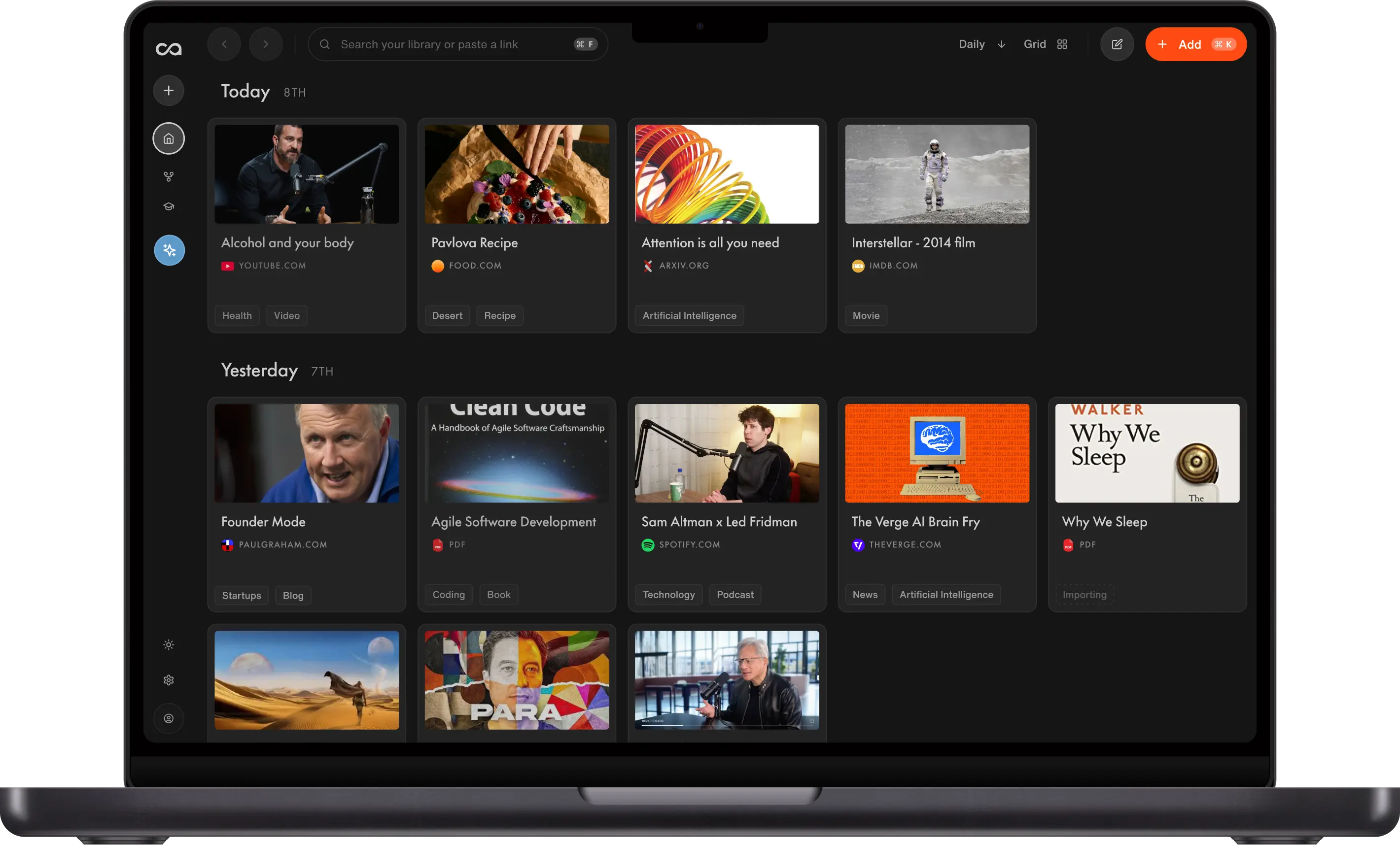
- Illustrates starting a business using the example of "Bill's Lemonade Stand".
- Discusses raising capital through issuing shares and borrowing money.
- Emphasizes keeping a larger share of the business by borrowing rather than selling more stock.
STARTING A BUSINESS (2m18s)
- Introduces the concept of a balance sheet showing company's assets, liabilities, and shareholder equity.
- Details initial company setup with $500 raised through stock, $250 borrowed, and $1000 of goodwill for the idea.
- Explains the purchase of fixed assets and inventory for lemonade stand operation.
- Describes creating an income statement showing revenue, expenses, and profit/loss.
- The initial business operations lead to a slight loss, prompting evaluation of business viability.
GROWING THE BUSINESS (5m49s)
- Discusses reinvestment strategy for business growth and price increase assumptions.
- Projects expansion to multiple lemonade stands with growth in revenue and profits.
- Outlines cost management and eventual profitability increase.
- Explains tax implications on profit and the positive outcome for investors.
CASH FLOW (8m8s)
- Analyzes cash flow implications as the business becomes profitable.
- Highlights accumulation of cash within the company and increase in shareholder equity.
- Suggests that, based on projections, the lemonade stand could be a viable and potentially successful business.
BILL'S LEMONADE STAND GOOD OR BAD BUSINESS? (8m52s)
- The business had an initial valuation of $1,500 and generated over $1,500 in earnings by year five, indicating a high return.
- Return on capital was over 100%, as $2,100 was invested in capital and generated $2,336 in earnings.
- Earnings growth was rapid at 155% per annum and profitability increased significantly from 1.3% to 28.6% by year five.
- An equity investor earned a 100% return, much higher than the lender's 10% interest.
- Equity investors took on more risk, but received higher returns whereas the lender had lower risk with secured returns and priority in liquidation.
DEBT AND EQUITY: RISK AND REWARD (11m10s)
- Debt is safer than equity with a senior claim on company assets, varying from secured loans like mortgages to mezzanine and convertible debt.
- Debt prioritization affects interest rates, with safer investments earning lower rates.
- Equity, such as preferred or common stock, offers a residual claim on assets after debts are paid.
- Equity holders are entitled to dividends rather than fixed interest and assume the risk of business failure.
- Risk should be evaluated by the potential for permanent loss rather than short-term stock volatility.
- Investments are compared to low-risk options, like government bonds, to determine expected returns.
- Higher business risk warrants higher expected returns from investors whether lending or buying equity.
- Growth opportunities may be pursued instead of immediate dividends for profitability.
VALUATION: DETERMINING A COMPANY'S WORTH (17m37s)
- A company's worth is critical when considering payouts or selling interests.
- Business owners must balance growing the business against personal liquidity needs.
- Options include paying dividends, selling the company, or selling a portion of the business either privately or publicly.
COMPARING COMPANIES TO DETERMINE VALUE (17m52s)
- An IPO (Initial Public Offering) allows a business owner to sell shares to the public and get listed on an exchange, such as the New York Stock Exchange.
- The IPO process involves significant disclosure of information to the public through a prospectus, prepared with lawyers and investment banks.
- The prospectus outlines the company's history, financial statements, risks, and opportunities, and needs approval from the Securities and Exchange Commission (SEC).
- During an IPO, owners typically sell only a small percentage of the company, retaining control while raising capital.
- Business valuation can be determined by comparing with similar companies in the stock market, using earnings multiples to estimate worth.
- Example: if comparable lemonade stands trade at 20 times earnings and your company earns $1 per share, the company could be valued at $20 per share.
- Selling a portion of the business through shares can raise capital while reducing the owner's stake, though maintaining majority control.
- Post-IPO, the business becomes liquid with shares traded on public markets, facilitating further investments or owner exit strategies.
HOW TO VALUATION WORKS
- To value a business, look at similar businesses on the stock market for comparison.
- Stock price times the number of shares outstanding gives the equity value of a company.
- Use earnings multiples from comparable companies to estimate a business's worth.
- The value of a company can increase significantly from its inception to the time of an IPO based on earnings and market comparables.
- Selling shares reduces owner's percentage but can raise necessary funds and provide liquidity.
IMPORTANCE TO INDIVIDUAL INVESTORS
- Understanding company operations, profits, and financial reporting is crucial for investors.
- This knowledge aids in making informed decisions when investing in businesses, from small ventures like a lemonade stand to larger, publicly traded companies.
KEYS TO SUCCESSFUL INVESTING (24m56s)
- Starting to invest early in life can significantly boost future returns due to compounding interest.
- An initial investment of $10,000 at a 10% return can grow to $600,000 in 43 years, whereas starting 10 years later would yield only $232,000.
- Higher returns, such as 15% or 20%, drastically increase the compounded amount over the same period.
- Consistently investing more than the initial amount, like $10,000 annually, increases wealth exponentially.
- Avoiding significant losses is as important as generating returns to ensure the preservation and growth of investments.
- Following Warren Buffett's advice to never lose money is critical for long-term investment success.
WHEN TO INVEST (33m28s)
- Invest in publicly traded, established companies that are easy to understand and have a track record of profitability.
- Choose investments that are priced reasonably and have potential for longevity. Examples include Coca Cola and McDonald's.
- Invest in companies offering unique products or services with strong customer loyalty and brand preference, like Hershey's chocolate.
- Avoid businesses with excessive debt which may struggle during tough times.
- Seek companies with barriers to entry that protect them from new competitors threatening their market position.
THE PSYCHOLOGY OF INVESTING (34m40s) & HOW TO WITHSTAND MARKET VOLATILITY (35m44s)
- Seek businesses resistant to external factors, such as commodity price changes, interest rates, and currency fluctuations.
- Companies that consistently perform well through various global events, like Coca-Cola, which has been profitable over 120 years despite wars and economic changes, are ideal.
- Prefer businesses that don't require significant reinvestment of capital for growth.
- Low capital intensity businesses are more attractive, unlike high capital intensity ones like the auto industry, which requires large investments in factories and equipment.
- Companies like Coca-Cola and American Express, which earn royalties or a percentage of sales without owning production facilities or funding customer purchases, are considered high-quality investments.
MUTUAL FUNDS (38m3s)
- Investing in companies that are not controlled by a major shareholder is safer, as controlled companies can pose a risk due to the potential for decisions that don't favor minority investors.
- Trust in the controlling shareholder is crucial, and there's no guarantee that the current, trustworthy controlling shareholder will not sell to someone less supportive of minority interests in the future.
- Evaluation of a company should also consider management and control to ensure that minority shareholders' interests are protected.
- Investment readiness is addressed, suggesting that one should be free of high-interest debt, such as student loans or credit card debt, before investing.
Browse more from
Investing

How to Invest for Beginners
Taiwan Semi should also benefit from the AI chip market by 2027, says Deepwater's Doug Clinton

Discussing Impact Investing and ESG's with a BlackRock Executive | Terrence Keeley | EP 410
ETF Edge, January 17, 2024
ETF Edge, January 22, 2024
Bill Ackman: SVB Collapse; Biden vs Trump; How I Lost $400M on Netflix; Bill's 10-Year Long | E991
Ready to get started?
Save, summarize & chat with your content.
GET STARTED
IT'S FREE
No credit card required · 30 Day Refund on Premium · 24 Hour Support