Stanford EE259 Principles of Sensing for Autonomy I Introduction, GPS overview I 2023 I Lecture 1
17 Jan 2024 · over 2 years ago
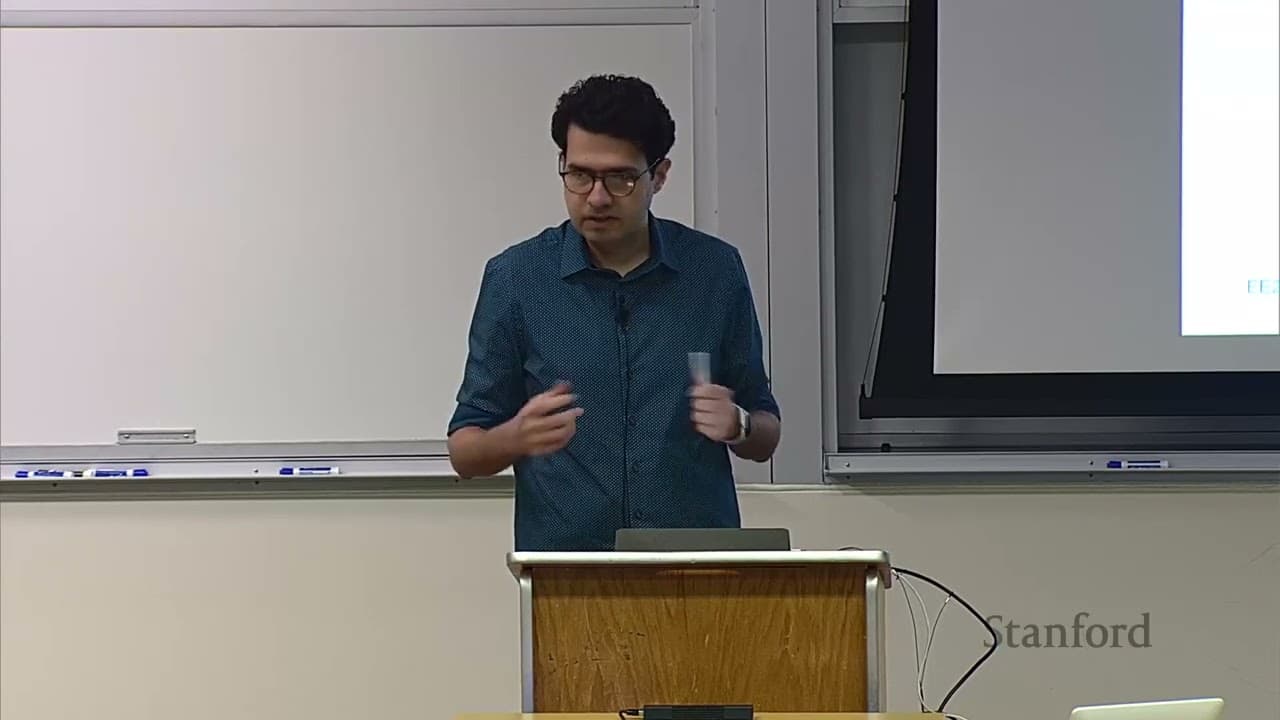
This YouTube video is an introduction to a course on principles of sensing for autonomy. The instructor gives an overview of the course content and explains the importance of understanding sensors for autonomous systems. He discusses the concept of autonomy and the challenges involved in bringing AI to the physical world. He also emphasizes the need for deep understanding of sensors and their operation principles in order to solve the complex problem of autonomy. The instructor then introduces the concept of GPS (global positioning system) and explains how it works for navigation and localization. He mentions the history of GPS and its role in providing accurate positioning information. Finally, he briefly mentions the prerequisites for the course and encourages students to ask questions and actively participate in class discussions.
Browse more from
Stanford EE259 I Inertial sensors: accelerometer principle of operation & architecture I 2023 I Lec5
Stanford EE259 I Ultrasonic sensor (Sonar) principle of operation & architecture I 2023 I Lecture 8
Stanford EE259 I Sonar ranging and bearing angle estimation I 2023 I Lecture 9
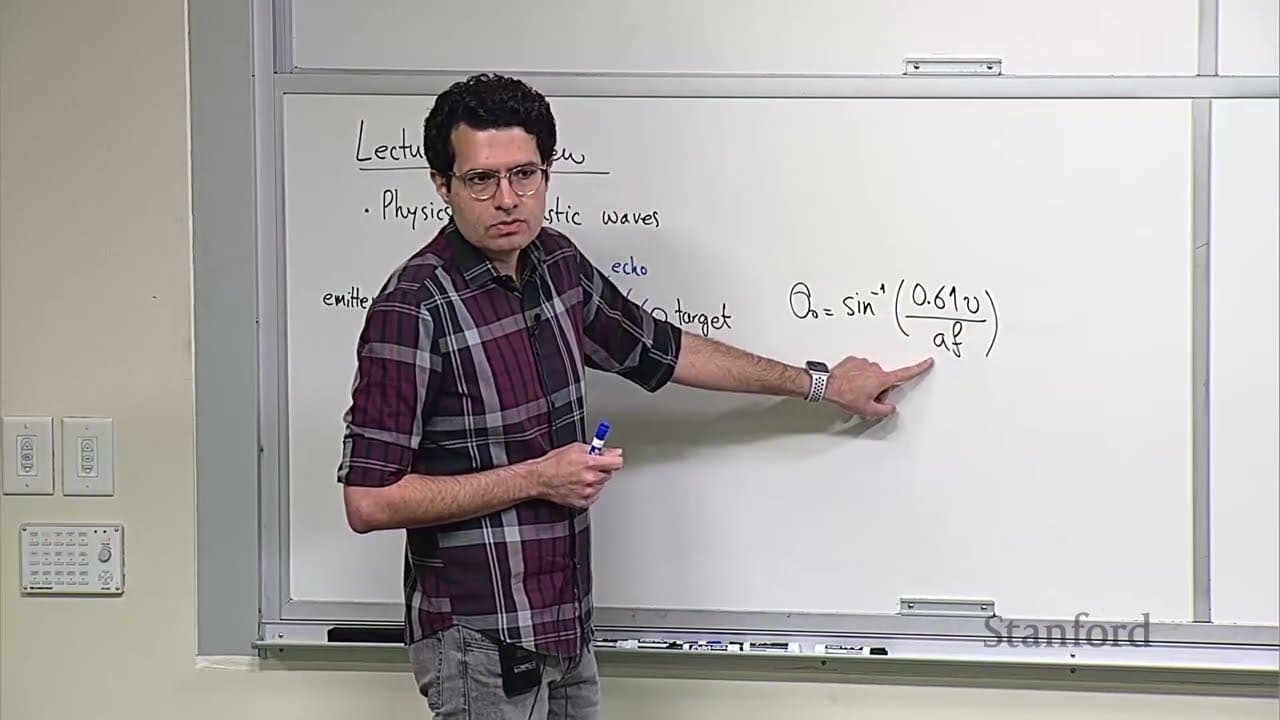
Stanford EE259 I Radar principle of operation & architectures (pulsed, FMCW, PMCW) I 2023 I Lec. 10
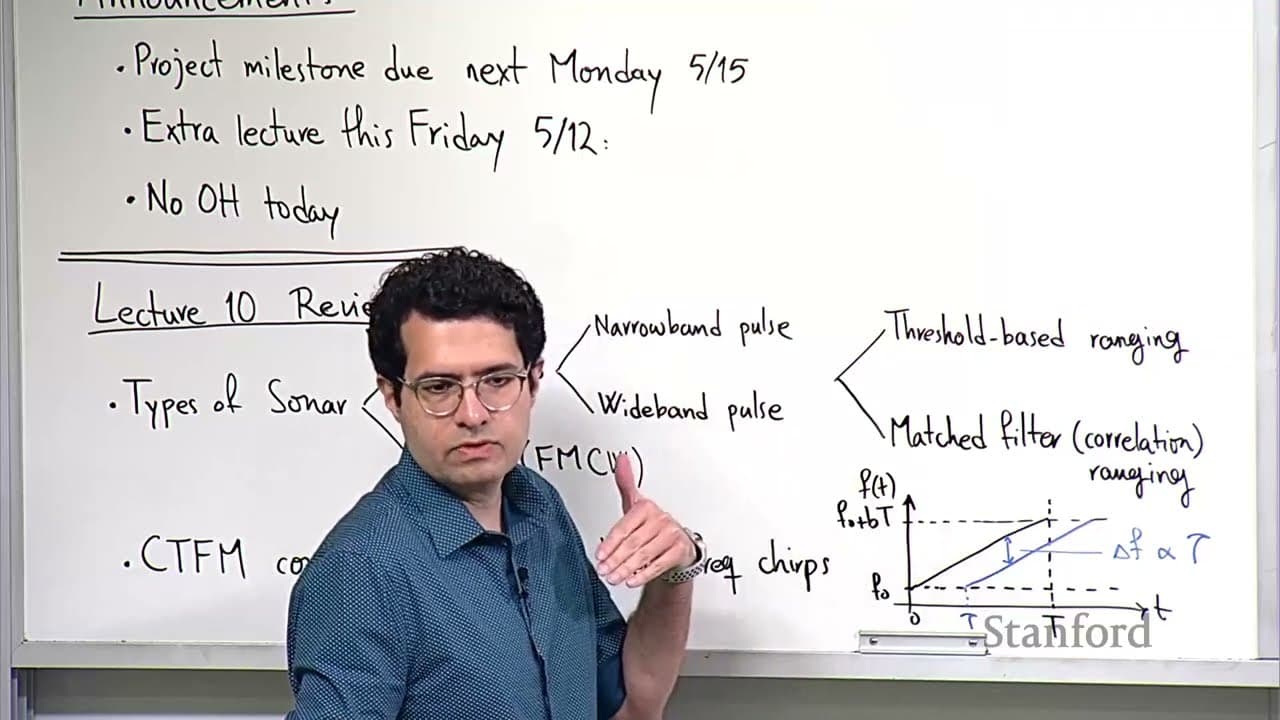
Stanford EE259 I Radar antenna designs and characteristics I 2023 I Lecture 11
Stanford EE259 I Gaussian beams, beam scanning techniques I 2023 I Lecture 16
Ready to get started?
Save, summarize & chat with your content.
IT'S FREE
No credit card required · 30 Day Refund on Premium · 24 Hour Support