Personal Transformation and Jonathan's Story
- Life is a journey filled with various challenges and situations, and what really matters is how we respond to them, which is the beginning of personal transformation 51s.
- This transformation involves focusing inward, comparing ourselves to our past selves, and finding truth and fulfillment by contributing to others 1m10s.
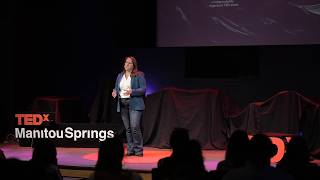
- Jonathan Natasaputra, also known as Jo, shares his personal story of transformation, starting with his high school days when he would often skip classes and meetings to go to the internet cafe 2m2s.
- One day, he met his history teacher outside the internet cafe, and although he was caught, the teacher's reaction was calm, which made Jonathan feel a bit embarrassed but also relieved 2m42s.
- However, his life took a turn for the worse when his school found out about his frequent visits to the internet cafe, and he became known as the student who loved going to the internet cafe 3m1s.
- Everything changed when his physics professor gave him a quiz, and despite not studying, Jonathan scored 67, which was below the school's passing grade of 75 3m32s.
- This experience motivated Jonathan to change his ways, and he started attending classes and actually learning, which caught the attention of his professor, who then became more invested in teaching him 4m52s.
- Jonathan's story highlights the importance of self-awareness, motivation, and the impact that others can have on our lives, leading to positive changes and personal growth 4m56s.
The Impact of a Professor's Teaching
- A professor's unorthodox teaching methods, which included making the student feel comfortable and presenting challenges in a fun way, helped to improve the student's grades and interest in physics, particularly in a subject the student initially struggled with, such as Fisika 5m52s.
- The professor's approach to teaching, which involved adapting to the student's needs and making learning enjoyable, had a profound impact on the student's life, inspiring the student to consider becoming a teacher themselves 6m43s.
- The student realized that the professor, who was not from a privileged background, was able to make a positive impact on their life, and this realization sparked the student's interest in exploring the world of education in Indonesia 7m28s.
Volunteering in Java and Educational Disparities
- The student was invited by friends to participate in volunteering, which involved teaching children in a village in Java, and despite initial reservations, the student decided to join 7m55s.
- During the volunteering experience, the student encountered children who were struggling with basic skills, such as writing numbers 1 to 10, and even their own names, which was a shocking realization 8m32s.
- The student met a child named Reza, who was unable to write his own name, and this encounter had a profound impact on the student, highlighting the need for better education and inspiring the student to make a difference 8m44s.
- The realization of the poor state of education in Indonesia came as a shock, with the country's education system being compared to a village in Java, and the thought of how much worse it could be in villages outside of Java 9m11s.
- Research was conducted online, and the discovered numbers were surprising, revealing the poor state of education in Indonesia, with many aspects that could be improved, including infrastructure, curriculum, and digitalization 9m26s.
Indonesia's Education System and PISA Assessment
- The focus is on two main aspects: students and teachers, with the starting point being the students, and one indicator used to assess the quality of education in a country is the PISA assessment 9m56s.
- The PISA assessment is a standardized test based on three matrices created by the OECD to assess the quality of education in all countries, and Indonesia's results show that the country is still lagging behind in mathematics, literacy, and science 10m9s.
- Indonesia's scores are 366 in mathematics, 359 in literacy, and 383 in science, which are below the international standards of 472, 476, and 485, respectively, indicating that Indonesia is 29% behind in mathematics, 33% behind in literacy, and 27% behind in science 10m29s.
- According to national standards, students who took the test are two grades below their expected grades, meaning a third-grade student's reading ability is only at the level of a first-grade student 11m14s.
- One of the causes of this problem is the issue with teachers, with two main criteria being quantity and quality, and Indonesia faces problems in both areas 11m38s.
- From the quantitative aspect, 25% of the approximately 6 million classes in Indonesia do not have teachers, and from the qualitative aspect, 65% of the 2.7 million teachers in Indonesia do not meet the international standards for becoming a teacher 11m56s.
Motivating Students with Incentives
- After realizing the problem, a decision was made to address the issue, and it was discovered that the boys in the village had a common interest in playing games, while the girls were more interested in collecting stationery 12m37s.
- Based on these two criteria, it was concluded that the boys and girls needed to be provided with incentives, such as mobile phones and stationery, to encourage them to learn 13m3s.
- In the next teaching session, preparations were made to provide these incentives, including bringing power banks and buying stationery, and the boys were challenged to complete a task within 30 minutes 13m16s.
- To motivate students, an experiment was conducted where each student was lent a phone for 10 minutes, and the fastest student to complete a task would receive a stationery gift, resulting in the students suddenly becoming focused and quiet 13m35s.
- The effectiveness of this method was later replicated with more students, but it was realized that not all students were motivated by stationery, as some preferred snacks and drawing 14m11s.
- To cater to different preferences, snacks and drawing materials were provided in the next session, which resulted in all students being happy to learn and motivated to do better 14m48s.
The Four Segments of Volunteering
- The volunteering experience was considered successful when two students who were initially difficult to teach expressed their inspiration to become teachers in the future 15m27s.
- The volunteering experience can be summarized into four main segments: identifying the problem, adapting to the students' needs, executing the plan, and multiplying what works 15m41s.
- The first segment involves identifying the problem, which in this context was the educational disadvantage of the children in the village 15m48s.
- The second segment involves adapting to the students' needs, which was done by providing stationery and snacks based on the students' preferences 16m19s.
- The third segment involves executing the plan, which requires proper strategy and execution, as a good plan that is not well-executed is useless 16m46s.
- The fourth segment involves multiplying what works, which means focusing on the methods that have proven to be effective and replicating them 17m29s.
- In this context, the effective method was providing incentives, such as stationery and snacks, which motivated the students to learn 17m41s.
The Essence of Volunteering and its Ripple Effect
- Volunteering can be as simple as making an effort to change the lives of those closest to you, and then multiplying that change to others, even if it's just by teaching or inspiring a few people 17m59s.
- The definition of volunteering doesn't have to be complex, such as traveling to a different place to build a health center or solve a problem in Africa, but can be as simple as what a professor did to inspire their student 18m24s.
- A professor identified the potential in their student, who was not doing well in school, and adapted their approach to make learning more challenging and fun, which motivated the student to learn and eventually inspired others 19m0s.
- The student, who was inspired by their professor, went on to teach and inspire others, including children in their village, and this impact was multiplied as those children were also inspired to learn 19m51s.
- The question is asked, how many lives have you impacted, and the answer may be more than you think, as the people you impact can go on to impact others, creating a ripple effect 20m9s.
- Volunteering can be compared to a multi-level marketing (MLM) system, where one person can impact 10 others, who can then impact 10 more, and so on, creating a large impact 20m42s.
- The true essence of volunteering is to change someone's life, and in doing so, multiply that change to others, even if you don't know them, by inspiring and making a positive impact on those closest to you 21m0s.
- The goal is to inspire others to volunteer and make a positive impact on the lives of those around them, creating a ripple effect of kindness and inspiration 21m21s.