

COVID-19 and Global Responses
- The COVID-19 vaccination rollout continues in the United States, with the White House partnering with Anheiser-Busch to offer free beer to incentivize vaccines 39s.
- In the United Kingdom, the government is planning to fully reopen later this month despite warnings of a potential third wave of COVID-19, and there is growing demand for a public inquiry into Boris Johnson's mismanagement of the pandemic 58s.
- Former top adviser Dominic Cummings revealed in a Committee hearing that top government officials realized in March 2020 that the pandemic planning had been badly botched, with Deputy Cabinet Secretary Helen McNamara stating that there was no plan in place 1m19s.
- The UK's COVID-19 response has been criticized, but it pales in comparison to Brazil's response under President Jair Bolsonaro, which has been a spectacular failure with over 1.9 million new cases in the past month 2m41s.
- Brazilians have staged protests across the country, demanding that the government account for its negligence in purchasing vaccines and trying to lead the country towards herd immunity 2m59s.
- An inquiry into the Brazilian government's negligence has uncovered that Pfizer repeatedly offered 7 million doses of its vaccine to Brazil's Health Ministry in August 2020, but received no answer 3m33s.
- Bolsonaro has been publicly dismissive of vaccines, which may have contributed to the government's lack of response to Pfizer's offer 3m56s.
- Brazilian President Bolsonaro made a joke about vaccine side effects, stating that if a person turns into a crocodile, it's their problem, but in reality, being a crocodile would have its advantages, such as being an incredible swimmer and not sweating 4m9s.
- Despite the joke, Bolsonaro's handling of the COVID-19 pandemic has been criticized, and polls show that 57% of Brazilians support his impeachment 5m1s.
- Brazil, which has the world's second-largest COVID-19 death toll, is hosting a massive soccer tournament, dubbed the "Championship of Death," despite high COVID-19 rates 5m11s.
- The tournament was originally supposed to be hosted by Argentina but was canceled due to COVID-19 rates, and Bolsonaro's decision to host it has been met with criticism and memes 5m27s.
- The spread of vaccine misinformation and the emergence of new variants could keep the world in trouble for a long time if not addressed globally 5m58s.
- In the US, despite the current situation seeming under control, the virus could still pose a threat if not actively controlled globally, according to a former top UK official 6m15s.
- The term "Hot Vax Summer" has been coined to describe the current situation, where people are vaccinated and ready to spend, but it's a play on the phrase "Hot Girl Summer" from Megan Thee Stallion 6m54s.
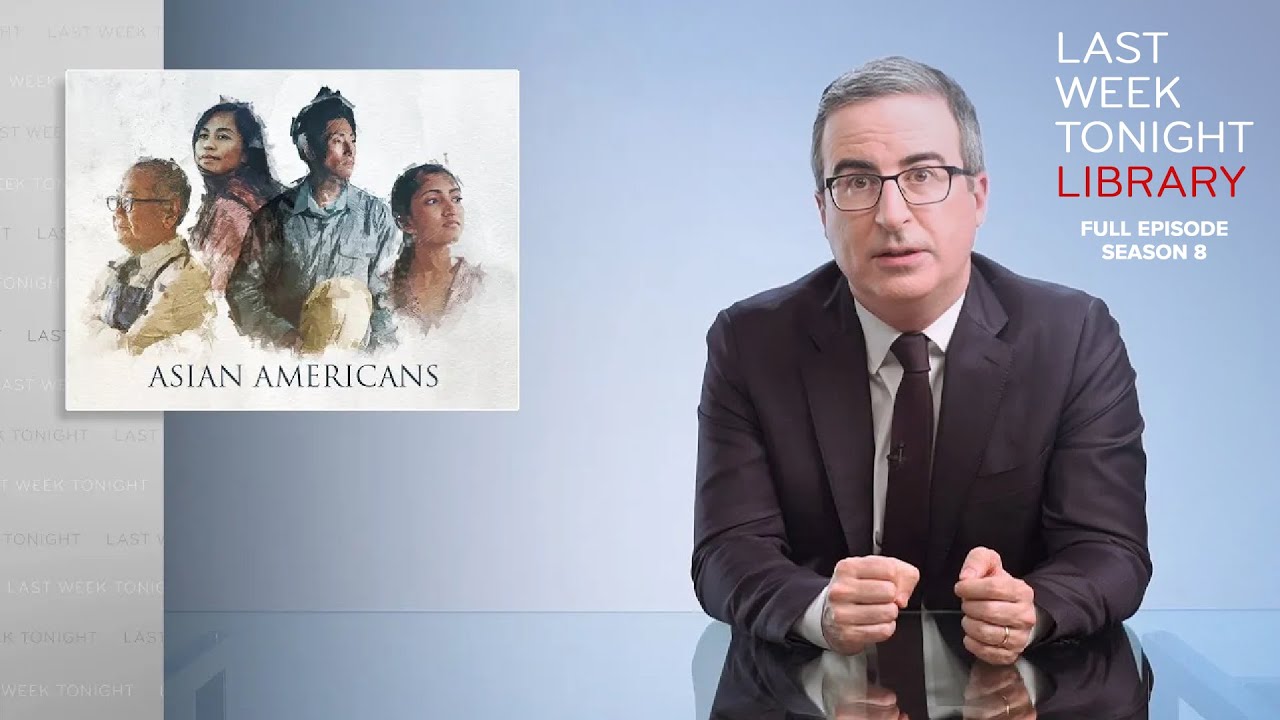
Asian Americans: Identity, Stereotypes, and Experiences
- The main story concerns Asian-Americans, who make up around 7% of the US population and are the fastest-growing racial group, yet are often overlooked 7m30s.
- A recent survey found that 42% of respondents couldn't name a well-known Asian-American, and the most popular answers were Jackie Chan and Bruce Lee, which is seen as embarrassing, especially considering the survey was conducted while Kamala Harris, who is Asian-American, was Vice President 7m43s.
- Many Americans seem to lack knowledge about the histories and experiences of Asian-Americans, with their experiences often being discussed in tragic contexts such as killings, mass shootings, or racism around the Coronavirus 8m22s.
- The need for a better-informed conversation about the way the country regards Asian-Americans has been highlighted, with a recognition of the history of white people generalizing confidently about the subject, sometimes making offensive statements 9m11s.
- The idea that Asian-Americans are a "model minority" has been persistent but problematic, with median family income and academic achievement being cited as examples of their success, but this label can be seen as dismissive of the experiences of other Asian-American groups 9m31s.
- The term "Asian-American" encompasses a vast group of people who can trace their heritage back to more than 20 countries, covering a huge amount of the world's land mass, but some people feel that it may not fit them or that the broadness of the category means their experiences get erased 10m34s.
- The term "Asian-American" applies to a ridiculously large and diverse group of people, including those from Mongolia, Indonesia, Pakistan, Japan, and the Pacific Islands, but some groups, such as Filipinos, are often overlooked 11m17s.
- The broadness of the term "Asian-American" is not an accident, but rather a deliberate choice, as it was intended to encompass a wide range of people and experiences 11m49s.
- The term "Asian-American" was first coined in the late 1960s by Asian-American student activists in California who demanded an ethnic studies curriculum, uniting a diffused community in solidarity and forcing universities to devote resources to teaching the histories of their communities 11m52s.
- The term was initially a political and radical redefinition, but it has since become a common shorthand that can be used in a way that is too reductive and superficial, obscuring the diversity of Asian-Americans 12m55s.
- A 1968 government PSA attempted to address the diversity of Asian-Americans, stating that they have been American for a long time and do not all look alike, with some following Asian traditions and others being "apple pie American" 13m11s.
- Recognizing the diversity of Asian-Americans is about more than just recognizing different faces, as treating them as a single entity obscures the reality of what is happening for different subgroups 14m16s.
- Disaggregating data by subgroup reveals big disparities in poverty rates, with Mongolian and Burmese Americans having a poverty rate of 25%, more than twice the national average, and in education, with Indian-Americans having a high percentage of bachelor's degrees, while Bhutanese Americans have a much lower percentage 14m24s.
- The term "Asian-Americans" can be misleading when used to represent a political coalition, as it is not a monolith, and understanding the differences in when and how people came to the country can help to understand present-day differences 15m18s.
- The experiences of Asian immigrants can be broken down into broad categories, including those who arrived earlier in the 19th century and the first half of the 20th, who faced economic exploitation and violent backlash, starting with Chinese immigration 15m39s.
- In the 1860s, immigrants recruited to work on the railroads faced virulent racism from their bosses and white people, who saw them as disposable and unfair competition for jobs 15m54s.
- A senator from California described Chinese immigrants as "automatic engines of Flesh and Blood," and demanded that the federal government secure the American Anglo-Saxon civilization without contamination or adulteration 16m10s.
- The Chinese Exclusion Act of 1882 was the first comprehensively restrictive law in US history, singling out the Chinese by name as undesirable, and it set a template for the treatment of other immigrant groups 16m36s.
- The Act was celebrated with posters, including one that said "Hip harah to the Chinese Exclusion Act" and implied that the white man was on top 16m51s.
- Six Chinese men who survived the sinking of the Titanic were not permitted to enter the US and were instead forced onto another boat and sent away 17m19s.
- The experience of Chinese immigrants set the template for the treatment of other groups, including Japanese, Korean, South Asian, and Filipino immigrants, who faced racial hostility, violence, and laws denying them citizenship or land ownership 17m50s.
- Posters and signs were used to target different Asian groups, and Asian-Americans were often treated as perpetual foreigners whose loyalties were in question 18m15s.
- The most famous example of this was the World War II internment camps, where 120,000 Japanese Americans were imprisoned, and the US government later tried to give their release a positive spin 18m47s.
- The government offered grants to help internees relocate, but this was seen as a hollow gesture given the trauma they had experienced 19m5s.
- The US initially had exclusion laws and racial quotas that negatively impacted its global image, but these laws were eventually repealed, with the Chinese Exclusion Act being replaced by the 1965 Immigration Act 19m59s.
- The 1965 Immigration Act prioritized educated and highly skilled workers, such as doctors and engineers, and addressed specific labor needs, like the nursing shortage, by targeting Filipino nurses with ads promising them "Bright Futures in America" 20m32s.
- Labor recruiters and travel agencies targeted Filipino nurses with ads, including one that featured a basket decorated with the Philippine flag, addressing the nurse and promising to help them "chase" happiness 20m42s.
- The 1965 Immigration Act led to an influx of skilled workers from the Philippines, with nurses being one of the top imports, followed closely by Jollibee, a popular fast-food chain 21m11s.
- Asian-Americans before 1965 were largely exploited for their labor and faced legal discrimination, while those who arrived after 1965 faced fewer formal legal barriers and were more likely to be skilled workers 21m54s.
- The US also took in over a million refugees from Vietnam, Laos, and Cambodia between 1975 and 2010, largely due to the wars waged in the region, but did not provide adequate support for their success 22m16s.
- The US refugee policy has a "work-first" doctrine, which prioritizes immediate employment over addressing the trauma and mental health needs of refugees 22m52s.
- The American experience for Asian-Americans has been marked by a lack of concern for their lives abroad and at home, with different groups facing vastly different challenges and experiences 23m27s.
- Divergent migration experiences can lead to variations in income, education, and health outcomes among different groups, but these groups are often unified by the common experience of bigotry, as seen in the early 1980s when America's fear of an economically ascendant Japan led to racist fervor at home 23m30s.
- In 1982, Detroiters were invited to smash Japanese cars for 50 cents, which led to the murder of Vincent Chin, a Chinese American man who was beaten to death by two white men who blamed him for what Japan was doing to the US Auto industry 24m7s.
- Chin's killers were arrested and convicted but received no prison time, with the judge instead giving them three years' probation and less than $4,000 in fines, citing that they were "longtime hardworking members of the community" 24m52s.
- The judge's decision was widely criticized, with many questioning the criteria used to decide that the two men were not the kind of people to be sent to jail, with some speculating that it may have been based on the color of their skin 25m22s.
- The Vincent Chin case brought Asian Americans of all ethnicities together to call for justice and led to a new chapter of Asian American activism and political identity 25m50s.
- Asian American activism has a rich history of working across racial lines, from the student strike to Philippino labor leaders working with Cesar Chavez to organize a grape boycott, and Yori Kochiyama's friendship with Malcolm X and her advocacy for marginalized people of all backgrounds 26m5s.
- Despite this, a prevailing narrative in the US is one of conflicts between Asian Americans and other communities of color, which is not the whole picture and is part of a larger pattern of White America pitting Asian Americans against other communities 26m25s.
- The model minority myth emerged over half a century ago, in part because some Asian Americans strategically typecast themselves as upstanding and hardworking to enhance their demands for racial equality, and was further reinforced by immigration law selecting for skilled and educated Asian immigrants 26m53s.
- The stereotype of Asian Americans as a "model minority" emerged during the Civil Rights era, as some whites used the success of Japanese and Chinese Americans to downplay systemic racism in the US, implying that if Asian Americans could succeed, then racism couldn't be the reason for the struggles of other minority groups 27m21s.
- This stereotype prioritizes wealthy, educated Asian immigrants and uses their success to shame other minority groups, particularly Black Americans, for not achieving the same level of success despite centuries of subjugation 27m42s.
- The idea that Asian Americans' success disproves systemic racism in the US is a trend that continues to this day, with some arguing that if the US were truly a racist society, Asian Americans wouldn't be able to achieve success 27m56s.
- Dick Morris has praised Asian Americans as the "most admirable ethnic group" in the US, citing their strong work ethic and success-oriented mindset, but this praise is based on a flawed understanding of the Asian American experience 28m32s.
- The model minority myth implies that overcoming racism is simply a matter of strong values and hard work, which is both offensive and untrue, as it ignores the systemic barriers that prevent many minority groups from achieving success 28m55s.
- The pressure to conform to the model minority stereotype can have severe consequences, including damage to self-esteem and mental health, with Asian Americans between the ages of 15 and 24 having a high rate of suicide and low rates of seeking help for mental health issues 30m0s.
- The model minority myth is also a tool of white supremacy, as it perpetuates the idea that racism can be overcome through individual effort rather than systemic change, and it can be a trap for Asian Americans, who are still subject to discrimination and violence despite their perceived success 31m0s.
- Andrew Yang has been criticized for his approach to addressing Asian-American issues, including making self-deprecating jokes and suggesting that Asian-Americans need to "embrace and show our Americanness" by wearing red, white, and blue, which some see as insulting and oversimplifying the complexities of racism 31m10s.
- The Asian-American experience is often reduced to the "model minority" stereotype, which omits a history of exploitation, exclusion, and activism, and neglects the diversity of interests and achievements within the community 33m24s.
- Access to high-quality, disaggregated data is necessary to have smarter, more nuanced conversations about the Asian-American experience and to inform public policy that meets the needs of individual communities 32m8s.
- Asian-Americans have been warning about the dangers of stereotypes and the importance of human dignity for decades, as seen in a 5-year-old interview with a man who discussed the limitations of the "model minority" stereotype and the need for recognition of individuality 32m24s.
- The "model minority" stereotype is an infringement on human dignity, as it reduces individuals to a category or box, rather than recognizing them as unique human beings 33m1s.
- The Asian-American experience is complex and multifaceted, encompassing a range of issues including immigration, education, and access to social services, and cannot be reduced to a single narrative or stereotype 33m32s.
- The story of Asian-Americans is an integral part of the American story, and it is essential to recognize and celebrate the diversity and achievements of the community 33m42s.


