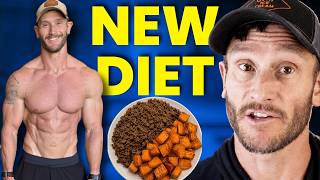
Intro 0s
- A framework for movement is built around walking as the foundation, making up the base third to one-half of the movement pyramid 4s.
- Walking should be the vast majority of the movement one does, with other forms of exercise such as running and high-intensity training added on top 15s.
- The discussion aims to compare walking, running, and high-intensity interval training (HIIT) to determine their practical applications and who needs to be doing what 36s.
- The goal is to create a hierarchy of movement needs and amounts, rather than simply promoting one form of exercise over others 55s.
- Walking is considered a staple in one's life and is used as a foundation of movement for every client being coached and trained, starting with assessing and creating a foundation of walking 1m7s.
- Walking is a low-impact form of exercise 1m16s.
Walking 1m18s
- Walking is a low-intensity, low-skill movement practice that humans are physiologically and anatomically wired to do very well, making it an accessible and safe form of exercise for most people 1m23s.
- It is rare to find instances where walking is contraindicated, and safe environments can be created for people to walk in almost every single case 1m45s.
- Walking is a sustainable form of exercise that should be part of everyone's life for as long as they want to be living a healthy and active life 2m7s.
- People who walk more tend to have more access to their physicality in all forms when they're older 2m17s.
- A 30% off discount link plus a free gift for Thrive Market is available, which offers healthier grocery options at competitive prices, delivered directly to the doorstep 2m31s.
- Thrive Market allows users to search for specific dietary options, such as gluten-free, Paleo, sugar-free, and keto, and have them delivered to their doorstep 3m10s.
- The 30% off discount link can be used on the entire grocery order, making it a helpful resource for those looking to save money on healthy groceries 3m23s.
- Running is a form of exercise that can be challenging to develop a sustainable practice for, with risks of injury, burnout, and discomfort 4m17s.
Running 4m34s
- Running has more moderate to high impact and intensity compared to walking, and while the intensity can be varied, running inherently has more impact on the body than walking 4m34s.
- Running is a skill that people often lose as they age, and when they pick it up again later in life, they may not have the same level of skill, leading to poor mechanics, asymmetries, and injuries 4m51s.
- Many people use running as a tool to increase activity and energy expenditure in their lives, but they may not be using proper form, which can lead to pain and injuries 5m49s.
- Choosing running over walking is not just a matter of speed, but also of impact, and if not done correctly, running can have a significantly greater impact on the body than walking 6m12s.
- A landscaper neighbor once commented that he saw running as "artificial exercise" because it's not a natural part of daily life, unlike walking, which is a more natural form of movement 7m26s.
- The neighbor's comment highlighted that many people have engineered activity out of their daily lives, making conscious exercise like running necessary to compensate 7m53s.
- Running was not a common form of exercise in the past, unless someone was an athlete, and people generally only ran when necessary, making walking a more natural and instinctive form of movement 8m9s.
- Walking is a necessary form of exercise that should be considered regardless of other activities 8m22s.
- Running can have a spiritual and hormonal draw, releasing endorphins and feeling amazing when done consistently, but it requires a certain level of skill to feel effortless and therapeutic 8m26s.
- There is a culture around running, but it's essential to understand that every step up from walking to running to high-intensity training requires time to learn how to do it right, safely, and sustainably for longevity 9m0s.
- Jumping into running without a good base or understanding of how to develop a sustainable practice can lead to trouble and potentially break down the body 9m36s.
- The same risk applies to starting high-intensity training (HIIT) without proper preparation and understanding of how to use it to burn energy safely 9m57s.
HIIT 10m3s
- High-Intensity Interval Training (HIIT) involves high-impact and high-skill movements, such as those found in CrossFit, F45, or Boot Camp-style classes, which require a good understanding of body movement and coordination 10m4s.
- When choosing a method for burning energy and increasing movement, it's essential to consider the differences between various options, as they are not all the same, and the best choice is the one that can be done consistently without causing harm 10m39s.
- A framework for movement recommends walking as the foundation, making up one-third to one-half of the movement pyramid, with intensity training, such as higher-impact and higher-skill activities, as the next tier 11m35s.
- Intensity training should be done safely and correctly, with a focus on minimizing risk, and can include activities like high-intensity cycling or weighted step-ups, which can be modified to suit individual needs 12m6s.
- The choice of high-intensity activity should consider the risk ratio, with the goal of achieving the most stimulus with the least amount of potential risk, and intensity can be relative and scalable 14m8s.
- Intensity can be achieved in various domains, such as cycling, with less risk of injury than high-intensity sprinting, and the risk ratio can be lessened to allow for more frequent high-intensity bouts 14m40s.
- The key is to find a balance between intensity and risk, allowing for consistent and safe training, and to consider individual needs and limitations when choosing a high-intensity activity 15m12s.
Over Age 40 (risk ratio) 15m15s
- When people reach their 40s, 50s, and especially after 60, the idea of intensity in exercise becomes increasingly intimidating and scary due to the higher risk of injury and potential long-term consequences 15m26s.
- As a result, people tend to become averse to doing high-intensity activities, which can lead to a decline in top-end strength and aerobic capacity 15m50s.
- This aversion to intensity is a significant problem, as it can impact overall fitness and mobility, particularly in older age 15m53s.
- Even with guidance from a fitness professional, some individuals, such as the speaker's parents in their 70s and 80s, may still be hesitant to engage in intense training due to fear 16m24s.
- The speaker emphasizes the importance of building intensity into one's exercise routine early on, learning to scale and adapt it to individual skills and abilities, and maintaining it as a foundation of movement practice throughout life 16m39s.
- Walking remains a crucial foundation of movement, providing a low-skill, low-intensity, and low-impact way to stay active and mobile 17m12s.
- The speaker's parents, who are in their 70s and 80s, are examples of individuals who prioritize walking as a form of exercise, which is beneficial for their health, but may not be enough to maintain top-end strength and aerobic capacity 16m11s.
Making Walking a Habit 17m20s
- The goal is to reach a point where walking is not seen as deliberate exercise, but rather as deliberate movement and a part of daily life 17m22s.
- Achieving this requires time, commitment, and making walking a habit, which is considered the next level of progress 17m37s.
- For most people, walking 10,000 steps a day is initially viewed as exercise, but the ultimate goal is to shift this perspective to viewing walking as a natural part of life 18m0s.
- In many countries, such as the United States, walking has been engineered out of daily life, whereas in Europe, it remains a more integral part of daily activities 18m15s.
- To progress, it's essential to start by celebrating small achievements, such as going for a walk, and then work towards making walking a habitual part of daily life 18m41s.
- The process of making walking a habit is similar to starting a new diet, where initially, it's a deliberate choice, but eventually, it becomes a natural part of one's lifestyle 18m53s.
- The ultimate goal is to move people along a continuum, where walking becomes an integral part of their daily lives, rather than just a form of exercise 19m6s.
Where Running Fits in 19m12s
- Running is often viewed as the pinnacle of cardiovascular training, but it can be seen as a middle ground between high-intensity training and walking, offering a way to train the cardiovascular system with minimal impact on the body 19m19s.
- Some people are well-suited for running and find it effective for zone two, four, and five threshold training, but it may not be the best choice for everyone, particularly those who haven't invested time in the discipline 19m48s.
- Running can be an effective way to maintain good V2 Max and cardiovascular health, but it may not be as important as strength and muscle mass for longevity, which can be achieved through high-intensity work 20m30s.
- A pyramid of movement can be built with walking as the baseline, followed by high-intensity training and resistance training, and then dosing running sparingly unless specifically training for running 22m38s.
- The culture around movement often pushes people to assume that running is the best way to lose weight and do cardio, but this may not be the case for everyone, and alternative methods can be used to build a robust fitness foundation and health 23m20s.
- Not everyone is built for running anthropometrically or biomechanically, and walking is a more accessible option for most people unless they have a limiting injury 22m15s.
- The priorities for building a pyramid of movement can vary depending on individual goals, such as living a long and healthy life versus training for a specific running event 23m4s.
- It's essential to recognize that running is not the only way to build a strong fitness foundation and that alternative methods can be used to achieve cardiovascular health and weight loss 23m44s.
Where to Find More of Marcus 23m53s
- Marcus can be found on Instagram and YouTube under the handle "Marcus Philly" where he shares his content 23m55s.
- His content focuses on breaking down the functional bodybuilding lifestyle, which includes his training methods and coaching style 24m2s.
- Marcus combines functional training and bodybuilding to promote a "look good, move well" culture, and all his content is available on his social media platforms 24m10s.