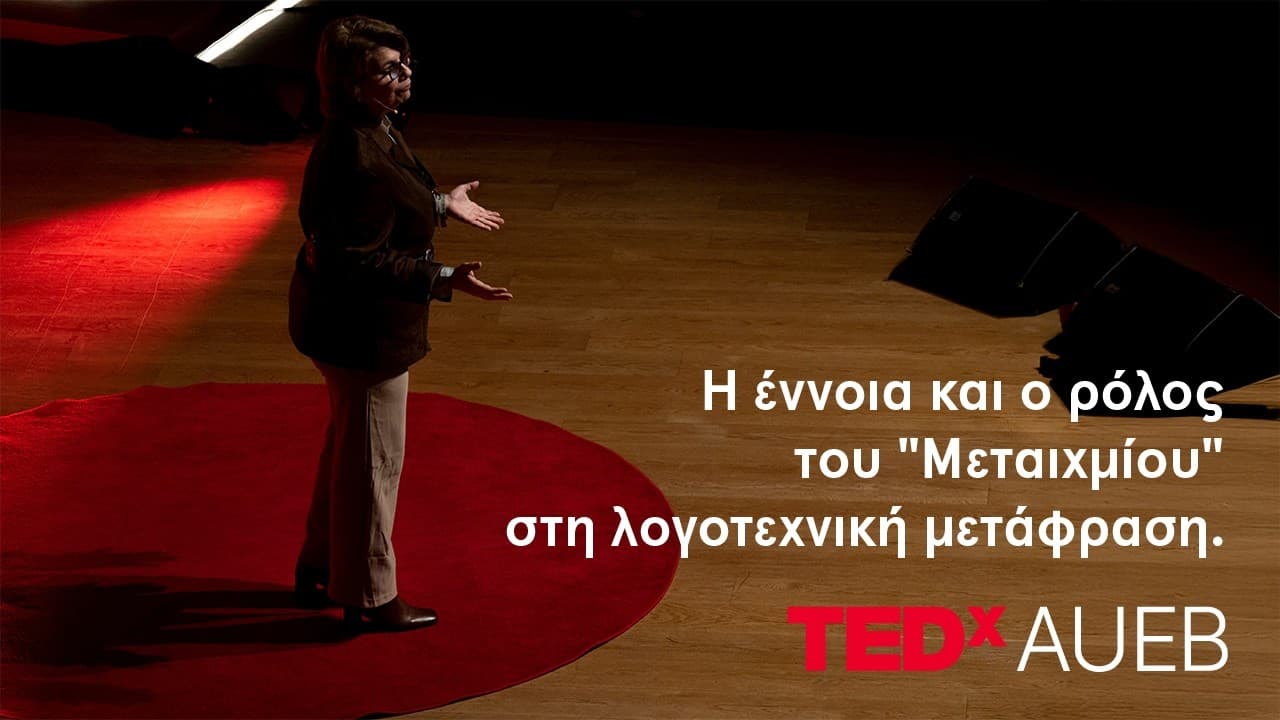

Historical Challenges in Literary Translation
- Professional literary translation in the early 1990s presented significant challenges due to the absence of modern technological aids such as search engines or artificial intelligence 10s.
- Translators working with non-European languages, such as Arabic, Chinese, Persian, and Russian, lacked basic tools and resources during that period 28s.
- In the case of Arabic translation, the available resources were limited to a single, inadequate dictionary of approximately 200 pages 42s.
- The scarcity of information regarding authors, historical contexts, cultural influences, and factual details within literary works necessitated extensive physical research in libraries 55s.
- During the 1990s, the Arabic language and its associated cultures were largely unfamiliar and unexplored territories within Greece 1m15s.
- The Arabic language does not represent a single, monolithic culture but rather a chain of distinct cultures, each possessing its own unique identity, historical trajectory, and literary voice 1m30s.
Technological Advancements and Efficiency
- In contrast to the past, there is currently an abundance of information available regarding the historical and social transformations of the various regions and countries associated with the Arabic language 1m55s.
- Modern technology allows for the immediate retrieval of information at the touch of a button. 0s
- The Arabic language, including both its formal standard version and its various dialects, is supported by over 100 electronic dictionaries that provide extensive, detailed commentary and information. 0s
- The time required for a translator to process a text has been significantly reduced due to the availability of these digital resources. 0s
- In 1992, a 350-page literary work by Naguib Mahfouz took 2.5 years to translate, whereas the same book could be translated in less than four months today. 0s
- The transition brought about by the internet represents a "liminal" (metechmiaki) condition in literary translation, fundamentally altering data, approaches, and timelines. 0s
- The shift caused by the internet was received by the generation of translators with a mixture of great joy and awe. 0s
The Liminal Nature of Translation
- The concept of the "liminal" (metechmio) is an integral part of the translation process itself, rather than just a reference to the passage of time or personal experience with Arabic and English literature. 0s
- The "liminal" in the field of literary translation refers to the specific point where the source text exists during the translation process. 0s
- During the translation process, a text gradually sheds its original linguistic and cultural identity to acquire a new identity in the target language 0s.
- This transformation occurs without losing the original text's deeper cultural and ideological foundations, nor does it betray or distort the author's intentions, meanings, or core principles 0s.
- Maintaining this balance is described as a difficult task, characterized as a thin line or an invisible thread that simultaneously connects and separates the original text from the newly created translation 15s.
Linguistic Transformation and Creative Process
- The transition from the original text to the new one is a complex and fascinating process that begins with the placement of the very first word on the page or in the file 35s.
- The first word or phrase of a translation cannot be identical to the original because the semantic weight of words differs between languages 48s.
- Despite the necessary linguistic differences, the initial phrase is essential for providing life and a new breath to the translated text 58s.
- Translation is not merely the conversion of one language into another, a task that is instead performed by tools like Google 1m5s.
- The Arabic language is characterized as a unique "arabesque" of words and structures, representing a distinct linguistic form 1m12s.
Linguistic Density and Cultural Mediation
- The Greek language possesses a unique linguistic density and a significant aesthetic and conceptual weight that provides it with the expressive capacity to approach and render complex texts more effectively than other European languages. 0s
- Achieving a 100% accurate translation is considered impossible, as the process of rendering meaning between languages is inherently incomplete. 10s
- Linguistic density impacts the physical length of a text during translation; for example, a 100-page book in Arabic typically expands to at least 120 pages when translated into Greek. 18s
- The translator must navigate the expansion of the language, which serves as a "threshold" or "metaihmio" in the translation process. 25s
- The interpretive journey of translation becomes more demanding, creative, and challenging when the source language and the target language originate from radically different cultures. 32s
- Differences between cultures include distinct social and historical experiences, mentalities, perceptions, and ideological frameworks. 42s
- Proficiency in a language is insufficient for high-quality translation; it requires a deep understanding of the specific author's personal idiom and the cultural foundation upon which they write. 55s
- Authors are fundamentally connected to their own history and culture, which necessitates that translators account for these influences. 1m8s
- Translation functions as an act of cultural mediation, serving as a bridge between civilizations and facilitating a smooth transition from one world to another. 1m15s
Specialized Translation of Poetry and Theater
- Literary translation involves the complex process of bridging an unknown world with a known one, a challenge that is particularly evident in poetry and theatrical works. 0s
- Translating poetry requires managing not only the language itself but also its symbolic functions, including allusions, rhythm, meter, sound, and polysemy. 0s
- The translator of poetry must account for the specific poetic tradition of the author, as well as the historical difficulty of rhyme, which has become less rigid as even Arabic poetry has increasingly adopted free expression. 0s
- Theatrical translation is distinct because the text is intended to be spoken on stage and performed, rather than solely read by an individual. 25s
- Translators of theatrical works must ensure the target language is fluid and natural so that the audience can follow the performance with ease. 25s
- The audience plays a primary role in the reception of a theatrical work, requiring the translator to consider elements such as pauses and the specific dynamics of words and phrases. 25s
- A phrase that carries significant impact in one language may lose its power or become uninteresting when translated into another. 25s
- Translating comedy requires careful consideration of the audience's cultural sense of humor, as what is perceived as funny in one language may be viewed as indifferent or unengaging in another. 25s
- The translation of theatrical works occupies a liminal space, positioned between the realms of poetry and other forms of literary translation. 25s
- The translation process occupies a space between poetry and oral speech, combining the sensitivity and concise expression of poetry with the requirements of oral delivery and stage performance 0s.
The Philosophy and Purpose of Translation
- Translation is defined as a dynamic and creative act where language serves as the translator's primary tool rather than the ultimate objective 5s.
- The core purpose of translation is to translate cultures rather than just language 10s.
- A primary goal of the translation process is to make the original text accessible to a new audience that may have little or no prior knowledge of the source material 15s.
- Translation is characterized as both an art and a technique, functioning as a bridge for understanding and intercultural dialogue 22s.
- The practice of translation consists of an uninterrupted chain of individual thresholds and transitions 28s.
- The translator acts as a conductor, constantly positioning themselves between various elements to manage and harmonize them 33s.
- The act of writing also involves a transition or threshold, as a writer's thoughts undergo a transformation when they are transferred onto paper 38s.