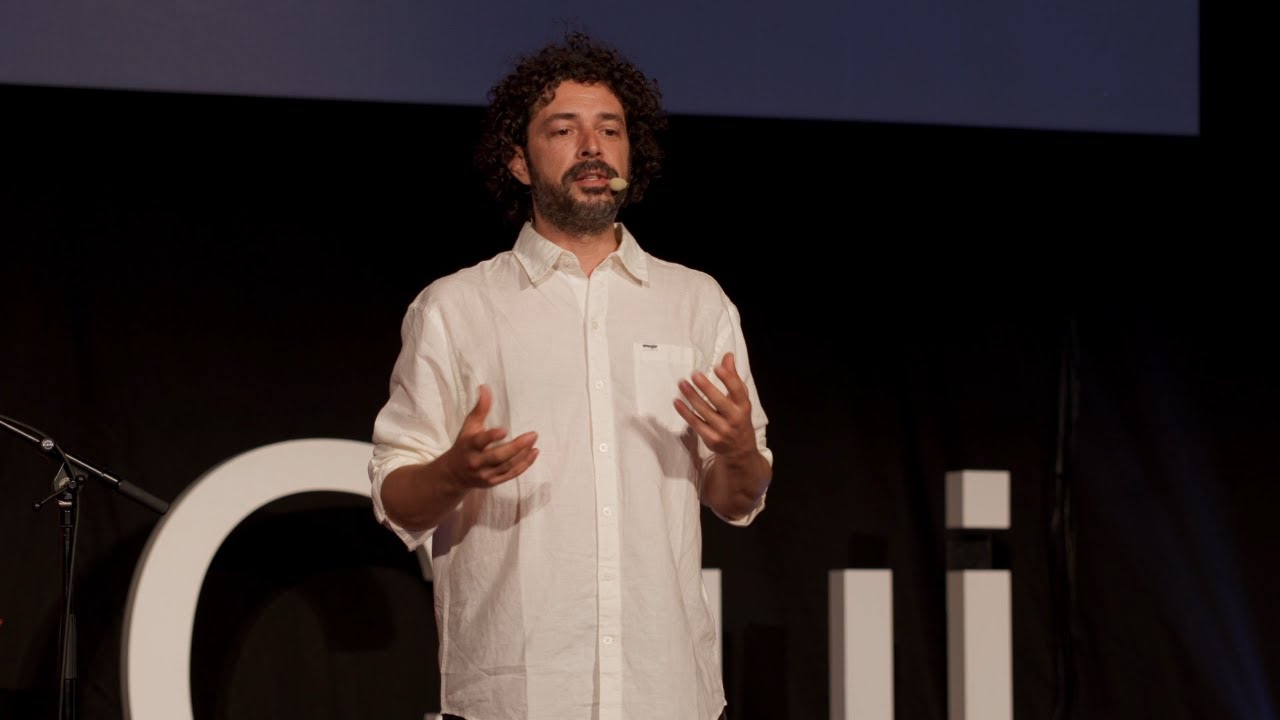


Introduction
- Music has the power to give us energy and can even heal us in places where medicine cannot, as stated in a quote that music heals us in places where medicine cannot reach 1m21s.
- There are four main ideas about music: it is an art, an industry, a science, and a medicine 1m37s.
- Music is an art because it can be understood differently by each person, and it is a way to explore our inner selves, just like looking at a painting where everyone sees something different 2m10s.
- Creating art through music can be challenging because it may not resonate with the public, and the artist may face criticism or disinterest 2m28s.
- Music as an industry views music as a commercial product, where it is created to sell and make a profit, and this type of music may not resonate with everyone 3m15s.
- Commercial music is still music, even if it does not resonate with some people, and it has its own audience and purpose 3m35s.
- The music industry is a significant part of our daily lives, with music being present in various aspects of our daily routines 3m46s.
- The speaker proposes to explore these four ideas about music in more depth, discussing how music affects us and its role in our lives 1m44s.
Music as Science
- Musicians often make calculations when creating music, even if they don't explicitly state them, as seen in the work of Max Martin and Desmond Child, who wrote songs for artists like Bon Jovi and Aerosmith 3m53s.
- The idea that creating a hit song is just a matter of luck is incorrect, and there must be some underlying calculations at play, which is why the title of this talk is "The Science Behind Music" 4m21s.
- The human body has a heart that responds to music by changing its pulse rate, and a brain that breaks down melodies into smaller parts that are understood subconsciously 4m29s.
- Music has three main elements: rhythm, melody, and lyrics, with rhythm being handled by the cerebellum, the part of the brain responsible for coordinating movement 4m51s.
- The cerebellum is responsible for counting the rhythm of music, and can become confused when a producer introduces syncopation or complex rhythms, leading to a physical response such as tapping one's foot 5m5s.
- The cerebellum is also responsible for calculating the bass line, guitar line, and percussion, making it a crucial part of the music-listening experience 6m13s.
- People listen to music both actively, such as at concerts, and passively, such as while studying, and the cerebellum plays a key role in both cases 6m20s.
- A good rhythm can be uplifting and energetic, while a straightforward rhythm is often referred to as "elevator music" because it is unchanging and unremarkable 6m47s.
- The brain has three parts: the reptilian brain, the mammalian brain, and the cortex, each playing a distinct role in processing music, with the mammalian brain focusing on intonation and melody 7m12s.
- The mammalian brain is attentive to the melodic line, expecting a response after an initial phrase, which is why popular music often follows a pattern of rising and falling melodies 7m21s.
- Intonation is crucial in music as it conveys emotion, and humans have used intonation to communicate since ancient times, with early forms of language relying more on intonation than words 7m59s.
- People use intonation to express their emotions, and some individuals may not be aware that their tone of voice can contradict their words, making them appear dishonest 8m27s.
- The cortex analyzes song lyrics, looking for relatability and context, and is more likely to pay attention to lyrics that tell a story or evoke emotions 8m50s.
- Women tend to pay more attention to song lyrics than men, who often focus on other aspects of music, such as melody or rhythm 9m21s.
- Men are often preoccupied with other tasks or thoughts, making them less attentive to lyrics, and are more likely to remember and hum or whistle a catchy melody 9m37s.
- One of the greatest compliments to a singer is when people hum or whistle their melody, indicating that the song has stuck in their memory 9m53s.
Music as Happiness
- Music is an expression of happiness, and people often whistle when they are joyful, as it is a way to express their emotions, and this is evident in the fact that no one says they are sad when whistling 10m43s.
- Music is present everywhere, and people often sing or hum along to tunes, even when they are alone, such as in the shower, or in a crowd where they feel comfortable and not judged 11m1s.
- Many successful people, including entrepreneurs, directors, and those who have changed mentalities, have a developed sense of music and rhythm, which is a part of them that resonates with the idea of listening to music and being passionate about notes and rhythm 11m39s.
Music and Creativity
- It is recommended to take a deeper dive into music, whether it's classical, jazz, or rock, as it can be a healthy and beneficial activity 11m53s.
- The concept of creativity is closely related to music, and creativity is a human expression that can be defined in many ways, but one definition is the ability to observe needs, imbalances, and try to find a solution 12m37s.
- Creativity is about solving problems through art, music, or other forms of expression, and music is a science that uses the brain's emotional and rational parts to create and appreciate it 13m23s.
- There are certain techniques and tricks that great musicians have discovered or learned throughout their lives, which can be applied to music and creativity 13m40s.
- Music producers often count the syllables in a musical phrase when creating music, and if the number of syllables is odd, it can leave the listener waiting for more, as demonstrated by the example "toată lumea mâinile ce urmează" 14m15s.
- In contrast, a phrase with an even number of syllables, such as "toată lumea mâinile sus", can be more satisfying and complete 14m33s.
- This technique is used to create a sense of balance and harmony in music, with a combination of odd and even phrases used to add interest and variety 15m7s.
- A song can be broken down into its component parts, including phrases with odd and even numbers of syllables, to analyze its structure and rhythm 15m10s.
- The song "Sus pe toc" is an example of a song that uses this technique, with a mix of odd and even phrases in its lyrics 15m13s.
- The use of odd and even phrases in music is a form of mathematics, and understanding this can help to appreciate the structure and rhythm of a song 17m0s.
- The discovery of this technique was made while working with Swedish musicians, who may have invented the idea, and it has been used to analyze and create music ever since 16m11s.
- The technique involves counting the syllables in a musical phrase and using a combination of odd and even phrases to create a sense of balance and harmony 16m47s.
- This approach to music can help to explain why some songs are more catchy and memorable than others, and why they may be more likely to become popular hits 16m52s.
- The use of mathematics in music is not just limited to counting syllables, but also involves the use of rhythm, melody, and other musical elements to create a sense of harmony and balance 17m11s.
Music as Medicine
- Music is a medicine, and just like food is for the body, music is for the soul, providing nourishment and comfort 17m36s.
- A personal experience illustrates the healing power of music, where a song helped overcome a difficult period in life, both personally and professionally 18m4s.
- The song was played repeatedly, morning, noon, and night, serving as a mental boost and helping to regain a positive mindset 18m14s.
- As a token of gratitude, a restaurant owner offered free food in exchange for the song, highlighting the value of music beyond monetary compensation 18m39s.
- Music evokes emotions and has the power to bring people together, as seen in the example of people singing a single note in unison 19m6s.
- The act of singing together creates a sense of community and shared experience, demonstrating the universal language of music 19m10s.
- A live demonstration of this concept involves the audience singing a single note, creating a unified sound and showcasing the power of collective music-making 19m35s.
- The exercise highlights the importance of music in bringing people together and creating a sense of harmony and unity 19m40s.
- The experience is meant to be enjoyable and uplifting, leaving a lasting impression on those involved 21m17s.
Conclusion
- After decades, Marius Moga is still learning. 21m26s
- Marius Moga expresses gratitude. 21m30s
- Marius Moga wishes everyone a wonderful day. 21m33s