Intro 0s
- Bill Maeda's approach to eating is to always be a little hungry, never feeling stuffed or maxed out, and eating until he feels not hungry or slightly full, then waiting until he feels hungry again before eating 9s.
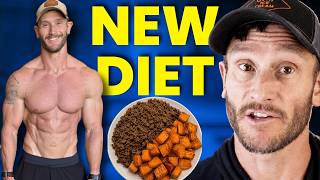
- At 55 years old, Bill Maeda is considered the most shredded 55-year-old, with a physique that sparks curiosity about his diet and supplement regime 28s.
- Bill Maeda's training and physique have been showcased on Instagram, featuring impressive feats such as lifting barbells with a towel using his teeth, and displaying prominent veins 42s.
- Despite being 55 years old, Bill Maeda's physique raises questions about his diet and how he maintains his physical condition at his age 52s.
30% Off Your First Order AND a Free Gift Worth up to $60 57s
- Thrive Market is a preferred choice due to its adoption of EU standards for processed foods, resulting in fewer weird additives and no artificial dyes in their products 1m11s.
- Thrive Market offers a 30% discount on the entire grocery order for first-time customers who use a specific link, along with a free gift worth up to $60 1m34s.
- The market provides various options, including frozen meat and seafood, and is starting to roll out fresh options for some customers 1m49s.
- Thrive Market also offers canned fish options, such as tuna, Wild Planet sardines, and anchovy, which can be part of a Mediterranean diet 2m3s.
- The market's healthier snack options are beneficial for families who want to avoid products with excessive additives and MSG 2m13s.
- Thrive Market aims to provide healthier options to consumers at a reasonable price, making it a recommended choice 2m30s.
- The link to receive the 30% discount and free gift is available in the description, and it has been a trusted sponsor on the channel for over half a decade 2m45s.
Bill's Diet Has Been the Same Since Childhood 2m49s
- Bill's diet has remained the same since he was a child, which seems to contradict conventional wisdom on diet and metabolism 2m49s.
- He has never used performance-enhancing drugs, but he does use BPC 157 and TB500 peptides, and has never used hormones or growth hormone 3m22s.
- Bill's metabolism has been extremely fast throughout his life, requiring him to eat high-density foods and large amounts of carbohydrates 3m50s.
- He eats foods that might be considered unhealthy in large quantities, such as pancakes, waffles, and ice cream, but only when his body needs them 4m11s.
- Bill is not an emotional eater and tends to stop eating when he's upset or nervous, and he doesn't eat for 12 hours after consuming large amounts of food 5m5s.
- He doesn't consider his eating pattern as intermittent fasting, but rather as fueling his body with whatever he needs, whether it's healthy or not 5m48s.
- Bill has never weighed or measured his food, and he eats intuitively without a set schedule or portion control 7m7s.
- Throughout his life, Bill has never had a job that required him to sit for long periods, as he has worked as a trainer and has always been on his feet 7m32s.
- His intention was to join the military, specifically Special Forces, but he was ineligible due to a football injury that required surgery and left him with two screws in his right shoulder 7m43s.
- Bill has continued to work as a trainer since high school and has never had a job that required him to be static for long periods 8m14s.
Always Be a Little Hungry 8m56s
- Eating until feeling not hungry, but not stuffed, is a key principle, where the goal is to eat until feeling slightly full and then wait until actually feeling hungry again 9m8s.
- This approach involves coasting on the previous meal until the body starts feeling the need for more food, which can be physically felt, such as the cheeks sucking in 9m20s.
- When consuming dense or high-calorie foods, such as those with real sugar or fat, a longer period of time is spent burning those calories constantly 9m31s.
- This eating strategy is believed to contribute to achieving a low body fat percentage, although the exact mechanisms are not fully understood 9m38s.
- The approach is not about restricting food intake, but rather about listening to the body's hunger cues and eating in response to those signals 9m23s.
Eating Intuitively 9m46s
- Daily caloric intake can vary greatly, with some days reaching 5,000 calories and others as low as 1,000 calories, with no specific pattern or schedule 9m49s.
- On certain days, sugar cravings may arise, and consuming sugary foods or drinks can help provide a temporary energy boost and prevent overeating during meals 9m57s.
- Sugary foods and drinks are used strategically, taking advantage of their convenience, and are consumed in large amounts when needed, followed by periods of time without needing to "reload" 11m11s.
- This approach to metabolism is compared to an AK-47 rifle, which can function with various types of ammunition, symbolizing the ability to adapt to different food sources and still maintain energy levels 11m52s.
- This mindset originated from training to be a soldier in high school, where the goal was to be able to survive and function on minimal or suboptimal nutrition 12m11s.
- The idea is to view food as a fuel source, without worrying about the quality or nutritional value, and to be able to consume large amounts of food when needed 12m54s.
- This approach has been a part of daily life since a young age, with the ability to eat huge amounts of food and still maintain high energy levels, which is still the case today 13m2s.
- Intuitive eating is a pattern that allows individuals to be in tune with their body's needs, but it can be challenging for those who consume hyper-palatable processed foods, which can hijack their ability to know when to stop eating 13m48s.
- Teaching children to listen to their body's response to food is crucial, and parents should encourage them to pay attention to how food makes them feel, rather than imposing barriers on what they eat 14m19s.
- When food provides energy, it's essential to use that energy, as wasting it can lead to energy toxicity and metabolic decline 14m47s.
- Metabolic health is a mix of energy utilization and proper partitioning at a cellular and mental level, and being aware of this can help individuals make better food choices 15m11s.
- The body doesn't recognize time in the same way humans do, and it only knows when it needs food or not, making it essential to listen to hunger cues 15m51s.
- Despite having a varied diet, there are common denominators that can help individuals make better food choices, even if they're not consciously aware of them 16m10s.
- Cooking at home and having staples like red meat, such as steak, can help provide a sense of structure and balance in one's diet 16m39s.
- Red meat, including venison and elk, is a staple in this individual's diet, although they don't typically eat a lot of pork 17m10s.
- Bill Maeda mentions that he eats a lot of white rice, which has never been a problem for him, as it feels like a quick fuel source that he can feel working in his body shortly after consumption 17m19s.
- He emphasizes the importance of staying connected to the food he eats, even after swallowing, and envisions it as a source of energy that fuels his thoughts and actions for hours after eating 17m39s.
- Maeda notes that he stays internally connected to what he eats, and it's not just something that gets digested and forgotten, but rather it continues to provide energy and nourishment 18m0s.
- He believes in maintaining a simple approach to eating, which involves consuming lots of food, but the specifics of his diet are not detailed in this segment 18m48s.
Bill's Food Staples 18m50s
- The diet consists of steak, rice, any fruit, and occasionally mango, grapes, and other fruits, with no restrictions on sugar content or fructose 19m7s.
- The individual does not feel inclined to overeat fruits, such as mangoes or grapes, and is content with having a few 19m27s.
- Although not a big fan of vegetables, they are consumed for their prebiotic benefits, but not in large quantities 19m47s.
- Dairy products, such as ice cream, are also part of the diet, along with pasta, cereal, and wheat-based cereals 20m8s.
- The daily protein intake is estimated to be around half a pound, primarily from red meat sources like hamburger 20m47s.
- Chicken is not a preferred protein source, with a preference for red meat, such as beef, and fish like mahi-mahi 21m38s.
- The go-to meal consists of red meat and white rice, with occasional potatoes, and a mix of simple carbohydrates, red meat, water, and fruit 22m7s.
- The diet is high in carbohydrates, with a rough estimate suggesting that more calories come from carbs than protein 22m33s.
- Despite the high carbohydrate intake, principles from low-carb diets, such as intermittent fasting, are still applied 22m55s.
- A diet approach inspired by the keto diet is followed, but not strictly, as full keto was not successful in the past, resulting in a shriveled appearance, and instead, a combination of clustering carbohydrates at certain times and being low-carb for prolonged periods is used 23m3s.
- Carbohydrate loading is done when glycogen levels start to drop, which can take a day or three days of low-carb intake, and this loading is done in a short period, similar to how bodybuilders replenish their muscles after a competition 23m35s.
- The diet consists mainly of meat, rice, and some fruit, with cooked cabbage being a staple, as it is considered a simple and effective food choice 24m26s.
- Carbohydrate intake is not strictly measured, but an estimate of 100 grams of carbs in a meal is mentioned, although not all of it is consumed in one sitting, with a more realistic estimate being 25-40 grams of carbs 25m12s.
- The diet approach is flexible and not extreme, with an emphasis on listening to the body's needs and adjusting accordingly 25m35s.
Eating Before Training 25m40s
- Typically, eating before training is preferred, but it depends on the type of training, such as lifting a barbell with teeth, which requires being "topped out" on everything, or going for a run, where training fasted works great 25m42s.
- Food is used strategically, especially when needing a push, like during high-volume kettlebell stuff or Infinity lunges, where high glycemic foods that cause big spikes in insulin and blood sugar are consumed 26m11s.
- Certain foods like ice cream mixed with Starbucks coffee, or pastries, are used as a pre-workout due to their sugar and caffeine content, which provides a psychological boost and a degree of guilt to motivate the workout 26m44s.
- The belief is that energetically and metabolically, the body can burn what was just consumed, so a powerful snack tends to result in a powerful workout 27m40s.
- Foods that are not ideal but have high glycemic content are timed strategically when needed, and if done properly, the workout doesn't have to be long, and dinner can be eaten shortly after 28m22s.
- A significant amount of food is eaten close to bedtime, and a "litness test" is waking up without running to the toilet, having a flat stomach, and feeling alert 28m55s.
Allowing Yourself to be Hungry 29m21s
- Eating at random times, also referred to as "fractal eating," involves having strategic yet random gaps between meals, which are not planned but rather occur intuitively when one is hungry 29m44s.
- Allowing oneself to be a little bit hungry is an important aspect of this approach, as it is supported by scientific evidence from randomized control trials 30m17s.
- When in a state of slight hunger, ghrelin levels are elevated, hormone-sensitive lipase levels are elevated, lipolysis occurs, and the body is usually in a fat-burning state 30m25s.
- This approach is the opposite of what most people typically do, and it underscores the importance of listening to one's body and eating when hungry 29m28s.
- Marx and others have spent hours watching videos on how to implement this approach, but in reality, it can be done intuitively by simply eating when hungry 29m53s.
Apologies for the Temporary Sound Glitch 30m44s
- Poor dietary choices can be overcome by being very active, but it is also essential to maintain a state of being slightly hungry all the time to achieve optimal results, particularly for someone aiming to be under 5% body fat at the age of 55 30m44s.
- Having a moderate or mild caloric surplus can lead to different results, and the key to achieving the desired body fat percentage is the relationship with food and the ability to maintain a certain mindset 31m6s.
- Some people need to "gamify" their relationship with food by counting calories, having a plan, or finding ways to make it more engaging, whereas others may inherently have this ability 31m26s.
- There is no need to keep a daily "scorecard" of food intake, and it is more effective to evaluate progress over a longer period, such as a week, rather than focusing on daily calorie intake 31m40s.
- A weekly calorie intake of 15,000 to 20,000 calories, with varying daily amounts, can be a better indicator of progress than focusing on a specific daily calorie goal 31m50s.
- The discussion is about to pivot to the topic of supplements 31m59s.
Supplements & Peptides 32m2s
- The primary supplement is caffeine, with a daily consumption of up to 500 milligrams on some days 32m45s.
- Other supplements include a vitamin homocysteine multivitamin, vitamin D3, vitamin C or Ester C, and NAD (nicotinamide adenine dinucleotide), an antioxidant that helps create energy at a precellular level 33m13s.
- NAD is essential for the body, and running out of it can be fatal within 15 seconds, as it plays a crucial role in carrying electrons across the proton gradient to create energy 34m31s.
- The use of NAD supplements has resulted in noticeable positive effects, with the body responding well to its intake 34m51s.
- Additional supplements include BPC 157 and TB500 peptides, which were restarted after a three-month layoff 35m5s.
- The peptides were initially used to address severe overtraining, which occurred due to intense daily training and posting on social media for four years straight 35m22s.
- The peptides were obtained from Maric Health, a company met through Steve Granzella at Mark Bell's podcast 35m51s.
- Notable effects of the peptides were observed within a week or two of taking them, including improvements related to a previous colon removal 36m13s.
- 13 years ago, Bill Maeda had colon cancer, which led to his guts never being right, and he experienced significant improvement in his gut health after taking peptides, specifically BPC-157, which also helped with his knees and ankles that were swollen due to massive overtraining 36m19s.
- Bill Maeda has been sleeping for less than 5 hours since he was a teenager, training himself to function on small amounts of sleep, but now his biggest focus is retraining his nervous system and circadian rhythm to accept 5.5 to 6 hours of sleep 37m6s.
- He considers sleep his biggest supplement, as it precedes everything else, and has made the biggest difference in his overall health and well-being 38m27s.
- Bill Maeda initially took peptides, which did not work on his ankles or knees, and may have even made them worse due to increased training intensity, but after taking a 3-month break and reducing his training, he noticed significant improvement in his knees and ankles 38m34s.
- He has reordered peptides from MER and is hopeful that they will have a better effect this time, as he noticed his gut health improving when taking the peptides without any probiotics or prebiotics 39m54s.
- Bill Maeda's highest goal is to be able to continue doing what he does, and he is willing to take steps back and focus on his sleep and overall health to achieve that goal 39m14s.
- Bill Maeda is considering taking creatine due to its benefits for physical performance, cognitive function, and sleep quality, and is willing to start with a low dose 40m27s.
- He currently takes 500 milligrams of caffeine and considers coffee his favorite supplement, but finds it puzzling that he can't sleep despite consuming caffeine 40m50s.
- Maeda believes he might be addicted to caffeine, but does not experience headaches when he doesn't consume it for a day or two 41m11s.
- He mentions the liver enzyme cytochrome p450, which affects how people metabolize substances, and notes that some individuals are fast or slow metabolizers, impacting their tolerance 41m18s.