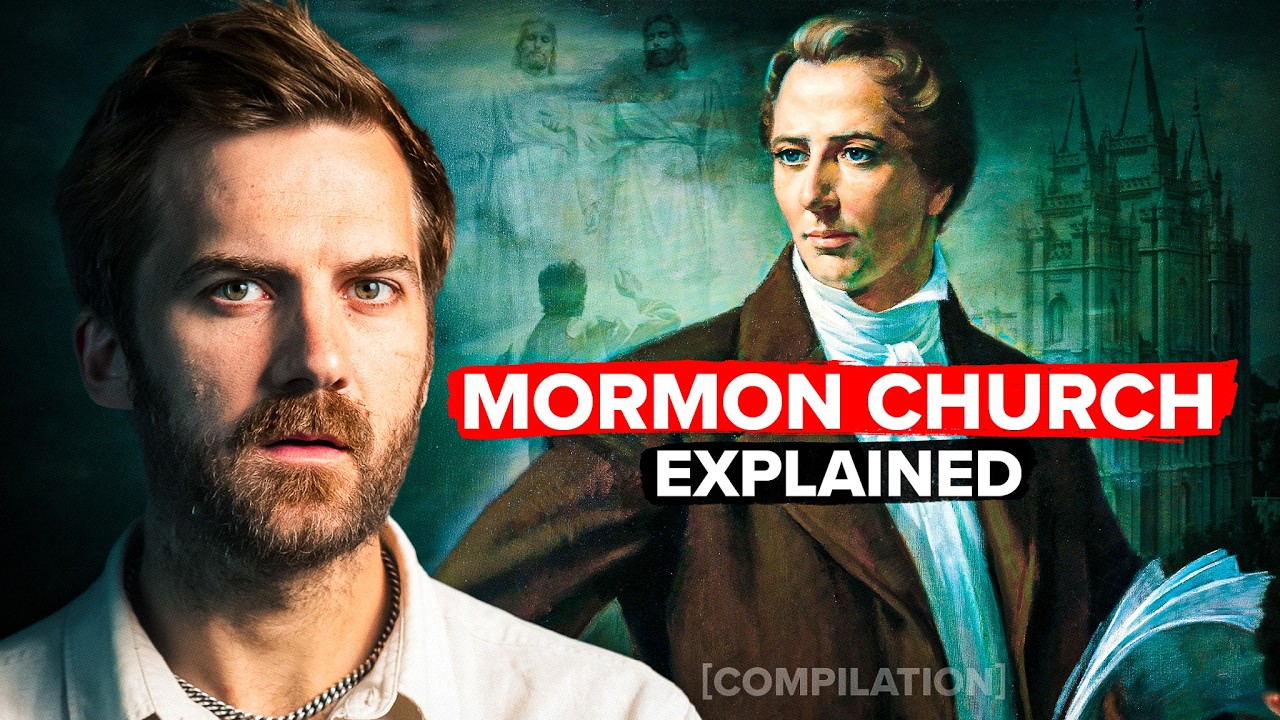


Introduction to Joseph Smith and the LDS Church
- Joseph Smith is the author of a worldview that was deeply believed in, a religion and gospel that brought hope, meaning, and community to its followers, with unique stories about the origin and destiny of humanity 10s.
- Joseph Smith was a non-religious, uneducated kid from upstate New York who created a global movement that gathered huge numbers of followers in a short time, despite facing violence and persecution, and his vision was to build a new utopian society based on celestial laws, preparing for the end of the world and the Second Coming of Jesus Christ 2m6s.
- The early 1800s in the US was a time of massive growing pains, with only 10% of white Americans regularly attending church, and this led to an explosion of religious thought, especially in upstate New York, where charismatic preachers emerged to revive God and create new, emotional, and personal religions 4m6s.
- The time period was marked by unprecedented changes, with America feeling special and different, but also scary, with new ideas, science, and technology emerging, and many people believed that the end of the world was coming, and that Jesus would return to usher in a thousand years of glory, known as the Millennium 6m3s.
- Joseph Smith was born in 1805 to a mother who was swept up in the excitement of new religions and a father who was not religious, and he was born into a family that was religiously lost, but soon to be influenced by the frothy religious environment of upstate New York 8m5s.
- Upstate New York was also a place where people hunted for treasure, with a culture of folk magic and legends, and Joseph Smith was caught up in this treasure hunting craze, using mystical and magical methods, such as seer stones, crystals, and rods, to locate buried treasure, despite having little education or religious background 10m5s.
- The story takes place in upstate New York in the early 1800s, where there is a frenzy of folk magic, treasure hunting, and religious fervor, with people talking about the Last Days and the Millennium of fire and glory that is coming soon 10s.
- A 14-year-old boy named Joseph gets curious about religion, visits several churches, and finds no answers, so he decides to go into a grove of trees to ask God which church is true, where he has an experience known as the First Vision 2m6s.
- During the First Vision, Joseph sees a pillar of light brighter than the sun, and within that light, he sees two people, God the Father and His Son Jesus Christ, who tell him that none of the churches he has been investigating are true and that he is being called to restore the real true church that had been lost from the Earth 2m6s.
- The First Vision is the founding story of the LDS Church, also known as the Mormon Church, and it is a story that members of the Church learn, sing about, and study from a young age 2m6s.
Joseph Smith's Early Life and the First Vision
- Joseph Smith was born in 1805 to a mother who was swept up in the excitement of new religions and a father who was not religious, and he was born into a family that was religiously lost, but soon to be influenced by the frothy religious environment of upstate New York 8m5s.
- Upstate New York was also a place where people hunted for treasure, with a culture of folk magic and legends, and Joseph Smith was caught up in this treasure hunting craze, using mystical and magical methods, such as seer stones, crystals, and rods, to locate buried treasure, despite having little education or religious background 10m5s.
- The story takes place in upstate New York in the early 1800s, where there is a frenzy of folk magic, treasure hunting, and religious fervor, with people talking about the Last Days and the Millennium of fire and glory that is coming soon 10s.
- A 14-year-old boy named Joseph gets curious about religion, visits several churches, and finds no answers, so he decides to go into a grove of trees to ask God which church is true, where he has an experience known as the First Vision 2m6s.
- During the First Vision, Joseph sees a pillar of light brighter than the sun, and within that light, he sees two people, God the Father and His Son Jesus Christ, who tell him that none of the churches he has been investigating are true and that he is being called to restore the real true church that had been lost from the Earth 2m6s.
- The First Vision is the founding story of the LDS Church, also known as the Mormon Church, and it is a story that members of the Church learn, sing about, and study from a young age 2m6s.
The Book of Mormon and Its Translation
- A few years after the First Vision, Joseph has another experience where an angel named Moroni appears to him, telling him that the Second Coming of Christ is near and that he has been called to prepare the world for it, and that there is a book written on golden plates buried in a hill near his house 4m42s.
- The book on the golden plates is an important record of a group of Jews who left Jerusalem in 600 BC and came to the Americas, and Moroni tells Joseph that he will be able to translate the plates into English when he is older 4m42s.
- By the time Joseph is 21, he is instructed to go to the Hill Cumorah near his house and get the plates, and he starts to focus on translating the plates, orienting himself away from treasure hunting and towards translation 6m15s.
- Joseph Smith claimed to have obtained metal plates, which he translated into the Book of Mormon, a process that involved sitting on one side of a curtain, looking through stones at Egyptian engravings on the plates, and dictating the translation to a scribe, sometimes his wife or other early believers, with the translation process beginning in a little cabin in rural New York 10s.
- The translation process was not always done with the plates, as Joseph Smith would sometimes use his personal seer stone, a chocolate-colored egg-shaped stone, which he would put into a hat, bury his face in the hat, and claim that the stone would light up with the words he was supposed to dictate to his scribe 1m30s.
- The use of mystical visions, treasure hunting, and seer stones was not unusual at the time, as folk magic and Native American artifacts were common in society, and Joseph Smith had been involved in such activities for about a decade, which is why his parents and community supported him 2m6s.
- Joseph Smith finished dictating the 588 pages of the Book of Mormon in a 90-day window, a feat that was considered remarkable given his limited education, and he claimed to have given the plates back to Moroni and taken the manuscript to a printer 4m20s.
- The Book of Mormon is a foundational text for the LDS faith, and its importance lies in its role as a validator for Joseph Smith, who was not considered a religious or educated person, yet was able to produce a Bible-like book with complex histories, religious lessons, and nods to Hebrew language and culture 6m10s.
- The Book of Mormon tells the story of a group of Jews who leave Jerusalem around 600 BC, travel to the Americas, and split into two civilizations, the Nephites and the Lamanites, who are constantly at war with each other, with the book containing a mix of compelling religious lessons and copy-and-paste jobs from the Bible 8m30s.
- The Book of Mormon introduces the Lamanites as the principal ancestors of the American Indians, although this description was later changed to "among the ancestors of the American Indians," with no archeological, genetic, or linguistic evidence supporting the claim that Jewish people migrated to the Americas around 600 BC 10s.
- The Book of Mormon tells the story of Jesus visiting the people in America after his resurrection in 33 AD, which is a crucial part of the book for believers, and is depicted in a painting that hangs in many LDS churches, showing Jesus Christ among the ancient civilizations of the Americas 2m6s.
- The Book of Mormon is considered a compelling piece of work for believers, providing proof that Joseph Smith was a legitimate prophet called by God to prepare the world for the Second Coming, and by 1830, he had gained followers who believed in him and his prophetic abilities 4m30s.
Theology and Doctrine of the LDS Church
- Joseph Smith developed a unique theology, stating that God is a man with a body of flesh and bone, has a wife, and lives near a distant star, and that humans are eternal balls of light called intelligences, birthed by heavenly parents, and sent to Earth to gain physical bodies and learn 6m40s.
- According to this theology, the ultimate goal is to return to live with God and become like Him with one's spouse, by passing tests on Earth, completing rituals, and demonstrating obedience, which requires the establishment of a church with proper authority and a savior to account for sins 8m50s.
- The story of God's children, including Jehovah, later known as Jesus, who volunteered to be the savior, is central to this theology, and the cycle of prophets being called by God to restore His authority and start the process over again is a recurring theme 11m20s.
- This cycle of prophets and apostasy ultimately led to the establishment of Jesus' church, which was later corrupted and fell into the Great Apostasy, but the world would eventually be restored through another prophet, with Joseph Smith being seen as the one to restore God's authority and prepare the world for the Second Coming 14m50s.
- The idea was that Jesus would be coming soon and things were about to get really bad, so God helped Europeans come across the ocean to take over North America, colonize the land, and create a country with freedom of religion, which would eventually lead to the birth of Joseph Smith and the restoration of His church 10s.
- Joseph Smith claimed that Jesus and Heavenly Father appeared to him in a grove, sending angels to tell him where to get the golden plates and restore the authority of the priesthood that Jesus had given to the original apostles, allowing him to establish his church 10s.
- The church's theology included the idea of a Restoration, with Joseph Smith as the prophet of a newly restored church that could talk to God and get instruction on how to run God's Kingdom on Earth to prepare for the Millennium 10s.
- The church's doctrine was a unique blend of Jewish mysticism, American folk magic, reincarnation, evangelical Christianity, and eventually Freemasonry, with ideas such as God having a body and a wife, which was considered wild and fringe at the time 2m6s.
Establishing Zion and the Challenges Faced
- As Joseph Smith gained followers, he was arrested and called a disorderly person, but was eventually released, and he realized that he and his members needed to leave, beginning their journey moving West 2m6s.
- Joseph Smith claimed that the Lord was telling him to go to Ohio to await instructions for their final destination, where they would set up their new city, called Zion, a communal utopian society that would be the base for preparing the world for the Second Coming of Jesus 4m6s.
- The concept of Zion transitioned from a vague idea to a solid plan, with Joseph Smith sketching out the city on paper, including details such as gridded streets, parceled plots, and homes with yards and gardens 6m6s.
- Joseph Smith's plan for Zion was based on the prophecies of old, with the city being called the New Jerusalem, and he wrote in extreme detail about what the city would be like, including the layout and design of the homes and streets 6m6s.
- The city of Zion was envisioned with brick or brick and stone houses, farms, and central streets named after significant locations in Jewish history and culture, such as Zion Street, Jerusalem Street, and Bethlehem Street, with a temple at its center 10s.
- Joseph Smith's idea of God's restored Kingdom on Earth was to be a hyper-progressive, communal society where resources would be shared, and the community would be governed by celestial laws and structures, with a new government run by the prophet 1m6s.
- The concept of Zion was a vision that Joseph Smith was able to rally his followers around, and it became a central calling card for new converts, with the promise of a Millennial Kingdom where God could communicate with His people as the world prepared for its end 1m42s.
- Joseph Smith's revelations continued to push the belief system of Mormonism further away from mainstream Christianity, including the idea that there are three kingdoms of Heaven, and that marriage by proper authority was necessary to reach the highest degree of kingdom, the Celestial Kingdom 2m6s.
- The locals in Ohio did not welcome the growing Mormon community, and Joseph Smith was violently attacked by a mob, leading him to leave the area, after which Oliver Cowdery suggested Jackson County, Missouri, as the location for the Millennial Kingdom 3m42s.
- The area in Independence, Missouri, was believed to be the site of the original Garden of Eden, and Mormons began buying up land and moving to the area, driven by the belief that the Second Coming was imminent, with some, like Martin Harris, making bold predictions about the spread of Mormonism 5m6s.
- The Mormon community's efforts to establish Zion in Missouri were met with resistance from the locals, who were not receptive to the idea of a new religious society 6m42s.
- The arrival of a large group of Mormons in a county, with the intention of creating a new religious communal society and preparing for the Apocalypse, sparked fear and violence among the local residents, who sabotaged the Mormons and eventually drove them out 10s.
- The Mormons, led by Joseph, faced violent resistance and conflict over the next five years as they moved throughout the Midwest, and after initially being told not to fight back, they eventually started fighting back, leading to a full-blown war 42s.
- The Governor of Missouri issued an extermination order, stating that the Mormons must be treated as enemies and exterminated or driven from the state if necessary for public peace, prompting the Mormons to flee to Illinois 2m6s.
- In Illinois, the government, which included a young Abraham Lincoln, gave the Mormons a special charter to create a city and government based on their unique Zion principles, and they established the city of Nauvoo, where Joseph appointed himself in charge of the courts and militia 2m6s.
Polygamy and the Internal and External Conflicts
- Joseph sent missionaries to Europe to preach about the Gospel and invite people to join his vision of Zion, and one of those people was the great-great-grandfather of the narrator, who traveled to the United States and arrived in Nauvoo, which eventually grew to be more populous than Chicago 4m10s.
- In Nauvoo, Joseph claimed that an angel appeared to him and demanded that he take on multiple wives, and he went on to have 40 wives in three years, many of whom were already married to other people, but this practice of polygamy was kept quiet and private 6m15s.
- By 1844, the Zion dream was growing in Illinois, and Joseph decided to run for President, but this campaign backfired, and he was seen as a legitimate political threat, leading to further conflict and criticism, including from a group of former Latter-day Saints who published a newspaper criticizing him for polygamy 8m30s.
- Joseph responded to the criticism by sending his militia to destroy the printing press and declaring martial law, which led to his arrest for attempting to incite a riot, and marked one of many run-ins with the law that he had 10m45s.
- Joseph Smith's life ended in tragedy when a mob of over 200 men stormed the jail where he was being held, and he was shot and fell to his death at the age of 38, with a Book of Mormon in his hands, defending his vision and belief in his own story 10s.
- The death of Joseph Smith led to him being considered a martyr, and it fueled the fire of his vision for Zion, but the Latter-day Saints realized that they would not be able to build Zion in the United States and began looking for a new location, such as Mexico, to establish their Millennial Kingdom 1m20s.
- Joseph Smith created a powerful story about the Last Days, treasure, visions, angels, and modern-day revelation from God, which attracted many followers and led to the establishment of a utopian society with a strong sense of community and shared beliefs 2m6s.
- The story of Joseph Smith has been reenacted and celebrated by Latter-day Saints, who sing songs like "Praise to the Man" and reenact the story of the Book of Mormon on a large stage with many characters, demonstrating the significant impact of his story on the lives of his followers 3m30s.
- Joseph Smith's charismatic leadership and storytelling abilities allowed him to attract an audience and build a movement around his vision, which eventually led to the establishment of a complex set of stories and rituals, including the concept of the priesthood and the idea that Native Americans were actually Israelites 5m40s.
- The facts about Joseph Smith's life, including his practice of polygamy and his use of his visionary skills to build a movement and gain power, are often written off as anti-Mormon literature or persecution by Latter-day Saints, but they can also be seen as historical facts that are not surprising in the context of his time and circumstances 7m10s.
The Death of Joseph Smith and the Future of the Church
- Joseph responded to the criticism by sending his militia to destroy the printing press and declaring martial law, which led to his arrest for attempting to incite a riot, and marked one of many run-ins with the law that he had 10m45s.
- Joseph Smith's life ended in tragedy when a mob of over 200 men stormed the jail where he was being held, and he was shot and fell to his death at the age of 38, with a Book of Mormon in his hands, defending his vision and belief in his own story 10s.
- The death of Joseph Smith led to him being considered a martyr, and it fueled the fire of his vision for Zion, but the Latter-day Saints realized that they would not be able to build Zion in the United States and began looking for a new location, such as Mexico, to establish their Millennial Kingdom 1m20s.
- Joseph Smith created a powerful story about the Last Days, treasure, visions, angels, and modern-day revelation from God, which attracted many followers and led to the establishment of a utopian society with a strong sense of community and shared beliefs 2m6s.
- The story of Joseph Smith has been reenacted and celebrated by Latter-day Saints, who sing songs like "Praise to the Man" and reenact the story of the Book of Mormon on a large stage with many characters, demonstrating the significant impact of his story on the lives of his followers 3m30s.
- Joseph Smith's charismatic leadership and storytelling abilities allowed him to attract an audience and build a movement around his vision, which eventually led to the establishment of a complex set of stories and rituals, including the concept of the priesthood and the idea that Native Americans were actually Israelites 5m40s.
- The facts about Joseph Smith's life, including his practice of polygamy and his use of his visionary skills to build a movement and gain power, are often written off as anti-Mormon literature or persecution by Latter-day Saints, but they can also be seen as historical facts that are not surprising in the context of his time and circumstances 7m10s.
- The story of a charismatic leader who gains followers by telling a story of apocalyptic endings, and then decides to have multiple wives, is a common pattern that has been repeated throughout history, with the leader's movement often becoming more dogmatic after their death, using shame to keep followers close, and revering the leader as a prophet 10s.
- The leader in question is Joseph Smith, the founder of the Latter-day Saints, whose story is comforting and motivating for believers, but also presents a paradox with no clear resolution, and the story will be continued in Part Two of the series, which will explore what happens after Joseph's murder and the Mormons' move to the West 2m6s.
The Move to the West and the Founding of Salt Lake City
- The narrator grew up Mormon and did not drink coffee until their late 20s, but has since developed a taste for specialty coffee and discovered that much of the coffee commonly consumed is of low quality, with stale beans and burned flavors 4m42s.
- The narrator promotes Cometeer's World Mug Collection box, which contains 32 cups of premium coffee from 16 different countries, sourced from specialty roasters, and can be easily made at home with no machine or plastic waste 6m15s.
- The story of the Mormons continues with the murder of Joseph Smith, who had 14 children and 40 wives, and the subsequent flight of the Mormons to the mountains of Mexico, where they built a utopian society with their own language, symbols, government, and economy 10m10s.
- The Mormons' new prophet, who had 56 wives, continued Joseph's vision of building Zion in the mountains, and the community went on to draw borders for a state of their own, leading to a conflict with the United States government that nearly destroyed everything they had built 12m20s.
- The conflict between the Mormons and the US government helped shape the West and had a lasting impact on the people, including the narrator, who was influenced by the stories, culture, and university they grew up with 14m30s.
- The Mormons were kicked out of Illinois and Missouri in the 1840s and made a thousand-mile journey to the remote mountains of Mexico, where they aimed to build Zion, a city with a holy temple at its center, following the designs drawn up by Joseph Smith 2m6s.
- The Mormons believed that they would eventually return to Jackson County, Missouri, a place they considered sacred, where they would help usher in the end of the world and the Second Coming of Jesus Christ 2m6s.
- After arriving in the mountains of Mexico, the Mormons started building their city, using a perfect grid design, and worked tirelessly to achieve their vision of Zion, adopting the beehive as a metaphor for their community, symbolizing industrious and motivated people working together for a common goal 2m6s.
- The Mormons used the ancient word "deseret", meaning honeybee, as the name of their proposed state and a foundational symbol for their community, which would become a core part of the Mormon identity 2m6s.
- Brigham Young sent members of the church to build new settlements, repeating the same pattern of building a city with a temple at its center, and the Mormons soon spread throughout the Mountain West area, displacing native people in some cases, and building a network of settlements 4m30s.
- The Mormons were highly industrious, building sophisticated ditches, canals, and reservoirs, mining metals, and farming, and they shared their surplus with one another, aiming to create a community with no poor among them, where the community was more important than the individual 6m10s.
- In 1848, the US gained control of the land where the Mormons had settled, following a victory against Mexico, which placed the Mormons back inside the borders of the United States, although the government still had limited control over the area 8m40s.
- The Mormons' commitment to communal living, obedience, and sacrifice created a tension with the surrounding white settlers, who were driven by individualistic pursuits of freedom, land, and riches, setting the stage for potential conflicts 10m50s.
- Brigham Young sent missionaries to various locations, particularly to the west coast of England, to preach the word of the Restoration of the Gospel and the building of Zion in the American West, which proved to be effective in converting people to the Mormon faith 10s.
- The Mormons in Salt Lake would pool their money together to help pay for the way of new converts to travel across the ocean and continent to join them in building Zion, with the speaker's great-great-great grandmother and grandfather being examples of converts from Wales who made the trek to Utah 1m30s.
- The Mormon community developed into a theocratic society with Brigham Young as the head of their government, featuring schools, newspapers, a complex economy, and their own currency, including unique coins with symbols such as the beehive 2m6s.
- The Mormons also invented their own writing system, known as the "Deseret Alphabet," which was meant to unify the people around a common way to spell and pronounce words, although it was not widely taught or used 3m40s.
- As the Federal government exerted more control over the West, the Mormons proposed the creation of their own state, called the state of Deseret, which would have encompassed parts of modern-day Arizona, Southern California, Colorado, Idaho, New Mexico, Oregon, Wyoming, and Utah 5m30s.
- The proposed state of Deseret was rejected by the US government, but they did grant the Mormons a territory, with Brigham Young as the first Governor, allowing them to continue settling the land and building their community 7m40s.
- The US Congress named the region Utah after the local Ute natives, instead of using a word from the Book of Mormon that means "beehive," and this decision was made as the Congress did not want to associate the region with a Mormon term 10s.
The Church's Growth and Global Expansion
- Brigham Young sent missionaries to various locations, particularly to the west coast of England, to preach the word of the Restoration of the Gospel and the building of Zion in the American West, which proved to be effective in converting people to the Mormon faith 10s.
- The Mormons in Salt Lake would pool their money together to help pay for the way of new converts to travel across the ocean and continent to join them in building Zion, with the speaker's great-great-great grandmother and grandfather being examples of converts from Wales who made the trek to Utah 1m30s.
- The Mormon community developed into a theocratic society with Brigham Young as the head of their government, featuring schools, newspapers, a complex economy, and their own currency, including unique coins with symbols such as the beehive 2m6s.
- The Mormons also invented their own writing system, known as the "Deseret Alphabet," which was meant to unify the people around a common way to spell and pronounce words, although it was not widely taught or used 3m40s.
- As the Federal government exerted more control over the West, the Mormons proposed the creation of their own state, called the state of Deseret, which would have encompassed parts of modern-day Arizona, Southern California, Colorado, Idaho, New Mexico, Oregon, Wyoming, and Utah 5m30s.
- The proposed state of Deseret was rejected by the US government, but they did grant the Mormons a territory, with Brigham Young as the first Governor, allowing them to continue settling the land and building their community 7m40s.
- The US Congress named the region Utah after the local Ute natives, instead of using a word from the Book of Mormon that means "beehive," and this decision was made as the Congress did not want to associate the region with a Mormon term 10s.
- The Washington Monument in Washington DC features a stone from every state and territory, including one from the Utah region that says "Deseret" and has a beehive and the phrase "Holiness to the Lord," which are significant Mormon symbols 42s.
- The Mormons had a territory called Utah Territory, where President Brigham Young served as both the Governor and prophet, and they were able to build their community in peace, but the government kept a close eye on them and sent federal employees to monitor their activities 2m6s.
- The government was concerned about the Mormons' theocratic government and apocalyptic ideas, and they wanted the Mormons to behave like other Americans and abandon their unique practices, including their goal of creating a society in preparation for the coming of Jesus 2m6s.
- The practice of polygamy, which was introduced by Joseph Smith as a divine law from God, became a significant issue, with Joseph Smith marrying around 40 women, including some who were very young, and Brigham Young marrying 56 wives and having 57 children 4m10s.
- Brigham Young publicly endorsed polygamy in 1852, citing Joseph Smith's revelation on marriage, and this led to more Mormon men practicing polygamy, often with younger women, which was viewed as unacceptable by the government and the general public 6m20s.
- The government compared polygamy to slavery, and some lawmakers saw it as a threat to the stability of the country, which was already on the brink of a Civil War, and they became increasingly uncomfortable with the Mormons' theocratic utopia 8m30s.
- Brigham Young's statements, such as writing that the world was "on the eve of revolution" and giving speeches that implied the Church was the real government, further exacerbated the situation and raised concerns about the Mormons' intentions 10m40s.
- The practice of polygamy and the Mormons' apocalyptic beliefs led to widespread disgust and criticism from the American public, as reflected in political cartoons and other forms of media, which portrayed Brigham Young and his wives in a negative light 12m50s.
- The media portrayed Mormons as a different race, less white than other Americans, and depicted them in a dehumanizing manner, with images such as Uncle Sam marching into Utah, referred to as the "Mormon vermin nest", and lines of women marching into a skull labeled "Utah" 10s.
- Mormon leaders defended polygamy, claiming it was a healthier way of life, and made bold claims that monogamy "engenders disease, disappointment and premature death", while polygamy "promotes life, purity, innocence, vitality and health" 42s.
- The Federal government eventually had enough of the Mormons' refusal to budge on polygamy and called in the troops, leading to the Utah War, where the Mormon militia, known as the Nauvoo Legion, resorted to insurgent tactics to slow down the Federal troops 2m6s.
- During the Utah War, a group of Mormon militia massacred almost an entire group of settlers, including 120 men, women, and children, with only a handful of young children being spared, and this event led to increased tension between the Mormons and the Federal government 2m6s.
The Church's Relationship with the Federal Government
- The government was concerned about the Mormons' theocratic government and apocalyptic ideas, and they wanted the Mormons to behave like other Americans and abandon their unique practices, including their goal of creating a society in preparation for the coming of Jesus 2m6s.
- The practice of polygamy, which was introduced by Joseph Smith as a divine law from God, became a significant issue, with Joseph Smith marrying around 40 women, including some who were very young, and Brigham Young marrying 56 wives and having 57 children 4m10s.
- Brigham Young publicly endorsed polygamy in 1852, citing Joseph Smith's revelation on marriage, and this led to more Mormon men practicing polygamy, often with younger women, which was viewed as unacceptable by the government and the general public 6m20s.
- The government compared polygamy to slavery, and some lawmakers saw it as a threat to the stability of the country, which was already on the brink of a Civil War, and they became increasingly uncomfortable with the Mormons' theocratic utopia 8m30s.
- Brigham Young's statements, such as writing that the world was "on the eve of revolution" and giving speeches that implied the Church was the real government, further exacerbated the situation and raised concerns about the Mormons' intentions 10m40s.
- The practice of polygamy and the Mormons' apocalyptic beliefs led to widespread disgust and criticism from the American public, as reflected in political cartoons and other forms of media, which portrayed Brigham Young and his wives in a negative light 12m50s.
- The media portrayed Mormons as a different race, less white than other Americans, and depicted them in a dehumanizing manner, with images such as Uncle Sam marching into Utah, referred to as the "Mormon vermin nest", and lines of women marching into a skull labeled "Utah" 10s.
- Mormon leaders defended polygamy, claiming it was a healthier way of life, and made bold claims that monogamy "engenders disease, disappointment and premature death", while polygamy "promotes life, purity, innocence, vitality and health" 42s.
- The Federal government eventually had enough of the Mormons' refusal to budge on polygamy and called in the troops, leading to the Utah War, where the Mormon militia, known as the Nauvoo Legion, resorted to insurgent tactics to slow down the Federal troops 2m6s.
- During the Utah War, a group of Mormon militia massacred almost an entire group of settlers, including 120 men, women, and children, with only a handful of young children being spared, and this event led to increased tension between the Mormons and the Federal government 2m6s.
- The Utah War never escalated into a full-blown battle, and Brigham Young eventually backed down, negotiating with the government to allow the army to enter Utah and keep an eye on things, and stepping down as leader, with the government replacing him with non-Mormons 2m6s.
- Despite the government's efforts to suppress the Mormon community, people continued to join, and Mormon men continued to take multiple wives, leading the government to pass a series of laws making polygamy illegal and giving them the power to seize the Church's property, including their temples 2m6s.
- The law led to thousands of Mormons being rounded up and put in jail, and the government seizing the Church's property, including their temples, which was a significant blow to the community, and led to the prophet Wilford Woodruff commanding the members to stop practicing polygamy to avoid the destruction of the Church 2m6s.
- Many members of the Church listened to Wilford Woodruff's command and stopped practicing polygamy, but many others continued to practice plural marriage for decades, despite the risks and consequences 2m6s.
- The Church of Jesus Christ of Latter-day Saints had seven top leaders, called apostles, who continued to practice polygamy even after the manifesto, leading to a group of them forming the Fundamentalist Church of Jesus Christ of Latter-day Saints, or FLDS, which today has 30,000 members living in insular communities and practicing polygamy 10s.
The LDS Church's Cultural and Social Identity
- Mainstream Mormons eventually stopped practicing polygamy and Utah was made a state, with the descendants of the original pioneers living in Mormon communities along the corridor settled by Brigham Young, where they were taught a sugarcoated version of their history that emphasized struggle, conflict, sacrifice, and bravery 2m6s.
- This identity is deeply linked to exploitation, including the exploitation of Mormon women and children, the theft of native land, and obedience to a God whose will is aligned with the incentives of men, as well as apocalyptic thinking that justifies these actions and confirms that Mormons are the chosen people preparing the world for the end 4m30s.
- The Mormon experience is also characterized by a bizarre pivot from being a rebellious, apocalyptic group to embracing the federal government and growing into a global organization with over $100 billion in financial assets, all with the goal of building Zion in preparation for the end of the world 6m40s.
- The goal of building Zion has motivated Joseph Smith, Brigham Young, and members of the Church today, and is still a driving force behind the Church's actions and decisions 8m20s.
- The Church's history and identity are complex and multifaceted, and understanding them requires exploring the various aspects of the Mormon experience, including its history, culture, and beliefs 10m0s.
- The individual was taught to study the Book of Mormon and follow the prophet from a young age, with songs and stories about the Lamanites and ancient history, and they got baptized at the age of eight, marking the beginning of their responsibility to repent for sins 10s.
- As a member of the Church of Jesus Christ of Latter-day Saints, also known as Mormons, the individual started paying 10% of their income as tithing, even though they didn't have any income at the time, and they received the priesthood at the age of 12, which came with authority and God's authority 42s.
- The individual participated in various church activities, including passing the bread and water to the congregation, attending the temple, and getting baptized by proxy for someone who had died, and they also attended a Church educational seminary every morning before school 2m6s.
- The individual's weekends were spent volunteering, attending family home evening on Monday nights, youth gatherings on Wednesday nights, and church meetings on Sundays, which lasted for three hours, and they were taught to be social, charismatic, and fun, while also being ambassadors of the Church 2m6s.
- As the individual grew older, they started paying tithing with their first paycheck, attended Mormon youth camp, and eventually received a letter assigning them to a two-year mission to spread the Gospel in Tijuana, where they would be volunteering for the Church of Jesus Christ of Latter-day Saints 5m0s.
- Before leaving for the mission, the individual was inducted into the highest order of the priesthood and went through intense rituals in the temple, which included special clothing, gestures, and promises of commitment and loyalty, and they were given the title of Elder John Harris 10m0s.
- The individual spends nearly every waking moment as a missionary, knocking on doors, talking to people, studying the doctrine, and spreading the story of Joseph Smith restoring God's true church in 1830, following a strict dress code and daily routine with no free time, no music, and no entertainment 10s.
- As a missionary, the individual discovers how hard they can push their body and mind, learns Spanish, and develops skills to make the message sound compelling, while also collecting data on the number of people spoken to, lessons taught, and baptisms, with the goal of baptizing as many people as possible 2m6s.
- The individual leads a group of 20 missionaries at the age of 20, teaching and guiding them, while burying their doubts and building their testimony, faith, and belief in the Church, with the goal of inviting people to understand the laws of God 2m6s.
- After two years of missionary work, the individual returns home, attends Brigham Young University (BYU), and meets lifelong friends, while studying international relations, traveling the world, and being subsidized by the Church, which teaches the same lessons and sings the same songs in the same-looking buildings everywhere 4m30s.
- The individual prioritizes family, believing it to be the most important thing, and at the age of 21, becomes engaged to a devout Mormon, gets married in the temple, and starts a family, following the expected path of a devout Mormon, but eventually begins to question and leave the Church 6m0s.
- The Church of Jesus Christ of Latter-day Saints has a complex history, transforming from a radical, rebel polygamist movement that fought with the US government to a clean-cut, all-American, and increasingly global church, which the individual aims to understand and explore in the final chapter of their story 10m0s.
The Individual's Experience as a Mormon
- The individual was taught to study the Book of Mormon and follow the prophet from a young age, with songs and stories about the Lamanites and ancient history, and they got baptized at the age of eight, marking the beginning of their responsibility to repent for sins 10s.
- As a member of the Church of Jesus Christ of Latter-day Saints, also known as Mormons, the individual started paying 10% of their income as tithing, even though they didn't have any income at the time, and they received the priesthood at the age of 12, which came with authority and God's authority 42s.
- The individual participated in various church activities, including passing the bread and water to the congregation, attending the temple, and getting baptized by proxy for someone who had died, and they also attended a Church educational seminary every morning before school 2m6s.
- The individual's weekends were spent volunteering, attending family home evening on Monday nights, youth gatherings on Wednesday nights, and church meetings on Sundays, which lasted for three hours, and they were taught to be social, charismatic, and fun, while also being ambassadors of the Church 2m6s.
- As the individual grew older, they started paying tithing with their first paycheck, attended Mormon youth camp, and eventually received a letter assigning them to a two-year mission to spread the Gospel in Tijuana, where they would be volunteering for the Church of Jesus Christ of Latter-day Saints 5m0s.
- Before leaving for the mission, the individual was inducted into the highest order of the priesthood and went through intense rituals in the temple, which included special clothing, gestures, and promises of commitment and loyalty, and they were given the title of Elder John Harris 10m0s.
- The individual spends nearly every waking moment as a missionary, knocking on doors, talking to people, studying the doctrine, and spreading the story of Joseph Smith restoring God's true church in 1830, following a strict dress code and daily routine with no free time, no music, and no entertainment 10s.
- As a missionary, the individual discovers how hard they can push their body and mind, learns Spanish, and develops skills to make the message sound compelling, while also collecting data on the number of people spoken to, lessons taught, and baptisms, with the goal of baptizing as many people as possible 2m6s.
- The individual leads a group of 20 missionaries at the age of 20, teaching and guiding them, while burying their doubts and building their testimony, faith, and belief in the Church, with the goal of inviting people to understand the laws of God 2m6s.
- After two years of missionary work, the individual returns home, attends Brigham Young University (BYU), and meets lifelong friends, while studying international relations, traveling the world, and being subsidized by the Church, which teaches the same lessons and sings the same songs in the same-looking buildings everywhere 4m30s.
- The individual prioritizes family, believing it to be the most important thing, and at the age of 21, becomes engaged to a devout Mormon, gets married in the temple, and starts a family, following the expected path of a devout Mormon, but eventually begins to question and leave the Church 6m0s.
- The Church of Jesus Christ of Latter-day Saints has a complex history, transforming from a radical, rebel polygamist movement that fought with the US government to a clean-cut, all-American, and increasingly global church, which the individual aims to understand and explore in the final chapter of their story 10m0s.
The LDS Church's Rebranding and Modernization
- The Mormon Church has produced deeply devoted members and has become the richest church on Earth, with a history that includes being driven out of the United States and taking refuge in the high desert where they built their own religious government and kingdom, practicing polygamy and rebelling against the US government 10s.
- The church's history includes a division between the mainstream church and fundamentalist polygamist offshoots, which occurred when the church gave up polygamy under intense pressure from the US government, leading some members to resist and split off to form their own version of the church 2m6s.
- The Church underwent a process of hyper-Americanization in the early 1900s, attempting to assimilate into broader American ideals and distance themselves from their legacy of polygamous rebels, with efforts including rebranding and strictly enforcing rules against alcohol, coffee, tea, and smoking 4m42s.
- The Mormons also encouraged family night for all members, participated in World War I, and donated money to the war effort, and by the early 1900s, they were celebrating America's founding and embracing patriotic myths, which was a significant shift from their previous stance of commemorating the 4th of July as the death of democracy and liberties in America 6m15s.
- The church's assimilation effort was successful in making them more mainstream, with Mormons serving as lawmakers, but it also created a problem that struck at the heart of the Mormon belief system by the 1930s, as they tried to imitate their neighbors and do it even better, according to Taylor Petrey, a Harvard-trained theologian and expert on Mormon history and theology 10m10s.
- Joseph Smith, the founder of the Mormon church, claimed to have translated the Book of Mormon from ancient records, which he believed was a literal record of a lost American civilization, containing specific names, battles, languages, and technologies, making it verifiable and vulnerable to science 10s.
- The Book of Mormon's claims have been analyzed by various fields, including archeology, geology, linguistics, and anthropology, with many viewing Joseph Smith's translations and claims as a fantasy or invention, including some dissenting voices from within the Mormon community 42s.
- Brigham Young University, which started as a religious school for Mormons, attempted to become a legitimate academic university, hiring PhDs and providing research funds, but this led to some faculty members and church leaders concluding that the evidence points to Joseph Smith creating the Book of Mormon himself 2m6s.
- The Book of Mormon is considered the "keystone" of the Mormon religion, with Joseph Smith stating that it is "the most correct book of any book on Earth," and if it is not a literal record, the entire religion falls apart, making it a crucial aspect of the church's teachings 2m6s.
- In the 1930s, the BYU campus was a hub for questioning and challenging the veracity of the Book of Mormon, with PhDs and intellectuals reinterpreting the core evidence of the Church's teachings, leading to concerns among church leaders about the devotion of members and the potential consequences of modernizing Mormon doctrine 4m30s.
- Church leaders, including Joseph Fielding Smith, believed that reinterpreting traditional Mormon beliefs in light of new scientific and historical learnings would "strike at the heart of our LDS teachings" and potentially lead to the end of the church, as it would undermine the literal interpretation of Joseph Smith's visions and the Book of Mormon 6m40s.
- The potential consequences of continuing to modernize Mormon doctrine would have led to a less literal faith, potentially transforming the church into a more symbolic interpretation of Christianity, which would have made it less compelling and distinct from other Christian churches 8m20s.
- The devotion of people to the message of the Church relied on the veracity of the Book of Mormon and the claims that Joseph Smith actually saw God and was chosen by God to create the one true church, which drove people to sacrifice their lives and everything they had for the building of the Kingdom on Earth 10s.
- There is a legitimate struggle among Mormons about the direction they are going to take, with some intellectuals and lay membership shifting towards a modernist direction, while other leaders want to hold onto fundamentalist conservative Christian values 42s.
- Church leaders needed stability and control, and one of the top Mormon leaders, J. Reuben Clark, emphasized a literal reading of the Bible and the Book of Mormon, obedience, and certainty, telling professors to teach the scriptures and not promote their private interpretations of Church beliefs 2m6s.
- The Church was not always like this, as Joseph Smith founded a church that was full of debate, contradiction, interpretation, and symbolism, with a flexible and mystical approach that worked when they were a small band of renegades, but would not work in the new era of the Church 2m6s.
- J. Reuben Clark's speech at BYU set a clear direction for the Church towards a more standardized, literal, and controlled theology, which was a significant moment in modern Mormon history 2m6s.
- From 1890 to the 1930s, there were several potential trajectories the faith could have taken, but J. Reuben Clark's version won out, although dissenters did not go away and continued to be a loud minority 4m0s.
- The Church underwent a rebranding away from polygamy and towards hyper-American ideals, which affected the appearance of Mormons, including the decision to do away with long beards, with David O. McKay being the first prophet to be totally clean-shaven 6m0s.
The LDS Church's Control Over Doctrine and Teaching
- In the 1930s, the BYU campus was a hub for questioning and challenging the veracity of the Book of Mormon, with PhDs and intellectuals reinterpreting the core evidence of the Church's teachings, leading to concerns among church leaders about the devotion of members and the potential consequences of modernizing Mormon doctrine 4m30s.
- Church leaders, including Joseph Fielding Smith, believed that reinterpreting traditional Mormon beliefs in light of new scientific and historical learnings would "strike at the heart of our LDS teachings" and potentially lead to the end of the church, as it would undermine the literal interpretation of Joseph Smith's visions and the Book of Mormon 6m40s.
- The potential consequences of continuing to modernize Mormon doctrine would have led to a less literal faith, potentially transforming the church into a more symbolic interpretation of Christianity, which would have made it less compelling and distinct from other Christian churches 8m20s.
- The devotion of people to the message of the Church relied on the veracity of the Book of Mormon and the claims that Joseph Smith actually saw God and was chosen by God to create the one true church, which drove people to sacrifice their lives and everything they had for the building of the Kingdom on Earth 10s.
- There is a legitimate struggle among Mormons about the direction they are going to take, with some intellectuals and lay membership shifting towards a modernist direction, while other leaders want to hold onto fundamentalist conservative Christian values 42s.
- Church leaders needed stability and control, and one of the top Mormon leaders, J. Reuben Clark, emphasized a literal reading of the Bible and the Book of Mormon, obedience, and certainty, telling professors to teach the scriptures and not promote their private interpretations of Church beliefs 2m6s.
- The Church was not always like this, as Joseph Smith founded a church that was full of debate, contradiction, interpretation, and symbolism, with a flexible and mystical approach that worked when they were a small band of renegades, but would not work in the new era of the Church 2m6s.
- J. Reuben Clark's speech at BYU set a clear direction for the Church towards a more standardized, literal, and controlled theology, which was a significant moment in modern Mormon history 2m6s.
- From 1890 to the 1930s, there were several potential trajectories the faith could have taken, but J. Reuben Clark's version won out, although dissenters did not go away and continued to be a loud minority 4m0s.
- The Church underwent a rebranding away from polygamy and towards hyper-American ideals, which affected the appearance of Mormons, including the decision to do away with long beards, with David O. McKay being the first prophet to be totally clean-shaven 6m0s.
- David O. McKay is described as a fashionable guy who is clean-shaven, and this style is adopted by other church leaders, leading to the disappearance of long Brigham Young beards by the middle of the 1900s 42s.
- The Brigham Young University (BYU) implements grooming standards, known as the Honor Code, which prohibits beards, and this standard becomes a cultural trope for the Mormon Church 1m6s.
- Church members, especially teenagers, are given a manual on how to behave and dress, with a section dedicated to grooming, emphasizing the importance of dressing appropriately for church meetings and activities 2m6s.
- For teenage girls in the church, the manual focuses on modesty, specifying rules such as wearing shorts and skirts below the knees, and avoiding sleeveless tops and strapless dresses 2m30s.
- The church leaders emphasize the importance of outward appearance and behavior, stating that it sends a message to others, and that members should reflect that they are children of God through their appearance 4m30s.
- The church's emphasis on appearance is also reflected in its missionaries, who are expected to adhere to strict grooming standards, presenting a corporate representation of the church, and this image is seen as crucial for the church's public perception 6m0s.
- The number of Mormon missionaries increased significantly in the middle of the 20th century, with 19-year-old volunteers, including men and women, being assigned to areas around the world to spread the church's message and recruit new members 8m0s.
- The Church experienced significant growth in the 1950s and 1960s, particularly in Central America, Europe, the Pacific Islands, and Australia, due to its missionary efforts and the appeal of American values, especially anti-communist values 10s.
- The Church's success led to an increase in members from diverse cultural backgrounds, resulting in a blending of local traditions with the Church's doctrine and belief system, which posed a challenge for the leaders in Salt Lake to maintain control over the teachings in every branch and congregation worldwide 42s.
- To address this issue, the Church's top leaders formed a committee to rewrite all manuals, doctrine, and policies in clear language, aiming to achieve consistency in teachings across the globe, and to reshape the organization into a hierarchical structure with the prophets and apostles at the top 2m6s.
- The correlation movement led to the development of standardized manuals and direction from the top, replacing local variations of beliefs and practices, and the creation of a handbook for bishops in every congregation to ensure uniformity in teachings and procedures 2m6s.
- The Church's reorganization included the centralization of authority under the priesthood in Salt Lake, which had been given to Joseph Smith and initially limited to white men, but later extended to all men in 1978, in an effort to maintain the Church's core message and prevent it from being watered down by external influences 2m6s.
- The correlation movement also led to changes in the women's organization, the Relief Society, which had previously been autonomous, with the male leadership taking control of the curriculum and teachings, resulting in a shift in the women's role within the Church 2m6s.
- The Relief Society, a women's organization, initially focused on social outreach, food drives, and providing social services, but its mission shifted in the post-World War II era to teaching women how to be wives and mothers 10s.
- The Church replaced various magazines with three official, approved magazines for adults, youth, and kids, and this change continued for many years, with the version of Mormon doctrine and history that won out being the one preached by J. Reuben Clark 42s.
- The conservative Church leaders effectively consolidated their power, shutting out other voices and perspectives, and this correlation moment marked the end of progressive theological thinking and debate in the Church 2m6s.
- Church leaders agreed to avoid publicly criticizing one another, which led to a unified voice among the General Authorities, and this unity was used to spread a standardized version of the belief and history through a large network of distribution 2m6s.
The LDS Church's Image and Public Perception
- The Church's standardization efforts resulted in identical Mormon Churches around the world, with the same layouts, materials, and teachings, creating a sense of global community and belonging among members 2m6s.
- The Church produced high-quality movies, such as "The Testaments," to bring approved beliefs to life, including the official version of Joseph Smith's story and the story of the Book of Mormon, which helped to reinforce the Church's teachings and create a unified narrative 4m30s.
- Mormon youth were exposed to a variety of media, including videos and music, that taught them how to apply Mormon doctrine in a modern world, with some of these media being quite effective and memorable 10s.
- The Church produced original musicals, comedy movies, and jewelry to remind members to "choose the right" and follow Mormon teachings, as well as posters that reinforced centralized messages and values 1m42s.
- As teenagers, Mormons receive a special blessing from a seasoned priesthood holder, known as a Patriarchal Blessing, which is believed to foresee their future and provide guidance, and is then transcribed, printed, and carried with them as a reminder of their future blessings 4m6s.
- General Conference is a significant event in the Mormon calendar, held twice a year, where tens of thousands of Mormons gather to listen to their prophets and leaders speak, and is also broadcast to the entire world through the Church's sophisticated broadcasting abilities 6m38s.
- The General Conference experience is powerful and creates a sense of belonging and specialness among Mormons, with the Church's ability to control the message and spread it efficiently contributing to unity and a sense of authority among members 9m10s.
- Most people who run the Church are volunteers with normal jobs, and they handle a significant amount of paperwork, data collection, and administrative tasks, including meeting notes, forms, records, and databases, which is a complex process 10s.
- As a missionary, one is required to fill out forms, turn in reports and updates, and analyze spreadsheets and charts to track progress, such as the number of lessons taught and baptisms performed, which helps the Church to maintain its records and achieve its goals 1m5s.
- The Church has a detailed system of organization, with maps that delineate the world into regions and assign priesthood authority, and missionaries like the author were tasked with performing audits to update Church records, which helped to develop their administrative skills 2m6s.
- The author found a sense of purpose and devotion during their mission, where they thrived and developed leadership skills, despite struggling in school, and they documented their experiences in journals, which served as a valuable record of their time 3m20s.
- The Church has a comprehensive guide to its doctrines and beliefs, which is organized alphabetically with scriptural footnotes, and missionaries used various techniques, such as the "yoro y cloro" demonstration, to teach and challenge people to be baptized 5m10s.
- The author reflects on their experiences and acknowledges that while the Church's system can be seen as brainwashing, it also provides a sense of meaning and purpose for its members, who believe they are part of a larger mission and are motivated to volunteer and sacrifice for the Church 8m40s.
- The Church's history, particularly in the 1970s, is marked by efforts to rebrand and move away from its past practices, such as polygamy, and to present a more modern and acceptable image to the world 12m30s.
- The Church of Jesus Christ of Latter-day Saints has a history of rebranding itself, with efforts to improve its image and presentation to the world, particularly through hiring consulting firms and launching advertising campaigns, such as those in the 1970s that emphasized the importance of family 10s.
- The Church's rebranding campaign in the 1970s involved downplaying doctrines and highlighting family values, as recommended by a consulting firm, and this led to the creation of commercials and inserts in publications like Reader's Digest that showcased the Church's emphasis on the nuclear family 42s.
- The "I am a Mormon" campaign is another example of the Church's ongoing efforts to rebrand itself and present a more mainstream image, which has been largely successful in changing public perceptions of Mormons as family-centered and values-driven 2m6s.
- Despite the Church's efforts to present a unified and mainstream image, there is a paradox between its emphasis on family values and its unique beliefs and practices, such as the wearing of special underwear, which can be difficult for outsiders to reconcile 2m6s.
- The Church has a highly developed media empire and image-shaping apparatus, with a large team of professionals working to craft and present the Church's image, and this has been a key factor in its ability to shape public perceptions 4m10s.
- The Church has also historically demonized intellectuals and those who question its teachings, with leaders like Boyd K. Packer speaking out against the dangers of "so-called scholars and intellectuals" and warning against the influence of "anti-Mormon literature" 5m30s.
- The concept of "anti-Mormon literature" is used to describe any information or materials that contradict the Church's official teachings, and members are often warned against reading or engaging with such materials, which are seen as a threat to their faith 6m40s.
- However, there are signs that the Church's approach to information and criticism may be changing, with some indications of greater openness and willingness to engage with outside perspectives in recent years 8m20s.
The LDS Church's Financial and Organizational Structure
- The Church had very little tolerance for anti-Mormon literature during the 90s and 2000s, and any leader or historian who published work that contradicted the Church's official line would be sidelined, kicked out of leadership, or excommunicated from the Church 10s.
- The Church's control extended to its members, as seen in the case of Kate Kelly, a fervent believer who was excommunicated for advocating for women to be given the priesthood, demonstrating that the Church does not tolerate debate or dissent 1m42s.
- Temples are important and sacred buildings for Mormons, where they perform rituals necessary to reach the highest tier in Heaven, and to achieve this, individuals must get married in a temple, with the Church strategically locating temples in visible places to encourage questions and interest 2m6s.
- To enter a temple, individuals must obtain a Temple Recommend, a card with a barcode, which can only be obtained by answering 15 questions posed by a local priesthood leader, including questions about their testimony of the Restoration of the Gospel, their support for the Church's teachings, and their payment of tithes 4m30s.
- The 15 questions asked to determine worthiness to enter a temple include inquiries about the individual's honesty, Sabbath day observance, and adherence to Church covenants, such as wearing temple garments, with the final question being whether the individual considers themselves worthy 6m40s.
- If an individual answers the questions correctly, they are given a Temple Recommend, but if they do not, they are not allowed to enter the temple, even for important events like a family member's wedding, emphasizing the Church's strict control over who can participate in its most sacred rituals 8m50s.
- If an individual has committed a sin, such as a sexual misdeed, they will have their Temple Recommend taken away, and they will be required to undergo a process of repentance, which includes not taking bread and water on Sunday, and this public shame is intended to evoke feelings of sorrow and repentance, with the goal of eventually being deemed worthy again by the bishop 10s.
- The process of repentance and the loss of a Temple Recommend can have significant social and psychological consequences, particularly if the individual is planning to get married in the temple, and the experience of being shamed and seen as unworthy can be extremely difficult 42s.
- The Mormon Church requires its members to pay 10% of their income in tithing, and at the end of the year, members participate in a tithing settlement, where they confirm to the bishop that they have paid their full tithing, and this practice is seen as essential to being sealed to one's family and achieving the highest level of heaven 2m6s.
- The church's financial practices have evolved over time, and by the 1970s, leaders such as N. Eldon Tanner, a business powerhouse from Canada, began to apply corporate expertise to the church's finances, introducing financial discipline, cost-cutting measures, and investments in stocks, bonds, and real estate 4m30s.
- Under Tanner's leadership, the church standardized its finances, hired financial professionals, and established a trust fund, which has grown significantly over time due to compounded interest, making the church massively financially wealthy by the 1980s and 1990s 6m15s.
- The Mormon Church owns a significant amount of land, including huge ranches and farms, as well as investments in various sectors such as agriculture, commercial, hospitality, industrial, and retail, and they also invest in the education of their members, like those who attend Brigham Young University (BYU), where 70% of the tuition is subsidized by the Church 10s.
- The Church's investment in education, particularly at BYU, is seen as a strategic move to produce loyal and devoted members who will go on to make a significant amount of money and contribute to the Church through tithing, with the business school at BYU being named the Marriott School of Business after Mormon businessman Marriott 1m30s.
- Many senior Church leaders are drawn from the ranks of high-powered lawyers and corporate types who can efficiently manage the Church's vast resources, rather than being chosen for their theological or doctrinal understanding, and this has contributed to the Church's sophisticated financial management and investment strategies 2m40s.
- The Church's wealth has grown significantly, with an estimated $100 billion increase in the last decade, and over $200 billion in cash, stocks, and bonds, making them the richest religious organization in the world, with a significant portion of their expenditures going towards reinvesting to grow their wealth 4m10s.
- The Church spends some of its money on humanitarian aid, aid to members in need, and Church education, including the curriculum and teaching at BYU, but the vast majority of their expenditures, around 65%, goes towards reinvesting to grow their wealth, which is seen as a rational move to fulfill their mission of preparing the world for the Second Coming of Jesus Christ 6m20s.
- The Church's mission is to spread the good news of the Restoration and give people the opportunity to get baptized and participate in rituals, and they believe that they need a significant amount of money to achieve this goal, with a former employee of the Church's investment firm expressing discomfort with the Church's investment strategies a few years ago 9m30s.
- The Church, specifically the Mormon Church, has been alleged to have $100 billion that was supposed to go to charitable causes but did not, and this allegation drew attention to the Church's financial dealings, resulting in the SEC fining the Church for using shell companies to hide its wealth 10s.
- The Church has been using its tithing to run a hedge fund, and while members of the Church may view this as a positive development, non-Mormons may be uncomfortable with the idea of a tax-free organization being a giant investment firm 2m6s.
- The Church has started investing more in humanitarian aid, possibly in response to scrutiny, and has seen a lot of people leaving, but is growing rapidly in places like South America and Africa 4m30s.
- The Church's newest leader has softened some of the culture, inviting more local variations on how Mormonism is practiced around the world, and has started publishing more transparent versions of history, but the doctrine itself remains unchanged 6m20s.
- The Church is a high-commitment, high-control religion with bold doctrinal beliefs, and its priesthood authority, which can only be held by men, is central to its existential story of the world and its imminent end 8m40s.
Leaving the LDS Church and Reclaiming Personal Identity
- Leaving the Church can be a difficult process, involving rewriting one's understanding of worthiness, value, and meaning, and untangling feelings of harm done to one's mind from the positive aspects of the Church's influence on one's life, such as work ethic, industriousness, and family-focused nature 12m10s.
- The concept of control is a crucial aspect of the story, as it was exercised over the most intimate and personal parts of life by a group of men in Salt Lake City, who believed they were fulfilling their calling from God 10s.
- The correlated, centralized church has a powerful mechanism for repetition, clarity, and certainty, which can have a profound impact on an individual's mind and perception of worthiness, making it difficult to redefine one's value away from the imposed narrative 42s.
- The process of taking back control and redefining worthiness involves moving away from loyalty and compliance with a corporate organization's rules and instead, focusing on internal values and self-worth 2m6s.
Conclusion and Final Thoughts
- Cometeer coffee offers a unique experience, allowing consumers to taste the distinct flavors of coffee from various countries, such as Ethiopia and Colombia, with flavors like jasmine, stone fruit, caramel, and red apple, which are preserved through Cometeer's delivery method 2m6s.
- The World Mug Collection box from Cometeer provides an opportunity to taste 32 cups of specialty coffee from 16 countries, all perfectly brewed, and users can take $20 off their first order using a link in the description 2m6s.


