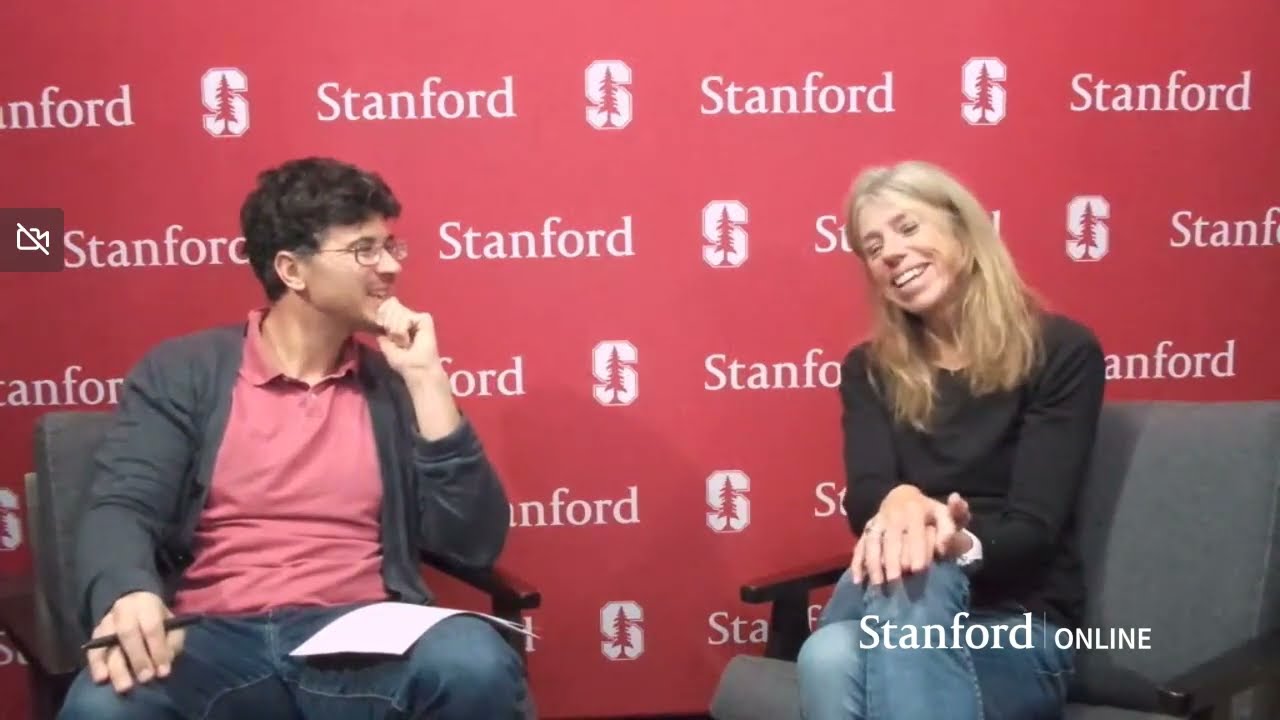


Professor Ellen Kuhl's Background and Research
- Professor Ellen Kuhl is a professor at Stanford's School of Engineering and focuses on improving human health through computational simulation.
- She is the founder of the Living Matter Lab, which uses physics-based tools embedded in machine learning to model living systems, such as the heart, arteries, lungs, muscles, and the brain.
- The lab collaborates with medical professionals and device designers to help develop therapies and understand the impact of forces on the heart.
Traditional Model Discovery
- In the past, researchers would select a model from a library of existing models that best fit their data points.
- This required expertise in mechanics and physics, limiting its use to experts in the field.
- The process of selecting a model was manual and time-consuming, relying on the researcher's knowledge and experience.
Automated Model Discovery
- The Living Matter Lab has developed a method to automate the model discovery process using neural networks.
- Neural networks are trained to select the best model based on input data, such as mechanical tests of tissues.
- The neural network output includes model parameters that represent stiffness, shear modulus, and other physical properties.
- The automated process removes the need for manual selection and allows non-experts to use these tools safely.
Constitutive Neural Networks
- Constitutive neural networks are a type of neural network that incorporates physics and engineering principles into the model discovery process.
- Physics parameters and constraints, such as symmetry and elastic behavior, are hardwired into the network.
- The resulting models are more interpretable, with parameters that have physical meanings.
Applications and Impact
- The automated model discovery process has applications beyond medical research, such as modeling the mechanical properties of artificial meat.
- In healthcare, it can be used to model the human brain and better understand conditions like Alzheimer's disease and traumatic brain injuries.
- It can aid in the design of medical devices, choosing the safest regions to perform surgery, and optimizing therapies for individual patients.
- The Living Matter Lab's code and resources for this technology are open-source and available on GitHub.
- The lab offers a graduate-level course in automated model discovery for professionals interested in learning more about the methods and applications.