

The Nature of Creativity
- Human brains do not create entirely new concepts from scratch; instead, they synthesize existing features and information into what feels like something new. 0s
- The process of creativity is fundamentally dependent on prior consumption, which includes the intake of thoughts, ideas, conversations, books, movies, and music. 42s
- While children are frequently encouraged to be creative and are enrolled in various extracurricular activities, they are rarely provided with a clear definition of what creativity actually entails. 1m35s
- A common misconception is that being creative is synonymous with being different. 1m55s
- Participation in a book club revealed that many interpretations and ideas regarding literature are often repetitive rather than unique or groundbreaking. 2m6s
Synthesis of Existing Ideas
- The book Steal Like an Artist by Austin Kleon challenges the traditional view of originality by suggesting that all creative work is built upon existing ideas. 2m48s
- Creativity does not occur in isolation; rather, it involves using an existing set of "colors and paints" to produce a unique individual expression. 3m15s
- Early experiences in creative writing classes highlighted the challenges of developing original work, as evidenced by a mentor's reaction to an initial writing piece. 3m35s
Personal Creative Development
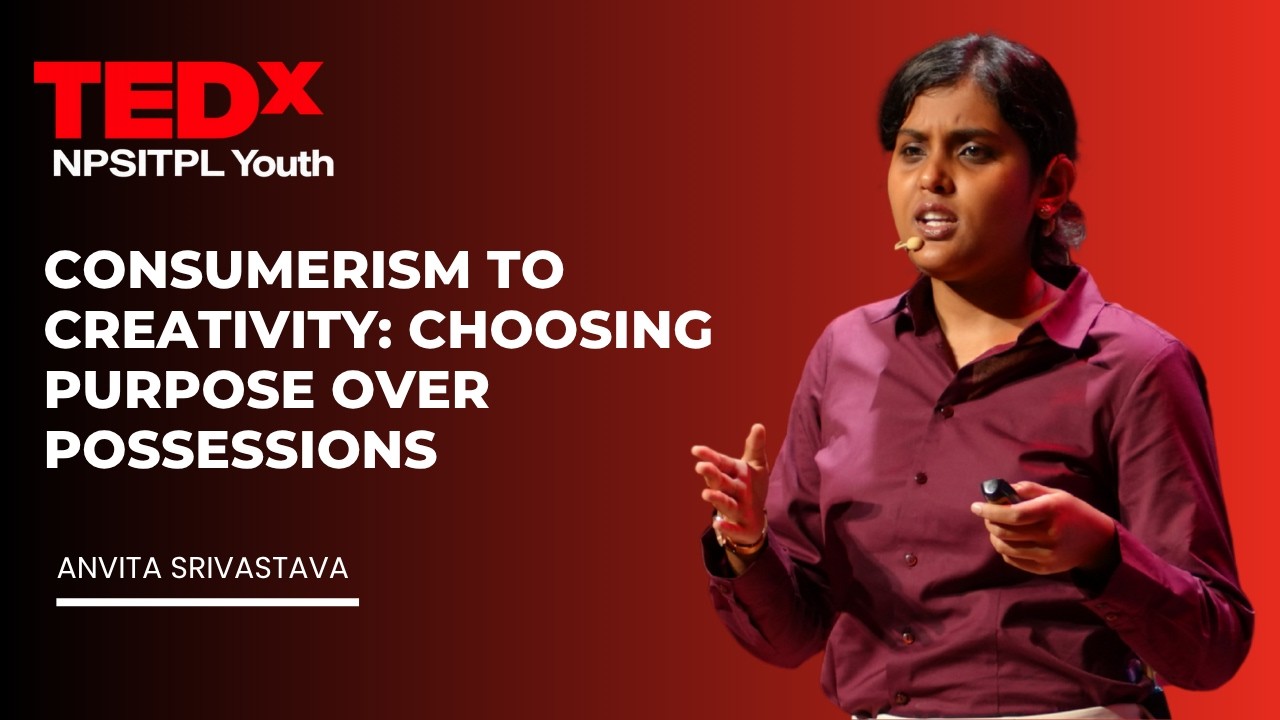
- Anvita Srivastava was initially advised to write in a colloquial, relatable style rather than using polished, complex language, a suggestion that initially caused confusion regarding the nature of creativity 0s.
- Following this advice, Anvita Srivastava was published in the anthology Pillars of Chills three years later and subsequently released a solo debut novel titled A Leafy Affair 42s.
- Creativity is defined not as novelty or originality, but as the act of presenting something deeply familiar through a new lens 1m5s.
- Ideas for creative work are not spontaneous; they are the result of subconsciously processing consumed experiences and transforming them into tangible forms 1m23s.
- The inspiration for A Leafy Affair, which personifies plants to explore human relationships, originated from observing the author's mother conversing with potted plants on a balcony 1m43s.
Broadening Creative Expression
- By consuming shared human experiences, individuals can find unique ways to express their own perspectives 2m15s.
- When speaking to young students, the importance of allowing oneself time and space to imagine was emphasized as a core component of the creative process 2m25s.
- All creative works, including literature and film, are inspired by existing themes and experiences 2m55s.
- The success of the film Dhurandhar is attributed to its storytelling, soundtrack, and structure, which allowed it to form a lasting connection with the audience despite utilizing familiar cinematic tropes 3m8s.
Creativity in Daily Life
- Creativity is a broad concept that extends beyond traditional arts like writing or music to include everyday actions, such as styling clothing or cooking a meal 3m45s.
- Creativity manifests in everyday actions, such as crafting a handmade gift due to budget constraints or developing personal analogies to understand academic concepts 0s.
- Writing can serve as a natural outlet for creativity rather than an additional task, and every individual possesses an internal creative artist that can be discovered with time 12s.
The Consumption and Creation Cycle
- While consumed content influences identity, the impact of that content depends on how an individual processes it after the initial consumption 42s.
- Individuals can develop unique perspectives by reflecting on books or movies rather than immediately relying on external reviews 55s.
- Increased consumption provides more opportunities to create, provided that individuals allow themselves the necessary time to process their thoughts and emotions after consuming media 1m10s.
- A perpetual cycle of consumption without creation can lead to a "zombie-like" state, whereas active thinking and creativity trigger an increased dopaminergic effect in the brain 1m55s.
- Creativity is a biological demand rather than just a learned behavior, and individuals are encouraged to shift from a cycle of "consume and repeat" to one of "consume, digest, create, and repeat" 2m15s.
Managing Information and Intent
- By the next morning, the average person will have consumed approximately 100 GB of data and generated 1,000 thoughts 2m45s.
- The fundamental challenge is not what is consumed, but rather which ideas and thoughts an individual chooses to claim and develop into their own creations 2m55s.
- People are categorized into two groups: those who only consume and those who consume for the purpose of creating 3m10s.