

Family Dynamics and Cultural Identity
- During the freshman year of high school, a household of five expanded to 11 people when an aunt, her husband, and their four children moved in after winning the visa lottery to become permanent residents of the United States 3s.
- The living arrangements were reorganized to accommodate the new arrivals, with the aunt and her family taking over bedrooms while the original residents adjusted their sleeping quarters 35s.
- While the parents provided financial support, the children in the household took on responsibilities including babysitting, teaching, and providing cultural education to the younger cousins 55s.
- Television programs, including Disney Channel shows and the film Black Panther, were used as tools to help the younger cousins connect with their heritage and see heroes who shared their background 1m8s.
- The younger cousins expressed no desire to return to Ghana, insisting they were Americans and refusing to speak the Ga language, despite having lived in Ghana previously 1m35s.
- The narrator, who had also lived in Ghana as a child to learn the language and culture, struggled to understand why the young cousins so quickly denounced their Ghanaian identities 1m55s.
Constructing Identity Through Personal Narratives
- A review of old school exercise books from the Ghanaian education system revealed a lack of history books, leading to the realization that the narrator did not learn about Ghanaian history, pain, resistance, or triumph while attending school in Ghana 2m25s.
- The narrator’s own Ghanaian identity was constructed through stories shared by parents, the Ghanaian community in Nashville, and by reading between the lines of history lessons in southern public schools 2m45s.
- Personal stories from the father, such as memories of the narrator’s childhood in Ghana and early experiences in the United States, served as a reminder of the narrator's identity 3m0s.
- Stories from the mother about her own childhood, including selling ice water to save money for food and experiences in boarding school, provided further connection to family history and the grandmother 3m25s.
- Personal narratives, such as those shared by family members about childhood experiences in Ghana, played a significant role in shaping a sense of identity and providing a nuanced understanding of Ghanaian culture 0s.
- Stories serve as a vital tool for self-expression and help individuals define their own identities while expanding their capacity to imagine realities beyond their immediate surroundings 35s.
The Danger of the Single Story
- In 2009, Nigerian author Chimamanda Ngozi Adichie introduced the concept of the "single story," which refers to a one-dimensional narrative that reduces a person, place, or experience to a singular circumstance, grandeur, or misfortune 1m5s.
- The danger of the single story lies in its tendency to create stereotypes that, while not entirely false, are incomplete because they omit the daily realities that ground ideas in truth 1m23s.
- A personal encounter with a young woman named Adwoa, who worked as a house help for an 89-year-old grandmother in Ghana, highlighted the tendency to limit others to their perceived roles 1m37s.
- Despite being the same age, there was an initial failure to conceptualize Adwoa outside of her role as a house help, until a conversation revealed her active ambitions to pursue university studies and a career in graphic design 1m55s.
- The experience with Adwoa demonstrated how repeatedly viewing people as one thing leads to the creation of a single story, a process reinforced by the lack of complexity in portrayals of Ghanaian and African life in Hollywood 2m25s.
- The primary danger is not just the existence of the single story, but the absence of diverse narratives that allow individuals to imagine themselves fully 2m38s.
Expanding African Representation in Media
- While high-profile films like Black Panther and The Woman King challenge stereotypes, there is a need for more everyday narratives, such as coming-of-age stories and fairy tales, that center on Black African characters 2m50s.
- Educational efforts, including anti-racist and college-level courses, have attempted to challenge the single story of Africa but have often failed to provide the necessary texture of diverse human experiences 3m15s.
- There is a desire to see African characters portrayed in a wide range of roles, including ambitious mothers, middle-aged fathers, teenagers, superheroes, and villains 3m30s.
- Beyond mere representation on screen, it is essential that African individuals have the agency to own and tell their own stories 3m45s.
Critique of Western Media and Cultural Production
- Many individuals who grew up watching Disney programs transitioned to streaming platforms like Netflix and Hulu as they aged 0s.
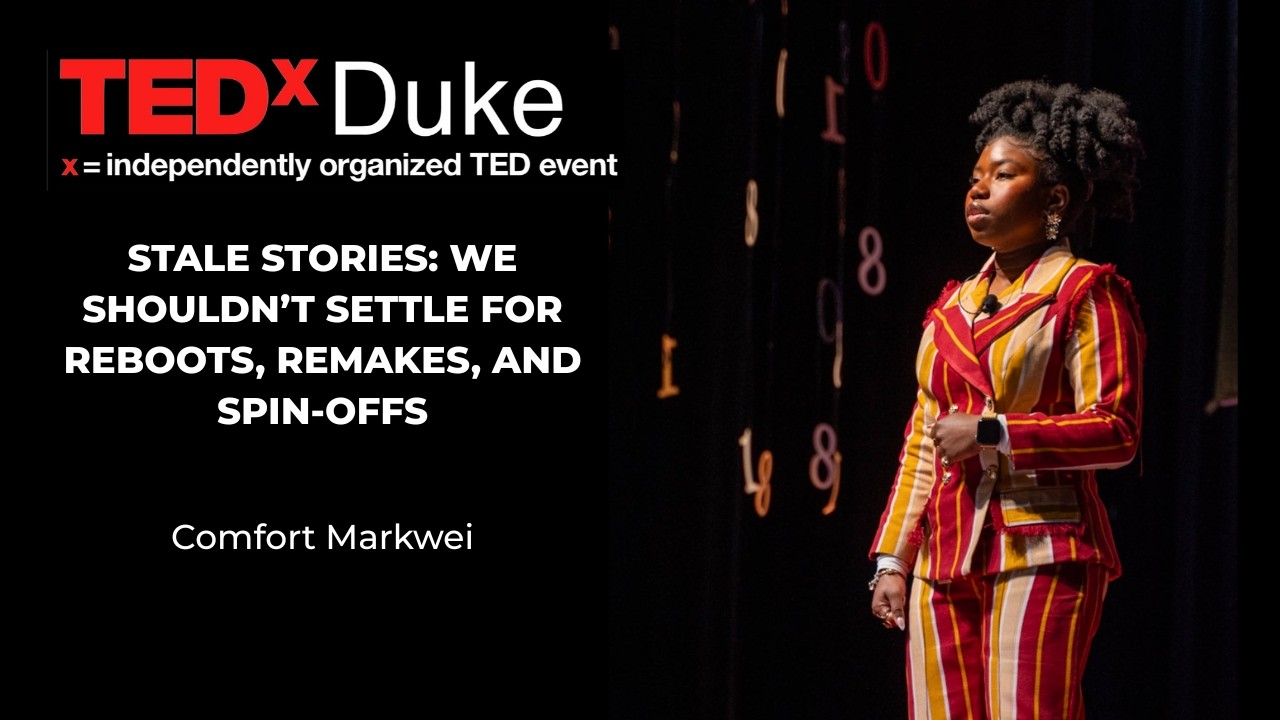
- The trend of Disney producing live-action remakes of animated films raises questions about whether the industry is running out of original stories to tell 18s.
- Replacing white characters with black and brown women in existing stories, such as the casting of Halle Bailey in The Little Mermaid, is viewed as fitting these women into roles not originally designed for them 32s.
- Africa possesses a wealth of historical figures, such as the Ashanti queen mother Yaa Asantewaa, who fought against British colonial rule and demonstrated strength and bravery 48s.
- Characters like Mulan, Moana, Tiana, and Belle are rooted in specific cultural tapestries, mythology, and folklore 1m15s.
- Disney and other major media companies are identified as cornerstones of cultural production that have yet to produce stories about African heroes situated within their own unique cultural contexts 1m25s.
Empowering Future Generations Through Authentic Storytelling
- African identities have been maintained through tradition, culture, and language despite facing global disdain, scorn, and prejudice 1m55s.
- Hollywood should recognize that stories about Africans in their own spaces have commercial potential, as evidenced by the financial success of films like The Woman King and Black Panther 2m12s.
- The call for increased African representation in media is not a request for further extraction from the continent; Africans must serve as the primary authorities and authors of their own narratives 2m35s.
- Younger generations are increasingly consuming content on platforms like YouTube and Xbox, and they should be encouraged to view their African heritage as a source of power, creativity, and brilliance rather than a tragedy to overcome 2m55s.
- To foster pride in the next generation, the media industry must move beyond diversifying old stories and instead prioritize telling new, original stories that expand empathy 3m25s.
- The goal of representation is to ensure that younger generations see a world that recognizes and accepts them 0s.
- Seeing oneself fully represented in media serves as a catalyst for individuals to begin imagining their own potential more completely 5s.
- The futures that individuals are capable of imagining directly influence the futures they are able to construct 10s.