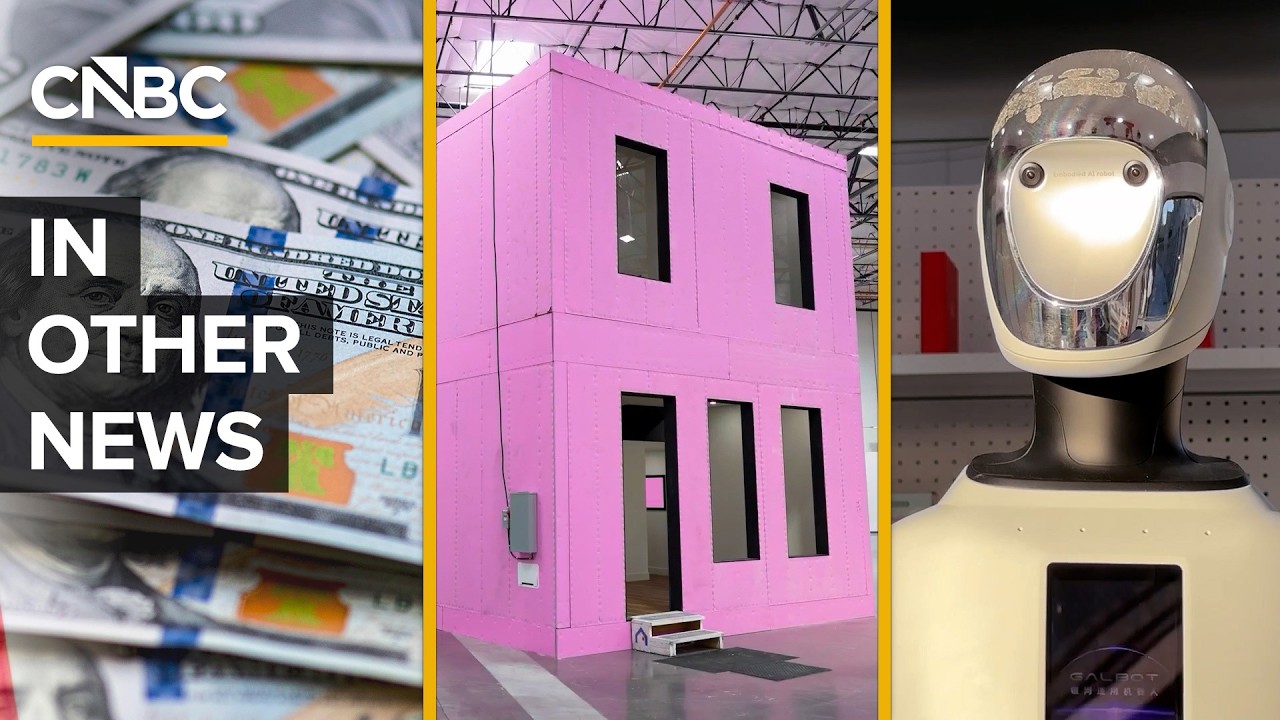


Economic Sentiment and Inflation in the US
- Americans have not regained their economic confidence after the pandemic, with a consumer sentiment survey by the University of Michigan falling to record lows, despite the economy continuing to grow and consumers keeping up their spending, as individuals have experienced a decade's worth of inflation in the past five years 10s.
- The gap between consumer sentiment and traditional economic indicators is largely due to the effects of higher prices, with inflation still above the Fed's target, and consumers comparing current prices to those before the pandemic, leading to a sour outlook 2m6s.
Japanese Home Builders' Expansion into the US Market
- Japanese home builders are on a US buying spree, having purchased four builders so far this year and 23 in the last five years, due to the attractive US housing demographics, with high demand and low supply, and the Japanese companies' lower cost of capital and greater efficiency in building 4m30s.
- Japanese companies now own 33 home builders operating in the US, with close to 6% of the US market share, and the biggest deal this year being the $4.5 billion purchase of Tri Pointe Homes by Sumitomo Forestry, which aims to supply 23,000 homes annually in the US by 2030 6m10s.
- The Japanese home building market is not growing, with almost no annual immigration and unfavorable demographics, leading Japanese builders to look to grow outside of their market, and taking advantage of the US demographics, which are favorable for home building, with the US being short about 4 million homes 8m20s.
Japanese Home Builders' Strategic Advantages and Market Opportunities
- The Japanese homebuilding market is thriving, with many builders having a significant amount of cash and looking to invest in other markets, and the US market is considered ripe for purchase due to its current struggles with higher interest rates and overall uncertainty, with publicly traded builders trading at around one times book value, which is a discount from the average valuation of 1.4 10s.
- The Japanese homebuilders have an advantage in terms of efficiency and production, as they tend to build every house twice, first in a digital environment, to reduce waste and cost, and this approach is expected to make a big difference in terms of affordability in the US market 1m30s.
Challenges for US Startups Competing with Japanese Builders
- Some US startups, such as Boxable, are trying to compete with the Japanese homebuilders by using factory-built homes and automated production lines, but they face challenges such as state and local zoning and jurisdictional issues 2m6s.
- Boxable's founder and co-CEO, Paolo Taramani, admits that he was naive when he started the company and underestimated the hurdles posed by national building codes and zoning regulations 3m20s.
- Japan is heavily invested in factory-built and robot-enabled construction, but this methodology has yet to be deployed in the US companies they have acquired, and there may be a culture clash between the different management styles 4m30s.
Robotics and AI in China's Humanoid Robot School
- In China, a humanoid robot school is training robots to work in various scenarios, such as factory lines, housekeeping, and metal repair, with instructors like Foodie Law teaching the robots to sort items and perform tasks using cameras, controllers, and motion capture 6m10s.
- The robots are taught skills through repetition, with the instructors guiding them through tasks multiple times, and the robots are able to learn and perform tasks on their own after generating data from the instructors' movements 7m40s.
- The robotic hands are trained with motion tracking and sensors, and are able to pick up small objects, such as eggs, and lift strings, with the creators aiming to advance the capabilities of the robots 9m20s.
AI-Powered Robots in Service Industries and Their Purpose
- AI-powered robots are being tested in various service industry roles, including as restaurant chefs, bartenders, waiters, and bodega owners, with the current requirement of human assistance, but their proponents claim it is only a matter of time before they can perform these tasks independently 10s.
- The primary objective of utilizing these robots is to take on tasks that pose a danger to humans or involve repetitive work that people are unwilling or afraid to do, according to the proponents of this technology 10s.
- The developers of these robots state that they have no intention of replacing humans in any field, emphasizing their goal of using robots to perform specific tasks rather than displacing human workers 10s.