
Founding and Early Product Development
- Raising capital against a monopolist can be highly advantageous because, once investors believe in the potential for success, the lack of competition in the market creates significant upside potential 0s.
- SeatGeek’s initial strategy focused on creating a superior product to address a lack of industry innovation that had persisted for over a decade 15s.
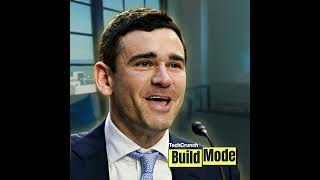
- Co-founded by Jack Gressinger and Russ D'Souza, SeatGeek launched at the TechCrunch 50 event in 2009 25s.
- Over a 17-year period, the company raised nearly $400 million, opted against a planned IPO, and established itself as a leading ticketing platform while remaining independent and private 35s.
- At the time of the 2009 launch, the founders operated with the expectation that most startups fail, focusing on building a product that was useful and iterating from there to expand the company's scope 1m25s.
Evolution of the SeatGeek Platform
- The original iteration of SeatGeek was a web application designed to forecast ticket prices on the secondary market, advising users on whether to buy tickets immediately or wait 2m6s.
- The founders determined that the initial price-forecasting model was not compelling because it often advised users not to purchase, which was counterproductive for an e-commerce platform 2m35s.
- The company shifted its focus to helping users identify the best value among thousands of available tickets, leading to the creation of a feature called "deal score" 2m50s.
- The "deal score" feature evaluated tickets based on seat location and price to surface the best deals for consumers, addressing the dichotomy between the high value of live event experiences and the difficulty of finding affordable tickets 3m5s.
Market Strategy and Operational Shifts
- The process of purchasing tickets for live events has historically been considered one of the most negative consumer experiences on the internet. 0s
- SeatGeek identified a tension between the positive nature of live events and the poor quality of the ticket-buying process, leading the company to focus on transparency and data to help users find better deals. 0s
- Existing industry incumbents often maintained broken user experiences intentionally, as the lack of transparency and opacity allowed them to generate more revenue. 35s
- SeatGeek initially operated as a ticket meta-search engine rather than a merchant of record, which allowed the company to focus exclusively on building a high-quality front-end user experience without the complexities of managing a two-sided marketplace. 35s
- By avoiding the early operational burdens of a marketplace—such as fraud prevention, credit card processing, customer service, and chargebacks—the company was able to prioritize technological improvements to the search experience. 35s
- The company eventually transitioned into running a marketplace, which introduced significantly more operational complexity. 35s
Strategic Expansions and Business Growth
- SeatGeek characterizes its major business changes as expansions rather than pivots, as each step built upon the foundation of the previous model. 1m35s
- Key strategic expansions included moving from meta-search to a direct marketplace, prioritizing a mobile-first approach, and launching a primary ticketing platform to compete with Ticketmaster for major U.S. venues. 1m35s
- Investors were supportive of these expansions because they viewed them as logical steps in increasing the company's potential, rather than radical shifts. 1m35s
- The company’s ability to compete with major incumbents like Ticketmaster was contingent on first establishing a large user base that already relied on and valued the SeatGeek buying experience. 1m35s
Funding and Pandemic Resilience
- SeatGeek has raised nearly $400 million in capital across multiple funding rounds over several years. 2m25s
- Capital raises are not viewed as vanity metrics, but rather as necessary funding for product development and user acquisition, with the preference being to raise as little as possible 0s.
- The most difficult funding round occurred in 2020, as the global pandemic created significant uncertainty regarding the future of the live entertainment industry 25s.
- Investors viewed the 2020 funding round as a referendum on the future of live events, with the deal being contingent on the belief that the world would normalize and live entertainment would return 42s.
- Seth Levine at Foundry Group led the 2020 funding round, based on the conviction that the world would recover and that SeatGeek possessed a differentiated product capable of succeeding 1m15s.
- The live entertainment industry was effectively out of commission for approximately one year, with a trickle of activity returning by the end of 2020 and accelerating in 2021 1m45s.
- During the pandemic, leadership focused on maintaining transparency with the team regarding knowns and unknowns, while some employees monitored epidemiological data to help inform the company's outlook 2m25s.
- The lack of transactional activity during the pandemic allowed the company to refactor systems and build new products more rapidly than would have been possible during normal operations, when the need to avoid breaking existing services acted as a constraint 2m55s.
The SPAC Listing Process and Cancellation
- In 2021, the company announced plans to go public through a SPAC merger 3m35s.
- In 2021, SeatGeek pursued a public listing via a Special Purpose Acquisition Company (SPAC) because the market viewed SPACs as a viable alternative to traditional IPOs, and the company was already considering a public transition 0s.
- SeatGeek signed a deal with a SPAC named RedBall and progressed nearly to the completion of the process before deciding to cancel the agreement at the last minute 25s.
- The decision to terminate the deal was mutual between SeatGeek and RedBall, as both parties recognized that the SPAC market was deteriorating rapidly 42s.
- Had the company proceeded with the SPAC, it likely would have faced significant challenges, as many companies that went public via SPACs during that period struggled and were negatively stigmatized by the market 1m5s.
- The process of preparing for a SPAC listing involved rigorous compliance, controls, and regulatory requirements similar to those of a traditional IPO 1m35s.
- SeatGeek was fully prepared to list on the New York Stock Exchange and had flown the entire company in for a bell-ringing ceremony before the decision was made to cancel the listing 1m55s.
- The disappointment of canceling the listing was mitigated by the successful raising of a Series E funding round, which provided the company with a clear financial pathway 2m15s.
- Despite strong internal company performance, the decision to pull the deal was driven by the realization that the broader SPAC market was trending downward, which would have made for a difficult public debut 2m30s.
Competing Against Industry Monopolies
- SeatGeek eventually entered into direct competition with Ticketmaster, a move that required navigating investor concerns regarding the presence of a dominant incumbent in the ticketing industry 3m5s.
- During the Series D funding round around 2017, the company navigated investor concerns regarding competition with a monopolist by highlighting the significant market upside if the company could successfully capture the unoccupied space 0s.
- The strategy for competing against a monopolist relied on the premise that the company could build a superior product in an industry that had seen little innovation for over a decade 0s.
- A primary challenge in gaining market share was overcoming the inertia and psychological fear customers felt regarding switching from the established status quo 0s.
- Once the company secured initial proof points and early clients, investors were able to recognize the potential for growth if the company continued to improve its product 0s.
- A key factor in convincing both investors and prospective clients was having existing, passionate clients who were willing to advocate for the company and meet with potential partners 42s.
- Because the company serves a relatively small number of large-scale clients rather than a high volume of small-scale users, it is easier to cultivate deep, partnership-based relationships that extend beyond standard client interactions 42s.
Reflections on Hiring and Team Culture
- Reflecting on the company's history, a significant regret is not being more intentional about team building during the early stages, as the team is as critical to success as the product itself 1m25s.
- Early hiring mistakes included a lack of rigor and scrutiny during the recruitment process 1m45s.
- A specific error in judgment was the assumption that a poor hiring decision could be easily rectified by parting ways with the employee, failing to account for the long-term negative impact on existing code and team morale 1m45s.
- Early-stage founders must recognize that the first five hires significantly influence the company's culture for hundreds of future employees. 0s
- Hiring individuals who lack a dedicated work ethic early on can create substantial challenges for a founder, necessitating potential personnel churn to correct the company's trajectory. 0s
Future Outlook and Artificial Intelligence
- Maintaining a long-term commitment to a company over 17 years is driven by a genuine passion for the work, the team, and the belief that the live entertainment market in the United States has significant room for growth through better technology. 42s
- The year 2026 is viewed as a major reset for the live entertainment industry, influenced by both regulatory changes and the integration of artificial intelligence. 42s
- SeatGeek positions itself as a technology company that happens to sell tickets, utilizing a flexible foundation that allows for the easier adoption of AI compared to less technology-centric competitors. 42s
- The company aims to fundamentally transform the experience of buying and selling tickets within the next few years, intending to define how AI is applied to live entertainment. 42s
- SeatGeek operates two distinct product segments: a consumer-facing platform for fans and a complex enterprise platform used by major venues to manage ticket sales and business operations. 2m6s
- AI offers immediate, practical improvements for the venue-facing product, such as automating the processing of complex ticketing letters, which currently can take a week to encode but could be completed in five minutes. 2m6s
- While AI applications for the consumer side of the marketplace are less straightforward, they are considered highly interesting because current e-commerce and marketplace user flows have remained largely unchanged over the last four years despite the capabilities of large language models. 2m6s
Industry Challenges and Competitive Differentiation
- A recent jury verdict has brought structural problems within the ticketing industry into the public eye, marking a significant shift from the industry landscape of three years ago. 15s
- Despite the verdict, challenges remain, including high costs for fans, limited choices for venues, and a lack of sufficient innovation. 15s
- The jury verdict serves to validate long-standing concerns previously expressed privately by clients and venues. 15s
- SeatGeek aims to achieve success based on its own product development rather than relying on regulatory or judicial outcomes. 15s
- The company strives to create a product that is significantly superior to competitors, with the goal of making the choice to use SeatGeek an obvious decision for clients. 15s
Enhancing the In-Venue Experience
- There is a significant, untapped opportunity to improve the in-venue experience for attendees at events like concerts or sports games. 1m5s
- SeatGeek is focusing on wayfinding technology to help attendees navigate venues, such as identifying shorter concession lines, locating restrooms, finding the correct entrance, or exploring seat upgrade options. 1m5s
- Artificial intelligence could enhance the in-venue experience by acting as an interactive companion for users during events. 1m5s