
Work Culture and Company Philosophy
- The workplace culture at Corgi is extremely intense, with employees expected to be available 24/7, and those who have weekends off, specifically Saturdays and Sundays, are not suited for the company, as the CEO Nico does not sleep much, averaging 3 to 4 hours per night, and even has a mattress in the office 10s.
- Nico values the potential for asymmetric upside and infinite returns in business, using a baseball analogy to illustrate that taking risks and aiming for big wins can lead to enormous success, even if it means facing setbacks and failures along the way 2m6s.
- The CEO believes that fear of losing should not be a motivator, and instead, one should focus on the thrill of winning and the potential for huge victories, as this mindset is essential for achieving great things in business 2m6s.
- Nico is known for being extremely aggressive in his approach to business, setting ambitious goals, and taking bold risks, with one of his team members, Josh Young, describing him as the most aggressive person he has ever met 4m30s.
- When reflecting on past decisions, Nico thinks that attending university was a mistake, as it did not provide him with the real-world experience and humility that he needed to succeed, and he believes that one should be willing to take risks and face challenges head-on in order to achieve greatness 6m40s.
Education, Risk, and Legitimacy in Business
- The idea that university education may be less valuable today than it once was is also discussed, with Nico implying that hands-on experience and a willingness to take risks may be more important than formal education for achieving success in business 8m20s.
- Startups face a crisis of legitimacy, where there is no inherent loyalty or inherited structure, and employees can easily leave to work for another company, much like the non-hereditary monarchy of the Roman Empire, where emperors could be replaced if they were deemed unfit 10s.
- The concept of tier one investors is often used to borrow legitimacy, and universities also provide credentials that are meant to carry some legitimacy, but it may not be as effective as intended, with some arguing that the credential is too obvious and does not convey the desired level of legitimacy 42s.
- Mark Andre's idea that a company invested in by a fund is loaning them the brand and validity until the company is big enough to transition and loan the brand to others is relevant, as it highlights the importance of legitimacy and brand reputation 2m6s.
- The perception that capital is fungible is being challenged, with the idea that the value added by investors and the tier of investors can impact a company's reputation and success, as seen in the way companies are often described by their investors, such as being a "tier one company" or a "YC company" 4m10s.
- The idea that a company's actions and decisions are influenced by their investors is not always accurate, as investors often have limited control over the company's operations and decisions, and the company's success is ultimately dependent on the team's competence and decision-making 6m20s.
Work Ethic and Company Expectations
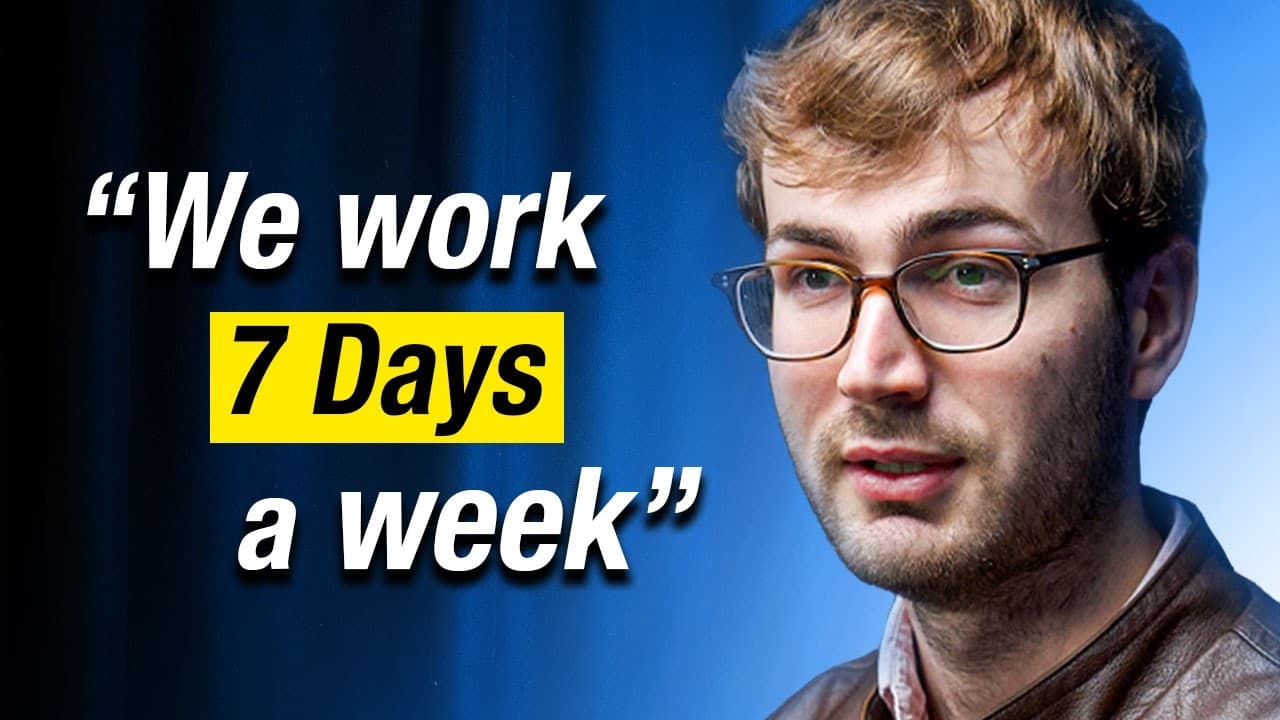
- The importance of work ethic and dedication is highlighted, with the idea that working 7 days a week can be necessary to achieve big goals and scale up ambition, as the amount of work that can be done in 5 days can be increased by working 6 or 7 days a week 10m30s.
- The concept of "do you want to win or do you want to be liked" is mentioned, suggesting that the desire to win and achieve success may require making unpopular decisions and putting in extra effort, rather than seeking to be liked or popular 8m40s.
- To achieve the biggest possible things in a startup, it is essential to have a sense of community and camaraderie with coworkers, and to go all out, rather than doing things halfway, which is why having a standard five-day workweek may not be sufficient 10s.
- Rest is not entirely dismissed, but having a day off every week, such as on Saturdays and Sundays, is not acceptable at Corgi, and if someone's days off happen to be on these days every week, they will not have a place at the company 2m6s.
- The company's intense work culture attracts the right type of person who wants to dream big and do something important with their lives, and repels the wrong type of person, which is why the company can be upfront about its expectations during the hiring process 4m30s.
Hiring Process and Company Fit
- Corgi has a work trial process where potential employees work on mock projects for one or several days, including weekends, to give them an idea of the company's intensity and expectations, which helps to scare off those who are not a good fit 6m15s.
- During work trials, soft skills are more important than hard skills, and what impresses the most is someone who is all-in, wants to do the maximum, and is willing to solve hard problems and do hard things 8m45s.
- When interviewing people, asking them what matters to them and why can be a revealing question, as it tends to elicit honest answers, and while a response focused solely on making money may be alarming, it is not necessarily a deal-breaker 12m10s.
Motivation and Company Vision
- The motivation for building a successful company is not solely driven by money, as being extremely money-motivated can lead to short-term gains but not necessarily the most profitable outcomes in the long run 10s.
- The goal is to build the most important company in the world, solve the hardest problems, and make a significant positive difference, with the desire to win and add value being a key driving force 2m6s.
- To achieve this goal, sacrifices are made, including personal comfort and time, with the founder literally living in the office, having a mattress there, and not spending much time outside of work 4m42s.
Founder's Lifestyle and Sacrifices
- The founder believes that symbolism matters, and leading by example is crucial, which is why they choose to work extremely hard and make personal sacrifices, rather than just expecting others to do so 6m15s.
- The founder's work schedule is intense, with only a few hours of sleep per night, typically between 3 to 4 hours, and they have experienced health scares, including psoriasis and heart palpitations, due to their all-in approach 8m30s.
- Despite the risks to their health, the founder prioritizes their work and the success of their company, measuring their lifespan in victories rather than years, and would rather have their company, Corgi, be a trillion-dollar success even if it means a shorter lifespan 10m50s.
Startup Culture and Hyper-Growth
- The idea of wanting something so badly that one is willing to sacrifice years of their life for it is compared to a study where Olympians would rather live 10 years less and have a gold medal, with 98% of them saying yes unwaveringly 10s.
- Brian Johnson's perspective on hyper-growth startups is mentioned, where he believes that if a startup is not working weekends, they are essentially "quiet quitting", implying that a high level of dedication and effort is required for success 1m42s.
Operational Decisions and Company Infrastructure
- The importance of having food in the office is discussed, as it saves time and reduces cognitive load for employees, allowing them to focus on high-leverage tasks, and having a chef was initially considered a way to achieve this, but it is no longer the case 4m6s.
- The decision to no longer have a chef is attributed to the desire to focus energy on things that directly or indirectly lead to growth, rather than taking on additional logistical burdens 6m42s.
- The company's expansion into the retail space, specifically a cafe, is mentioned, which was initially forced upon them due to zoning regulations when they rented their building in San Francisco, but it is now seen as an opportunity to address the lack of late-night dining options in the financial district 9m10s.
- The lack of late-night dining options in San Francisco, particularly in the financial district, is highlighted as a problem, with most restaurants and cafes closing early, and the company's cafe expansion is seen as a way to fill this gap and support the growth mindset of local startups 12m6s.
Cafe Expansion and Community Building
- The issue of not having many places for serious technology enthusiasts to come together and work hard in San Francisco led to the impromptu opening of a 24/7 cafe, which caught on more than expected and is now always full, with people signing term sheets and getting deals done 10s.
- The cafe was started with an initial investment of under $100,000, and despite losing money, it has become a hub for founders, with over 20 people having submitted their YC app or signed term sheets there, and the idea of Corgi Ventures operating from 3:00 a.m. to 5:00 a.m. has emerged 2m6s.
- The cafe's success is not measured by its profitability, as it loses money due to sponsored drinks, but it has become a valuable space for founders to work and connect, with sponsors like Brexo and Deal providing support 4m6s.
- The expansion of the cafe to London was a strategic decision, driven by the exceptional talent pool in the city, both British and European, and the ease of attracting people to move to London, making it an ideal location for a tech hub, especially given the visa situation in the United States 10m0s.
Hiring and Compensation Strategy
- Hiring in London is slightly cheaper than in other major cities, but the company prioritizes offering generous equity to its employees, understanding that they are asking for a significant commitment, including working 7 days a week 14m0s.
- The company's investors initially criticized the idea of opening a cafe, seeing it as a distraction, but the founder believes it has become a valuable asset, and the company is now slightly profitable, with plans to continue expanding and supporting the tech community 16m0s.
- The company has a unique approach to equity, where employees are given more equity based on their performance after they have started working, which can be seen as accelerators on milestones hit 10s.
- Founders angel investing is viewed as a distraction and not core to winning, which is why some people choose not to participate in it 2m6s.
Location and Company Growth Strategy
- The decision not to sell secondaries is based on the belief that the company's equity is going up and it is a valuable asset to hold onto, allowing for meaningful influence over the company's direction 2m6s.
- San Francisco is considered a special place for building a company, particularly for those in the US who want to do something big with their life and are interested in technology and programming 4m30s.
- The city's unique quality is that it attracts like-minded people who are passionate about technology and startups, making it an ideal location for finding talent and building a company 4m30s.
- Other cities, such as New York and Miami, are not considered ideal for building a startup company, as they may distract from the focus on the business, with the exception of cities like Chicago and Dallas, which have great potential 6m0s.
- London is considered a great city for startups outside of the US, but it has its own set of challenges, such as the abundance of pubs that can be a distraction 8m0s.
Reflection and Learning from Experience
- Reflecting on past decisions, it is acknowledged that there are mistakes that have been made, but the focus is on moving forward rather than dwelling on what could have been done differently 10m0s.
- The approach to learning from victories rather than dwelling on mistakes is emphasized, as there is more to learn from successes, and emulating the things that have worked well can be beneficial 10s.
- Studying success and learning from the greats, including historical figures like Alexander the Great and Napoleon, can be informative for those who want to change the world and do something important 42s.
Company Culture and Team Management
- The culture of the company, Corgi, is described as a "culture of winning," which is the core value that drives the team 2m6s.
- The team at Corgi currently consists of just over 100 people, and it is believed that the intensity of the company culture can be maintained even when the team grows to 1,000 people 4m6s.
- The company's approach to hiring and team management involves accepting that different roles may require different work styles, and hiring more people to achieve the same work output if necessary, which is seen as a return on investment calculation 5m30s.
- The company's work culture is not for everyone, and it is acknowledged that it may be exclusionary, but it is argued that Corgi is a great place to work for those who want a sense of community and camaraderie, and that life is about trade-offs and sacrifices 7m20s.
Startup Legitimacy and Investor Influence
- The company's founder does not care about the backlash they receive for their views on work culture, including death threats and negative messages, and believes that it is not a concern 10m10s.
- The crisis of legitimacy is a significant challenge for startups, particularly for young entrepreneurs who lack external validation and credibility, which can be difficult to establish 10s.
- A company can be considered legitimate when investing in it is a safe choice, such as buying IBM, and not getting fired for doing so, with this legitimacy being a gradual process that involves gaining recognition from institutional investors and the government 2m6s.
Employee Retention and Compensation
- Lessons on paying people include the idea that those who ask for more money tend to be good, while those who ask for more title tend to be bad, and that low cash compensation can be beneficial, with equity being a better motivator, especially for high-performing employees 4m42s.
- To retain good employees, it is essential to provide them with the opportunity to solve big problems and offer a high return on investment, such as through equity, as this will motivate them to continue working hard and prevent them from seeking other opportunities 6m15s.
- When it comes to managing a team, it is crucial to get rid of bad employees quickly, even if it creates noise, and to evaluate mediocre employees by asking whether you would hire them again, with the goal of building a strong team that is motivated to solve significant problems 8m10s.
Fundraising and Investor Relations
- Fundraising is a critical aspect of a CEO's job, and having raised $1.3 billion from TCV, the key lesson is that revenue scaling very fast is essential, although the specifics of this lesson are not fully elaborated upon in the provided text 10m30s.
- The individual has gained experience in fundraising after having to do it for years and has learned from their early pitches, which were not very good, with their first pitch being to First Round Capital, where they were nervous and unprepared 10s.
- The first pitch was for $5 million, and they had 24 hours to secure the funding, with the pitch taking place on a Friday and the money needing to be transferred by Monday, which added to the pressure and nervousness 42s.
- The individual recalls that their early pitches were not good, and they were afraid to share certain information, such as the name of the insurance carrier, with potential investors, which made the pitches unconvincing 2m6s.
- The best VC meetings are those where the investor is growth-minded or product-minded, and the conversation focuses on the company's vision and strategy, rather than just the financials, which allows for a more meaningful connection 4m10s.
- The individual has had some bad experiences with VC meetings, including investors being disrespectful, eating, or flossing their teeth during the meeting, which can be distracting and unprofessional 6m20s.
- The advice given to founders regarding price is to never take the highest price, but instead, go with the second or third highest price, as this can help avoid potential issues and maintain a good relationship with investors 8m30s.
- The individual's approach to negotiating price is to see where the market is at and then stick with a reasonable price, rather than engaging in lengthy negotiations, which can help streamline the fundraising process 10m10s.
- The time it takes to raise rounds is typically a couple of days at most, and being in the market for a long time can be a bad thing, as it may indicate that the company is struggling to secure funding 12m0s.
- The process of fundraising can be distracting for companies, as it takes time and effort away from selling goods and services, and optimizing for selling equity instead can be detrimental to the company's overall health 10s.
- Venture capitalists often claim they want to get to know the companies they invest in, but in reality, they rarely put in the effort to do so, and instead, companies may receive brief responses, such as "thanks for your email, we're heads down" 42s.
- A key aspect of successful companies is their ability to get deals done, and this applies to venture capital firms as well, as they need to be able to close deals efficiently to achieve their goals 2m6s.
- Some deals are made in times of crisis, and these can be particularly notable, as they demonstrate the venture capital firm's ability to take risks and provide support when it's needed most 4m10s.
- The ability to get deals done quickly is an important factor in choosing a venture capital firm to work with, as it can be a significant advantage for companies looking to raise funds 6m20s.
- Pricing a company cheaply can be a strategy to attract investors and get deals done quickly, but it's not without risks, and companies need to consider the potential implications for their existing investors 8m30s.
- The decision to price a company cheaply is a deliberate choice, and it's based on the understanding that it's possible to raise funds at a higher valuation, but choosing not to do so may be seen as a way to prioritize the company's growth and goals 10m40s.
Company Valuation and Market Dynamics
- Private markets are considered a vehicle for valuing growth, whereas public markets are seen as a vehicle for valuing cash flow, with some companies having good margins but not growing, and this difference in valuation methods can affect a company's worth if it were to be public, 10s.
- The concept of company valuation is not solely based on future free cash flow, as brand and identity also hold value, similar to how a Rolex watch is preferred over a Chinese copy despite both telling the time, 2m6s.
Future Vision and Technological Impact
- With unlimited money, efforts would be focused on improving regulated financial institutions by reducing waste, fees, and increasing efficiency, and also exploring other areas such as medicine and mental health where technology can make a significant impact, 4m30s.
- The role of AI in the future is expected to make sales and marketing more important, as having a good engineering and product team is no longer enough to guarantee success, and the ability to sell and market a product will become crucial, 8m10s.
- Traditional B2B marketing is considered ineffective, and there is a need for B2B to learn from consumer marketing, with conferences being seen as an outdated and unproductive method, 10m40s.
Adaptability and Learning from Experience
- Consumer companies have perfected marketing, while B2B companies have perfected sales, and as a result, marketing tends to be an afterthought in B2B companies 10s.
- The importance of changing one's mind is highlighted, and it is mentioned that the value of experience has grown, particularly in recognizing the knowledge and nuances that people with long-term experience possess, which can be a significant asset 2m6s.
- There is a problem in capturing the knowledge of older generations and transferring it into computers that can think and talk, which could potentially unlock trillions of dollars 2m6s.
Leadership and Governance
- The concept of a board is viewed as somewhat unnecessary, with a preference for executive decision-making, as it allows for quicker and more decisive action, similar to the approach taken by leaders like Elon Musk and Mark Zuckerberg 4m42s.
- The board is seen as a check the box, providing a level of accountability, but ultimately, management's ethics and intentions are what truly matter 6m15s.
AI and Market Competition
- When given the choice between buying OpenAI or Anthropic at the same price, the preference is for OpenAI due to its origins and pure approach to AI research, despite Anthropic's current outperformance 8m40s.
- The product offered by Anthropic is considered better, and companies like OpenAI need to secure their position, with the ease of switching between products not being a significant concern, as labs often try to lock in contracts with discounts on tokens 10s.
- There are only a few truly good companies that strive to win and be historically significant, with most companies being average and part of the mediocre masses, and the cultural character of good companies is not appreciated enough 2m6s.
CEO Influence and Venture Capital Responsibility
- The philosophy behind the management teams of companies like Andreal and Anthropic is not well understood, and they have distinct differences, with both having the potential to be good companies 2m6s.
- There are underappreciated CEOs, but the style of a CEO is unique to themselves, and venture funds have the potential to influence the startup ecosystem by setting incentives that drive behavior, and they should take a more active stance in aligning their deployed capital with the changes they want to see in the world 4m30s.
- The dramatic increase in fraud, especially around AR, can be attributed to various factors, including credentialism and the quest for legitimacy, with VCs being partially responsible, but venture investors have limited control over the management team's actions after investing in a company 6m40s.
- The emphasis on rapid growth, such as going from zero to 100 million in a short amount of time, can contribute to the prevalence of fraud, and some venture investors have encouraged company founders to take on significant personal liability, including criminal liability, in the past 8m20s.
- Venture investors may bear more responsibility when companies they invest in turn out to be fraudulent, as people who commit fraud are skilled at disguising it, especially when investment rounds are moving quickly 10s.
YC Experience and Future Outlook
- The first believer in Corgi was Jared Friedman from Y Combinator (YC), who remained a supporter even when others were doubting the company 1m5s.
- The individual would participate in YC again, indicating a positive experience with the program 1m30s.
- Looking forward to the next 10 years, there is excitement about the potential for technology to solve many problems, possibly creating new industries and outcomes, particularly in areas like biology where venture investing has not been as effective 2m6s.
- The belief is that there will be more significant technological advancements, similar to the emergence of large language models like ChatGPT 3.5, which will have a substantial impact and create new opportunities 2m45s.