

Market Dynamics and Different Valuations of Money
- Different individuals place varying values on money, impacting market dynamics.
- The traditional economic model assumes equal valuation of money, which may not always hold true.
- Variations in marginal values for money can lead to inefficiencies and unfairness in the free market.
- Non-market allocation mechanisms, such as rationing or lotteries, may be more suitable in certain cases.
Examples of Market Failures
- The Taylor Swift concert ticket example demonstrates the market's inability to allocate tickets to those who value them the most.
- Ride-sharing companies illustrate cross-side inequality (between drivers and riders) and within-side inequality (among riders), affecting market dynamics.
Policies for Efficiency and Fairness
- Policies that consider different marginal values for money can enhance efficiency and fairness.
- Distorting markets to achieve social goals, such as reducing inequality, can be economically beneficial.
- Public transportation pricing can be adjusted to ensure accessibility for all socioeconomic groups.
- Private information about individual preferences should be considered to avoid market distortions.
Addressing Inequality through Market Distortions
- Inequality requires a comprehensive societal approach, but market distortions can provide partial solutions.
- Policymakers and regulators can be persuaded to adopt fairer market policies.
- Data and analysis can aid in identifying optimal policies.
The Speaker's Motivation and Research
- The speaker's interest in economics stems from a love of mathematics, fascination with human behavior, and a desire to address inequality.
- The speaker and co-authors explored interpersonal utility comparison, comparing well-being across individuals.
- Despite potential criticism, they pursued this innovative research topic.
- The speaker's friend predicted a 5% chance of groundbreaking impact and a 95% chance of ridicule, but the speaker embraced the risk for intellectual fulfillment.
Podcast Information
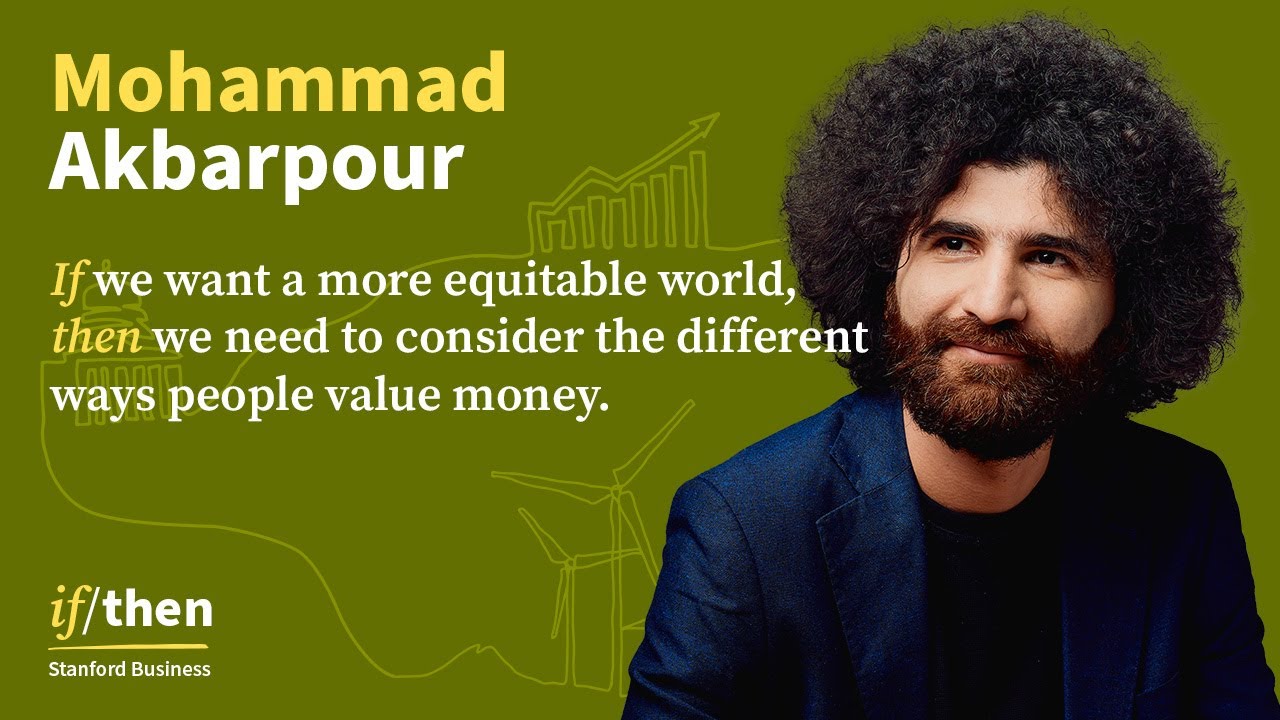
- The podcast, "If Then", produced by Stanford Graduate School of Business, features conversations with professors about their research and ideas.