
The Limitations of Traditional Education
- Many people learn things in school that they do not use later in life, and this is evident as most people raise their hand when asked if they have learned something in school that they do not really use anymore 10s.
- The individual was a self-proclaimed "bad student" and class clown in high school, but was also a good test taker, which did not fit well in the academic system, making them feel like an awkward black sheep 1m30s.
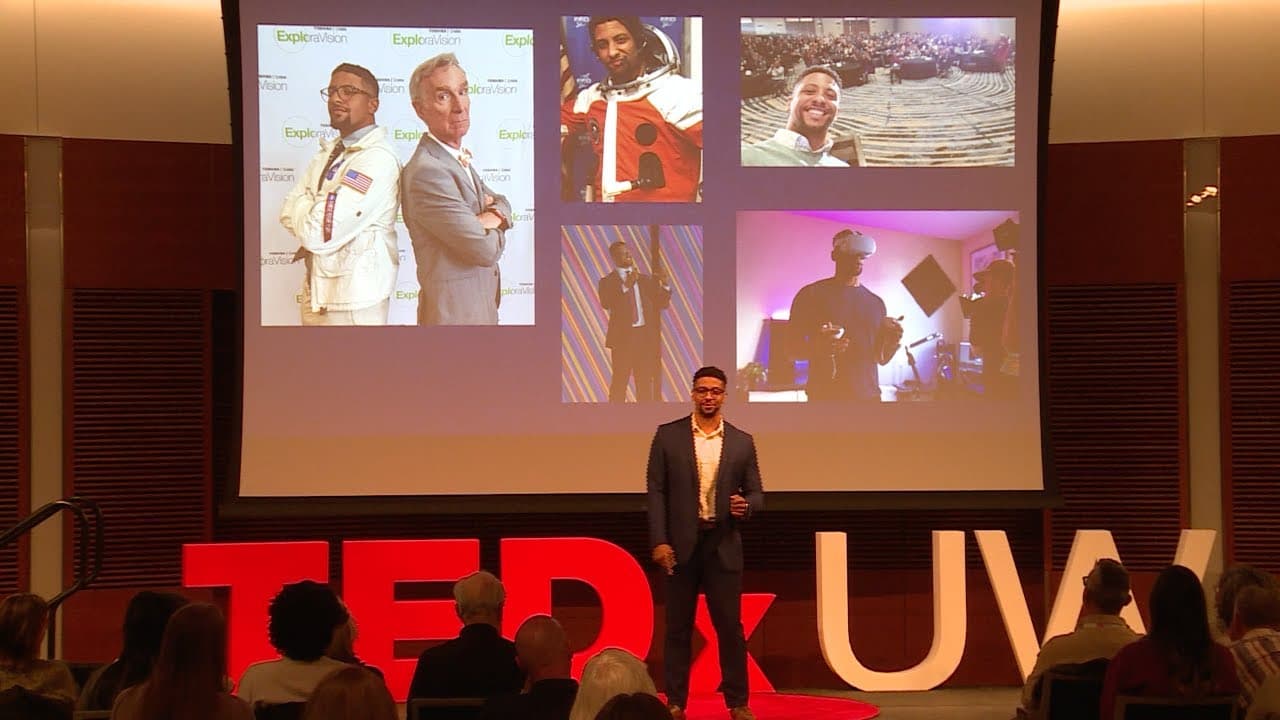
- The individual's trajectory led them to attend the Consumer Electronics Showcase in Las Vegas, where they encountered Ameca, a robot that could respond to questions in real time, and had a memorable conversation with her 2m50s.
- Ameca's ability to banter and respond to questions in real time was impressive, and the individual's conversation with her was recorded and viewed by 20 million people, making national news and catapulting Ameca to global fame 4m10s.
Personal Experiences and the Rise of AI in Education
- The individual, now a STEM educator, teaches people about technology tools, and their most viewed video is of them getting rejected by Ameca, which is a humorous and memorable experience 5m30s.
- The development of ChatGPT, which can draft college essays and solve novel math problems, has raised questions about the necessity of academia and school as it exists today, and has led to concerns about the impact of AI on cognitive capacity 6m40s.
- Research has shown that the use of AI tools can lead to cognitive offloading, resulting in a decline in cognitive capacity, and abysmal grade math and reading scores from students, making it clear that the standard path for students is outdated 8m10s.
- The AI era has made it possible for students to learn things that can be answered by a ChatGPT prompt, and has led to concerns about the value of a college degree and the job market, highlighting the need for a new approach to education 9m40s.
The Changing Nature of the Job Market and Education
- The current job market is changing rapidly, with many jobs becoming obsolete in a few years, making it essential to find a scalable and sustainable solution for students, and most people's career journeys are no longer linear, involving trying different things, failing, and iterating until they find success 10s.
- Research suggests that the skills that actually matter today, such as curiosity, adaptability, and leadership, are not skills that can be tested for in the traditional academic system, which is why it is necessary to find new ways to test for these skills at scale 2m6s.
The History and Evolution of Standardized Testing
- Standardized tests have a long history, dating back to 605 AD when Chinese imperial exams were first administered to create upward mobility and homogenize values, and the Westerners later adopted this idea and incorporated the Socratic method, where students would demonstrate their knowledge by speaking in front of their peers 4m5s.
- However, the Socratic method was not suitable for all students, particularly those without verbal fluency, which led to the introduction of written exams by Horace Mann in 1845, who advocated for written exams as a more objective method of assessment 5m30s.
- Despite the introduction of written exams, biases still exist in standardized tests, as evidenced by a real question from an SAT test in the 1980s that required knowledge of privileged socio-economic activities, such as regattas, which can be confusing for students from different backgrounds 6m45s.
- The continued use of standardized tests has been driven by the need to produce a mass production mindset in students, preparing them for factory or corporate work, but this is no longer relevant in today's society, where personalized tests at scale can be produced using AI tools and student data 8m15s.
Personalized Testing and AI-Driven Assessment
- Personalized tests can be designed to accommodate individual students' needs, such as Isla, a 17-year-old who struggles with test anxiety and performs best in a calming environment, and can be tailored to test their aptitude in the best way possible using AI tools and motion capture technology 10m30s.
- The current testing system can be modified to assess traits that are valuable in the workforce, such as curiosity, resilience, and leadership, by using technology like ChatGPT to evaluate verbal responses that prioritize these qualities over correctness 10s.
- A personalized testing approach can be tailored to individual strengths, for example, a test that focuses on creativity, flexibility, and analysis would be more suitable for someone like the class clown version, who excels in these areas 1m15s.
The Need for a New Approach to Testing and Education
- Many people have had the experience of the traditional schooling system not working for them, and this is because the standardized approach to testing and education is not designed to cater to individual needs and strengths 2m6s.
- A thought experiment can be conducted to envision what a perfectly optimized and personalized test would look like for each individual, taking into account their unique abilities and learning styles 2m45s.
- The idea is that each person still possesses the qualities and strengths they had as a student, but they were never given the opportunity to demonstrate them through the right test 3m30s.