This video discusses the principles of sonar or ultrasonic sensors. It explains that sonar sensors consist of a transmitter, receiver, and signal processing system. The video discusses the physics of sonar and the properties of ultrasonic waves. It also explains the beam pattern of the ultrasonic emitter and the sensitivity of the receiver. The video covers the echo amplitude and the factors that affect it, such as acoustic reflectivity, range, and angle of arrival. It explores different types of transducers used in sonar systems, including electrostatic, piezoelectric, and MEMS transducers. The video then introduces the system architecture of ultrasonic sensors, including the components and functions of the system. It explains the two main types of waveforms used in sonar: pulse echo and continuous waveforms. The video discusses the threshold-based ranging method and the matched filter ranging method for estimating time of flight. It also introduces linear frequency chirps as the waveforms used in continuous wave sonar and explains the process of extracting the frequency difference using a mixer or down converter. The video concludes by mentioning the advantages and limitations of pulse echo and continuous wave sonar.
YouTube video summary
Stanford EE259 I Radar principle of operation & architectures (pulsed, FMCW, PMCW) I 2023 I Lec. 10
Engineering
25 Jan 20241 min summaryFrom Stanford Online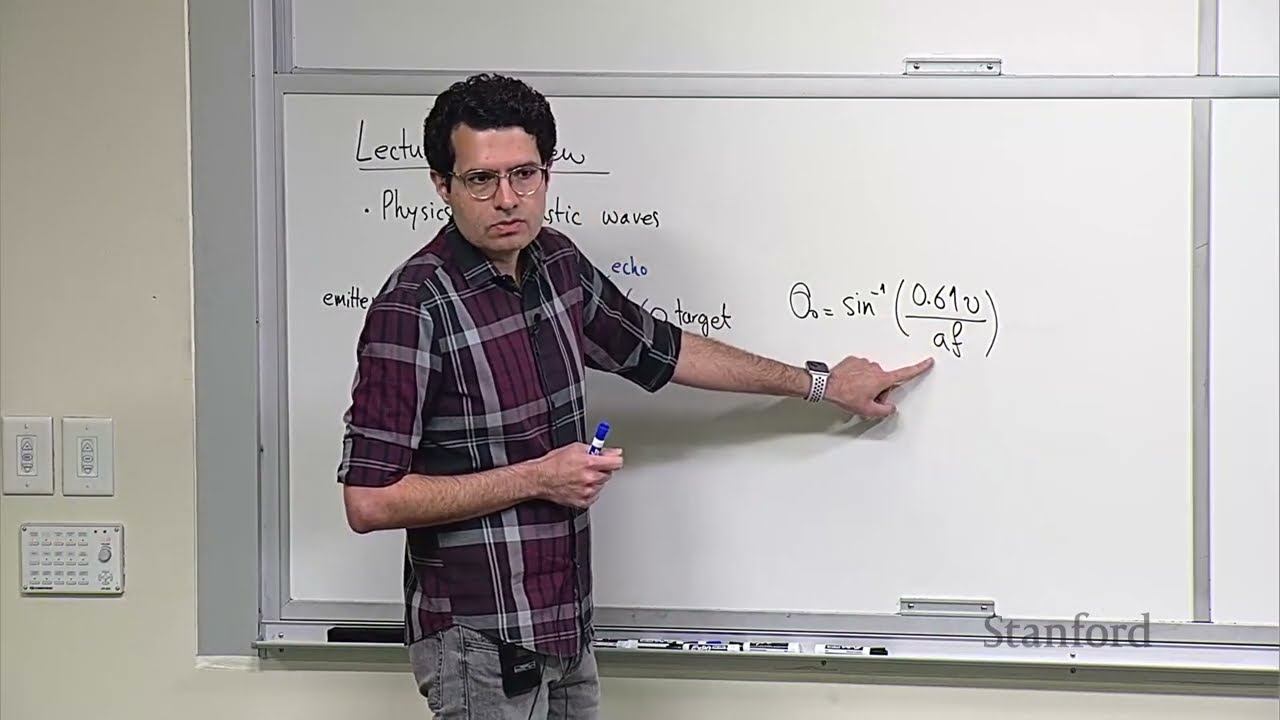

Stanford Online
YouTube
Free · no signup
Get the key points of a YouTube video or podcast in 30 seconds
Paste a YouTube, Spotify, or Apple Podcasts link and jump straight to what matters, with timestamps, instead of watching the whole thing.
 YouTube Videos
- Spotify Podcasts
- Apple Podcasts
Trusted by 700,000+ researchers, students, and professionals
Free · no signup
Do this for your own videos and podcasts
You just got the key points without sitting through the whole thing. Paste a YouTube, Spotify, or Apple Podcasts link and get the same summary in under 30 seconds.
- YouTube Videos
- Spotify Podcasts
- Apple Podcasts
Trusted by 700,000+ researchers, students, and professionals
More from Stanford Online
Browse all from Stanford Online →


Ready to get started?
Save, summarize and chat with your content.
GET STARTEDIT'S FREE
No credit card required · 30 Day Refund on Premium · 24 Hour Support
