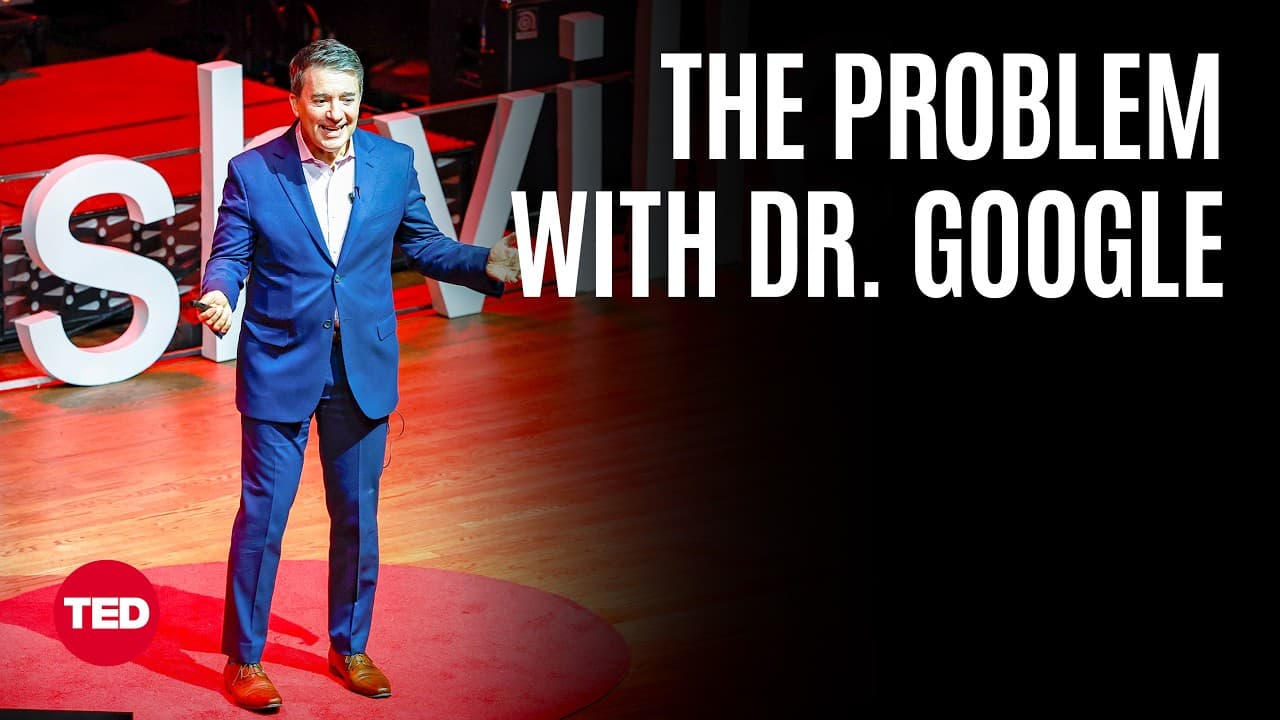

The Problem of Online Health Searches
- Many people have experienced searching for symptoms online, such as a mole on the skin, a cough, or a headache, and after ten minutes, they often become more confused and concerned, rather than clearer on what they might be having 42s.
- A significant number of people search for health conditions online, with a billion health searches every day, and this number is increasing, leading to a challenge in managing the vast amount of information available 2m6s.
- The motto "better information leads to better health" is believed to be true, but the challenge lies in the fact that information is not the same as knowledge, and too much information can create anxiety and be dangerous 4m6s.
- A patient, referred to as Mary, searched online for her symptoms of cerumen impaction, or a clogged ear with wax, and became concerned about hearing loss leading to dementia, as well as the possibility of infection, which led her to take unnecessary and harmful actions 6m6s.
- The term "cyberchondriac" refers to people who search online for symptoms and often jump to the worst-case scenario, magnifying every detail, and this can be a problem when it comes to managing one's health 8m6s.
The Limitations of Online Health Information
- Even if the information found online is correct, it is essential to put it into context, as seen in the case of a 12-year-old who correctly identified his condition as MRSA after searching online, but this also highlights the importance of consulting a medical professional to confirm a diagnosis 10m6s.
- The issue with using online symptom checkers and AI tools for health information is that they can cause more confusion than clarity, as they do not know an individual's medical history and cannot perform a physical exam, which can lead to inaccurate information and misinformation 10s.
The Role of Algorithms and Misinformation
- Algorithms on social media platforms, such as Instagram, can drive users to inaccurate information based on their search history and interests, making it challenging to find reliable sources, as seen in the example of the author's Instagram feed being loaded with information on golden retrievers and wellness 2m6s.
- The problem of misinformation is further complicated by the fact that some online sources, including doctors, may have ulterior motives, such as selling a particular product, which can erode trust in the information being presented and make it difficult for individuals to know who to trust 4m30s.
Approaching Health Information with Caution
- When searching for health information online, it is essential to approach it with the same level of scrutiny as financial information, by checking credentials, corroborating information, and seeking expert opinions, as one would when making investment decisions 6m40s.
- The importance of human interaction and trust in healthcare cannot be overstated, as individuals are more likely to trust a chatbot or influencer for health information than they would for financial advice, which can have serious consequences for their health and wellbeing 8m50s.
Strategies for Evaluating Health Information
- Ultimately, the goal should be to become empowered and educated about one's health, but also to recognize the limitations of technology and the importance of human connection in healthcare, in order to achieve clarity and avoid confusion 11m20s.
- To effectively evaluate information, it is essential to consider the source, verify the accuracy of the information, and confirm it through other means, which helps in assessing the credibility of the message 0s
- Knowing if the information sounds right to the individual is also a crucial step in the evaluation process, as it involves personal judgment and intuition 0s
- Discussing the information with a trusted person can provide additional perspectives and help in making a more informed decision 0s