

Introduction to the Female Form and Fertility
- Men were historically involved in designing the female form, with two men being introduced as examples, King and another man, who described women as producing babies, bleeding for 40-45 years, and having blood come from their elbows, which is an inaccurate representation of the female body 38s.
- The original design for women included having babies constantly for 40 years, with an estimated 53.3 babies, but this has changed over time, and women now have a choice to have babies or not, with most women only wanting to be fertile for about 5 years 1m32s.
- The "Blood baby thing" was described as including symptoms such as water retention, sore breasts, cramps, terrible moods, and more, which were deemed insufferable, and the solution was to hide women away for that week every month 2m5s.
- Men's symptoms were described as including erections, fuzzy faces, and balding heads, and they were said to shave every day and go fishing sometimes 2m20s.
- The connection between the "Blood thing" and moon cycles was mentioned, but the reason for this connection was unclear 2m41s.
Menopause: The Big Fright and the Monstrous Mess
- Once a woman has reared her children, supported her partner, developed a career, and completed unpaid work in the house, she will experience a big fright, which is menopause 2m47s.
- Menopause was described as a monstrous mess of fluids, aches, life, and fear, and it was noted that it wasn't an overnight process 3m7s.
- The first flush, or hot flash, was described as a time when the female body is out of control, with body temperature fluctuations, exhaustion, and more 3m28s.
- Menopause is a 5-10 year transition from fertile to non-fertile, and it is a time of irregular periods, flushes, embarrassment, fear, selflessness, incontinence, and more 4m19s.
- The term "menopause" comes from the Greek phrase "monthly thoughts," and it is a time when estrogen is disappearing from the system, leading to a range of symptoms 4m1s.
- Menopause has been referred to as a critical age, and menopausal women have been described as quarrelsome, vexatious, and overbearing, with a range of negative symptoms and emotions 4m30s.
Menopause: A Natural Transition and Evolutionary Genius
- Menopause is a natural part of life, and it's not just a disease, but rather a brilliant evolutionary genius that allows women to reinvent themselves and make changes 5m23s.
- Estrogen plays a crucial role in the female body, affecting not only the reproductive system but also cholesterol, blood sugar levels, bone and muscle mass, circulation, blood flow, collagen production, and brain function 5m39s.
- When estrogen disappears during menopause, it can be replaced by a sense of freedom and positivity, but it also brings considerable overlap with anxiety and depression symptoms 6m13s.
- Menopause affects women of all ages, cultures, ethnicities, and backgrounds, including the trans community, and it's essential to consider gender diversity and not forget that not all women have ovaries or become mothers 6m46s.
Historical Context of Menopause
- Historically, menopause was spoken about in hushed tones, and it was only over the past 200 years that women have lived long enough to experience it, making it a relatively new phenomenon 7m17s.
- In the past, menopause was often misunderstood, and women were subjected to inhumane treatments, including being labeled as "hysterical" and being forced to undergo hysterectomies or electroshock therapy 7m52s.
- The term "hysteria" comes from the Greek word "hystera," meaning uterus, and it was used to describe women's emotions and behaviors during menopause 7m55s.
- Many cultures have a tradition of devaluing older women, relegating them to the sidelines, and fearing their dependency and loss of fertility function 8m7s.
- In some cultures, signs of aging, such as chin hairs and wrinkles, were considered proof of sorcery, and women were often misunderstood and mistreated 8m31s.
Cultural Perspectives on Menopause
- Researchers have found that culture can affect a woman's experience of menopause, and in societies where age is revered, menopause symptoms are significantly less severe 9m17s.
- Attitudes towards menopause are changing, and people are becoming increasingly educated, but many still judge middle-aged women based on their fertility, femininity, and youthfulness 9m34s.
- Western media has minimized menopause by treating it as a taboo illness, and Germaine Greer has stated that our aversion to the menopausal woman is the result of our intolerance for female rage 9m59s.
- Many cultures view older women as a repository for everything that is wrong with society, and social media can perpetuate this negativity, as seen in the "Karen" meme, which, although not directly about menopause, is a close example of how women can be attacked online 10m16s.
- A UK survey found that 60% of women reported that menopause negatively affected their work, and 30% of women missed work due to menopause symptoms 10m41s.
- The UK Samaritans group states that the highest suicide rate for UK females is between the ages of 54 and 59 10m53s.
- In contrast, some cultures view menopause more positively, such as in Chinese medicine, which refers to it as the "second spring," a time of rebirth and regeneration 11m5s.
- Traditional Chinese medicine (TCM) has been found to be effective in reducing menopause symptoms, and some women prefer it over hormone replacement therapy (HRT) 11m31s.
- The Asian diet, high in soy and fiber, may also contribute to fewer hot flashes in Asian women compared to those on a Western diet 11m43s.
- In some cultures, such as Islamic, Indian, and African societies, menopausal women enjoy greater social freedom and are often seen as spiritual leaders 12m4s.
- However, many women, especially from less wealthy cultures, lack access to support and resources for managing menopause symptoms 12m40s.
Personal Experiences with Menopause
- The speaker's personal experience with menopause was marked by a significant change in her life, from being active and engaged to feeling angry, sweaty, and self-critical, but hormone replacement therapy (HRT) helped her regain her life and energy 14m24s.
- The speaker's sons initially responded to her menopause with patronizing and stereotypical gifts, but eventually, she was able to find new activities and interests, and her family supported her through this transition 13m12s.
- A personal experience of menopause involved physical changes, such as hot flashes, and emotional struggles, including feelings of shame and frustration, leading to a period of transition and self-discovery 14m52s.
- The lack of information and support during menopause led to feelings of fear and uncertainty, with the only resource being a late '90s edition menopause book from Amazon that presented a terrifying and negative view of menopause 16m9s.
- However, with time and self-reflection, a new perspective on menopause emerged, focusing on empowerment, control, and joy, leading to a renewed sense of purpose and identity 16m30s.
The Menopause Maidens and the Rebranding of Menopause
- The concept of a "menopause tribe" was formed, consisting of like-minded women who support and celebrate each other, and who call themselves the "menopause maidens" 17m11s.
- The menopause maidens organized a wedding-themed event, where each member was encouraged to wear an inappropriate wedding dress, symbolizing a change in narrative and a celebration of menopause 17m18s.
- The three best things in life mentioned were having babies, getting married, and menopause, highlighting the importance of finding joy and empowerment in all stages of life 17m38s.
- The idea of "menopause magic" was introduced, emphasizing the need to rebrand menopause as a positive and empowering experience, rather than a negative and frightening one 18m14s.
Menopause as a New Chapter and a Power Surge
- A "menopause manifesto" was shared, encouraging others to spread the word and celebrate menopause as a time of transformation and growth 18m18s.
- The concept of "shifting" was discussed, highlighting the transition from ignorance to knowledge, and from fear to welcome, and the importance of embracing change and reinvention 18m27s.
- The idea that menopause is not an expiry date, but rather a new chapter in life, was emphasized, encouraging women to recreate, recharge, and reinvent themselves 18m46s.
- The importance of finding one's own metaphor for menopause, such as a phoenix or a roller coaster, was highlighted, encouraging women to enjoy the chance of constant reinvention 18m54s.
- The idea that women don't have hot flashes, but rather "power surges," was shared, emphasizing the need to celebrate menopause as a passage to new beginnings 19m9s.
Call to Action and Spreading the Word
- The call to action was to celebrate menopause and to spread the word about the positive and empowering aspects of this stage of life 19m25s.
- The audience is encouraged to take the message of menopause home, think about it, speak to people, and investigate, to raise awareness and normalize the conversation around menopause 19m40s.
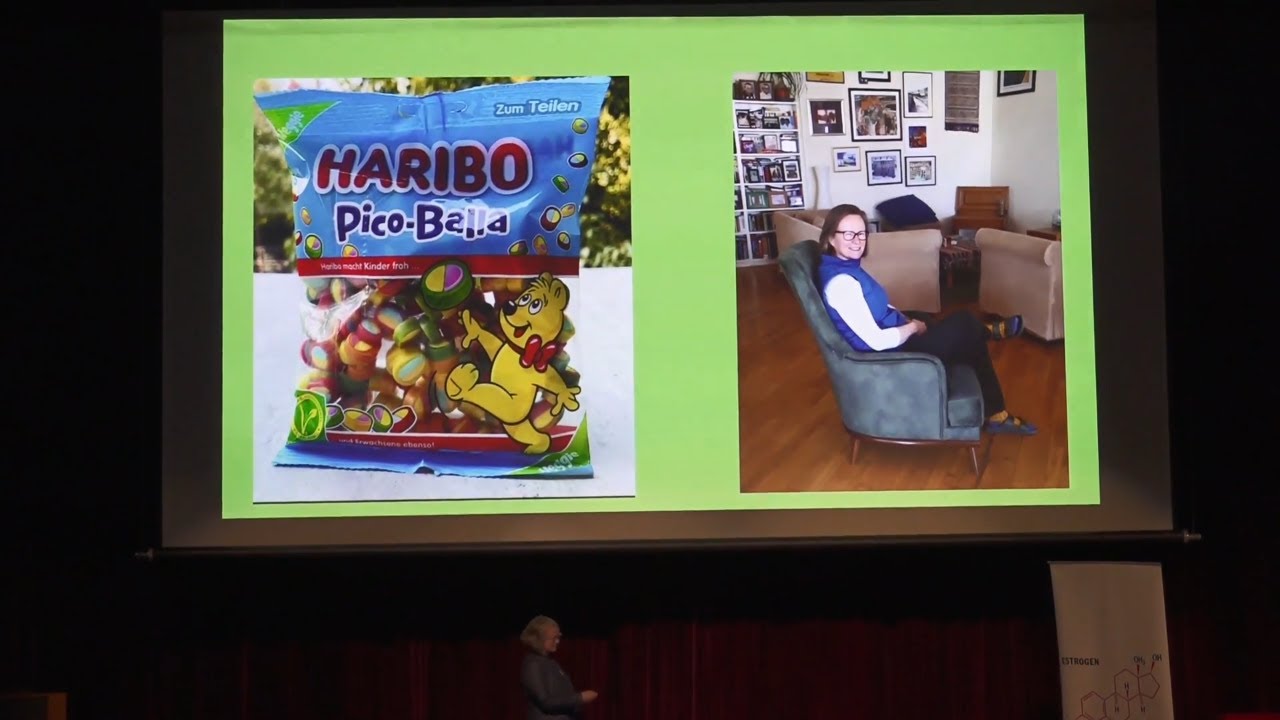
- The audience is divided into two groups to shout "menopause" and the side that wins gets sweets, with the goal of making the topic more approachable and fun 20m7s.
Managing Menopause and Finding Support
- To address any medical issue, including menopause, it's essential to get passionate, deepen knowledge, find a healer, connect with a supportive community, eat well, exercise, and manage stress 21m6s.
- The audience is assigned homework to watch the UK comedy "Bridget Jones's Diary" and its episode "The Change," which humorously portrays women's transitions and reminds viewers that men don't change in the same way 21m19s.
Celebrating Older People and Concluding Remarks
- The importance of celebrating and appreciating older people is emphasized, with a suggestion to buy them a present and enjoy their company, especially on special occasions like Mother's Day 21m55s.
- The talk concludes with a song, celebrating the journey and progress made, and expressing gratitude and appreciation 22m1s.