

The Rise of Cat Burglars
- Cat burglars are often romanticized as intelligent thieves who utilize stealth, planning, and imagination to target the wealthy and their insurance companies rather than relying on violence 0s.
- Despite modern security advancements like motion detectors and alarm systems, it is estimated that over 100 cat burglars currently operate within Florida 25s.
- The Palm Beach Sheriff's Office reports that many modern burglars model their techniques after the "Dinner Set Gang," a pair of highly skilled thieves 35s.
The Dinner Set Gang Operations
- Peter Serno, considered one of the best jewel thieves, is currently serving time in a Miami prison for the illegal distribution of oxycodone, a painkiller he used for back pain resulting from his career as a burglar 55s.
- Dominic Latella served as the lookout and logistics expert for Serno, and the pair estimated their total haul over the years to be in the tens of millions of dollars 1m15s.
- During the late 1960s and 1970s, the duo targeted wealthy individuals in Palm Beach, Florida, who frequently wore expensive jewelry 1m30s.
- The Dinner Set Gang earned their name by revolutionizing society burglaries; they targeted victims while they were occupied with long, multi-course dinners, rather than when they were out in public 1m45s.
- Because wealthy victims followed predictable dinner rituals involving butlers and extended conversation, burglars could anticipate that security alarms would be deactivated and that the victims would remain in the dining room for hours 2m5s.
- During a typical burglary, Serno would enter the second story of a home to locate jewelry, while Latella remained downstairs to monitor the victims and provide a whistle alert if anyone approached the stairs 2m35s.
- Serno was noted for his ability to quickly locate hidden valuables within large master suites, often completing a burglary in approximately three minutes 3m5s.
- Victims often did not realize their jewelry was missing until the following day 3m25s.
- The Dinner Set Gang followed the wealthy social season, moving from Palm Beach to New York and Connecticut 3m35s.
- Retired detectives Billy Adams and Jim Hirs spent 20 years attempting to apprehend the pair, noting that Serno is considered the standard by which other jewel thieves are judged 3m45s.
- In the early 1970s, the gang targeted large homes, with an average haul of approximately $250,000 per burglary 4m5s.
Methods and Targets of the Dinner Set Gang
- The Dinner gang conducted research for their burglaries by utilizing local libraries, Forbes magazine’s list of wealthiest Americans, Who’s Who in America, and photo spreads in Architectural Digest and Town and Country 0s.
- The group stole $168,000 in jewels from the home of Reader’s Digest founder DeWitt Wallace while he and his wife were eating dessert 15s.
- A heist involving an heir to the Flagler Railroad fortune resulted in the theft of $5 million while the victim was hosting a seated black-tie dinner 23s.
- In the exclusive community of Hobe Sound, which featured only one road for access, the burglars executed an amphibious assault by using a raft to reach the home of an heir to the DuPont fortune 30s.
- During the DuPont burglary, Latella and Serno breached the bedroom and discovered a leather traveling case in a linen closet that contained jewelry 55s.
- The stolen items from the DuPont residence included two large round faceted sapphires (25 and 22 carats), a ruby, a large emerald (estimated between 12 and 15 carats), and a set of pearls featuring a 5-carat canary yellow marquee diamond clasp 1m35s.
- The most valuable item taken during the DuPont heist was a 17.65-carat natural pink flawless pear-shaped diamond, which was valued at $1.8 million at the time and is currently held by an Arab sheik 1m55s.
- The total value of the goods stolen from the DuPont home was $12 million 2m5s.
Financial Management and Decline of the Gang
- The burglars utilized a fence named Wally Gans, who operated out of the 47th Street Diamond Exchange in New York, to move the stolen merchandise 2m10s.
- The gang typically received 10 cents on the dollar for the stolen jewelry and occasionally provided tribute payments to associates in the mob 2m35s.
- Serno and Latella, along with their wives, Gloria and Sandra Ceino, accumulated large amounts of cash, which they stored in envelopes of $20,000 each within safe deposit boxes 2m45s.
- The proceeds from the burglaries were spent on luxury items, including new cars such as a 450 Mercedes, boats like a Scarab, clothing, homes, and travel 3m5s.
- The gang’s financial situation declined in the 1980s after they attempted to enter the construction business and lost money when the real estate market crashed 3m20s.
Final Crime Spree and Apprehension
- Following a prison term and a diagnosis of breast cancer for Gloria Serno, two men turned to a crime spree in the winter of 1991 to secure funds for her medical care 0s.
- The individuals involved in the spree admitted to becoming obsessed with the work, claiming they performed as many as 40 jobs in a single month to prevent the lack of money from causing her death 23s.
- The perpetrators acknowledged becoming careless by breaking their own rules, which included failing to research targets, not planning escape routes, and operating during winter conditions 42s.
- In one instance, the men burglarized a house they had previously targeted nearly 20 years earlier, with the victims remaining the same 1m0s.
- Upon identifying the return of the "Dinner Set Gang," law enforcement issued a bulletin to surrounding areas, leading to a renewed pursuit by police 1m18s.
- On January 21, 1992, the men were caught in a house in Westport, Connecticut, after a homeowner called 911, resulting in a significant police response involving officers and dogs 1m35s.
- Despite the harsh weather conditions, including blowing snow and temperatures around 10 degrees, police maintained a perimeter and eventually apprehended the suspects 1m55s.
- Following their arrests, Latella served nine years in prison and Serno served four years 2m15s.
- Law enforcement officers expressed a sense of loss regarding the end of the pursuit, noting that the chase had been a significant part of their professional lives 2m25s.
Post-Criminal Lives and Reflections
- As of the time of the report, the men had retired from burglary, with Latella selling used boats while on parole and the wives of the men working in retail 2m40s.
- Latella expressed regret for the feelings of violation caused to victims but maintained that he and his partner acted as "gentlemen" who did not intend to hurt anyone 2m55s.
- Latella stated he did not regret his life as a burglar, citing the excitement of the lifestyle, though he denied plans for future criminal activity 3m15s.
The Isabella Stewart Gardner Museum Heist
- Two years prior to the report, 13 pieces of art, including works by Rembrandt, Vermeer, Manet, and Degas, were stolen from the Isabella Stewart Gardner Museum in Boston 3m35s.
- The art theft, which occurred at 1:00 a.m. on March 18, 1990, involved items valued at a minimum of $200 million and remains unsolved 3m55s.
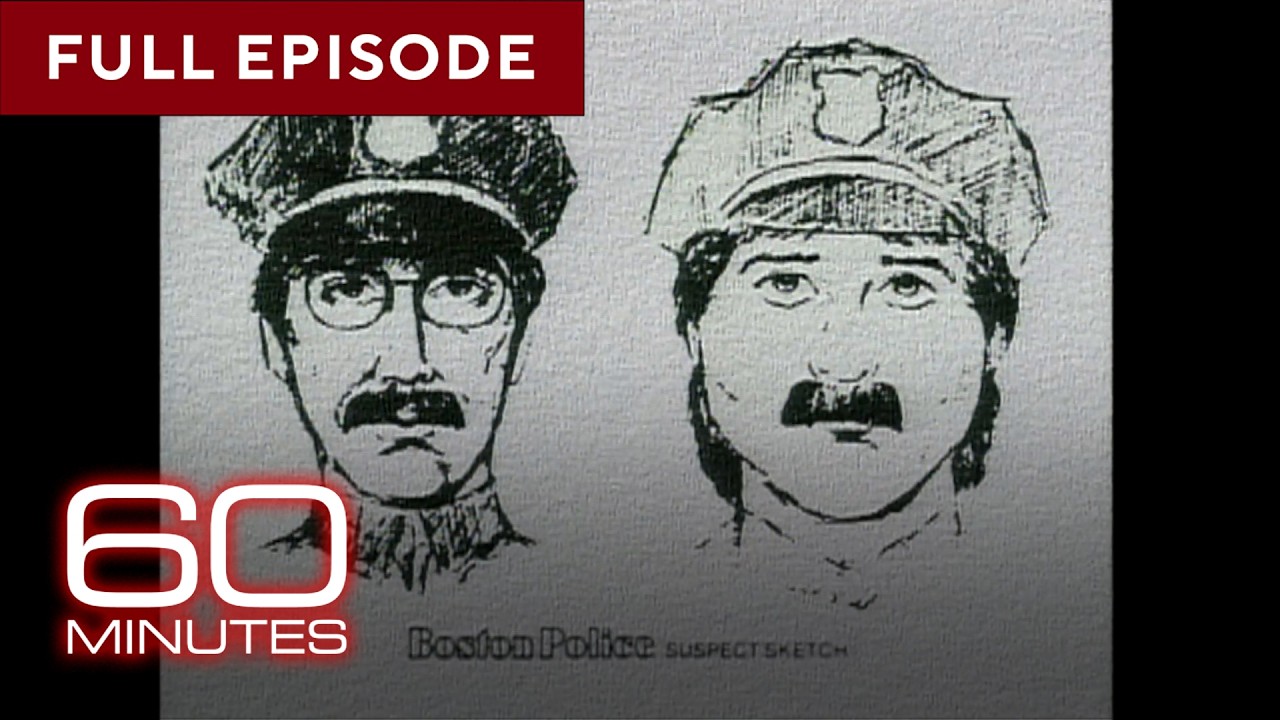
- Two men disguised as Boston police officers gained entry to the Isabella Stewart Gardner Museum by claiming to respond to a disturbance report. 0s
- Once inside, the intruders overpowered, bound, and gagged the museum guards before spending two hours stealing 13 objects from the collection. 0s
- The Isabella Stewart Gardner Museum was designed as a replica of an Italian villa to house the eclectic collection gathered by Isabella Stewart Gardner. 15s
- Among the stolen items were Rembrandt’s "Storm on the Sea of Galilee" and Vermeer’s "The Concert," both of which are considered works of significant artistic importance. 25s
- The guards were discovered bound and gagged in the basement at 7:00 a.m. the morning after the robbery. 1m15s
- Witnesses described the two thieves as men in their late 20s or early 30s who spoke with Boston accents. 1m25s
Investigation and Theories of the Gardner Theft
- Expert Brian McDev, a former member of an international theft ring, characterized the heist as a professional operation likely commissioned by a private collector. 1m35s
- McDev speculated that the stolen paintings might be located in Japan, held for ransom, or kept by a billionaire, noting that such famous works are impossible to sell on the open market. 2m0s
- The FBI, led by Howard Apple, has offered a one-million-dollar reward for information regarding the stolen art. 2m45s
- Despite the involvement of up to 40 agents and the distribution of information through Interpol’s stolen art network, the FBI had not recovered the items two and a half years after the theft. 3m0s
The Hyde Museum Blueprint
- Investigators identified a 1980 robbery attempt at the Hyde Museum in Glens Falls, New York, that served as a potential blueprint for the Gardner heist. 3m15s
- The Hyde Museum, which shares architectural and collection similarities with the Gardner Museum, was targeted by a man using the alias Paul Vanderbilt. 3m25s
- The suspect in the Hyde Museum case spent months casing the facility while posing as a wealthy benefactor and staying at a local hotel. 3m45s
- The 1980 plot involved disguising accomplices as Federal Express employees and hijacking a delivery van, but the plan failed due to traffic delays. 4m10s
- District Attorney David Weight stated that a young man posing as a Vanderbilt and his accomplice were identified by a kidnapped driver, leading to their capture and immediate confession 0s.
- The individual identified as Paul Vanderbilt was actually a 20-year-old conman from the Boston area named Brian McDev 23s.
- In December 1980, McDev confessed to an attempted robbery of the Hyde Museum in Glens Falls, New York, where he had carefully cased the location and identified specific items to steal 33s.
Brian McDev and the Gardner Investigation
- The Isabella Stewart Gardner Museum heist shared significant similarities with the botched Hyde Museum attempt, including the methods used to bind and gag guards, the language used during the crime, and the techniques for removing paintings 53s.
- McDev claimed that if the Hyde Museum robbery had been successful, the stolen paintings would have been transported to Tokyo, Japan 1m8s.
- While the FBI has exhaustively interviewed McDev and his acquaintances, the agency maintains that speculation is insufficient for trial and that they require concrete evidence 1m20s.
- McDev currently resides in the Hollywood Hills and alleges that he is under constant surveillance by the FBI 1m37s.
- McDev is working with his lawyer, Tom Beatatrice, and has expressed a desire to sell a screenplay about his life story titled "Masterpiece" 1m48s.
- Although McDev’s name has been linked to the Gardner heist, he denies involvement in the crime, though he acknowledges that it was reasonable for the FBI to investigate him 2m0s.
- At the time of the Gardner robbery, McDev lived in an apartment building on Beacon Hill in Boston, and neighbors reported that he left town shortly after the heist without notice 2m23s.
- McDev lacks an alibi for the morning of March 18, the date of the Gardner heist 2m37s.
- McDev has a criminal history that includes five felony convictions, including the theft of $60,000 in cash and $100,000 in bearer bonds from a Boston safe deposit box 2m45s.
- Investigator Roy Prout, who pursued McDev for the Boston District Attorney's office, noted that many people perceived McDev as a phony who deceived those around him 2m55s.
- McDev claims that while fleeing from Detective Prout, he traveled to Brazil and became involved with an art theft ring, describing the experience as similar to a film 3m12s.
McDev's Hollywood Deceptions
- Brian McDev, a 32-year-old living in Hollywood, describes his past activities as a con man as being easy to perform when he was between the ages of 19 and 21 0s.
- McDev moved to Hollywood with the stated intention of reinventing himself and pursuing a career as a writer or screenwriter 15s.
- Despite having never published any work, McDev joined the Hollywood chapter of the Writers Guild of America and was placed in charge of grants 25s.
- While working with a writer named Ben Pollock, McDev claimed to have won the Hemingway and O. Henry awards, written for The New Yorker, worked on the film Hope and Glory, ghostwritten Soapdish, and contributed to several television shows 35s.
- Ben Pollock conducted research and discovered that McDev’s professional resume was entirely fabricated 50s.
- After being confronted, McDev allegedly issued an implied threat to Pollock, warning him not to disclose the findings and suggesting that he was not someone to be angered 55s.
- Pollock reported feeling frightened by the interaction, noting a shift in his perception of McDev from someone he initially compared to Robert Kennedy to someone he likened to Jeffrey Dahmer 1m10s.
- When asked about a lie detector test, McDev claimed he would pass without a doubt, though he noted that he and the FBI decided against him taking one because the results are considered unreliable 1m20s.
- The FBI continues to investigate McDev but has not secured solid evidence against him regarding the theft of paintings 1m40s.
Legacy of the Gardner Heist
- Under the terms of Mrs. Gardner’s will, the Isabella Stewart Gardner Museum is prohibited from rearranging the remaining paintings, leaving empty spaces where Vermeer and Rembrandt works once hung 1m55s.
- McDev speculated that the stolen paintings are currently with a private collector, though he maintained he does not know what happened to them 2m15s.
The Rise of Heavy Equipment Theft
- A new type of burglary involving the theft of heavy construction and farm equipment, such as Caterpillar bulldozers, tractors, and backhoe loaders, is occurring nationwide 2m40s.
- These thefts, which cost billions of dollars, are reportedly contributing to increased consumer costs, including higher food prices, insurance fees, and construction expenses 2m55s.
- Houston, Texas, is identified as a location where the theft of heavy machinery is particularly acute 3m5s.
- Heavy equipment is often easy to steal because the machines are frequently unbranded and can be started easily by bypassing the solenoid or by obtaining duplicate keys 3m15s.
- Many Ford tractors manufactured within the last 20 years can be started with a single key, and most Case heavy equipment can be started with one of two specific keys 0s.
- Heavy equipment can be started easily using only a penknife in the ignition, allowing thieves to load the machinery onto a truck and depart within minutes 12s.
- The backhoe loader is the most stolen piece of construction equipment in the United States, with a value of approximately $30,000 28s.
- Other frequently stolen equipment includes wheel loaders valued at $60,000, track loaders at $100,000, and bulldozers at $200,000 35s.
Steal-to-Order Operations and Fencing
- The theft of heavy equipment often functions as a "steal to order" business, where thieves fulfill specific requests from buyers 42s.
- Royce Featherston, a thief who has stolen over a million dollars worth of equipment, once stole a tractor and trailer worth approximately $12,000 for a university professor, selling it for $4,000 52s.
- After being caught stealing five tractors, Royce Featherston was sentenced to five years at the Darington Prison Farm near Houston 1m15s.
- Beyond academics, individuals involved in purchasing stolen heavy equipment include high-ranking officials, such as the chairman of the board of a major savings and loan institution 1m35s.
- Fences, or middlemen, are essential to the operation, purchasing stolen equipment from thieves and reselling it at a fraction of its market value 1m45s.
- One veteran fence, who has been dealing in stolen heavy equipment for over a year, reported moving 50 pieces of equipment in one year, generating approximately $350,000 in tax-free income 1m52s.
- Insurance fraud is a significant factor in equipment theft, with estimates suggesting that 50% of stolen units are taken so that owners can collect insurance payouts 2m15s.
- Thieves often gain access to job sites by cutting fences or by monitoring the schedules of security guards to ensure they are gone before the theft occurs 2m38s.
- Ray Higgins, a construction superintendent in Houston, reported losing multiple pieces of equipment, including an $18,000 tractor and a total of over $30,000 worth of machinery from various job sites, none of which were recovered 3m0s.
Economic Impact and Lack of Enforcement
- Burglars gain access to properties by cutting fences and driving stolen heavy equipment, such as tractors and bulldozers, off the premises 0s.
- Contractor Bice Barry reports having 10 tractors stolen, with only two of them being insured 7s.
- The total financial loss for Bice Barry, including the value of the machines, downtime, and production loss, is estimated between $600,000 and $700,000 14s.
- To compensate for these losses, rental costs for customers have increased by approximately 10% 25s.
- The Houston Police Department has only one detective assigned to track down stolen backhoe loaders 35s.
- Detective Bob Olsen has been investigating heavy equipment theft for four years 45s.
- At a freight depot, Detective Bob Olsen identified a tractor awaiting international shipment that had its serial numbers removed, though he was unable to take action due to a lack of evidence 48s.
Vulnerabilities in Equipment Tracking
- Unlike automobiles, heavy equipment often lacks serial numbers stamped into the metal, making them easy for thieves to alter or remove 1m15s.
- Heavy equipment lacks a formal paperwork trail, such as titles or registration, which prevents police from verifying ownership or checking status during traffic stops 1m28s.
- The recovery rate for stolen heavy equipment is approximately one out of 10, significantly lower than the seven out of 10 recovery rate for stolen automobiles and trucks 1m45s.
- The FBI places low priority on the interstate movement of stolen equipment 1m53s.
Cross-Border Smuggling into Mexico
- It is estimated that 30% to 40% of stolen equipment from Houston is transported overland to Mexico 2m5s.
- Stolen equipment can be transported to the Mexican border near McAllen, Texas, with little interference from police patrols or weigh-in scales 2m20s.
- An estimated $250 million worth of heavy farm and construction equipment enters Mexico annually, though the exact portion that is stolen remains unknown 2m35s.
- Truckers moving equipment into Mexico are required to fill out a Shipper Export Declaration (SED), which is primarily used for Commerce Department statistics 2m50s.
- U.S. Customs officials do not have the jurisdiction to verify the accuracy of the information provided on an SED, allowing truckers to transport stolen goods across the border without inspection 2m58s.
- While Mexican federales are tasked with checking equipment entering the country, the ease of moving large machinery remains a significant concern for officials 3m10s.
- Thieves facilitate the movement of stolen vehicles across the border by establishing connections and making deals with federal officials in advance 0s.
- Payments to officials for border passage are made either through direct monetary bribes or by trading stolen merchandise for favors 0s.
- In one instance, four stolen vehicles—three new Broncos and one four-wheel drive pickup—were delivered directly to federal officials as part of an arrangement to allow machinery to cross the border 0s.
Security Challenges and Industry Resistance
- Various security measures have been implemented to deter theft, including suspending lightweight equipment from cranes at the end of the day, installing security fences, using special locks, and marking equipment with decals, individual numbers, or custom paint jobs 25s.
- Despite these security efforts, current methods have proven largely ineffective at preventing the theft of heavy equipment 25s.
- Law enforcement officials reported making only two cases against buyers of stolen equipment in their best year, despite $21 million worth of equipment being stolen during that same period 42s.
- In their most successful year, law enforcement officials made approximately 12 cases against the individuals who actually committed the thefts 58s.
- The prevalence of theft is partly attributed to the convenience of using universal keys that start multiple types of tractors and backhoe loaders 1m3s.
- Registration of heavy equipment is proposed as a potential remedy, but it faces significant resistance from manufacturers and contractors 1m3s.
- Manufacturers oppose registration because they fear increased government control, bureaucracy, and paperwork, as well as the potential for stricter environmental enforcement 1m15s.
- Manufacturers also resist registration because it would reveal their annual production and sales figures to competitors and prevent them from selling older machines as new models at higher prices 1m15s.
- Contractors resist registration because it would require them to disclose their total equipment holdings to tax authorities, potentially leading to higher tax liabilities 1m38s.
- A pending congressional bill proposes a study on ways to combat heavy equipment theft nationwide, but it is currently being heavily lobbied against by manufacturers, dealers, and users 1m48s.
- There is an indication that the industry stakeholders involved in lobbying against the bill fear government oversight and taxation more than they fear the thieves themselves 1m48s.