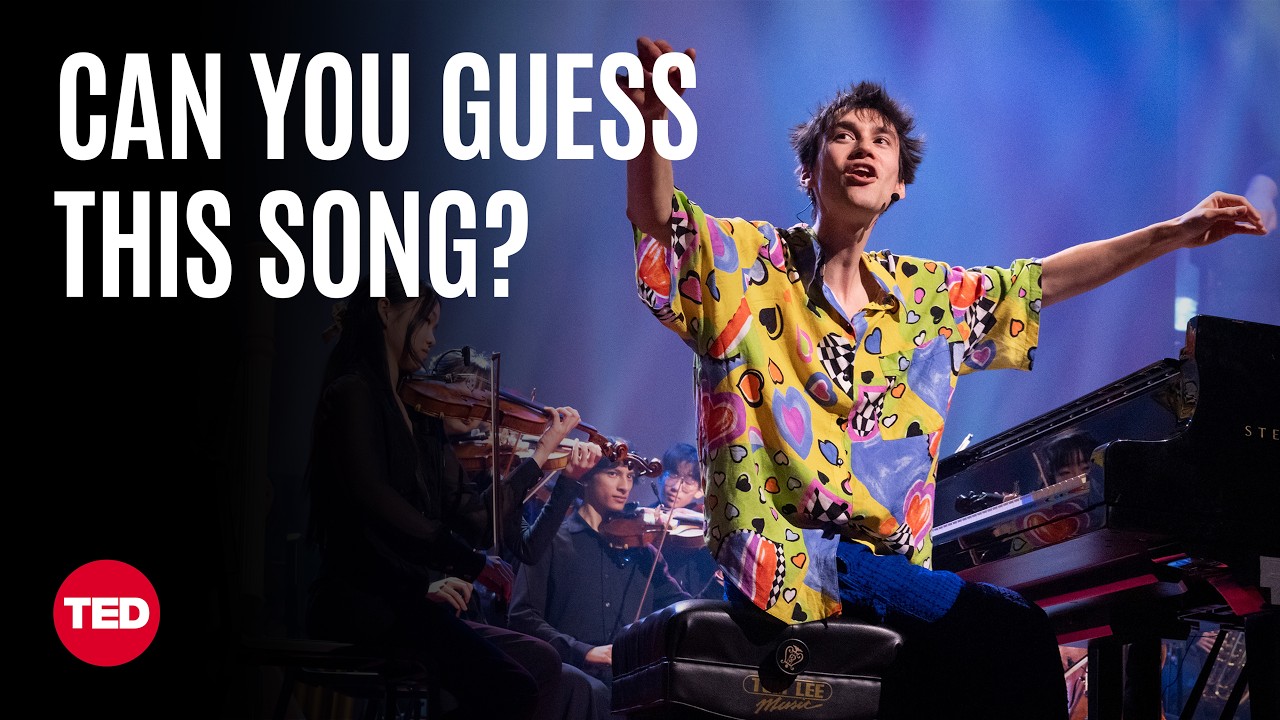


Introduction and Initial Instructions
- The musicians on stage are about to create a piece of music without any prior rehearsal, sheet music, or discussion, and they are instructed to start playing with the violins, who are asked to play a D, followed by an A, a G, and another D, with the addition of tremolando, 10s.
- The violas are then asked to play a G and a D, and the tempo is established, with the musicians playing every beat, while the harp is instructed to play a G major, starting from the bottom and moving up, 1m15s.
- The vibraphone is asked to play a high G, and then a G above it, with increasing volume, and the cello and flute are instructed to play three notes, with the cello playing G, F sharp, and E, 2m6s.
- The flute is then asked to play an octave lower, and the bass, cello, and clarinet are introduced in the second half of the verse, with the bass playing down the G major scale, starting on A, and the clarinet playing a similar pattern, 3m30s.
Expanding the Musical Structure
- The musicians are then asked to loop their parts, with the bass, cello, and clarinet playing their parts twice, and the rest of the orchestra joining in, 5m10s.
- After the verse is completed, the musicians are applauded, and the chorus is introduced, featuring the brass section, with trombone, trumpet, and horn playing three notes each, twice, 7m20s.
- The percussion section is then added, with the snare drum, kick drum, and cymbal, and the brass section is asked to play their parts five times louder, with the addition of a snare drum roll, 9m40s.
Conductor's Guidance and Brass Section Instructions
- The orchestra is guided through a musical piece, with the conductor providing instructions on how to play their parts, including the brass section, tuba, trombone, and trumpet, and the guidance starts with a loud drum roll 10s.
- The tuba player is asked to play a sequence of seven notes, which are part of the G major scale, and the trombone player is given a series of notes to play, including a repetitive sequence of C notes 1m42s.
- The trumpet player is asked to play a chromatic part starting on D, and then the three brass players are asked to play their parts together, first at full speed and then at half speed 2m6s.
Repetition and Transition
- The conductor explains that the entire piece will be played twice, with the drums only playing during the first iteration, and the orchestra will then transition back to the violins 3m15s.
- A new part is given to a musician who didn't have one, and the conductor explains that the piece will involve multiple sections, including violins, vias, harp, vibes, cello, flute, clown, tal bass, chorus, and audience participation 4m30s.
Performance and Audience Participation
- The orchestra begins playing the song, which appears to be a rendition of "All You Need is Love" by The Beatles, with the conductor guiding them through the piece and encouraging audience participation 5m45s.
- The song builds up to a finale, with the orchestra and audience singing and playing together, and the performance ends with applause and cheers 10m10s.