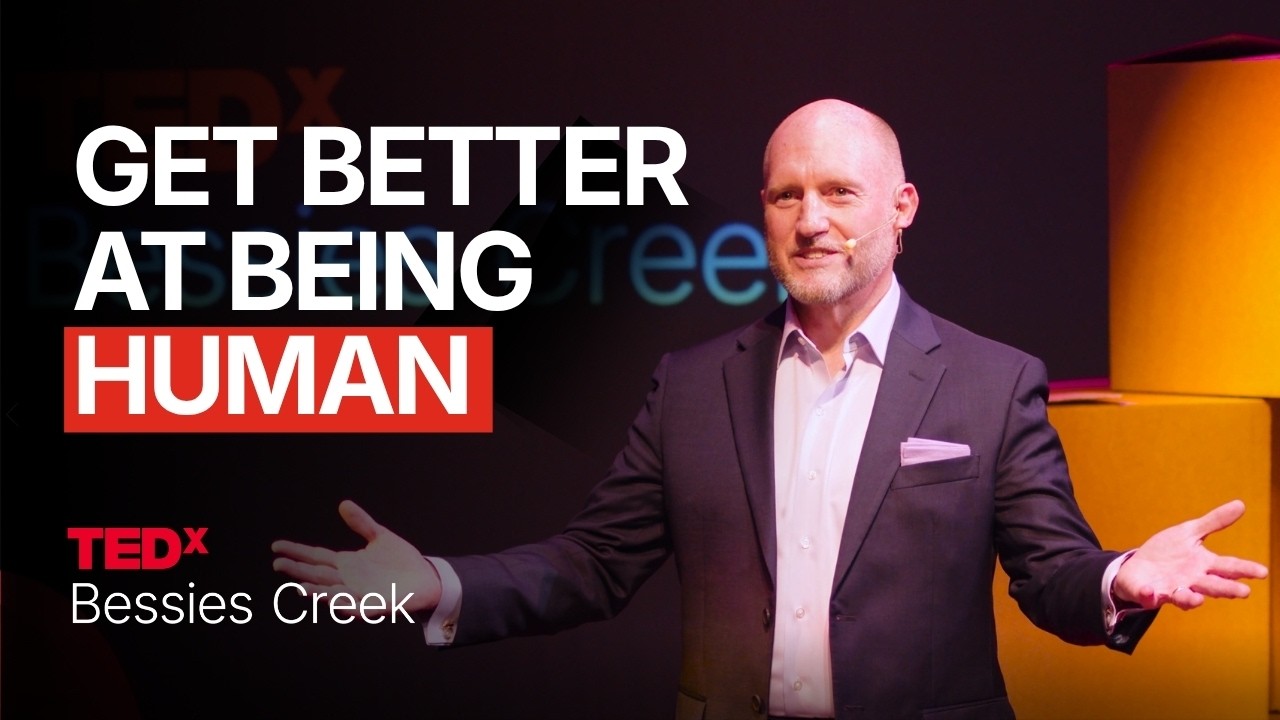


The Conflict Between Personal Grief and Professional Expectations
- The experience of losing a pet highlights the difficulty of transitioning from personal emotional crises to professional responsibilities within a short timeframe 0s.
- High-performance roles, such as those played by Disney actors, require maintaining a specific character regardless of personal circumstances, which raises questions about how individuals can support one another during times of grief 42s.
- Relying on platitudes or rigid rules is often ineffective when helping others navigate difficult emotional moments 1m25s.
Historical Patterns of Human Avoidance
- A recurring pattern exists where humanity has historically been avoided rather than embraced, a trend observable in families, politics, and organizations 1m45s.
- Recognizing this pattern of avoidance allows for a shift away from mutual blame toward a collective effort to improve the human experience 2m6s.
The Origins and Vulnerability of Human Consciousness
- The dawn of humanity marked a transition from a simple existence to one defined by complex self-consciousness, body image concerns, and deep emotional attachments 2m25s.
- The vulnerability associated with caring for others, exemplified by the fear of losing a mate, initiated a long-standing, conflicted relationship with human nature 2m55s.
- Modern workplace challenges, such as burnout, anxiety, and rigid HR processes that fail to account for personal hardship, reflect an ongoing struggle to manage the complexities of being human 3m25s.
Existential Fear and the Creation of Anti-Human Systems
- The fundamental pattern of human behavior involves a deep-seated fear of humanity because it is recognized as being meaningfully difficult 4m15s.
- Human existence is often characterized by struggle and worry, leading to a sense of existential terror regarding the human condition 0s.
- Rather than learning to navigate humanity, people frequently attempt to avoid it by creating protective illusions to cope with reality 15s.
- To enforce these distorted realities, societies develop anti-human systems, including rules, norms, doctrines, hierarchies, and institutions 35s.
The Failure of Organizational Control Mechanisms
- Organizations often make these patterns visible by attempting to manage complex human emotions through policies, behavior management, and performance management systems 52s.
- A common workplace response to employee frustration is to mandate that personal opinions and feelings be left at home, rather than addressing the underlying human experience 1m2s.
- Humanity remains stuck because the focus has been on controlling human nature rather than learning how to navigate it 1m22s.
- Individuals often project the blame for these systemic issues onto others, failing to recognize that they are personally suppressing their own humanity under the guise of responsibility 1m32s.
The Vicious Cycle of Authoritarian Control and Distrust
- The fear of stopping the suppression of humanity often manifests as visions of anarchy, chaos, and conflict 1m52s.
- Traditional leadership models, such as the authoritative "boss" archetype, often result in tyrannical behavior that alienates employees and family members 2m6s.
- A vicious cycle exists where the attempt to control others destroys trust, which in turn creates an environment where individuals are discouraged from taking accountability 2m26s.
- As people avoid their humanity, they become increasingly dependent on systems of control; when these systems fail, the response is typically to tighten controls further, which exacerbates the problem 2m36s.
- The reliance on simple, systemic solutions to manage the complexity of the human condition is identified as a primary driver of the problems being faced 3m6s.
Transforming Organizations into Ecosystems for Human Development
- Real progress occurs when individuals recognize these patterns, stop seeking simple fixes, and begin to embrace and navigate their humanity 3m26s.
- By shifting the focus from suppressing human capability to cultivating it, organizations can be transformed into tools that help resolve problems rather than amplify them 3m46s.
- Organizations occupy the majority of people's time, making them ideal environments to function as ecosystems for human development 0s.
- Developing individuals within an organization leads to positive transformations that extend beyond the workplace into families, communities, and society at large 3s.
Leadership Opportunities for Collective Human Improvement
- Historical approaches to managing humanity have focused on control, but there is a need to shift toward learning how to improve at being human rather than attempting to escape from it 12s.
- Organizational leaders possess the opportunity to act as leverage, transforming their workplaces into developmental ecosystems that produce extraordinary results and meaningful global impact 22s.
- Leaders are encouraged to move away from relying on hierarchies and policies and instead engage directly with team members in challenging, vulnerable human spaces 35s.
- Individuals, regardless of their specific roles or archetypes, are urged to stop falling into unproductive patterns of behavior 42s.
- While the experience of being human is inherently difficult, it does not have to be negative 48s.
- Although current human performance is not optimal, there is significant potential for collective improvement if people learn to embrace and stand together in difficult human spaces 52s.