

Childhood Influences and Historical Awareness
- Elders frequently told children and young people that they represent the future of humanity, a concept that was later reevaluated through the lens of social psychology. 0s
- During childhood, a strong interest in learning led to a preference for watching documentaries about anthropology, flora, and fauna over traditional play. 15s
- Daily commutes to school involved observing the landscape through a window, which functioned as a real-time documentary of the surrounding environment. 30s
- The local landscape was dominated by extensive sugarcane plantations, with the cycle of cultivation marked by seasonal burning. 42s
- Historical accounts from elders indicated that the land previously transitioned through cycles of cotton, coffee, and pasture. 55s
- It was discovered that the territory where this upbringing occurred originally belonged to Indigenous peoples, such as the Cengior of São Paulo, who were expelled and nearly decimated by development policies that labeled them as enemies of the land. 1m8s
The Burden of Responsibility and Future Expectations
- Learning about history carries the weight of understanding its impacts, moving beyond the simple pleasure of acquiring knowledge. 1m25s
- Teachers instilled a sense of responsibility in children to act as guardians of the planet's future for subsequent generations. 1m35s
- The realization emerged that being a guardian of the future was a complex responsibility, as the reality of the future differed from initial childhood expectations. 1m45s
Professional Transitions and Therapeutic Practice
- The completion of a psychology degree coincided with a sensitive period in recent history characterized by collective suffering and uncertainty about the future. 1m55s
- A transition occurred from clinical practice to working in a basic health unit in the sertão of southwestern Bahia, located 1,600 kilometers away. 2m10s
- Practical experience in psychology, gained through work in the sertão, fostered numerous encounters that expanded the perception of the world as a workspace. 2m25s
- Early in a professional career as a psychologist, therapeutic settings were often improvised, ranging from hospital beds during a global health crisis to brief intervals between daily routines at a social organization. 0s
Human Dignity and Shared Aspirations
- Words of hope frequently served as the only available tools for providing support to individuals in need. 15s
- Many individuals encountered in this professional capacity were exhausted, struggling for basic dignity, and forced to resist simply to exist. 22s
- While not all personal stories observed had a happy ending, the majority of these lives are still in progress. 35s
- Despite their differences, many people shared common dreams, such as home ownership, escaping homelessness or drug addiction, achieving retirement, gaining employment, or finding acceptance within their families. 45s
- These diverse stories collectively reflected a singular, shared aspiration: the desire to live a life of dignity. 1m12s
Global Crises and Statistical Realities
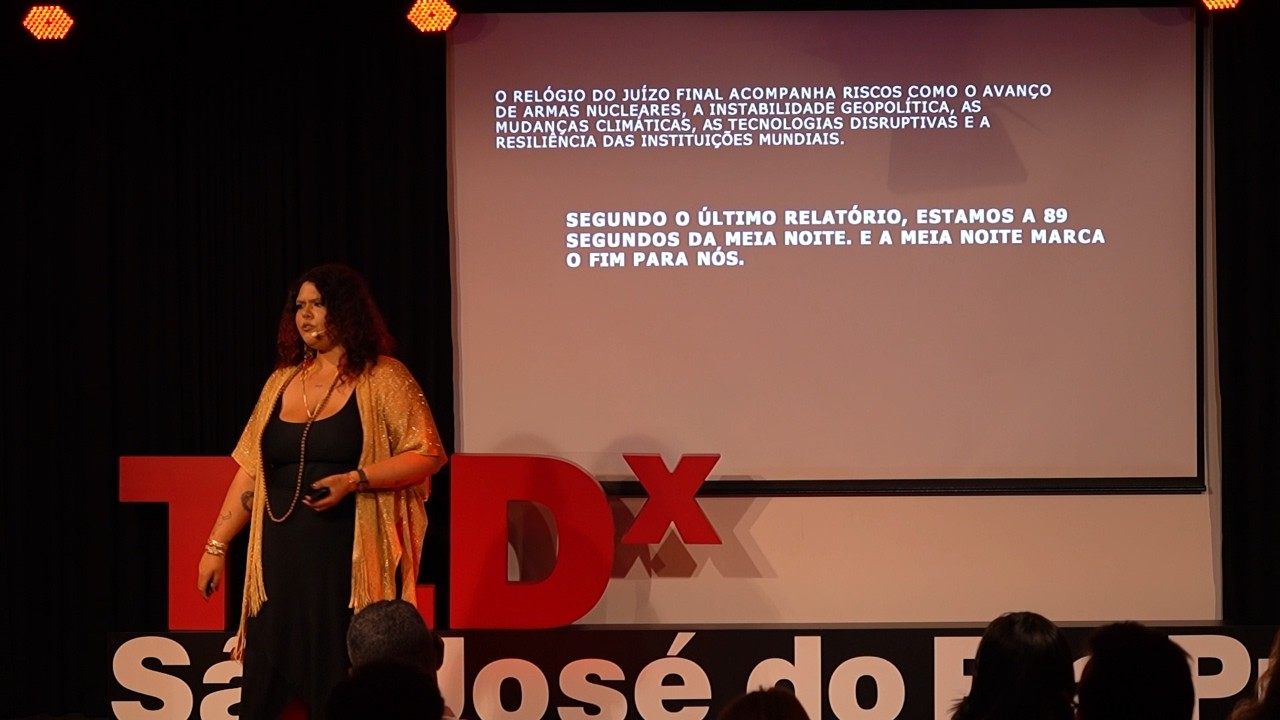
- The Doomsday Clock, created by the Bulletin of the Atomic Scientists—a group including figures like Albert Einstein and Robert Oppenheimer—serves as a symbolic measure of how close humanity is to its end. 1m35s
- The clock evaluates proximity to catastrophe based on parameters such as war, disruptive technological advancements, the security of global institutions, and climate change. 1m55s
- According to reports from 2025 and 2026, the clock is set at 89 seconds to midnight, with midnight representing the end of humanity. 2m10s
- In 2025, the UNHCR recorded 117.3 million displaced, refugee, or stateless individuals, including those fleeing war or climate-related issues who were unable to find a place in new countries. 2m22s
- World Bank data indicates that 700 million people currently live in extreme poverty. 2m42s
- Despite the current figures, extreme poverty has decreased significantly over time due to collective human mobilization, suggesting room for optimism regarding these statistics. 2m48s
Systemic Inequality and the Search for Home
- While extreme poverty has decreased, social inequality, the accumulation of wealth, and the predatory exploitation of natural resources remain persistent issues. 0s
- Many individuals who work diligently receive compensation that is disproportionate to the effort they expend in pursuit of dignity. 15s
- A personal experience involving a nine-year-old sister successfully navigating the way home serves as a metaphor for the possibility that humanity has lost its own way. 25s
- There is a belief that humanity will experience happiness once it discovers the path back home, a conviction that motivates continued advocacy. 1m5s
Unsustainable Consumption and Global Challenges
- Humanity appears to have shifted its focus from fundamental needs—such as food, housing, and respect—toward consumerist dreams. 1m25s
- The planet is reaching its limits, as evidenced by the "89 seconds to midnight" metaphor, and cannot sustain current patterns of consumption. 1m35s
- The global economy is characterized by stark contrasts where some individuals have an abundance of resources while others suffer from starvation. 2m5s
- Current coping mechanisms for global crises, such as using air conditioning for heat or ignoring news of violence and social inequality, will become unsustainable in the future. 2m20s
- Many people spend their lives working solely for survival, often dealing with the consequences of wars they did not choose or pursuing dreams that are not their own. 2m55s
- Although the world is vast, it currently lacks sufficient space for everyone, raising questions about how to dream individually within a collective global society. 3m15s
- There is an urgent need to dream, particularly as humanity struggles to reconcile its current state with the known concept of dignity. 3m35s
Reflecting on Collective Dreams and Future Guardianship
- The concept of being a guardian of the future is compared to a childhood dream, framed within the metaphor of a world that is 89 seconds away from ending 0s.
- Individuals are invited to consider whether they wish to take on the role of guardians of the future 12s.
- A process of self-reflection is proposed, starting with the analysis of personal dreams experienced while sleeping 18s.
- When evaluating these personal dreams, individuals are encouraged to consider how many people are required to bring them to fruition 25s.
- It is necessary to assess whether the planet has the capacity to support these individual dreams 31s.
- One must evaluate the level of impact that a personal dream has on the surrounding world 35s.
- The act of speaking from the heart about one's beliefs is described as the realization of a dream that required the support of countless people 39s.
- Future support from others is anticipated as a way to continue building upon the foundation of these dreams 50s.
- Words are characterized as seeds inherited from one's elders, and there is a hope that these words will find fertile ground 55s.
- By analyzing personal dreams, individuals may discover their own collective dreams and recognize that dreams possess the unique power to transcend time 1m4s.