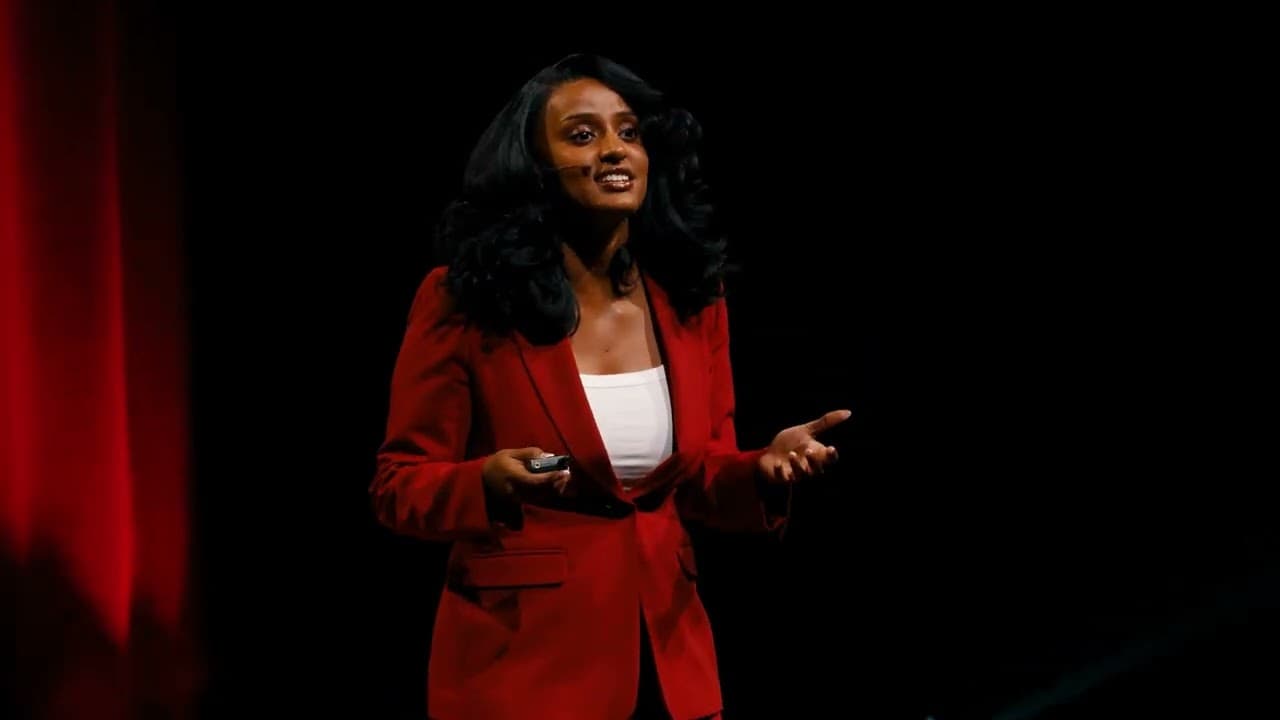

Sensory Introduction to the Coffee Ceremony
- The room’s scent of frankincense and coffee smoke creates a sensory memory that signals the nervous system to exhale, framing the experience as a ritual rather than a quick caffeine fix 0s
- In Ethiopian culture, the coffee ceremony is a slow, deliberate practice that contrasts with modern “grab‑and‑go” coffee habits, emphasizing cultural expression over speed 0s
- The ceremony involves rhythmic sounds—such as a wooden stir spoon clinking on a metal pan—as green beans roast into oily black coffee, accompanied by familial laughter and lively, often trivial, arguments 0s
Cultural Meaning and Personal Anecdotes of the Ceremony
- Personal anecdotes highlight linguistic teasing about Amharic pronunciation, noting the speaker’s 16 years in America and resulting accent 0s
- Rushing or skipping steps in the ceremony not only ruins the coffee but also damages the social connection; serving a poor pot can lead to lasting negative judgment from the community 0s
- The “slow brew” symbolizes prioritizing presence and relationships over efficiency, asserting that trust, understanding, and genuine human connection cannot be rushed 0s
Modern Society’s Exhaustion and Scripted Interactions
- Contemporary society is described as suffering from chronic, high‑definition exhaustion, with people relying on filters like echo‑chamber podcasts or muting uncomfortable remarks, reducing patience for unpredictability 0s
- This loss of tolerance leads to labeling others (e.g., “diversity hire,” “voter”) instead of seeing them as individuals, effectively replacing humanity with scripted interactions 0s
- The speaker shares a personal moment of avoiding conversation in a frozen‑food aisle by hiding behind broccoli for four minutes, illustrating reliance on a “scripted” social contract that prioritizes safety over authentic engagement 0s
- The script is described as a protective shield that makes one invisible and “nice,” but this performance prevents genuine connection and the building of bridges between people 0s
- Recognizing that this façade cannot foster understanding, the speaker calls for dismantling bias and encouraging real conversation to create empathy 0s
Hotel Front‑Desk Encounter and Authentic Response
- The speaker’s belief in the safety of niceness was challenged during an incident at 9:00 p.m. on a Saturday night at a Marriott front desk, underscoring the need for authentic interaction 0s
- Working the night shift at a hotel can be extremely demanding, with intense heat, physical fatigue, and a feeling of becoming a “kiosk with a pulse” while handling guest check‑ins 0s
- A guest asked the speaker’s origin, responded “Ethiopia,” and then complimented the speaker’s English, prompting the speaker to normally give a polite smile but instead choose to address the underlying feeling of not belonging 0s
- By stating, “I know you mean that as a compliment, but when you say that, it actually makes me feel like I do not belong here,” the speaker shifted the interaction from a scripted response to an honest personal perspective, leading the guest to apologize and reflect 0s
- This exchange illustrated how genuine conversation can break down labels and scripts, allowing both parties to share space and humanity rather than merely occupy it 0s
Slow‑Brew Framework: Roast, Grind, Pour
- The speaker describes a “slow‑brew” framework for meaningful dialogue consisting of three stages: the roast, the grind, and the pour 0s
- Roast: Embracing the uncomfortable “heat” of truth‑telling; naming one’s reality may feel risky, but it releases hidden potential, as the speaker’s admission of immigrant discomfort melted their mask 0s
- Grind: Engaging in high‑quality listening that requires breaking down one’s ego; the speaker relates this to work at the South Dakota Department of Corrections, where listening helps people see perspectives beyond entrenched scripts 0s
- Social psychologist Kenneth De Marie’s research is cited, noting that high‑quality listening creates the presence needed for others to consider unfamiliar viewpoints 0s
- Pour: Choosing connection over winning by staying in the conversation even when it becomes difficult; like pouring multiple cups of coffee, sustained engagement fosters deeper relational bonds 0s
From Winning Arguments to Pouring Connection
- Many people find themselves replaying arguments late at night, trying to craft the perfect comeback, only to realize that striving to win can lead to self‑inflicted harm, like spilling coffee and burning oneself 0s
- Shifting the goal from winning to “pouring” creates a bridge between people, allowing the bitterness of conflict to settle and the connection to become smooth 0s
Shallow vs. Deep Conversations and the Value of Pouring
- Not every interaction requires a deep, soul‑searching conversation; for example, at a bank one typically wants a quick answer about a check rather than a lengthy discussion 0s
- The issue is not the prevalence of shallow conversations, but the loss of the ability to engage more deeply when it truly matters 0s
- While real life is not a Hallmark movie with instant emotional resolutions, offering a “five‑star connection” or a slow‑brew moment can be valuable, even if the other person only seeks a simple transaction 0s
- The act of “pouring” is less about changing the other person and more about transforming the space between individuals, becoming a source of warmth rather than reflecting another’s coldness 0s
Presence, Identity, and Small Acts of Bridging
- Staying present in a conversation is an intentional choice, not something earned by the other person; it involves offering one’s own presence and warmth 0s
- As a Black immigrant woman in a predominantly white state, personal experience shows that being seen as a perception or assumption rather than a person can be mitigated by honest moments that chip away at bias 0s
- Bridging divides can begin with small actions, such as sharing a cup of coffee, and requires taking a step toward openness when the impulse to hide arises 0s
Reinforcing the Roast‑Grind‑Pour Process and Holding Space
- Embracing the “roast” means speaking one’s truth, even if the voice shakes, and doing the “grind” work to let defenses break down 0s
- Listening to others’ perspectives, lives, experiences, and opinions completes the “pour” and fosters meaningful conversation 0s
- Remaining in the room despite discomfort is essential for honest dialogue; the goal is to have more people who stay and hold space rather than “nice ghosts” who disappear 0s