
Public Reactions to Development Projects
- The concept of building and development can evoke various reactions, including excitement, skepticism, and concern, especially when it involves a favorite location, and the initial reaction to a new project can be alarm, as seen in public hearings 10s.
- The US is facing a housing crisis that is decades old, and there are challenges in getting transmission lines permitted, roads and bridges are crumbling, and there is a debate about building more data centers to train generative AI models, with policymakers suggesting that loosening regulations could help 2m6s.
- When projects reach the local permit stage, they often encounter emotional responses from the community, such as "Why is this happening?" or "Is this going to be a good thing or a bad thing?", which can cause alarm and lead to a NIMBY (not in my backyard) response 4m30s.
- Personal experiences, such as a proposed multi-family apartment building in a neighborhood with mostly one- and two-story buildings, and a freeway expansion project, demonstrate how communities may respond negatively to development projects due to feeling unheard during the planning process 6m20s.
- In both examples, lawsuits were filed to stop the projects, which eventually moved forward but were years behind schedule, highlighting the human side of why development projects are not getting built 8m40s.
The Role of Public Hearings in Development
- Public hearings for proposed development projects can be dramatic, with supporters speaking first, followed by opponents, and the process can be lengthy, taking hours to complete, especially for controversial projects 12m10s.
- Public hearings for projects can be lengthy and feature a wide range of statements from community members and local businesses, including concerns about energy and water consumption, habitat destruction, exposure to flooding, health concerns, and changes to the community's character, with some statements in opposition and some in support 10s.
- Each person giving a statement represents a segment of society, and these segments are related to each other, but they are often treated as if they are not, leading to a mosaic of statements that can be challenging to navigate 42s.
- The current process for public hearings can place community members and project developers in opposition, making it difficult to find a solution that works for everyone, and a new approach is needed to address this issue 2m6s.
Introducing Architectural Epidemiology
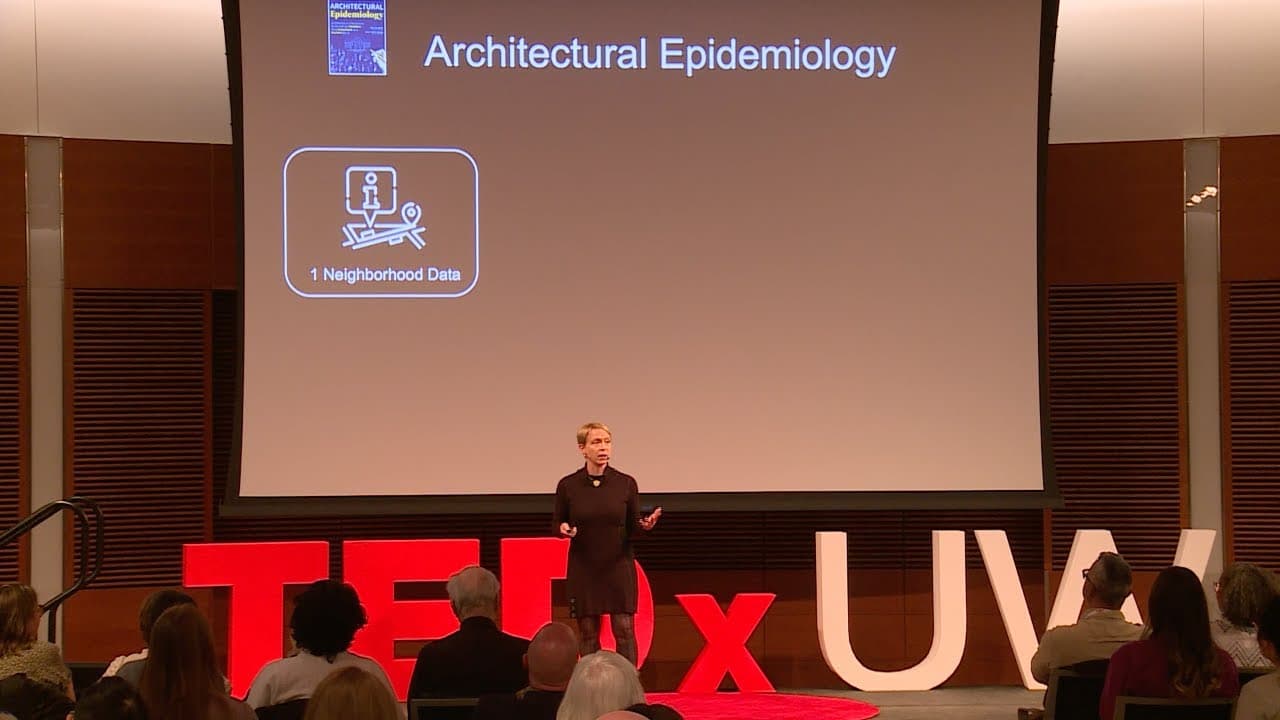
- A different method, called architectural epidemiology, has been developed, which applies public health methods to the design and development process, combining neighborhood data with community engagement to create a shared vision for the project 4m10s.
- This approach involves moving public statements and community engagement to an earlier stage in the process, informing them with evidence and residents' lived experience, and has been successfully used in projects such as the Louisiana Children's Museum in New Orleans 6m30s.
- The Louisiana Children's Museum project, designed by Mithun and Wagner and Ball, is an example of architectural epidemiology in action, where community engagement over a period of 5 months identified key themes and aspects of the design that were important to children and families 8m40s.
Case Study: Louisiana Children's Museum
- The first project addressed the ongoing intergenerational trauma of the relationship with water that children were still experiencing in New Orleans decades after Hurricane Katrina, and highlighted the diversity of cultures within the city, with the final project located in City Park, designed to reduce flood risk in surrounding neighborhoods 10s.
Case Study: William's Terrace in Charleston
- The second example is William's Terrace, a senior public housing development in Charleston, South Carolina, designed by David Baker Architects and McMillan Pazdan Smith Architecture, which is located in a neighborhood that has provided workforce housing since the 1700s and has a high poverty rate 2m6s.
- The William's Terrace project includes a public park and market-rate housing, with design features such as deep porches to protect residents from the summer sun, and the relocation of the laundry room and community room to the roof to protect from flooding, which also created space for social connection among residents 2m6s.
Case Study: I-5 Rose Quarter in Portland
- The third example is the I-5 Rose Quarter Independent Cover Assessment, designed by the architecture firm CGF, which aims to repair the harm caused by the creation of the I-5 freeway in the 1960s in a neighborhood in Portland, Oregon, with a high percentage of African-American population and high poverty rate 4m30s.
- The I-5 Rose Quarter project involves creating a cap over the freeway and knitting the two neighborhoods together, with a focus on building opportunities for housing, home ownership, and cultural expression within the neighborhood 4m30s.
Success Factors in Community-Driven Development
- A study was conducted to determine why these three projects were successful in creating a buildable and acceptable outcome for the community, and three themes emerged from the study, although the specific themes are not mentioned in this portion of the text 6m30s.
- Architectural epidemiology is moving away from the traditional approach where architects, developers, and local officials are the sole experts, and instead, community engagement is being introduced earlier in the design process, allowing communities to take a more active role in project development 10s.
Benefits and Outcomes of Architectural Epidemiology
- The use of data as a design tool creates natural guardrails that prevent individual ideas from dominating the conversation and makes it easier to visualize how different stakeholder groups' motivations and goals are linked, ultimately speeding up the process 42s.
- The process is set up to ensure that everyone involved feels heard, and this has been powerful for participants, including a local official who noted that it reframes sustainability to include both community and economy, rather than being a choice between the environment and the economy 42s.
- Participants, including a developer and a community member, have found value in the process, with the developer recognizing the project's ability to address numerous neighborhood needs and the community member appreciating that their voices were heard 2m6s.
- The goal is to encourage community members to view development projects as opportunities to create something celebratory, rather than causing alarm, and to think about how they can contribute to making the development a positive addition to their community 2m6s.