

Intro 0s
- The Vergecast is the flagship podcast of Farfield microphones, hosted by David Pierce, who is a person who thinks in lists and uses them to organize his life 1s.
- David Pierce has a list called "how to be a grown-up" that he has been keeping for several years, which includes tasks that are essential for being an adult, such as maintenance tasks that are easy to forget 26s.
- The list includes reminders for tasks like changing the air filter in the furnace every 3 months, which is a simple task but easy to forget 55s.
- The most recent task added to the list is to change the air filter on the dehumidifier in the laundry room, which is a task that is necessary to prevent the laundry room from smelling bad due to moisture 1m13s.
- Being an adult is not just about doing big tasks, but also about remembering to do small maintenance tasks that are easy to forget 1m38s.
- The topic of the podcast is not about lists or dehumidifiers, but about Alexa, which will be discussed in the rest of the episode 1m43s.
Alexa: A Decade in Review 1m48s
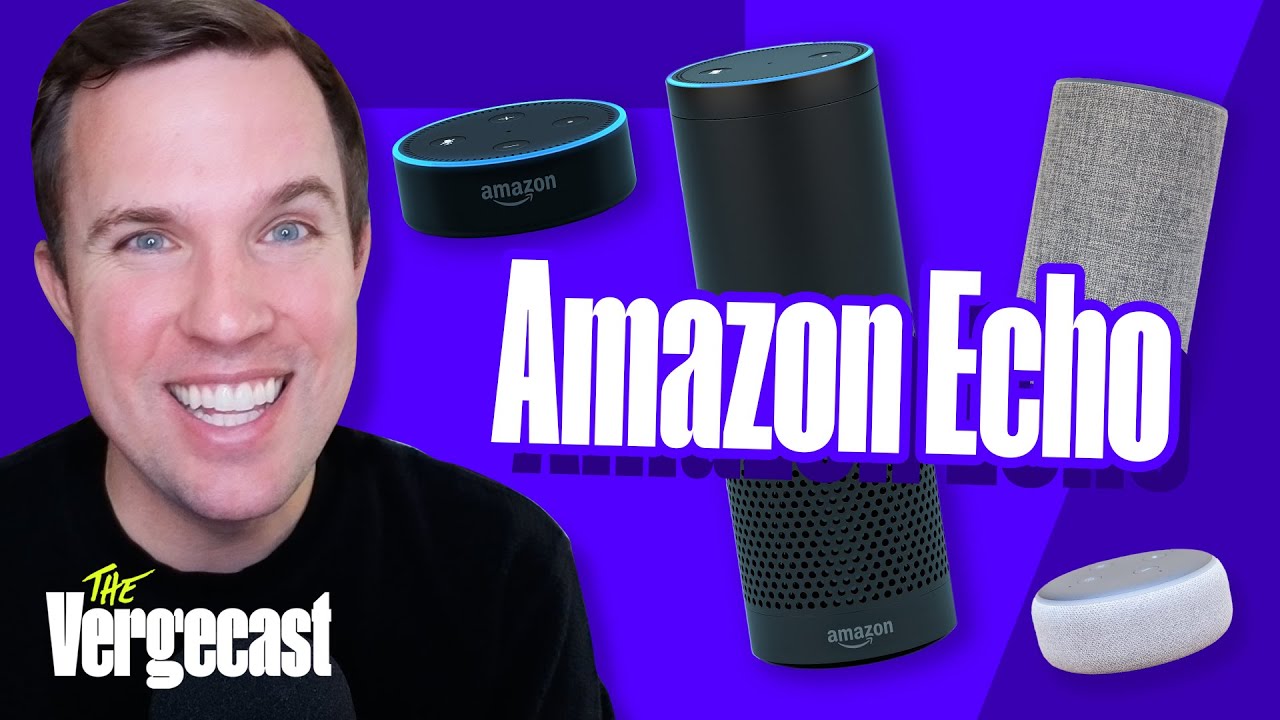
- The Amazon Echo was first released 10 years ago, specifically on a Wednesday, and it had a unique design resembling a can of tennis balls or a Pringles can with a blue ring and far-field microphone. 1m48s
- The Echo's release presented a fully formed vision for a new way of computing, and 10 years later, its impact has been both more and less transformative than expected. 2m6s
- Alexa's success has influenced other virtual assistants, such as Google Assistant and Siri, which has undergone significant changes due to Alexa's presence in the market. 2m23s
- The rise of AI has led to a significant push towards voice-based computing, raising questions about whether this is the right path for the future of computing and what can be learned from Alexa's first 10 years. 2m41s
- The discussion will explore how far voice-based computing has come, where it is headed, and whether it is the right direction for the future of computing. 2m18s
The Launch Amazon Echo 3m41s
- Amazon's Echo, a smart speaker that talks to users, was launched on November 6th, 2014, priced at $199, with a discounted price of $99 for Prime members who received an invite 3m41s.
- The launch was unexpected, and the initial reaction was confusion about the purpose and functionality of the device 4m17s.
- Amazon's idea was to create a physical device that could be a piece of furniture in users' homes, changing how they interact with it 4m54s.
- The device was initially met with skepticism, but Amazon was correct about some aspects, such as the potential for a voice assistant to be a different type of physical device 5m1s.
- The launch of Echo was influenced by the failure of the Fire Phone a few months prior, leading to a stealth launch with a press release and a video 6m22s.
- The original Echo had limited functionality, including playing music, answering questions from Wikipedia, and controlling the device with voice commands 7m31s.
- Alexa, the voice assistant, started in a deeply strange way, with a launch that was not widely publicized or anticipated 6m15s.
- The 10-year anniversary of Alexa's launch is being marked, with a discussion of its impact and the changes that have occurred in the tech industry over the past decade 6m6s.
- Amazon's Alexa was first announced on November 6th, 2014, and was initially available by invitation only, with a waitlist for those interested in purchasing the device 7m41s.
- The device was not initially sent out to reviewers, with The Verge purchasing one to review, and it wasn't until the spring of 2015 that regular people could buy it 8m2s.
- Alexa was launched as an experiment, with Amazon having spent years working on the technology, particularly the far-field microphones, which allowed users to talk to the voice assistant from anywhere in the room 8m27s.
- The ambition behind Alexa was to create a device akin to Star Trek's computer, an all-knowing and ever-present computer that could understand natural language and perform various tasks 8m49s.
- The first Echo device was a tennis ball can-shaped device, which still works for some users, including one who uses it for music in their garage 10m5s.
- The device went on general sale in July 2015, and some people received it as a Christmas gift that year, including one user who still has their original device 9m45s.
- The launch of Alexa was seen as exciting technology, with the potential to revolutionize the way people interact with their homes and devices 9m22s.
- The first Echo device was launched in a secretive manner, with the company initially being hesitant to provide review units, leading to a purchase and review of the device instead 11m34s.
- The launch of the Echo was a significant event, with the device becoming widely popular and important in a short period, going from a secret launch to being under many Christmas trees in just 12 months 12m10s.
- Amazon's initial hesitation with the Echo's launch may have been due to fear of it being a failure like the Fire Phone, despite Jeff Bezos being very supportive and excited about the project 12m30s.
- The Echo was not a locked-down proprietary device, but rather an open platform that allowed developers to create skills and capabilities for Alexa, with software development kits and partnerships with other manufacturers 13m5s.
- The launch of the Echo marked a shift in Amazon's approach to hardware development, from being cautious to being more experimental and willing to try new things 12m48s.
- The Echo's success can be attributed to Amazon's willingness to let developers and other manufacturers experiment with the technology, leading to a wide range of devices and capabilities being developed 13m58s.
- The initial review of the Echo in January 2015 was positive, with the device being seen as exciting and full of possibilities for what could be done with the new technology 14m11s.
Shortcomings of Alexa 14m19s
- Amazon's Alexa has been successful in delivering on its initial promises, such as playing music, providing basic information, setting timers, and converting units, which is impressive considering the company's understanding of the device's purpose from the beginning 14m35s.
- Within the first two years of its release, Alexa had sold 5 million devices, which is a notable achievement for a new piece of technology 15m7s.
- The concept of a smart speaker was new and unfamiliar to people before Alexa's release, but the device quickly gained popularity due to its ease of use and innovative features 15m20s.
- The device's ability to play music and perform tasks with simple voice commands created a sense of excitement and virality, making people want to use it more 15m57s.
- For families, Alexa brought technology into a more usable space in the home, allowing parents to engage with their children in activities like playing music, telling stories, and reading audio books without needing to use their phones 16m38s.
- Despite its initial success and potential, Alexa has not evolved beyond its basic features, failing to become the advanced, Star Trek-like computer that Amazon and its executives had envisioned 17m41s.
- Today, people still use Alexa, but its capabilities have not expanded significantly, and it remains a device that is primarily used for simple tasks 17m52s.
- The use of Alexa has not changed much over the years, with the same basic tasks being performed, indicating a lack of significant development or exciting new use cases for the technology 17m56s.
- Despite its limitations, Alexa has valuable use cases, particularly in accessibility and elder care, such as controlling lights, shades, and thermostats, and helping people with accessibility challenges 18m55s.
- The idea of an ambient voice assistant that can manage a home and be an omniscient artificial intelligence, like the computer in Star Trek, has not yet been achieved 19m24s.
- Many problems encountered when using Alexa include it not doing what is expected, not hearing correctly, or performing different actions than requested, leading to limited usage for basic tasks like turning lights on and off 19m53s.
- Alexa excels at core use cases such as playing music and setting timers, but its reliability issues hinder its potential for more complex tasks 20m34s.
- The reasons behind Alexa's limitations are unclear, with possibilities including a failure of technology, an ecosystem problem with not enough compatible devices, or the voice interface not being suitable for complex tasks 20m44s.
- The question of who or what is to blame for Alexa's limitations remains open, with various factors potentially contributing to its lack of development and reliability issues 20m50s.
- The development of Alexa, Amazon's voice assistant, has been a mix of success and failure, with the company focusing too much on creating new devices rather than improving the core technology 22m4s.
- Alexa started as an ambitious and exciting technology, but Amazon's focus shifted to selling more devices, resulting in a wide range of Echo devices, including those with screens, and integrating Alexa into various household items like microwaves and clocks 22m18s.
- The company's emphasis on expanding Alexa's presence in every corner of users' lives led to a lack of focus on developing the core technology, resulting in limited improvements to the interface and useful capabilities 23m7s.
- Despite having many capabilities, Alexa's interface remains a problem, with too many features that are not necessarily useful, and not enough focus on core use cases like ordering food or planning daily tasks 23m38s.
- The lack of breakthrough use cases has limited Alexa's adoption, making it a fun but not essential device for many users, with some niche use cases being the exception 24m32s.
- Amazon's shift towards becoming a hardware company has led to a focus on releasing numerous new gadgets, including 75 new Alexa devices in 30 minutes at one of their fall hardware events, but this has not necessarily translated to improved functionality 24m46s.
- The Alexa app is considered one of the worst pieces of smart home software, requiring users to rely on it to access many of Alexa's features, which has hindered the overall user experience 25m31s.
- Alexa has incrementally gotten better over time, but it is still difficult to use, with the voice interface being the main area that needed improvement, allowing users to talk to it in a natural way like in Star Trek, where the computer understands and fulfills requests without issues 25m37s.
- Alexa's voice interface has not improved significantly since its release, with it still struggling to understand user requests and fulfill them correctly, despite advancements in transcription and natural language processing 26m21s.
- The main challenge with Alexa lies not in understanding user requests, but in fulfilling them correctly, with the device often failing to complete tasks after correctly registering user intentions 27m26s.
- Alexa's integration with smart home devices has been clunky, with users experiencing difficulties in setting up and using routines, such as good morning or good night routines, to control their smart home devices 27m49s.
- Despite efforts to improve Alexa's smart home capabilities, users still experience issues with the device, such as incorrect execution of routines or failure to understand user requests, highlighting the need for further improvement 28m59s.
- The concept of a smart home that works seamlessly with voice control, as depicted in Star Trek, remains an elusive goal, with Alexa and other voice assistants still struggling to deliver a magical experience where the smart home just works 29m12s.
- The concept of a smart home assistant, such as Alexa, is to simplify daily routines and tasks, making life easier and more convenient, for example, turning on lights, playing music, and brewing coffee, all controlled by voice commands 29m21s.
- However, one of the main issues with smart home assistants is the lack of context, which can lead to problems, such as accidentally waking up a family member who is sleeping during the day due to their non-traditional work schedule 30m19s.
- Motion sensing support for Alexa has been spotty, and it has only been possible to use motion sensors to trigger routines in the last couple of years, with many users experiencing connectivity issues with Zigbee motion sensors 31m2s.
- Troubleshooting smart home devices can be time-consuming, and users expect their smart assistant to be able to resolve these issues quickly and efficiently 31m25s.
- Simple tasks, such as brewing coffee, can be challenging to set up with Alexa, requiring either a smart plug or a specific type of coffee machine, which can be expensive, with prices ranging from $1,000 to $2,000 31m52s.
- The process of setting up and maintaining smart home devices can be complicated and time-consuming, requiring a significant amount of work and maintenance, which can be frustrating for users 33m2s.
- The complexity of setting up smart home routines can be compared to using a scripting language, such as Apple Shortcuts, which can be overwhelming for many users 32m46s.
- Despite Amazon's efforts to enable smart home capabilities, the process of setting up and maintaining these devices can be daunting, leading to a significant loss of convenience and simplicity, which is the primary purpose of smart home assistants 33m9s.
The Future of Alexa 34m32s
- The future of Alexa is being discussed, with the possibility of the next decade bringing new developments in the field of voice assistance 34m33s.
- The idea is that in 10 more years, the technology might finally live up to its potential and become more integrated into daily life 35m15s.
- A visit to Amazon's smart home lab in Seattle provided a glimpse into the company's vision for an ideal Alexa-powered ambient smart home 35m47s.
- The lab featured a fully connected and set up home with various devices, including Echo devices, robot vacuums, and third-party gadgets 37m6s.
- However, the experience was disappointing, with the system feeling more like a remote control for the home rather than an ambient smart home 36m46s.
- The setup relied on command and control, with no motion sensing or ambient action, and the system was slow and laggy 38m17s.
- The visit reaffirmed the feeling that current smart home technology is not yet at the level of a Star Trek computer or an ambient smart home 38m50s.
- A distinction is made between a remote control for the home, which has its use case, and an ambient smart home, which is still the aspiration for the technology 39m1s.
The Struggle with Universal Remotes 39m11s
- Universal remotes are underdeveloped and underconsidered as gadgets, despite their potential to simplify control of multiple devices with a single interface 39m11s.
- Having multiple remotes for different devices is impractical, and consolidating their functions into one device makes sense in terms of human utility 39m36s.
- Amazon's Alexa is not yet at the level of ambient computing, where it can proactively perform tasks without being explicitly asked 40m3s.
- The current state of Alexa requires users to give specific commands, which is seen as a failure of the system, as it should be able to anticipate and perform tasks automatically 40m22s.
- The technology to enable proactive functionality is available, with devices like the Eight Sleep tracker, but Alexa has not yet successfully integrated these capabilities 40m31s.
- Alexa is currently at the level of a universal remote, which, although useful, is limited by the need for specific nomenclature and button sequences 40m45s.
- The ambient intelligence aspect of universal remotes and Alexa is lacking, requiring users to use specific words or button sequences to control devices 41m31s.
The Future of Ambient Computing 41m36s
- The next step in the smart home is to have systems that can understand context and everything in the home, which requires intelligence that current devices do not possess 41m38s.
- Amazon is trying to make Alexa more intelligent by feeding it every smart home manual ever made, so it knows the devices in the home and can act on them 42m9s.
- For example, a smart faucet can be controlled using Alexa, but it requires specific voice commands and does not always work as intended 42m23s.
- The ideal future would be for devices to know the context and location of the user, so they can perform tasks automatically, such as dispensing hot water when the user is standing in front of the faucet 43m10s.
- The technology to enable this future is already available, including devices from Apple and Google, and technologies like Wi-Fi and radar 43m24s.
- However, this future requires a deep trade-off in terms of privacy, as devices would need to be aware of the user's location and activities, which may make people uncomfortable 43m51s.
- Matter, a smart home platform, could potentially help by keeping information local and using data locally, rather than relying on the cloud 44m30s.
- The implementation of Matter is up to the platforms, but it could provide a way to balance convenience and privacy in the smart home 44m42s.
Challenges and Innovations in Voice Assistants 45m12s
- The current state of ambient computing has everyone thinking about the same goal, with the same technology expected to achieve it, which brings up Dave Limp's announcement of a reboot of Alexa a year ago, showcasing a more conversational and natural voice assistant 45m31s.
- The new Alexa demoed by Dave Limp was able to have a natural conversation, understand context, and have a personality, which is the North Star that the company has been working towards, similar to the Star Trek computer 46m5s.
- The new Alexa is also expected to be able to do more intelligent responses, including multistep routines, allowing users to create custom routines by simply telling Alexa what they want to accomplish 46m31s.
- The vision for the new Alexa is to be able to understand context and follow through on commands, allowing users to have more natural and conversational interactions with the voice assistant 47m0s.
- An example of this would be being able to tell Alexa to remind a family member about a science project, set an alarm, unlock a door, and preheat the oven, all while adjusting the timing if the user is running late 47m21s.
- To achieve this level of context awareness, Amazon will need to gather more information and data, similar to what is already seen in other ecosystems, such as Siri's ability to understand context and adjust accordingly 47m46s.
- The goal of a context-aware voice assistant is considered the holy grail of ambient technology, and companies like Apple are also working towards achieving this with Siri 48m45s.
- A hypothetical smart home scenario is described where a smart assistant anticipates and automates various household tasks, such as preheating the oven, unlocking the door, turning on the air purifier, and starting the robot vacuum, all without the need for voice commands or manual intervention 49m5s.
- This scenario is seen as both the "dream" and slightly terrifying, as it raises questions about the level of proactivity desired in a smart assistant 50m50s.
- It is noted that a perfectly proactive assistant may not always be the right answer, as people often enjoy browsing and making their own choices, even if the assistant can anticipate their preferences 51m3s.
- The idea of a smart assistant automatically starting a bath or playing a TV show without being asked is seen as potentially odd or unsettling, but being asked if you would like the assistant to perform these tasks is seen as more valuable 51m42s.
- The importance of interface design is highlighted, with the suggestion that a more conversational and interactive approach, similar to how one would communicate with a human personal assistant, may be more effective and desirable 52m5s.
- The use of large language models (LLMs) is mentioned as a current area of focus, but the specific implications and applications of this technology are not explored in detail 52m26s.
- Large language models (LLMs) are expected to improve understanding of queries, making them better than previous systems for speech-to-text, natural language processing, and text-to-speech, which is a positive development for Alexa 52m35s.
- Despite the potential of LLMs, they only solve part of the process, and other parts of the process, such as access to user data, remain a challenge for Alexa 53m4s.
- Google and Apple have an advantage over Amazon due to their access to user data, including location, contacts, calendar, email, and web search, which Amazon lacks 53m14s.
- Amazon's lack of access to user data limits Alexa's capabilities, and users may be hesitant to give Alexa access to their personal data, such as Gmail 53m41s.
- Amazon's strategy to put Alexa in front of users at all times through various gadgets may encourage users to share more information with Alexa, but this approach has its limitations 54m20s.
- The upcoming "remarkable Alexa" is rumored to be a significant improvement, but it remains to be seen if it will address the existing challenges 55m6s.
- Amazon's new hardware chief, Panos Panay, hinted at a big reset for Alexa, which may be announced at a future event 55m35s.
- Amazon has been releasing news about its devices and services in "dribs and drabs" over the last few weeks, including a new outdoor ARA ring with 24/7 recording, new Kindles, and the discontinuation of certain devices like the Echo Dot with Clock and possibly the Echo Show 15 56m1s.
- The company is also killing some services, such as Alexa Together, a home care service, and is rumored to be culling its devices and services division under Andy Jassy 56m32s.
- This reset may be an effort to streamline and focus on the core value proposition of the assistant, rather than emphasizing gadgets and gizmos 56m52s.
- Amazon may be working on improving the user interface and voice interface of Alexa, possibly using its own large language model (LLM) or others like Claude 57m17s.
- The company's approach to voice assistants may be different from its competitors, such as Google, which is killing Google Assistant in favor of Gemini, and Apple, which is using Siri under the umbrella brand of Apple Intelligence 58m45s.
- There is a disconnect between the capabilities of current voice assistants and LLMs, and it may make sense to merge or mesh the two technologies, but this may be a technical impossibility 59m20s.
- Amazon's decision to stick with the Alexa brand and integrate new technology into existing devices, rather than starting over, is a strategic choice that may or may not pay off 58m59s.
- The company has the opportunity to do something exciting with Alexa, just like it did 10 years ago when it launched the assistant, but it's unclear if it will succeed 58m21s.
- Amazon's Alexa has become a recognizable brand over the decade, and it's unlikely that the company will change its name despite potential technical baggage, as people have grown to love the Alexa brand, especially when compared to Siri and Google Assistant 59m54s.
- The idea of walking away from Siri might have been a smart move for Apple due to its baggage, but Alexa doesn't have the same issue, as people have settled into using it for simple tasks like music and timers 1h0m42s.
- Amazon's ability to upgrade existing Alexa devices with new capabilities could be a powerful move, especially if they can suddenly upgrade everyone's speakers in a massive way 1h1m26s.
- The original Echo device, which is over 10 years old, will be updated to support the new Alexa, showing Amazon's commitment to its existing infrastructure 1h1m39s.
- Making Alexa smarter and expanding its capabilities could lead to interesting possibilities, and Amazon's decision to improve Alexa rather than replacing it seems like the right move 1h1m55s.
- A review of the new Alexa on the original Echo device is planned, which will test whether the updated software can bring new life to 10-year-old hardware 1h2m15s.
Vergecast Hotline 1h2m52s
- Kyle Colin from Texas called in with a question and product idea about AirPods, specifically about people wearing them in public and not knowing if they can hear others speaking to them, and suggested adding LEDs to AirPods to signal when they are in hearing aid mode, similar to Samsung's new models 1h3m19s.
- The idea of adding LEDs to AirPods was well-received, and it was noted that this concept is similar to what is being seen in other technologies, such as smart glasses, where a light indicates that the user is being recorded 1h4m41s.
- The idea of using LEDs to communicate that a device is capturing audio or video is becoming more common, and it was suggested that this could be a useful feature for AirPods, especially for those using them as hearing aids 1h5m40s.
- It was noted that it would take time and marketing effort for people to understand the meaning of the LEDs, but it could be a more effective solution than simply accepting that people will wear headphones in public all the time 1h6m7s.
- The concept of using LEDs to signal that a device is capturing audio or video is still a relatively new idea, and it was noted that it has been tried before, such as with Google Glass, but it did not work well at the time 1h5m20s.
- The idea of using LEDs to communicate that a device is capturing audio or video is becoming more common, and it was suggested that this could be a useful feature for AirPods, especially for those using them as hearing aids, and it could be a more effective solution than simply accepting that people will wear headphones in public all the time 1h6m2s.
- The idea of having a signal or indicator on headphones to show when they are in use and the wearer can hear others is considered valuable, as it can help avoid misunderstandings and signal to others that the wearer is available to talk, even when wearing headphones 1h6m22s.
- Samsung's Galaxy buds 3 Pro have LEDs that light up when the find my feature is turned on, but they do not show battery life or other useful information, and are mostly aesthetic 1h6m54s.
- The concept of having a signal on headphones is seen as a good idea, and it is hoped that Apple will implement something similar in the future 1h6m50s.
- The use of headphones is becoming more common, and there is a societal shift towards wearing them in more situations, which can be seen as rude or off-putting by some people 1h7m31s.
- The increasing use of headphones as augmented reality devices that are always on and provide health benefits, as well as being useful in day-to-day life, will require significant societal changes 1h8m11s.
- The question of how to navigate the use of headphones in the real world, especially as they become more than just music devices, is a complex issue that requires consideration and feedback 1h8m44s.
- The idea of having a clear distinction between headphones and hearing aids, and whether headphones should be designed to look like hearing aids, is also a topic for discussion 1h9m7s.
- The use of headphones is a topic that will continue to be explored and discussed in the coming months, as it has significant implications for society and culture 1h9m27s.
- The Verge has a big week with various stories and an election package available on their website, and listeners are encouraged to read and vote if they haven't already 1h9m46s.
- The election package includes great stories and an endorsement, and listeners are wished the best of luck 1h9m56s.
- Listeners can share their thoughts, questions, and feelings by emailing vergecast@verge.com or calling the hotline at 866 Verge 111 1h10m8s.
- The show is produced by Liam James, Will P, and Eric Gomez, and is a part of the VOX media podcast Network 1h10m15s.
- The hosts will return on Friday to discuss the election, product news, and Apple updates 1h10m21s.