
Valuation and Seed Funding Amount
- A $300 million pre‑seed valuation is far above typical levels, and the founders prioritized having the right investors on the cap table who understand that an AI company may be revenue‑free for a period while building models from scratch 0s
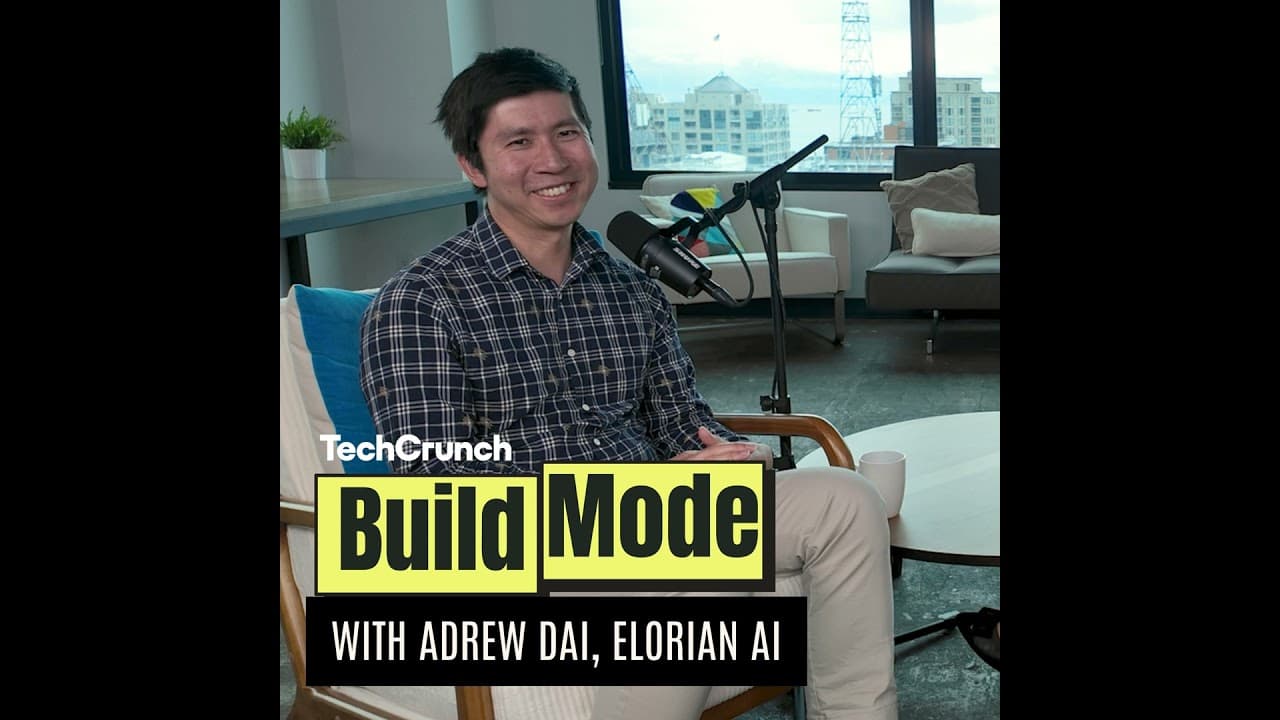
- Andrew Dai, co‑founder and CEO of Alorian, previously spent over a decade at Google DeepMind and authored a 2015 paper later cited by OpenAI as the “recipe for ChatGPT” 0s
- Alorian raised $55 million in a few months, achieving a valuation that even surprised the team 0s
Visual AI Vision and Goals
- The company focuses on developing visual AI models aimed at achieving visual artificial general intelligence (AGI), a domain the founder describes as “under‑discussed” and unevenly progressed compared with areas like math, physics, coding, and games 0s
- Current visual models perform well on simple tasks such as object identification (e.g., Google Lens recognizing a plant) but struggle with more complex visual reasoning questions that an elementary‑school child could answer, such as counting objects, tracing wires, or determining row positions 0s
- Alorian’s target applications involve solving these sophisticated visual reasoning problems, enabling machines to understand and reason about visual scenes at a deeper level 0s
Use Cases and Investor Selection Philosophy
- Example household use cases include a smart fridge that can automatically recognize and count items (e.g., a bottle of milk) without barcode scanning, and a home cocktail bar that can suggest missing ingredients, illustrating how visual AGI could make everyday appliances more intelligent 0s
- The founders chose to turn down higher valuations in favor of partnering with investors who share their long‑term vision and can support the challenging journey of building revenue‑free, cutting‑edge AI technology 0s
Founder Advice on Storytelling and Cash Planning
- Advice offered to other founders emphasizes the importance of telling a compelling story about technology that is years ahead of market expectations to attract the right backers 0s
- The company aims to build AI models focused on visual reasoning, choosing a post‑training approach that is more capital‑efficient than full‑scale training, allowing development with only a few million dollars and enabling early customer engagement. 0s
- To support this strategy, the team targeted a cash range sufficient for post‑training and hiring well‑compensated researchers, acknowledging that insufficient funding would hinder progress. 0s
Fundraising Process and Strategic Investors
- The seed round raised $55 million at a $300 million pre‑seed valuation, attracting high‑profile investors such as Menlo Ventures, Nvidia, and Jeff Dean, who were drawn by the capital‑efficient plan and rapid path to customers. 0s
- The fundraising process involved extensive pitching and explaining the company’s visual‑reasoning and AGI vision, which many investors found technically challenging to grasp. 0s
- Benchmarks like AKGI show improvements in multimodal reasoning, but current inputs are limited to very low‑resolution images (32×32 or 64×64 pixels), far from real‑world applicability such as representing fridge contents, highlighting a gap that the team emphasized to investors. 0s
- Technical investors (e.g., Jeff Dean, Nvidia) quickly understood the potential, while others required more refined messaging to appreciate the long‑term capabilities beyond existing benchmarks. 0s
Founder Fundraising Learning and Nvidia Partnership
- The founder noted that prior experience at Google led to expectations of a clean, straightforward fundraising narrative, but the actual process was more complex and involved learning about angel investing and investor communication. 0s
- Nvidia’s presence on the cap table is strategically important because Elorian AI requires massive compute resources for its multimodal reasoning work, and Nvidia can provide direct engineering support to optimize models for their chips and assist with GPU procurement 0s
- The relationship with Nvidia is still early, having received a relatively small investment so far, but there are plans for Nvidia to leverage Elorian’s multimodal models for its own clients and customers as the partnership matures 0s
Jeff Dean Involvement and Investor Pressure
- Jeff Dean, a highly respected AI researcher who previously worked with the founder at Google Brain and DeepMind, is an investor; his hands‑on technical expertise (down to machine code) left a strong impression, and he now supports the company mainly out of long‑standing professional rapport rather than imposing heavy expectations 0s
- The company’s $300 million pre‑seed valuation is far above typical levels and exceeds the valuation‑to‑capital ratio of historic large rounds such as Thinking Machines, creating significant pressure from investors to meet milestones and deliver results 0s
- This high valuation and the involvement of major strategic investors generate pressure on all sides, influencing the team’s focus and expectations for future funding rounds 0s
Market Pace and Frontier Competition
- The rapid pace of AI model releases—sometimes every two weeks—creates market pressure to stay at the frontier, more so than investor pressure 0s
- To avoid falling behind frontier labs, the founder left his previous role in November, founded the new company in December, and pursued an accelerated fundraising process 0s
- Fundraising was completed much faster than typical new labs, driven by the need to start building quickly rather than solely by capital requirements 0s
Holiday Fundraising Timing and Angel Insights
- The founder acknowledges that fundraising during the holiday season (late November to December) was suboptimal because many investors are on vacation and due‑diligence teams are unavailable 0s
- He would have preferred to begin fundraising in January instead of December to avoid these holiday delays 0s
- He wishes he had done some angel investing earlier to better understand the fundraising process 0s
Guidance for First‑Time AI Founders
- For founders raising their first round in AI, he advises anticipating how rapid AI advancements will impact their product story, especially in areas like coding, mathematics, and the sciences 0s
- He stresses the difficulty of raising capital for SaaS companies in the current AI climate and recommends aligning the business narrative with AI trends 0s
- Networking with other founders—particularly those who have left major AI labs such as Google Brain—and consulting angels can provide invaluable feedback on pitches and slide decks 0s
- When building AI companies that are not at the cutting edge, founders should be prepared to educate investors and the broader community about their technology, as competitors can quickly outpace less advanced solutions 0s
- The education gap among founders is significant and likely to grow, making it crucial to test pitches and explain concepts clearly to people outside the industry, as investors may not understand technical terms like MQA, MHA, or KV caches 0s
- Pitch relevance can change quickly, so founders should focus on the larger vision and potential moats—such as customer acquisition and verticalization—rather than getting bogged down in specific technical methods 0s
Pitch Iteration and Narrative Refinement
- It is acceptable to refine the big‑picture narrative during the pitching process, especially when under time pressure, and many founders iterate their story as they receive feedback 0s
- Different AI pitches vary in difficulty; straightforward applications like AI for customer service are easier to convey than more abstract concepts such as AI that visualizes or categorizes a future that does not yet exist, which require a more philosophical framing 0s
Early Traction and Hiring Expansion Plans
- Although the company has no public revenue yet, it has progressed rapidly, currently employing 13 people and receiving multiple offers in the pipeline 0s
- A public launch—including a website and launch video—generated 200 applicant submissions over a single weekend, creating a heavy interview load for the existing team 0s
- The hiring goal is to double or triple headcount within the next six months to secure top talent before they move to other labs 0s
Technical Milestones and Commercial Interest
- On the technical side, the team aims to achieve state‑of‑the‑art performance on several frontier visual‑reasoning benchmarks later this year and to release a public external API for external testing and feedback 0s
- Commercially, the company has attracted strong interest from both large enterprises and startups, who find current multimodal and visual‑reasoning models insufficient for use cases in agentic systems, engineering, and design 0s
- Discussions are underway with several companies to pilot the new model, with the goal of demonstrating superior performance over existing models in real‑world applications 0s
Founder Background and Fundraising Surprise
- The founder’s first startup experience was a six‑month stint at Autonomy after his bachelor’s degree; the company was later acquired by HP, giving him early exposure to wearing many hats in a small company 0s
- After 12 years at Google, he felt comfortable handling operational tasks such as payroll, vendor ordering, and office setup when launching his own venture 0s
- He found the fundraising process surprising because it is a two‑way “reverse pitch”: after founders pitch, investors also pitch themselves to the founders, requiring founders to evaluate why they should take money from a particular investor 0s
Hiring Challenges and Candidate Profiles
- Hiring proved more challenging than at large tech firms; candidates often have a strong preference for either big‑tech or startup environments, making it difficult to convince someone to switch direction 0s
- The company has raised $55 million, far more than typical founders at a similar stage who raise only $2–3 million, and this large amount is now public information 0s
- Candidates attracted to startups for the experience of building a company are easier to convince, as they see a clear growth path and early‑stage impact 0s
- Candidates coming from big‑tech backgrounds who have never considered a startup are harder to recruit; the firm can offer competitive compensation relative to other AI labs but cannot match the top 1‑5 % packages from firms like Meta or TVD Lab 0s
- Hiring targets are balanced against compensation limits; the company must meet its goal for the number of researchers and engineers while staying within budget 0s
- The hiring process maintains a very high bar, requiring candidates to pass extensive research and coding interviews before receiving an offer, which naturally limits the number of hires 0s
Capital Management and Investor Value‑Add
- The $55 million raised must be managed carefully to last until the next financing round, as the company does not plan to raise a Series A immediately 0s
- The founders evaluated investors based on how closely they would be involved, preferring high‑touch partners who could become future customers or connect them with valuable contacts 0s
- Access to university recruiting networks was a key factor, as some investors had strong relationships with well‑known colleges that could streamline hiring 0s
- Investors often claim to be the most value‑add on the cap table, so the founders probed for concrete ways the investors could help, such as hiring assistance and introductions 0s
- The founders favored a hands‑on approach from investors; with a small team of 13, they appreciated investors who checked in every few days and offered practical help rather than just requests 0s
Valuation Expectations and Investor Selection Criteria
- The $300 million pre‑seed valuation was unexpected; the founders’ primary goal was to raise $50 million to cover compute and data costs needed for a world‑class model, and the valuation emerged from market dynamics 0s
- Although higher‑valuation offers were presented, the founders declined them to prioritize investors who understood the unique, revenue‑free early stage of an AI company and could provide strategic support for GPU procurement and hiring 0s
- The founders emphasized that choosing investors for strategic value and guidance is more important than chasing the highest valuation or largest check size 0s
Differentiation, Market Target, and Moat Strategy
- Alorien differentiates itself by focusing on specialized multimodal models, targeting a different user base than competitors like Gemini, ChatGPT, or Claude 0s
- The target market consists of users who need highly accurate answers to visual problems such as counting rooms in a floor plan, calculating building square footage, or determining office seating capacity, where responses are binary (right or wrong) and precision is critical 0s
- The company differentiates itself from other multimodal firms by focusing on short‑term, user‑ready products and maintaining an aggressive model‑release schedule, aiming to launch its first model later this year, which is faster than most competitors 0s
- Rapid development and a defensive moat are intended to be built through accelerated pace, customer acquisition, and data collection, leveraging the speed of the AI sector 0s
Team Advantage and Experience
- Acceleration is achieved not by longer hours but by working smarter, using AI tools that understand the company’s AI‑native codebase better than legacy big‑tech codebases, enabling faster coding and iteration 0s
- The team’s advantage also stems from extensive experience, including early involvement with Gemini and a decade of work on large language models, allowing them to build high‑quality models from scratch 0s
Experimentation Mindset for AI Founders
- Advice for aspiring AI founders emphasizes experimentation: start with research papers, run many trials, modify data, architecture, and algorithms, and understand that breakthroughs often emerge from iterative testing rather than a pre‑planned vision 0s
- Successful experimentation does not necessarily require large funding; founders can achieve progress by repeatedly testing ideas and learning from failures 0s
- Small amounts of funding can enable development using open‑source models that run on a laptop or by training a very small model locally, and when results become unexpectedly promising it is an appropriate moment to approach investors or researchers for larger‑scale scaling. 0s
- The speaker emphasizes a “mess around and find out” mindset typical of Gen Z, encouraging hands‑on tinkering rather than spending excessive time on ideation and pitch decks before building. 0s
Closing Remarks and Podcast Credits
- Appreciation is expressed for the guest’s insights and optimism is conveyed about future success for the guest and for Lorean. 0s
- The guest thanks the hosts for the invitation and looks forward to appearing on their podcast. 0s
- Built Mode is identified as a TechCrunch podcast produced and edited by Maggie Ni, hosted by Isabelle Johannessen, with art and design by Maggie Ni, audience development led by Morgan Little, and contributions from the Foundry and Cheddar video teams, concluding with thanks to the broader startup community. 0s