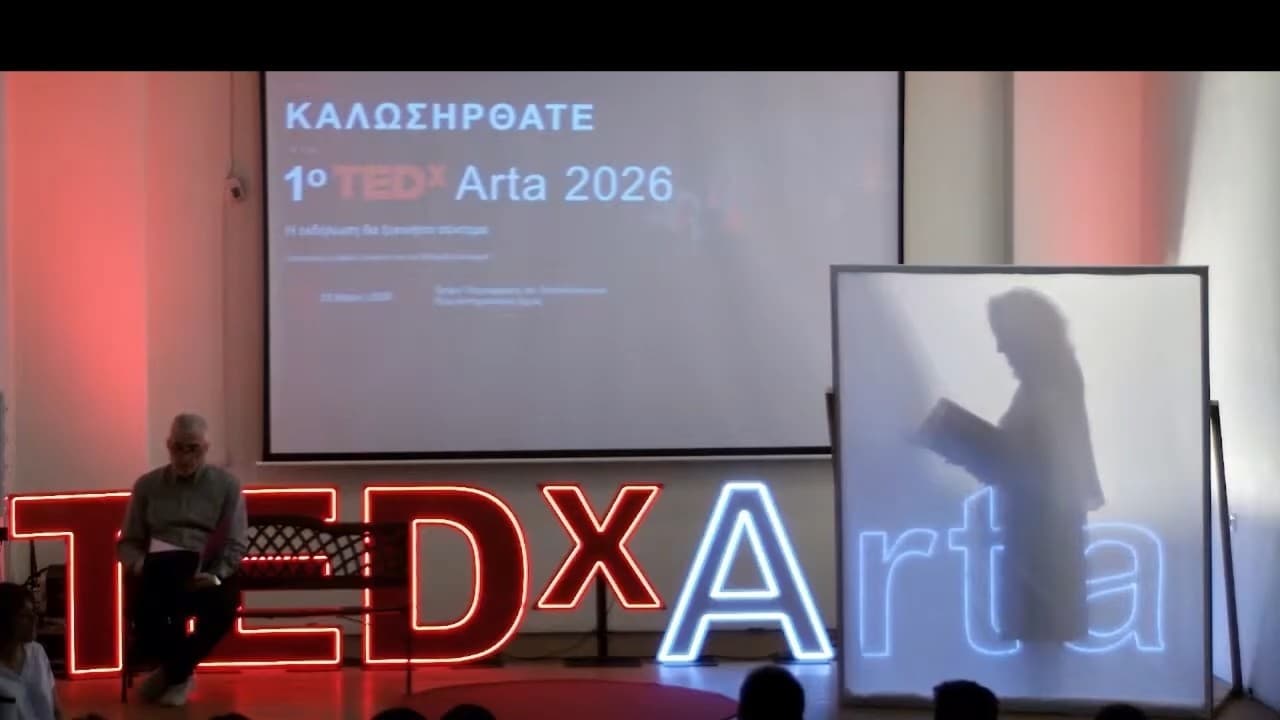

Epirotic Dirges and the Bridge of Arta
- Epirotic dirges are traditional lamenting songs that are performed not only during times of mourning but also during moments of joy, reflecting the cultural belief that life and death are closely intertwined 0s.
- A performance of a traditional dirge includes lyrics expressing deep sorrow, longing, and references to burial sites and personal grief 15s.
- Anna, a young architect, visits the Bridge of Arta to conduct research for a project 1m15s.
- While examining the bridge, Anna feels a mysterious pull and uses her fingers to trace the cracks in the stone, perceiving whispers and fragments of dreams 1m22s.
- As the sun sets behind the bridge, casting a golden light on its arches, Anna attempts to use her notebook but finds herself unable to write due to a sense of being watched or hearing whispers 1m35s.
- Anna experiences a sensation of being called by the bridge and hears a voice stating that it never passed but only remained 1m50s.
- Upon turning around and finding no one present, Anna touches the stone of the first arch and experiences a physical tremor 2m0s.
- Through a spiritual vision, Anna perceives the figure of a woman standing in the water wearing a soaked, dark dress 2m10s.
- The woman, described as a shadow existing between centuries, speaks to Anna in a calm, deep, and mnemonic voice 2m18s.
The Wife's Perspective on Construction
- The narrator requests that her memory be preserved not as a victim, but as a woman who chose to stand within the foundations of history rather than in the shadow of her husband 0s.
- Describing herself as a simple woman made of earth and labor, the narrator recounts growing up in Arta and dreaming of building a home 12s.
- She married a renowned master builder who was admired by others and viewed her with the same deep focus one applies to a work in progress 20s.
- The husband worked from sunrise to sunset, building arches and dreams, while the narrator provided support and rest for him 32s.
- The narrator notes that she lacked an individual identity, as her name was defined by her husband, much like stone that loses its original form to fit a mold 45s.
- Her role was to provide invisible architecture, supporting both the construction site and her husband's life 55s.
- The husband was tasked with building a bridge to unite the city and provide hope and passage, but the structure collapsed every night 1m10s.
- The failure of the bridge was attributed not to the water, but to fear and the act of building without giving of oneself 1m18s.
- As the project stalled, the husband struggled with the mud, the river, and his faith, eventually stating that if the bridge fell, he would sacrifice whatever was required to secure the stones 1m35s.
- The narrator understood what the stone demanded but remained silent, reflecting the nature of those who serve as foundations, who do not complain or ask for anything but instead take root beneath the earth 1m48s.
- The husband kissed her on the forehead as if he were saying goodbye 2m2s.
The Master Builder's Burden
- The master builder describes himself as an essential component of the construction process that was not included in the original blueprints 0s.
- A fateful prophecy dictated that for the bridge to remain standing, a human sacrifice was required, specifically excluding orphans, strangers, or travelers 5s.
- The prophecy demanded the sacrifice of the master builder’s wife, who was the person he loved most 12s.
- The master builder reflects on his craft, noting that others praised his ability to shape stone as if it were soft bread, though he focused primarily on the structural integrity and safety of his buildings 20s.
- He expresses a lack of understanding regarding miracles, defining his success instead by the stability of his structures during harsh weather 35s.
- The master builder observes that stones seem to communicate, suggesting that they require more than just mortar and lime to endure; they require blood to support the weight of people and their burdens 48s.
- The realization that the bridge requires the heart of his wife creates an internal conflict for the master builder, who must choose between his role as a creator and his role as a husband 1m5s.
- He questions the nature of fate and the hidden costs of construction that are determined before a design is even drawn on the ground 1m15s.
- The river haunts his sleep, questioning whether the structure he is building is worth the sacrifice of a human soul 1m25s.
- The master builder recalls being summoned under the pretense that his wife’s ring had fallen into the first arch of the bridge, a deception used to lure her to the site 1m35s.
The Sacrifice and Its Aftermath
- The woman did not cry out when she was bound or when the river touched her feet, as she understood her fate through the silence and eyes of those around her. 0s
- She observed the light from the crack and the final rays of the sun before being consumed by darkness, moisture, and the sound of hammers. 7s
- The man who built the bridge did not ask for her consent, but held her wrist firmly, though not with violence. 15s
- While the man’s hands worked with stone, he perceived the woman as being made of clay, earth, and breath. 20s
- The woman remained silent because she felt she had already been surrendered to the task. 24s
- The man never expressed his fear to her, focusing only on the necessity of the bridge being built. 28s
- The woman felt she was no longer a person but a foundation, serving as a path for others to cross rather than being honored. 32s
- Although her name was not included in the plans, the man knew the bridge’s stability depended on her. 38s
- The bridge stands, but the woman became silence, noting that no one asked about the cost of the construction. 42s
- The man sacrificed what he loved to ensure the project was completed, leaving him with a voice that could not offer forgiveness. 48s
- Observers focused on the bridge itself, failing to see the woman or hear her perspective. 53s
- The woman suggests that if she had been asked, she might have agreed, and if the man had been told no, he might not have built it; however, nothing was ever said. 58s
- Following the completion of the bridge, the man never spoke or smiled again. 1m7s
- Centuries have passed, and the woman remains within the stones and shadows of the arch. 1m12s
- Modern people cross the bridge and photograph its arches, but few truly listen to the voice of the woman who was sacrificed for faith and love rather than glory. 1m17s
- At night, the woman speaks with the wind, conveying the message that every great work requires a sacrifice. 1m26s
Reflections on Sacrifice and Memory
- The narrative questions the morality of sacrificing loved ones and explores the nature of love that asks for nothing in return, framing the river not as a source of anger or a curse, but as a vessel for memory and identity. 0s
- The act of crossing a bridge prompts a reflection on the personal cost of such structures and the sacrifices made by others to facilitate one's own passage. 7s
- A character named Anna experiences a moment of realization regarding the personal toll of construction and the metaphorical bridges built upon the souls of others. 15s
- After deciding against photographing the bridge, Anna chooses to internalize its history, committing to honor the anonymous individuals whose sacrifices underpin great achievements. 23s
- The story emphasizes that while a master builder constructs physical structures, the woman in his life finds her own path, building bridges through silence, patience, endurance, and dreams. 35s
- These metaphorical bridges serve to connect a woman's past, present, and future aspirations. 43s
- The bridge is described as smiling for the first time in centuries because someone finally crossed it to the other side. 48s
Musical Performance and Closing
- The presentation concludes with a song about hiding deep pain within the heart and the struggle to conceal one's tears from others. 53s
- The lyrics reflect on the strange nature of human existence, characterized by songs, laughter, and the complexities of life. 1m5s
- The performance features a musical rendition of lyrics describing the unique and strange nature of the local region. 0s
- The lyrics characterize the local songs as sorrowful or melancholic. 0s
- The lyrics describe the local people as being cheerful or smiling. 5s
- The song includes an invitation to close one's eyes and hold on, while contemplating the possibility that the current evening might be the final one. 8s
- The performance concludes with the audience offering applause. 35s