
Developing a System for Reading People
- A professional magician developed a system for reading people within seconds of meeting them to facilitate easier social interactions and conversations 0s.
- Early in his career, the magician struggled to understand why different people reacted in contradictory ways to the same magic tricks, leading him to analyze his interactions 42s.
- By performing magic for 50 to 100 new people per night over many years, he identified recurring patterns in human behavior 2m6s.
Categorizing Personality Types by Warmth and Speed
- The system for reading people is based on two primary factors: warmth, which is the openness of engagement, and speed, which is the pace at which a person moves and talks 2m35s.
- Warmth is categorized by suit color: people who are open, smile, and make eye contact are identified as red suits (hearts or diamonds), while those who are reserved and measured are identified as black suits (spades or clubs) 2m55s.
- Speed is categorized by the shape of the suit: diamonds and spades are considered "sharp" suits because these individuals prefer to move, talk, and decide quickly, while hearts and clubs are "curved" suits because these individuals prefer to take their time 3m15s.
- These two factors create four distinct personality types, each with specific needs: clubs need clarity and information, hearts need connection and belonging, diamonds need variety and excitement, and spades need power and control 3m45s.
Contextual Application of Personality Types
- This system is intended to help identify how to engage with someone in the moment rather than defining their permanent personality 4m25s.
- Individuals may shift between these four types depending on the context and the people they are with 4m15s.
- The approach to an interaction is adjusted based on the specific personality of the individual involved. 0s
- Observations of speed and warmth are used to identify individuals who embody specific personality types for demonstrations. 10s
- Eric was selected for a demonstration because he exhibited a critical, analytical, and detail-oriented demeanor while observing magic tricks during the intermission. 25s
Standard Procedures for Card Demonstrations
- An unopened, standard 52-card deck is used to ensure fairness and transparency in the demonstration. 1m15s
- The participant is tasked with verifying the deck's contents and shuffling the cards to ensure they are not in a predetermined order. 1m45s
- The participant selects a card, memorizes it, and returns it to the deck, maintaining secrecy from the audience. 2m6s
- The participant is asked to remain on stage to oversee the fairness of subsequent actions. 2m35s
- Individuals categorized as "hearts" are identified by their tendency to observe the reactions of others rather than focusing on the mechanics of the magic tricks themselves. 2m55s
Demonstration with Heart and Diamond Participants
- A participant named Srika is invited onto the stage to assist with a magic demonstration involving a deck of 52 unique playing cards 0s.
- Srika identifies her best friend, Julia, as someone she cares about, and she is instructed to record a video message for Julia using her phone's selfie camera 45s.
- The demonstration involves spelling out the name "J-U-L-I-Y-A" while dealing cards, with Srika tasked to remember the specific card associated with the final letter of the name 1m25s.
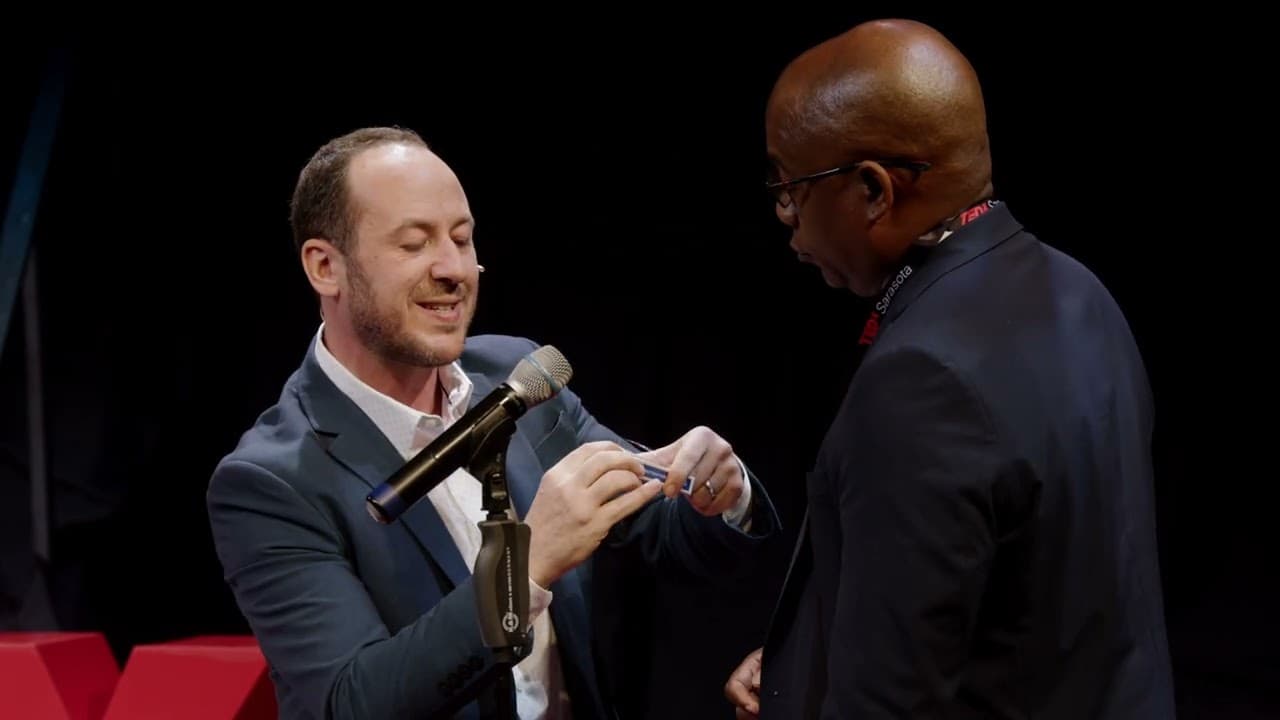
- A gentleman named Eric is tasked with ensuring the fairness of the card handling process 1m45s.
- The demonstration transitions to a new segment involving a participant identified as a "diamond," who is selected based on their willingness to come to the stage and engage with the audience 2m15s.
- A participant named Michelle is selected as the "diamond" and is provided with a Sharpie to sign her name in large letters across the face of a chosen playing card 2m45s.
- Michelle is instructed to stop the deck at a specific point to select her card, which she then signs before returning it to the deck 3m5s.
- The audience is encouraged to chant Michelle's name once her signed card is located within the deck 3m20s.
- Participants are given the option to shuffle the deck themselves to ensure the process remains fair and interactive 3m35s.
Demonstration with a Spade Participant
- Spades are characterized as being goal-oriented individuals who seek power, control, and the agency to make their own decisions 0s.
- Zach was invited onto the stage because he volunteered without hesitation when asked for a participant, demonstrating a desire for agency 0s.
- Zach stated that he chose to participate because the prospect sounded fun 42s.
- During the card selection process, Zach was given the choice of who would deal the cards, and he opted to have the cards dealt into his hand 1m6s.
- Zach was instructed to say "stop" at any point while the cards were being dealt, and he ultimately chose to adjust his selection by one card after the initial stop point 1m18s.
- Zach was directed to hold his selected card between his palms to ensure it remained secure 1m35s.
Conclusion of the Card Trick
- Four different participants selected cards using four distinct methods, including logical selection, emotional connection, spontaneous volunteering, and direct control over the decision-making process 1m45s.
- Despite the participants using different methods to select their cards and the cards being distinct from one another, all four participants selected the Queen of Diamonds 2m25s.
- A participant successfully identifies a chosen card, the Queen of Diamonds, which bears a signature 0s.
- The audience and participants celebrate the successful completion of the card trick 20s.
- The same card trick can result in four distinct experiences depending on how the performer interacts with the participants 35s.
Applying Observational Skills in Social Interactions
- Paying attention to individuals within the first six seconds of an interaction allows for the identification of their specific needs 38s.
- Reflecting on past experiences, the performer notes that a lack of observational skills can lead to confusion during social interactions 48s.
- Difficulties in social interactions are often misattributed to the other person being difficult, rather than recognizing that people are simply different 58s.
- Every individual has unique needs that require different approaches during communication 1m3s.
- Reading people does not require props like playing cards, but rather the application of two questions and the ability to pay attention over a six-second window 1m6s.