Early Beginnings in Dance
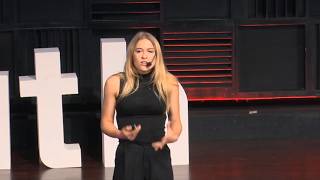
- Dr. Tushara Srinivasan is a practitioner of Bharatanatyam and Kuchipudi, an Indian classical dance form that originated from the state of Andhra Pradesh, and she started dancing at the age of five because her parents and grandparents enrolled her in a dance class 10s.
- On her first day of dance class, she was asked to take a basic position called half sitting, or aramandi, which is visually appealing but difficult to do, and despite feeling a burning sensation in her thighs, she continued to sit in that position 42s.
- As she continued dancing, she enjoyed the attention and applause she received from her peers and loved the vanity that came with performing, which was a big motivator for her, especially when she was around eight or nine years old 2m6s.
Adapting and Growing Through Dance
- When her dance teacher relocated, she had to discontinue learning from her physically, but she continued to perform and even created her own dance numbers by choreographing her own items, and she also started watching the performances of expert dancers 2m6s.
- Watching other dancers perform inspired her to try new things and learn from them, and a movie called Mitr My Friend, which featured a 15-second Bharatanatyam sequence with a unique mathematical pattern, caught her attention and made her watch it repeatedly 2m6s.
- The mathematical patterns in dance choreographies are a separate study, and although she did not decipher the math pattern in the movie sequence, it had a significant impact on her, and she spent an entire day watching it from 8:30 in the morning until 6:30 in the evening 2m6s.
Inspiration from Mathematical Patterns in Dance
- A mridangam player explained the mathematical pattern behind a particular thing, which sparked an interest and led to experimentation with different patterns, resulting in the creation of a dance choreography at the age of 12 or 13 10s.
- After watching a video of the dance performance, a feeling of detachment was experienced, as if watching the choreography as a third person, and it was realized that the output was not just a result of individual effort, but something working through to create the final product 42s.
The 'Something' Factor and Its Influence
- This "something" factor had a significant impact on life, behavior, and attitude, especially when teaching dance, which started at the age of 14, and it helped to overcome a deep-seated fear of darkness and the color black 2m6s.
- The fear of darkness and the color black, which was associated with people having dark skin complexion, was a problem for many years, but it was eventually overcome when teaching dance to students of different skin colors, including one student who had a dark skin complexion 2m6s.
- The moment of breakthrough came when a grandparent, who was also a teacher, pointed out the unfair treatment of the student, and the "something" factor intervened, allowing for a correction of behavior and the breaking down of a significant barrier 2m6s.
Overcoming Fear and Embracing Diversity
- The "something" factor also played a role in preventing a bad decision from being made during a difficult phase in life, when the face of a sincere student appeared, reminding of the responsibility towards her and her upcoming debut dance program 2m6s.
- The experience of teaching dance and the influence of the "something" factor led to a change in attitude and behavior, resulting in the color black becoming one of the most favorite colors, and a greater appreciation for the beauty of diversity 2m6s.
Emotional Discipline and Thoughtful Decision-Making
- The practice of taking a pause and staying calm in high-emotion situations was developed after a significant moment, and this practice has been applied whenever emotions are high, whether it be happiness, sadness, or anger, allowing for more thoughtful decision-making 10s.
Learning Kuchipudi and the Shift in Perspective
- Learning Kuchipudi at the age of 34 was a pivotal moment when movement turned into meaning, and despite initial struggles with vanity and ego, the experience ultimately led to a deeper understanding of the importance of connection with the art form 2m6s.
- The first performance in a teacher's ensemble was a challenging experience due to stage fear and self-doubt, but it ultimately led to a realization that the true joy of dancing comes from the connection with the art form, rather than external validation such as applause 4m30s.
- The rigorous training and discipline required for Kuchipudi helped to remove distractions and ego, allowing for a deeper connection with the art form, and this understanding has been applied to other areas of life 8m40s.
Identity Through Artistic Practice
- The identity built up through practicing Kuchipudi was not based on external recognition, but rather on the daily practice and connection with the art form, allowing for a sense of self to develop 10m50s.
Applying Dance Skills to Professional Life
- The skills developed through dancing, such as observation, listening, and analysis, have also been applied to a corporate career as a data modeler, making it a successful and fulfilling experience 12m20s.
Storytelling and Expression in Bharatanatyam
- The concept of Sanchari Bhavam in Bharatanatyam, which refers to the storytelling part of the dance, is used as a means of building confidence and eloquence, allowing individuals to take on various roles and characters, and this concept can be applied to everyday life to improve performance and expression 10s.
The Path to Purpose and Meaning
- To find one's purpose, it is essential to revisit and practice a particular activity or passion daily with sincere commitment and dedication, as this can eventually lead to the discovery of one's meaning and identity 2m6s.
- The journey to finding purpose is not limited to dance or any specific activity, but rather it is about making space for the "something" factor to emerge, which can be achieved by letting go of unnecessary things and focusing on doing everything with utmost sincerity, commitment, and discipline 2m6s.
- Every act, no matter how small or insignificant it may seem, should be done with 100% effort and dedication, without expecting any output, as this will ultimately lead to the discovery of one's purpose and the elimination of unnecessary distractions 4m0s.
Personal Growth Through Dedication and Practice
- The practice of giving one's best to every task and activity can lead to personal growth and self-discovery, allowing individuals to become better versions of themselves, and this is a key takeaway from the art of dance and its application to everyday life 6m0s.
- The idea that "the art is practicing me" suggests that the practice of dance or any other activity is not just about mastering the craft, but also about allowing it to shape and improve oneself, and this mindset can be applied to various aspects of life 8m0s.
- The importance of making space within oneself for the "something" factor to emerge and giving one's best to every task and activity is a key message, as it can lead to personal growth, self-discovery, and the discovery of one's purpose and meaning 10m0s.