

Airport Design and Friction in Travel Experiences
- The process of waiting for baggage claim at an airport can be frustrating for passengers, but designers of the new Terminal 1 at San Francisco International Airport aimed to minimize this frustration by introducing a system where the baggage claim starts moving when the first bag is ready to arrive, and passengers are informed of the carousel number through announcements, allowing them to trickle in and reducing wait times 10s.
- At Houston airport, executives found that placing gates further away from baggage claim, resulting in a longer walk for passengers, actually reduced complaints about wait times, as passengers had less time standing around the carousel, and this approach has also been adopted in the new terminal at San Francisco airport 2m6s.
- Passengers have expressed preference for walking to the baggage claim area, as it allows them to end their walk as their bags are coming out, making the experience more enjoyable, and this approach is an example of introducing friction to improve an experience 4m40s.
The Concept of Friction and Its Dual Nature
- According to Huggy Rao, professor of organizational behavior at Stanford Graduate School of Business, friction refers to obstacles that can either disable or enable individuals, and good friction is when obstacles slow people down, make them pause, and reflect, while bad friction confuses, overwhelms, and exhausts 6m10s.
- Rao uses the analogy of cholesterol to describe friction, with good friction being like HDL cholesterol, which has positive effects, and bad friction being like LDL cholesterol, which has negative effects, and leaders should aim to remove obstacles that confuse and overwhelm people, making good things easier and bad things harder 8m20s.
- The concept of good friction is also discussed in the context of leadership, where leaders should make curiosity and generosity easy by removing obstacles, and make bad behaviors harder to do, according to Rao and his co-author Bob Sutton, who have written about this topic in their book, The Friction Project 10m30s.
Sources and Consequences of Friction in Organizations
- Overconfidence and myopia are considered the two main culprits that can hinder progress, and introducing good friction can help slow people down, making them think and reflect before acting mindlessly 10s.
- The origin of friction can be attributed to the tragedy of good intentions, where well-meaning rules and procedures become obstacles, as well as blindness to the challenges faced by others, particularly those in higher positions who may be shielded from inconvenience 2m6s.
- The addition of tasks and responsibilities can lead to stress, burnout, and a loss of initiative, curiosity, and generosity, as individuals become overwhelmed and depleted of willpower 2m6s.
- Organizations often incentivize addition, with activities like brainstorming generating new ideas, but this can lead to addition bias, where the focus is on getting bigger rather than better 2m6s.
Meeting Culture and the Problem of Bad Friction
- Scaling an organization requires smart subtraction, focusing on scaling excellence rather than just getting bigger, and meetings can be a significant source of bad friction that consumes time and energy 2m6s.
- The example of Dropbox banning organization-wide meetings is cited, where the CEO issued guidelines to improve meeting productivity, but found that subtraction requires regular effort to be effective, much like mowing the lawn to prevent weeds from overgrowing 6m42s.
- The importance of finding the right size and purpose for meetings is emphasized, to make them productive but not an obstacle, and leaders should consider the role of meetings in their organization and how to optimize them 6m42s.
- The problem with meetings is that they are often driven by the incentives of the people who organize them and the fear of missing out (FOMO) of those who attend, with the organizer's status being tied to the number of people who attend, and attendees feeling trapped and wasting their time 10s.
- To solve the problem of unproductive meetings, it is suggested to attack recurring meetings that are scheduled by default, as they are not always necessary, and to create space between meetings to avoid exhaustion 2m6s.
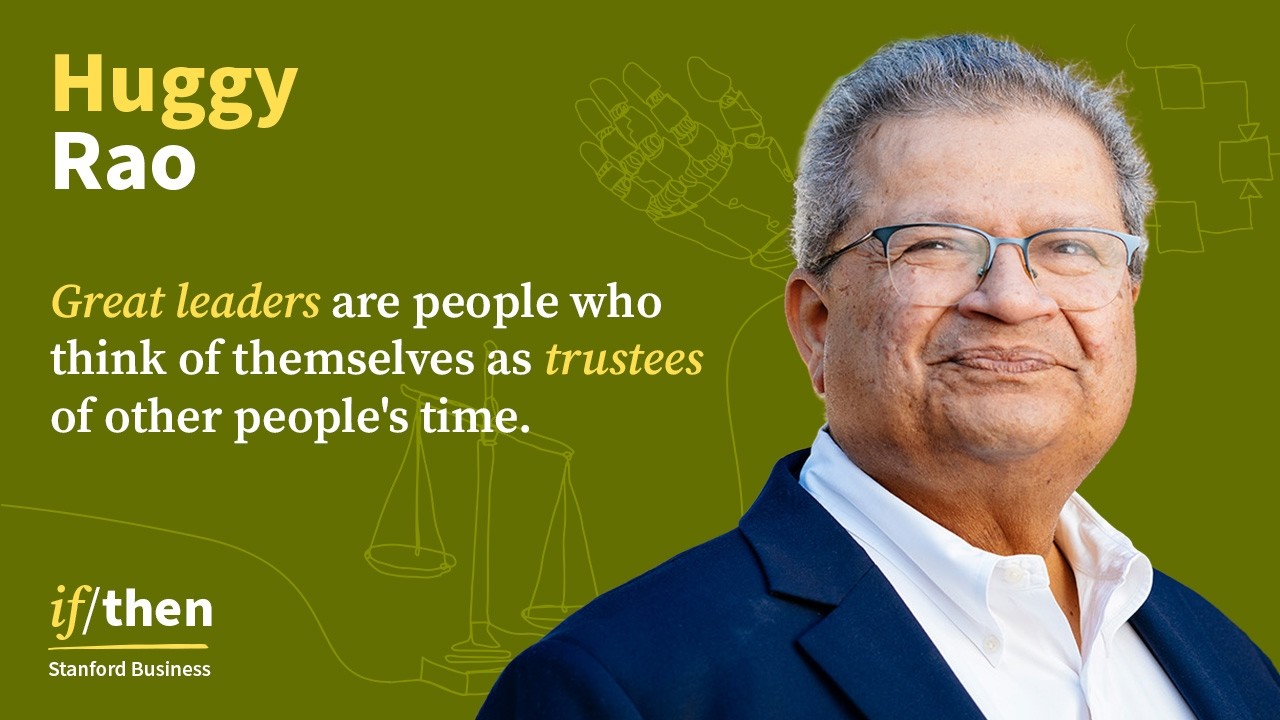
- Great leaders are people who think of themselves as trustees of other people's time and do not want to waste it, and a way to identify if someone is wasting people's time is if they are inspecting their cell phones or tablets during meetings 4m30s.
Strategies for Creating Good Friction in Meetings
- Having a customer present in a meeting can help make it more productive, as they will bring an outside perspective and question the value of the meeting, and this can be a way to create good friction 6m40s.
- Good friction refers to any method of slowing people down and getting them to reflect, such as the Roman Empire's instruction to "make haste slowly" and the basketball coach John Wooden's phrase "go fast, but don't be in a hurry", which emphasize the importance of balance between speed and careful consideration 8m10s.
- The concept of good friction can be applied in various contexts, including meetings, decision-making, and problem-solving, to encourage more thoughtful and reflective approaches 10m0s.
Good Friction in Everyday Decision-Making
- Elderly relatives made decisions about where to live based on the presence of stairs, as it provided them with exercise and forced them to think about the number of trips they needed to make, thus producing good friction by introducing a deliberate obstacle 10s.
- This example illustrates how people can use mental simulations to make decisions, and in this case, the elderly relatives were using the stairs as an assist to help them exercise and think more critically about their actions 42s.
- Many people struggle with weak will and are not resolute choosers, making it difficult for them to implement decisions such as exercising every day, and therefore, they need affordances or assists like stairs to help them 1m6s.
Societal Impacts of Excessive Friction
- At a societal level, excessive friction can lead to distrust in institutions, as seen in the example of welfare applicants in Michigan who had to complete a lengthy form with thousands of words, leading to conspiracy theories and distrust of authority 2m6s.
- The erosion of trust in authority is a widespread issue, with Gallup surveys showing declining trust in leaders and institutions among millennials and Gen Z, partly due to the perception that the system is not fair 3m10s.
- The huge pay differential between low-level employees and CEOs of publicly listed companies is an example of a system that is perceived as unfair, with CEOs receiving high pay and bonuses despite poor performance 4m20s.
Huggy Rao's Research and The Friction Project
- Huggy Rao's research interests are broad, and he landed on friction as an area of focus because he is drawn to studying things he does not understand, and his work on The Friction Project was a result of sharing ideas from Scaling Up Excellence with others 6m30s.
- Companies often struggle with internal issues, leading to frustration among employees, as evident from a participant who described their workplace as a "friction factory" 10s.
- The problems faced by employees are often psychologized by companies in the United States, with the issue being attributed to the individual's work-life balance rather than the company's design, and this is sometimes addressed by providing solutions like meditation apps 1m42s.
- The Friction Project aims to address these issues by providing a vocabulary for employees to describe their pain and suggestions to address the causes of their anger and disillusionment 2m6s.
The Mission and Impact of The Friction Project
- The mission of the Stanford Business School is to change lives, change organizations, and change society, and The Friction Project is seen as a way to achieve this by changing some lives and organizations 3m30s.
- The hosts of the podcast, including Kevin Cool, appreciate the work being done by The Friction Project and its potential to make a positive impact on people's lives and organizations 5m0s.
Friction in Everyday Life and Travel Experiences
- The conversation also touches on everyday experiences of friction, such as the problems faced by travelers at airports, like waiting for bags and navigating multiple carousels, as discussed by Kevin Cool and a traveler 6m30s.