

Company Profile and Strategic Pillars
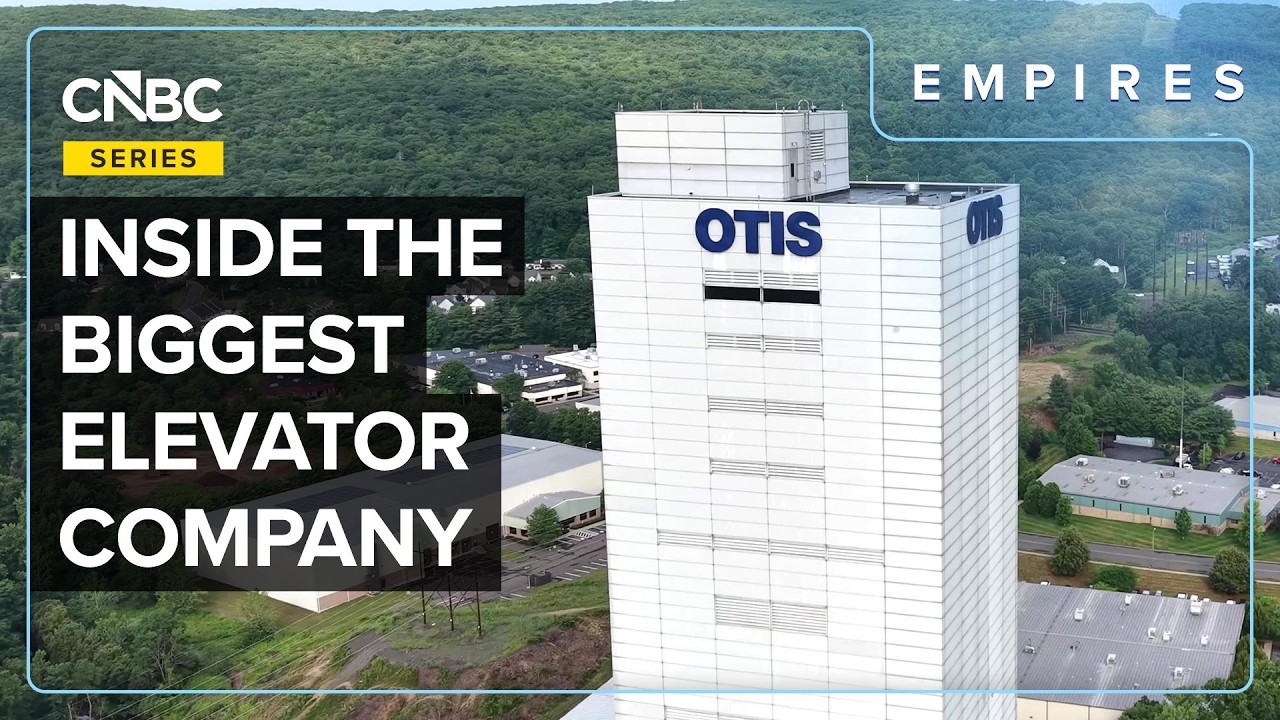
- Otis operates a testing facility in Bristol, Connecticut, where it subjects elevator components to extreme conditions, including salt-fog, humidity, temperature fluctuations, and dust, to ensure operational reliability 0s.
- The company has installed elevators in prominent global landmarks, such as the Space Needle, the Eiffel Tower, the Burj Khalifa, and the Empire State Building, the latter of which still houses original machinery installed in 1931 25s.
- Otis maintains operations in over 200 countries and facilitates the movement of approximately 2.5 billion people daily 45s.
- The company’s business strategy is built on four primary pillars: urbanization, digitalization, the mobility needs of an aging population, and infrastructure modernization 55s.
- Otis reported revenue exceeding $14 billion in 2025 1m15s.
Market Growth Drivers and Housing Trends
- A significant growth opportunity for the company is the development of multifamily housing, driven by a U.S. shortage of 3.4 million single-family homes, high mortgage rates, and elevated housing prices 1m23s.
- Otis is observing a revival in North American multifamily housing development and high demand for housing in markets like India 1m40s.
- The company identifies global growth in hospitals, senior living facilities, and infrastructure projects—such as airports, rail systems, metros, stadiums, and data centers—as key drivers for its elevator products 1m52s.
Service Business Model and Digital Transformation
- Otis emphasizes that its business model provides predictable, long-term revenue streams because elevators require maintenance and operation for decades 2m20s.
- The company has transitioned from using manual service tools and physical manuals to a digital "command app" that allows mechanics to perform adjustments using smartphones 2m35s.
- While the installation of new elevators is not highly profitable, the service business—encompassing maintenance, repairs, and modernization—generates more than 90% of the company's profits 2m52s.
- Otis currently services approximately 2.5 million elevators annually, an increase from the 2 million units it serviced in 2020 when it became an independent, publicly traded company 3m5s.
Financial Performance and Market Valuation Challenges
- Despite growth since its 2020 spin-off, the company has recently faced stock price declines and a slight decrease in its elevator service retention rates 3m15s.
- Approximately one year ago, the company initiated cost-related actions to address service issues, primarily by hiring more personnel and prioritizing maintenance over revenue-generating activities 0s.
- Uncertainty regarding the company's typically stable earnings has been exacerbated by external factors such as tariffs 23s.
- The company faces challenges in achieving a premium valuation because it is not currently categorized by the market as a power or data center industrial, sectors that are receiving higher multiples due to significant backlogs 33s.
- Market focus on artificial intelligence has led to outperformance for certain industrials, creating a one-dimensional investment environment 55s.
- While portfolio managers often compare the company to other industrials for capital allocation purposes, the company argues it is not a traditional industrial focused on manufacturing and distribution 1m5s.
Technical Maintenance and Service Margin Dynamics
- Ride quality in elevators is tested by placing a smartphone on the floor to measure vibrations, which helps identify issues with the machine or rails 1m17s.
- Common elevator malfunctions include power failures, mechanical issues, and door problems 1m32s.
- By modernizing elevators with new sensors and equipment, engineers can proactively address repairs before problems occur 1m40s.
- Although the company consistently grew the profitability of its service segment for several years, margins experienced a sharp decline in the first half of 2026 1m52s.
- The decline in service margins coincided with a broader market shift toward AI-related investments, causing capital to flow away from the company 2m2s.
- To restore investor expectations, the company is investing in service quality to improve retention rates, which is expected to drive service margin expansion throughout the year 2m22s.
Strategic Shift in the Chinese Market
- China, once a major growth engine for the company due to rapid urbanization and skyscraper construction, has become a point of investor scrutiny 2m43s.
- Construction in China hit a wall in 2015 as supply began to outstrip demand, though there was a temporary spike in activity during the pandemic 3m12s.
- Following a government crackdown and stricter regulations, China's share of the company's new elevator installations dropped from nearly 50% at its peak to less than 20% 3m26s.
- The company is transforming its operations in China by reducing the number of factories and shifting its focus from high-volume equipment sales to a service-led model similar to its operations in the U.S. and Europe 3m43s.
- The difficulty of maintaining success in the Chinese market has had an outsized impact on the company's overall narrative, as investors often equate success in China with success in the broader industrial sector 4m5s.
Global Operations and Corporate Evolution
- Otis maintains a growing base of elevator units across Europe, the United States, and the Asia-Pacific region 0s.
- To improve customer retention and maintenance contract renewals, Otis has invested in its European markets 4s.
- These investments focus on hiring more mechanics to ensure the company has the skilled labor necessary to handle an anticipated surge in modernization projects in Europe 13s.
- Since spinning off from United Technologies in 2020, Otis has achieved approximately 13% sales growth 26s.
- The 2020 spinoff also involved the HVAC company Carrier, while United Technologies' aerospace businesses merged with Raytheon to form Raytheon Technologies 30s.
- While conglomerates were considered valuable 40 to 50 years ago, current investors in Otis specifically choose to own a global service company 38s.
Competitive Landscape and Industry Consolidation
- Otis faces the potential loss of its status as the world's largest elevator company due to a nearly $35 billion deal announced in April 2026, in which Finland's Kone agreed to acquire Germany's TK Elevator 48s.
- The proposed merger between Kone and TK Elevator faces regulatory hurdles and a formal challenge from Schindler, the second-largest elevator company, on antitrust grounds 56s.
- Some analysts suggest that the merger could benefit Otis by reducing the number of major competitors bidding for contracts from four to three 1m4s.
- Otis currently competes globally against both Kone and TK Elevator and intends to let regulators and customers determine the outcome of the proposed merger 1m12s.