

Supersonic Flight Challenges
- Early attempts at supersonic flight faced challenges such as propeller inefficiency, loss of lift, and structural damage due to vibrations.
Supersonic Flight Pioneers
- The Germans explored supersonic flight during World War II with the rocket-powered Me 163, which reached speeds of up to 1,130 km/h but couldn't sustain supersonic speeds.
- The Bell X-1, an American aircraft, was designed to test transonic speeds and eventually achieved supersonic flight.
- The British Miles M.52 project aimed to break the sound barrier but was abruptly canceled in 1946 due to doubts about its feasibility and safety, as well as potential budget cuts or external pressure.
Chuck Yeager's Supersonic Flight
- Test pilot Chuck Yeager replaced Chalmers Goodlin and began glide and subsonic tests in August 1947.
- Yeager reached a speed of Mach 0.997 on October 10th, 1947.
- Despite breaking two ribs in a horse-riding accident, Yeager flew the X-1 on October 14th, 1947, and became the first person to officially break the sound barrier.
- Yeager continued to push the limits and experienced an internal coupling event at Mach 2.44 but managed to recover the aircraft.
Notable Supersonic Aircraft
- The fastest plane humans ever made was the North American X-15, which reached a top speed of 4,520 mph in 1967.
- Notable military supersonic aircraft include the North American XB-70 Valkyrie, Lockheed SR-71 Blackbird, Rockwell B-1 Lancer, F-22 Raptor, and F-35 Lightning 2.
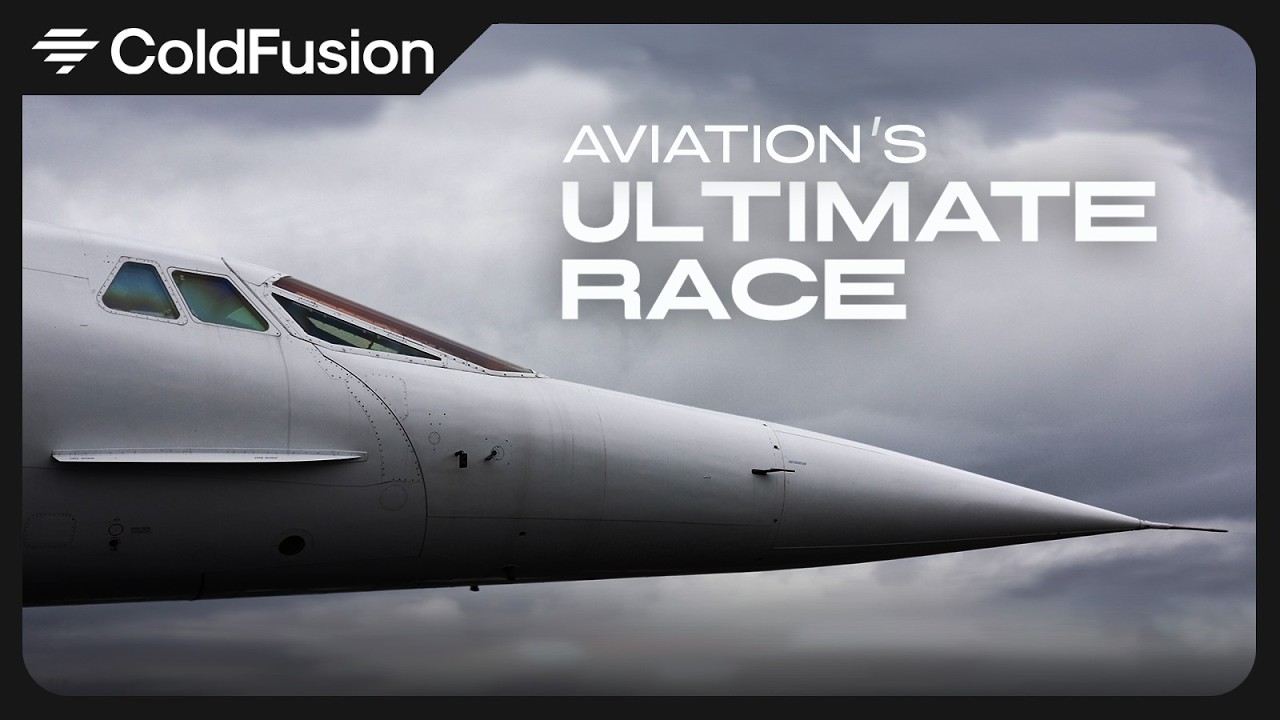
- Attempts at commercial supersonic flight include the Concorde, which operated from 1976 to 2003 but was retired after a fatal accident.
Challenges of Supersonic Flight
- Commercial supersonic transport faced challenges such as high costs, fuel consumption, noise, and environmental concerns, leading to the prohibition of routine supersonic flight over many countries.
Future of Supersonic Flight
- Ongoing efforts aim to revive supersonic transport with improved efficiency and reduced noise, such as Boom Technology's Symphony propulsion system and NASA and Lockheed Martin's X-59 Quiet Supersonic Technology (QueSST) project.
- Hermeus, an American company, is developing hypersonic jets capable of Mach 5 speeds for military and commercial applications.