

Founding and Early Development of Eventbrite
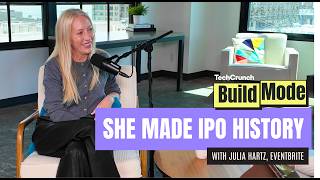
- Julia Hartz was the second youngest woman and the 21st female founder to take a company public. 0s
- Stepping into the role of CEO is described as a terrifying experience for which no one feels truly ready. 8s
- Founders are advised to prioritize human conversations with customers over strategy, execution, and metrics to ensure company longevity. 15s
- The professional journey of Eventbrite included bootstrapping, raising venture capital during the 2008 financial crisis, going public, and eventually returning to private ownership. 30s
- Successful founders are characterized by their ability to learn from mistakes quickly rather than avoiding them entirely. 42s
Career Background and Origins of the Platform
- Early in her career, Julia Hartz worked as an intern at MTV during the development and production of the first season and movie of Jackass. 1m35s
- Julia Hartz co-founded Eventbrite in 2006 with her then-fiancé, Kevin Hartz. 2m35s
- The founding of Eventbrite was influenced by Kevin Hartz’s background as an early investor in PayPal and his interest in the concept of democratization. 3m5s
- Early digital payment platforms evolved from simple money transfers between Palm Pilots into merchant processing systems that enabled individuals to start online businesses 0s.
- Kevin Hartz and Alan Braverman utilized the PayPal API to develop various applications, including event ticketing, subscription payments for Yahoo Groups, and international money transfer services 15s.
- The international money transfer project gained traction and received funding from Sequoia Capital, leading the team to shift their focus entirely to that venture and place other projects into maintenance mode 42s.
Early Influences and Mission
- Julia Hartz previously worked at FX Networks on original content such as Nip/Tuck, Rescue Me, and The Shield 1m3s.
- While working on a pilot about fandoms with documentarian Morgan Spurlock, Julia Hartz observed the palpable energy and connection present when people gathered in real life 1m18s.
- Renault Vis, a co-founder, engineer, and photographer, was motivated by a desire to help people turn their passions into profit 1m45s.
- TechCrunch and Michael Arrington served as one of the earliest scaled customers for the platform, providing inspiration for the product's development 2m6s.
- Michael Arrington provided direct feedback to the founders, and Kevin and Julia Hartz personally managed the check-in desk for the first TechCrunch Disrupt event 2m35s.
- The core mission of the platform was to democratize the event industry by enabling anyone to sell tickets and facilitating live, in-person experiences that created lasting memories 3m0s.
Navigating Crisis and Leadership Transitions
- Eventbrite has been in operation for 20 years, during which time the company has navigated the rise of social media, the adoption of mobile technology, the advent of big data, and the global COVID-19 pandemic 0s.
- Despite various technological shifts and predictions that live events were dying, human connection remains a fundamental need, positioned just above physiological and security needs in Maslow's hierarchy of needs 25s.
- Approximately 14 days into the COVID-19 pandemic, Eventbrite faced a crisis where the company was processing more refunds than revenue, leading to negative revenue that caused internal data dashboards to malfunction 1m5s.
- Julia Hartz became CEO of Eventbrite in 2016 after Kevin Hartz stepped down from the role 2m15s.
- The transition to the CEO role was described as a terrifying experience, as the process of leading a company often involves learning while building and making decisions in real-time 2m25s.
- Between 2016 and 2019, the leadership experience involved a mental struggle regarding self-doubt and the pressure to emulate the previous CEO 2m55s.
- The onset of the COVID-19 pandemic forced a shift in leadership perspective, as the urgency of the crisis eliminated the time for self-doubt and solidified the necessity of leading the company through the disruption 3m15s.
Scaling and Pandemic Response
- Eventbrite’s growth trajectory included acquiring its largest competitor in the music category in 2017 and going public in 2018 3m45s.
- The year 2019 was characterized by efforts to manage growing pains, scale the business, and focus on becoming a leaner organization, which inadvertently prepared the company for the disruptions of 2020 3m55s.
- In mid-March 2020, Eventbrite transitioned to a remote work model, leaving behind a 50,000-square-foot office space that had previously been at capacity 0s.
- Julia Hartz, influenced by her father’s background in servant leadership, was the final person to leave the office, an experience she described as a heavy moment 25s.
- During the first remote team meeting on Zoom, Hartz established a new cultural norm that employees should not apologize for the presence of children or pets in their home workspaces 55s.
- Hartz prompted her team to identify what they would do differently if they could restart the business, which helped the team move past organizational "barnacles," egos, and "sacred cows" 1m25s.
- By the end of that initial remote meeting, the team had produced a one-page document outlining a new strategic focus 1m45s.
- The company successfully restructured and reset its strategy by April 2020, preparing the organization for a period of anticipated long-term hardship 2m15s.
- Key leadership lessons identified by Hartz include the necessity of having the bravery to rethink core concepts, taking bold leaps during uncertain times, and planning for the worst-case scenario 2m30s.
Fundraising History and Investor Relations
- The discussion transitioned to the company's fundraising history, noting the involvement of investors, board members, and public shareholders alongside founders Julia and Kevin Hartz 3m5s.
- Eventbrite was initially bootstrapped using the personal funds of its three co-founders, who spent less than $250,000 during the first two and a half years of operation. 10s
- The company relied on a small team of contractors and an angel round from friends, family, and early investors to bridge the gap to their first institutional fundraising. 10s
- When the founders sought venture capital in the fall of 2008, they possessed product-market fit, traction in early categories, and profitability, yet they received 27 rejections from 27 venture firms. 10s
- Kevin, a co-founder, practiced extreme transparency by leaving the company's 2009 operating plan with every venture partner they met during the fundraising process. 10s
- During the 2008 financial crisis, Eventbrite experienced growth because people began hosting classes to earn money, attending networking events to find jobs, and gathering socially during difficult economic times. 10s
- By the fourth quarter of 2009, the company returned to a select group of the original 27 venture firms to present results that exceeded the operating plans they had previously shared. 10s
- Because many other businesses were forced to reset or rebase during the financial crisis, Eventbrite’s ability to beat its projections was viewed as a novel achievement. 10s
- Eventbrite secured multiple offers and chose to partner with Sequoia, a firm that had previously funded Kevin’s prior company, Zoom. 10s
- Following the partnership with Sequoia, Roelof Botha joined the board of directors. 10s
- Securing Sequoia as an investor made it significantly easier to attract other prominent investors, such as Lee Fixel and Henry Ellenbogen, to support the company's growth toward an IPO. 10s
Strategic Lessons in Fundraising and Growth
- Investors sometimes provide vague feedback like "not right now" instead of a definitive rejection, though some investors are known for being transparent about their decision not to invest 0s.
- Founders who receive a rejection should not view it as a permanent "never" and should instead focus on working hard to prove their business thesis before providing updates to investors 42s.
- When Eventbrite was starting, the concept of a couple founding a company together was not considered in vogue 42s.
- Eventbrite focused on customer acquisition through a self-sign-on machine that relied on a viral coefficient rather than traditional inside sales 42s.
- To address investor concerns regarding the founders being a couple, they proactively presented an operating plan that included how they would divide responsibilities and handle potential crises 42s.
- A recommended strategy for founders is to address the most obvious and uncomfortable questions immediately during investor meetings 42s.
CEO Succession and Mentorship
- Julia Hartz and Kevin Hartz successfully scaled their business, culture, and relationship while serving as CEOs in succession, with Kevin serving for the first 10 years and Julia for the second 10 years 1m35s.
- Julia Hartz notes that the transition of the CEO role between partners is difficult because it requires significant trust and communication to manage the feelings of the person stepping down and the person stepping into the role 2m6s.
- Upon becoming CEO, Julia Hartz experienced frustration because the reality of the role felt much more complex and difficult than it had appeared when Kevin Hartz was in the position 2m6s.
- Despite the challenges of the transition, Julia Hartz credits Kevin Hartz for acting as a mentor during her time as CEO 2m6s.
- Lee and Henry served as essential coaches and mentors during the early stages of Eventbrite, providing wisdom and guidance that proved critical to the company's survival 0s.
The IPO Process and Public Market Challenges
- The decision to take Eventbrite public was driven by the company reaching specific revenue thresholds, achieving operational predictability, and establishing the ability to scale in a responsible yet aggressive manner 25s.
- Public companies were viewed as the standard for transparency and validity, and accessing public market capital was considered a strategic advantage that later proved beneficial during the COVID-19 pandemic 38s.
- Prior to the IPO, other public tech company CEOs discouraged the move, citing the difficulties associated with being a public entity 55s.
- Julia Hartz made a personal commitment to embrace the public process and avoid complaining about the challenges associated with it 1m15s.
- The IPO day in 2018 was a celebratory event involving families, early employees, and customers, but it also highlighted the rarity of women in leadership roles 1m30s.
- During the IPO, it was noted that Julia Hartz was the second-youngest woman to take a company public and the 21st female founder-CEO to do so 1m50s.
- The New York Stock Exchange observed that the Eventbrite podium featured a record number of women, reflecting the company's long-standing commitment to a 50/50 gender split on its executive team 2m5s.
- Following the IPO, the company faced the realities of a quarterly reporting cadence and the increased demands of managing a larger investor base 2m35s.
- Operating as a micro-cap company in the public market presents significant challenges, leading to questions regarding whether the associated overhead, time, and effort are justified 2m45s.
Investor Relations and Strategic Valuation
- Founders often mistakenly believe that going public will consume all of their time with investor relations and public company requirements 0s.
- A CEO does not need to overprepare for investor relations if they possess a deep understanding of their business and numbers, as business results largely speak for themselves 22s.
- While earnings calls and investor relations involve a degree of performance, these processes can be transformed into engaging activities 42s.
- During remote work periods, Eventbrite implemented "camp earnings," a week-long collaborative event that fostered team bonding and generated new business ideas 55s.
- Eventbrite initially listed with a valuation of 1.67 billion dollars and was later sold for approximately 500 million dollars 1m25s.
- The company experienced significant volatility, including a period where its value dropped below zero before it was rebuilt 1m45s.
- Dwelling on past valuation numbers is considered unproductive and torturous, leading to a focus on the company's cultural impact and its value to business owners and customers 2m0s.
- The decision to take the company private at a lower valuation was driven by a priority to ensure the long-term viability and value of the business for its customers 2m25s.
- Despite facing unprecedented "black swan" events and acknowledging personal mistakes, the leadership remains focused on the future and the choices made to sustain the company 2m55s.
Future Outlook and Strategic Stewardship
- Julia Hartz expresses confidence in Eventbrite’s ability to navigate rapid market changes and maintain service to customers, noting that the company’s association with Bending Spoons provides reassurance regarding future product and customer focus 0s.
- The current business landscape requires a fundamental shift in how companies approach product delivery, speed to market, and innovation 35s.
- Eventbrite’s long-standing brand reputation is attributed to a 20-year commitment to building products that meet customer needs rather than relying on heavy marketing expenditures 35s.
- To remain competitive in the current market, the company must be capable of dismantling and rebuilding internal structures quickly, a process that requires a significant disruptive approach 35s.
- While Eventbrite underwent a major disruption and rebuilding phase during the COVID-19 pandemic, the current market environment presents unprecedented challenges 35s.
- A primary motivation for recent strategic decisions was the need to act as responsible stewards of capital and ensure the company's long-term longevity for investors 35s.
- Julia Hartz and Kevin Hartz remained major shareholders throughout the company's journey and did not sell significant amounts of stock, which aligns their personal interests with those of long-term shareholders 35s.
- The decision-making process regarding the company's strategic direction involved close collaboration with the board of directors 35s.
- Although Julia Hartz was initially resistant to certain strategic shifts, she eventually committed to the path once it became clear that the decision was in the best interest of the business and its shareholders 35s.
- The process of implementing major organizational changes is acknowledged as difficult because of the significant impact such decisions have on employees' lives 35s.
Balancing Shareholder Demands and Core Mission
- Managing the tension between creating value for customers and meeting shareholder expectations is a constant challenge for the company 1m25s.
- Prioritizing investor demands over the company's core mission would have likely resulted in the company failing to survive 1m25s.
- While investor feedback is considered valuable, the CEO must apply a critical, editorial lens to that input because public market sentiment can shift rapidly and inconsistently 1m25s.
- Investors often present competing priorities that can appear disorganized, similar to a toddler choosing dinner, due to the noise and various factors involved in business management 0s.
- A CEO must possess the backbone to listen to and respect investor feedback while ultimately leading based on what is right for the customer 15s.
- Deviating from the core mission, or "northstar," has historically resulted in poor and painful outcomes for the company 25s.
- The primary responsibility of a CEO involves listening to feedback, even when it is awkward or feels personal, and making decisions that prioritize the customer 35s.
Competitive Landscape and Market Positioning
- Hoppin, a virtual events platform that raised billions of dollars during the COVID-19 pandemic, serves as an example of how irrational capital allocation can occur during critical times 1m5s.
- Despite pressure from investors to sell to competitors like Hoppin, maintaining confidence in the eventual return to live events proved to be the correct strategic path 1m25s.
- "Healthy paranoia" is defined as a balance between staying aware of competitors and understanding consumer needs while remaining focused on the company's mission and customer service 1m35s.
- Competitors such as Luma and Partyful are recognized for their product sense and execution, but their presence does not necessarily threaten Eventbrite's market position 1m45s.
- Eventbrite maintains its status as the second-largest trafficked events ticketing site globally, with brand awareness and affinity that significantly exceed that of its competition 2m25s.
- Founders are encouraged to prioritize listening and learning from other founders, a practice that provides significant long-term value 2m45s.
- Eventbrite has contributed to the development of platforms that facilitate people coming together, regardless of whether those platforms are competitors. 0s
Marketplace Identity and Customer Trust
- Building a consumer-facing marketplace is a persistent challenge for founders. 15s
- A primary piece of advice for marketplace founders is to clearly define and understand their company's identity. 35s
- Eventbrite’s core DNA and identity were rooted in being a creator-focused company that provided tools and enablement for individuals to sell tickets to events. 45s
- While a company can function as both a platform and a marketplace, it is essential to identify who the primary customer is and to be cautious when attempting to shift that identity. 1m15s
- Eventbrite experienced painful setbacks when it attempted to shift its business model toward a consumer focus, which resulted in confusion and the loss of creator customers. 1m30s
- During the acquisition of a major competitor in the music industry, Eventbrite underestimated the impact that migrating independent live music venues to its platform would have on their daily operations. 2m6s
- The migration process was rushed due to the disintegration of the competitor's platform, but Eventbrite failed to provide adequate context to the affected venues. 2m25s
- The rapid re-platforming effort resulted in a loss of trust and was described as a disaster for both the company and the venues involved. 2m40s
- Rebuilding the trust lost during the music venue migration took years to accomplish. 2m50s
- Founders are advised to prioritize human conversations with customers over metrics, strategy, and execution to better understand how to help them and avoid causing harm. 2m55s
- The prevailing business advice to "build fast and break things" is viewed as potentially detrimental when it occurs at the expense of customers. 0s
Transitioning Out of the CEO Role
- Julia Hartz stepped down from her role as CEO of Eventbrite approximately a month and a half prior to the discussion. 12s
- The transition process involved a lengthy period of preparation, including board consultations, seeking advice, and navigating the regulatory and compliance requirements necessary to close the deal. 25s
- During the final stages of her tenure, Hartz experienced a significant leadership lesson after announcing a definitive agreement for the company. 35s
- Upon meeting with her leadership team shortly after the announcement, Hartz observed that her colleagues appeared expressionless and demoralized, which caused her significant personal distress. 55s
- Recognizing the need to maintain business operations as usual because deals can fail, Hartz addressed her team the following day to establish a new approach for the remaining time together. 1m15s
- The strategy for the final months focused on prioritizing the needs of customers, supporting one another, and maintaining a positive environment. 1m30s
- In the two years leading up to the deal, Hartz characterized her leadership style as intense, stressed, and micromanagerial. 1m45s
- Once Hartz relaxed her control over the company, she observed that the organization began to perform better and experienced a period of positive momentum. 2m5s
- The experience served as a humbling and significant lesson in leadership during the final phase of her time as CEO. 2m25s
Post-CEO Life and Future Interests
- Julia Hartz has received approximately 27 potential business ideas from Kevin, who remains a supportive partner for future ventures 0s.
- Adjusting to a life without a structured daily schedule is a significant challenge, as Hartz has maintained continuous employment since the age of 15 25s.
- The transition from a high-velocity work environment, where decisions were required every 30 minutes, to a less structured routine has been difficult despite the restorative benefits of lower stress levels 25s.
- Hartz is currently exploring interests such as AI, specifically engaging with Claude Code, and prioritizing quality time with family and individuals she previously lacked the time to support 1m5s.
- The current period of life is viewed as a deliberate reset, metaphorically compared to an early childhood acting role as "Frozen Bunny number three," where the goal is to learn, grow, and avoid letting ego dictate future actions 1m35s.
- Kevin recently served as a battlefield judge at TechCrunch Disrupt, maintaining a connection between the couple and the event organizers 2m15s.
Podcast Production Credits
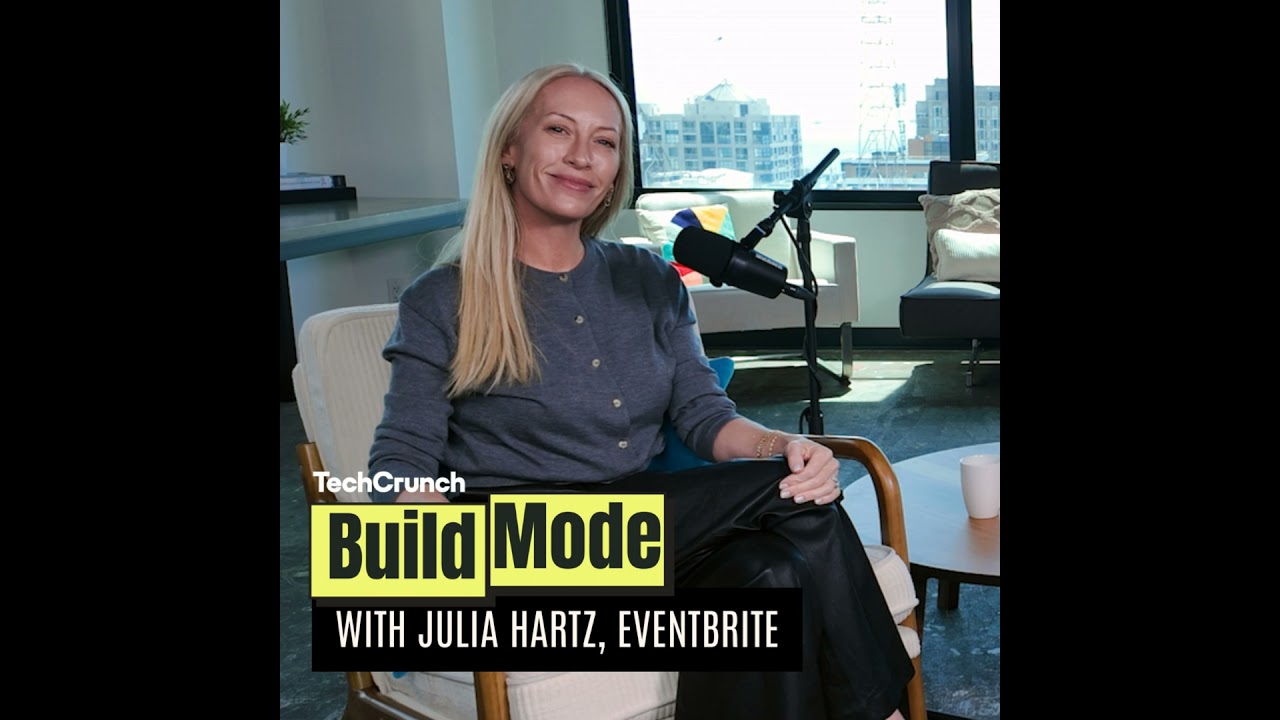
- The podcast titled Build Mode is produced and edited by Maggie Nye 0s.
- Isabelle Johannes serves as the host of the Build Mode podcast 0s.
- Maggie Nye is responsible for the art and design of the podcast 0s.
- Morgan Little is credited for leading audience development 10s.
- The Foundry and Cheddar video teams are acknowledged for their contributions 10s.
- The podcast expresses gratitude to the startup community and those identified as builders 10s.