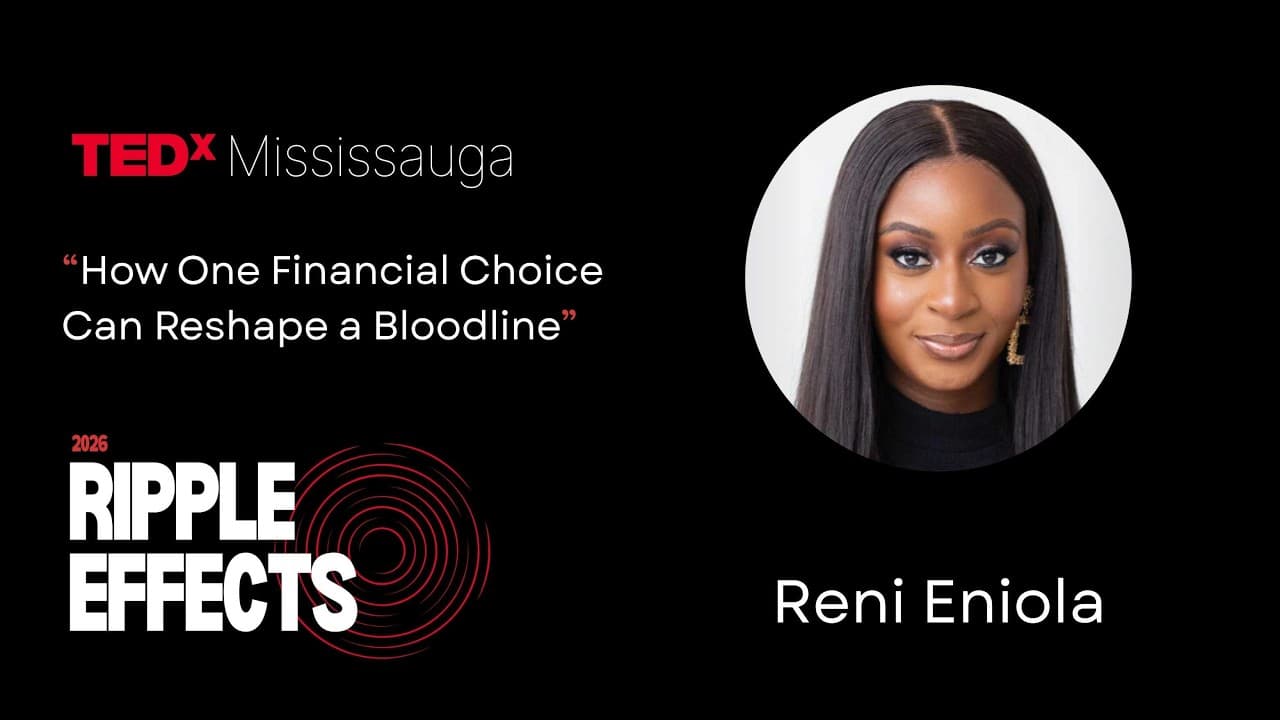

The Impact of Generational Financial Literacy
- Personal financial success, such as home ownership and the ability to choose whether to work, can be the result of decisions made by previous generations rather than individual intelligence alone 0s.
- A father who moved from Nigeria to the UK in his 20s observed that his co-workers, despite earning similar salaries, were achieving different financial outcomes like buying homes and investing 42s.
- Although the father was a hardworking and intelligent lawyer, he realized he lacked knowledge on how to make money work for him because he had never been taught about financial management 1m15s.
- The father chose to actively learn about money by reading books, attending seminars, and studying topics such as budgeting, real estate, and the stock market 1m35s.
- As the father gained financial literacy, his investments and confidence grew, leading him to promise that his children would not have to learn about money through trial and error or start from the same position he did 1m55s.
Breaking Cycles of Financial Silence
- The father’s decision to learn created a ripple effect, ensuring his children were educated about saving and investing from a young age, which in turn impacts the future of subsequent generations 2m25s.
- Generational wealth is often discussed, but there is also a cycle of generational poverty, silence, and fear regarding money that is passed down through families 2m55s.
- A study by the Canadian Trust Foundation indicated that 34% of adults feel uncomfortable discussing money with their families, and research suggests that open childhood discussions about money lead to better financial management in adulthood 3m15s.
- The father’s actions served to interrupt the inheritance of financial confusion and silence, allowing his children to have a different relationship with money 3m45s.
- Societal taboos often frame financial struggle as a personal failure, which encourages people to remain quiet and avoid asking questions about money, thereby perpetuating a cycle of silence 4m5s.
Practical Habits for Building Wealth
- Parents established a bank account for their child, mandating that half of all received money be saved for the future while the other half could be spent 10s.
- The practice of saving half of every paycheck began at age 15 when the child started their first part-time job 42s.
- The first investment in the stock market was made at age 18 42s.
- Proceeds from stock market investments were used to purchase a first house at age 23, despite the individual earning only minimum wage during that period 42s.
- Small, consistent habits regarding money, knowledge, and confidence compound over time to create significant change 1m5s.
- To ensure accountability, the father required the child to send a screenshot of every investment made every two weeks 1m25s.
Financial Literacy as a Tool for Opportunity
- Financial literacy provides a "head start" that allows individuals to build investments and career choices that previous generations may not have had 1m50s.
- Knowledge regarding how money works is described as more valuable than a monetary inheritance because it provides the gift of time 2m15s.
- The cycle of financial education continues as the next generation will be raised with early exposure to conversations about saving and investing 2m35s.
- Financial literacy is characterized as a tool for creating opportunity, confidence, and choices, rather than being solely about money 3m5s.
- The "ripple effect" of financial decisions suggests that one person's choices can influence the lives of their children and others they teach 3m25s.
- Individuals are encouraged to start improving their financial future by tracking spending, saving small portions of income, asking questions, and learning one new thing about money each week 3m40s.
Becoming the First Ripple of Change
- Individuals are encouraged to identify the first action they can take today to break their current cycle and initiate a new one 0s.
- The specific nature of the action is less significant than the underlying decision to change, as every transformative process begins with a single ripple 5s.
- Family backgrounds regarding financial literacy vary, as some parents provide instruction, some remain silent, and others focus solely on survival 12s.
- Every family possesses the potential for an individual to become the "first ripple," representing the person who decides to end cycles of fear, silence, confusion, or poverty 18s.
- Future generations may experience lives beyond current imagination, not necessarily due to luck or large financial inheritances, but because of a predecessor's decision to learn 30s.
- The most significant inheritance provided by a parent can be a different starting line in life rather than monetary wealth 42s.
- A single conversation, lesson, or investment can serve as the catalyst for long-term change 50s.