
Introduction to Object Permanence and Early Interest in Transportation
- Object permanence is a skill learned between four to six months of age, which is the understanding that things exist even when they cannot be seen, and this concept has significant implications when considering the world and how people move around in it 10s.
- The size of the world and the concept of object permanence lead to an interest in transportation, including automobiles, trains, and planes, which are used to get from one place to another, and this interest can start at a young age with toys like Hot Wheels and train sets 2m6s.
Development of Transportation Understanding and Time-Space Compression
- As people grow up, their understanding of transportation networks expands from simple toy tracks to complex systems like freeway networks and metro maps in major cities, which define the bounds and limits of time-space compression 2m6s.
- Time-space compression refers to the phenomenon where improved transportation makes spaces feel smaller and more accessible, reducing the time it takes to travel between points, as illustrated by the stories of Northern Mhawi, Ann, and Matt, who all travel 25 miles but with vastly different travel times and purposes 4m6s.
Illustrating Time-Space Compression Through Real-Life Examples
- The stories of Northern Mhawi, Ann, and Matt highlight the significant differences in travel time and accessibility, with Northern Mhawi facing a 9-hour walk to the nearest hospital, Ann taking 1 hour and 45 minutes to travel 25 miles in Berlin, and Matt commuting 25 miles in 23-35 minutes in Texas 6m6s.
Personal Experience with Transportation and Freedom
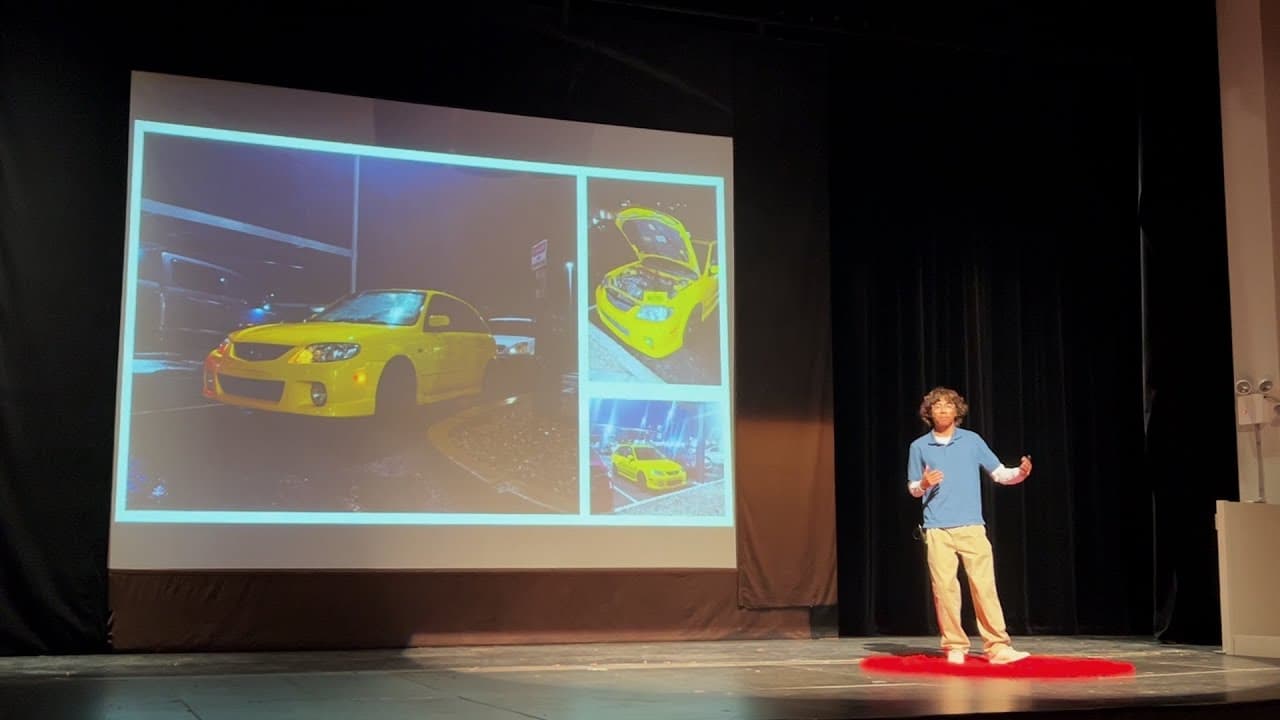
- The concept of time-space compression and the impact of transportation on daily life can be taken for granted, as seen in the story of the speaker's first car, a 2003 Mazda, which represented freedom of transportation and had a significant impact on their life 10m6s.
- The ability to choose where to go and when to go was lost after a car engine blew up, resulting in having to ask parents for a ride or arrange plans with friends, which limited freedom and made opportunities feel inaccessible 10s.
- The loss of reliable access to a car made it necessary to plan everything in advance, which felt weird and limited opportunities in life, even though they didn't disappear 1m20s.
Transportation Inequality and the Need for Alternatives
- Millions of people live in environments without reliable access to a car or public transportation, and their opportunities are shaped by their mobility rather than their ability 2m6s.
- There is a need for more walkability and less reliance on cars in the US, and examples of progress include the extension of the D-line in Los Angeles, a train on a floating bridge in Seattle, and the silver line in Dallas 3m40s.
Examples of Progress in Walkable and Public Transportation Systems
- These transportation projects, such as the ones in Los Angeles, Seattle, and Dallas, show that it is possible to rely on alternative modes of transportation and create walkable communities, even in environments that are not typically designed for it 4m50s.
- A walkable neighborhood in Tempe, called the culdesac, is an example of a community that has been recently worked on to create a more walkable environment, demonstrating that it is possible to create such communities even in areas that are not typically designed for walking 6m10s.
Challenges and Criticisms of Transportation Infrastructure Projects
- Counterarguments to these types of projects often cite their high cost and ineffectiveness, but these arguments are not entirely invalid, as many of these projects do cost nearly billions of dollars to construct 7m20s.
- Many projects have a high bar for entry, such as new developments in neighborhoods that only the rich can afford to live in, and some transportation systems, like the Dallas Silver Line, have relatively low usage, with 2,000 riders a day, compared to the least used line in Germany, which has 400,000 riders per day 10s.
The Long-Term Nature of Infrastructure Development
- The infrastructure in place is just the beginning and needs to be continuously subsidized to make a difference, as one line or one new neighborhood, such as in Tempe, does not change the overall situation in the metro Phoenix area 1m5s.
- A continued effort and investment in infrastructure are necessary to reduce prices and make the systems more effective, and this process cannot be completed in a short amount of time, just like Rome was not built in a day 2m6s.
Redefining Transportation Goals: Access Over Speed
- The goal of building infrastructure should be to make more places reachable for more people, rather than just focusing on how fast someone can get somewhere, because distance is measured in access, not miles 2m55s.