

Introduction to Visionary Leadership and Success Factors
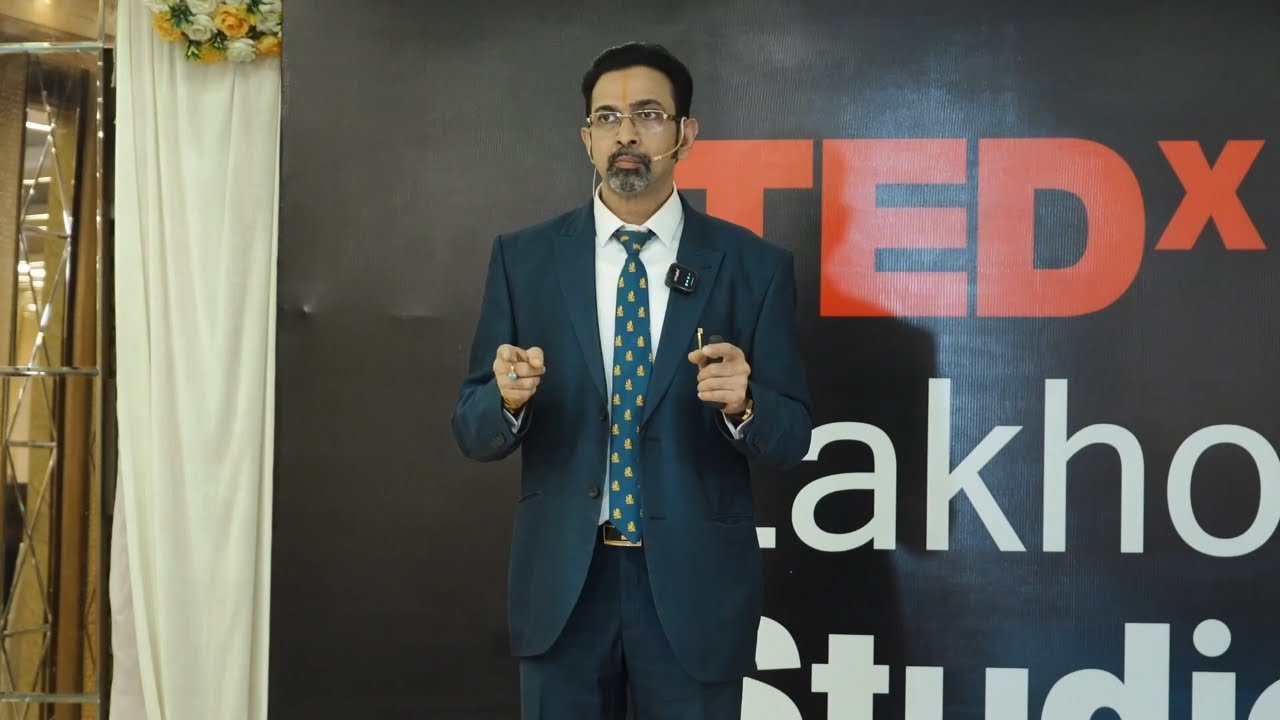
- A healthcare professional with 25 years of experience, Dr. Maneesh Agarwal, has written a book called Visionary Leadership Redefined, which outlines the essential factors for an individual's success, including having a capable mentor, a platform to work and refine their skills, available resources, and most importantly, their own willingness to achieve their goals 10s.
- For anyone to be successful, it is crucial to have big dreams, a strong desire to achieve something, and the enthusiasm to reach great heights, as expressed in the lines "manzilen unheen ko milti hain jinke sapnon mein jaan hoti hai" and "pankhon se kuch nahin hota, hauslon se udaan hoti hai" 42s.
- Dr. Maneesh Agarwal advises everyone to keep their spirits high, give their dreams wings, and strive to reach the highest levels of success, based on his own 25 years of experience, which included many ups and downs, but he never gave up 2m6s.
Life's Natural Cycles and Emotional Balance
- Using an example from the medical field, Dr. Maneesh Agarwal explains that just like an ECG graph shows a person's heartbeat, life also has its ups and downs, and when problems arise, one should pause, maintain their mental balance, and not panic, because sorrow will eventually give way to happiness 2m6s.
- Life is governed by the natural law of experiencing both happiness and sorrow, and one should not get distracted by these emotions 10s.
The Mumbai Terror Attack and Initial Response
- A personal experience is being shared, a tragic event that is hoped will not happen to anyone, which is related to the Mumbai Terror Attack, a devastating incident that shocked the entire country 42s.
- On the day of the Mumbai Terror Attack, the administrator on call duty at a hospital in Bombay had to make a choice between abandoning the post or facing the challenge head-on, and the decision was made to stand firm and provide humanitarian service despite the difficult conditions 2m6s.
- The hospital, being the closest to the attack site, received a large number of victims, with a total of 106 patients, all severely injured, including those with bullet shot injuries, and some with severe head or limb injuries 2m6s.
Hospital Response and Team Mobilization
- The experience taught a valuable lesson, which is to be shared, on how to handle adverse situations in life, and the importance of standing firm and providing service to humanity in the face of challenges 2m6s.
- Doctors were resting at home and were immediately called to work, with multiple teams divided to handle the situation, including surgeons, anesthesiists, operation theater teams, nursing, and paramedic staff, all of whom reached the hospital quickly to take charge of their respective roles 10s.
- The hospital was running throughout the night, with all patients being treated one by one, but the challenge did not stop there, as all the patients were critical and required ICU care, which was already full 42s.
- To accommodate the critically injured patients, the hospital team requested the relatives and consultants of stable patients in the ICU to shift them to the ward, which was agreed upon, and the stable patients were shifted to the ward, while the critical patients were accommodated in the ICU 1m6s.
Managing Media and Maintaining Confidentiality
- A bigger challenge was managing the media and VIPs, as the entire city of Mumbai was shaken after the accident, and the whole country's media attention was focused on the hospital, with everyone wanting to give updates every minute, but the hospital had to balance this with the need to maintain patient confidentiality and not leak information that could be used by terrorists 2m6s.
- A challenging situation was handled with stability and balance, and the media was managed in a diplomatic manner, which helped to maintain the confidentiality of patients, including Indian patients and foreign diplomats, 10s.
Outcome and Reflection on the Crisis
- The situation involved receiving and treating 106 critically injured patients, all of whom eventually recovered and returned home, which was a significant achievement and a testament to the team's efforts, 10s.
- The experience of handling this crisis situation helped to bring out leadership qualities, such as firm determination and the ability to provide services to the community, and it increased confidence in handling similar situations in the future, 10s.
- The lesson learned from this experience is that one should not panic in adverse situations, but instead, face them with stability and balance, and this approach can help to successfully overcome challenges, 10s.
Long-Term Impact and Leadership Development
- The experience of disaster management and crisis situation management has been helpful in various aspects of life and career, and it has provided the skills and confidence to handle similar situations with ease, even when the quantity of the challenge is smaller, 10s.
- Motivating the team and bringing out this quality in them is crucial, as losing occurs when one accepts defeat, and winning happens when one decides to persevere 0s.
The Mindset of Winning and National Pride
- The difference between losing and winning is the mindset, where losing is associated with accepting failure, and winning is associated with being determined to succeed 10s.
- The message is to be prepared to win, not just for personal achievement, but also for the country, with the goal of making it a world leader, and to strive for victory with the phrase "Jai Hind" 42s.