The Accident and Immediate Consequences
- The individual's right leg was amputated approximately four years ago, and this sudden change from being a healthy young person to becoming severely disabled was not something they were prepared for, leaving them with the choice of whether their story would be a tragedy or a comeback story 10s.
- On February 4, 2022, the individual was freeriding in Leermos, Tirol, with their friend Dommy, where they triggered an avalanche that swept them away, causing them to lose their footing and be engulfed by the snow, leading to a loss of visibility and an inability to breathe 2m6s.
- The individual experienced intense forces during the avalanche, including being tumbled around like in a washing machine, and eventually felt like they were falling and experienced a severe impact, followed by a sharp pain in their right leg, prompting their survival instincts to take over 2m6s.
- After making swimming motions, the individual managed to resurface and take a breath, but was shortly thereafter slammed into a tree by the avalanche, coming to a stop, and upon assessing their situation, they discovered their leg was severely injured, bent at a 180-degree angle, and they could see bloodstains in the snow 2m6s.
- The individual's friend Dommy made an emergency call, and after about 40 minutes, a helicopter arrived at the scene, although it was unable to land due to the steep terrain, and the individual was rescued using a winch, then taken to the hospital where they were put into a coma due to their critical condition 2m6s.
- Upon waking up from the coma, the individual's first question to the doctors was whether their right leg could be saved, but unfortunately, they had not only suffered an open femur fracture but also torn a major blood vessel and nerve in their right leg, making it impossible to save 2m6s.
- The individual had a severe injury that resulted in significant blood loss, and if the accident had occurred in warmer temperatures, the outcome would have been fatal, with the person likely bleeding to death at the scene 10s.
The Aftermath and Medical Response
- The substantial blood loss led to the muscle tissue in the right thigh dying, and the dead tissue had to be surgically removed multiple times, with each operation resulting in the loss of more of the leg 42s.
- The person, who introduces themselves as Marian, a 35-year-old who started skiing at the age of 3 and later discovered their true passion for freeskiing at the age of 12, had to come to terms with the fact that their leg could not be saved 2m6s.
- Marian's life changed dramatically after the accident, going from flying through the air while skiing to being confined to a wheelchair and struggling with basic tasks such as using the bathroom 2m6s.
Emotional and Psychological Impact
- The uncertainty and fear about the future were mentally challenging for Marian, who wondered if they would ever be able to return to their normal life, ski, or skateboard again 2m6s.
- Despite the doubts, many people believed in Marian's ability to cope with the situation, saying that if anyone could handle such a setback, it would be them, which initially made Marian feel both flattered and uncertain 4m0s.
Adaptation and Rediscovery of Passion
- However, Marian has since proven those people right, adapting to their new circumstances and finding new ways to enjoy their passion for winter sports, such as snowboarding, and even performing tricks again 6m0s.
- Reflecting on the experience, Marian realized that the people who believed in them saw the "freeskier" in them, which refers to the skills and qualities that freeskiing had taught, such as perseverance and the ability to work through challenges, ultimately helping Marian to overcome their difficult situation 8m0s.
- The process of learning new tricks and continuously improving was crucial when having to relearn how to walk with a prosthesis, which was extremely challenging at first, with muscle burn after just 20 meters, but perseverance was key 10s.
Resilience and Past Experiences with Injury
- The experience of overcoming injuries was not new, as there had been previous incidents, which helped in being somewhat prepared for the rehabilitation process and the journey back to regaining old fitness levels 1m20s.
- The most important lesson gained from the experience was the development of inner drive, an unconditional will to achieve goals despite numerous setbacks, which proved to be essential in the recovery and learning process 2m6s.
Relearning and Overcoming Physical Challenges
- After the accident, the first attempt at skating with a prosthesis was somewhat successful, but the joy and speed were missing, leading to a decision to learn at least one trick on the snowboard again, specifically a No Comply Frontside Shav, which seemed impossible at first but was eventually achieved after more than a year and hundreds of attempts 3m30s.
- Achieving this trick brought back the feeling of limitless joy and sparked a motivation spiral, where the sense of pride and fun led to a noticeable progression and an incredible motivation boost, encouraging the learning of more tricks 4m40s.
Shifting Perspective and Finding New Opportunities
- Looking back, it's clear that the old mindset was regained by viewing the accident and the use of a prosthesis as a challenge, rather than focusing on what was lost, and this shift in perspective led to discovering unexpected advantages and positive effects of the accident 6m10s.
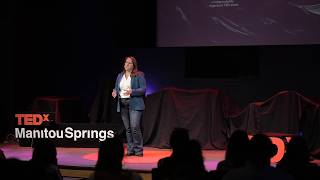
- The accident brought unforeseen opportunities, such as creating a documentary with a best friend and giving a TED Talk, which would not have been possible without the accident, highlighting the importance of finding the positive aspects in difficult situations 7m30s.
Unexpected Benefits and New Realities
- It is now possible to easily enter events using a disability pass, which allows for a more convenient experience 10s.
- After an amputation, a doctor expressed sympathy and stated that it would be impossible to engage in certain sports like skiing or snowboarding again, which can be a common experience for people who have set seemingly impossible goals 42s.
- The key takeaway from this experience is that in order to truly determine if something can be achieved, one must try and find out for themselves, rather than relying on the opinions of others or self-doubt, and this process often requires repeated effort 2m6s.