Start 0s
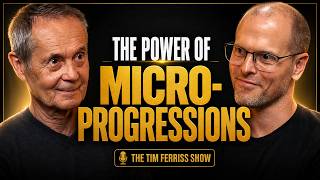
- Seth Godin, author of 21 international bestsellers, discusses overcoming resistance to change.
- Resistance is a natural response to change and can manifest as procrastination, self-doubt, or fear of failure.
- To overcome resistance, identify its source and address it directly.
- Take small, consistent steps towards your goals and have a support system or accountability partner for motivation.
- Persistence and embracing failure as a learning opportunity are crucial.
- Godin's latest book, "The Song of Significance: A New Manifesto for Teams," addresses team dynamics.
- Sitting is unhealthy, and podcasts are often consumed while stationary.
- The video encourages movement and walking as an alternative to sitting while listening to podcasts.
Writing a provocation rather than a prescription. 6m29s
- Treating blog posts as questions or provocations, rather than answers or prescriptions, can make them more engaging and effective.
- Condensing complex ideas into short blog posts can be challenging due to resistance to simplifying information.
- Blogs are good at creating sketches that allow readers to fill in the gaps and actively participate in the dialogue.
- Proofreading should focus on whether the writer is asking the right questions, rather than just fixing errors.
- A blog post can be broken down into a series of shorter posts, each focusing on a specific aspect of the topic.
- Using concise and memorable phrases can help readers visualize and remember the key points.
- Blogs allow readers to think about and interpret the author's meaning, creating a puzzle-like experience.
- The risk of being misunderstood can lead to negative responses and the author feeling the need to over-explain or stop blogging altogether.
- Asking for clarification or revisiting the blog later for further discussion can help address misunderstandings.
- XKCD, a blog in graphic form, exemplifies this approach.
Divvying up concepts. 13m23s
- The speaker is considering writing a series of short pieces exploring ideas and clarifying their thinking.
- They are unsure whether to make each piece a standalone or connect them as a series.
- The speaker wants to make their writing sustainable and avoid exhausting themselves or their readers.
- They mention the importance of genre and how readers need to understand what to expect from a piece of writing.
- The speaker suggests that writing a series of shorter pieces may be more sustainable than writing a single long piece.
- They use the example of David Letterman's TV show, which had a regular recurring segment called "stupid pet tricks" to illustrate the concept of genre.
- The speaker emphasizes the importance of giving readers a clear idea of what to expect from a piece of writing, so that they can adjust their expectations accordingly.
Comprehension over complication. 16m40s
- Seth Godin suggests adopting a comprehensive approach rather than overcomplicating things.
- He uses the example of a tennis lesson where the coach advised him to focus on hitting the ball straight up instead of trying to hit a home run.
- Godin proposes setting boundaries and rules to overcome the tendency to overcomplicate writing.
- He encourages creating self-sustaining, independent pieces rather than relying on multi-part series.
- Seth Godin identifies resistance as a common obstacle in writing.
- He points out the use of parentheticals as a protective measure against potential criticism.
- Godin suggests establishing boundaries to ensure that work is completed and shipped efficiently.
- He proposes specific rules, such as having a tagline under 18 words and limiting footnotes, to encourage clarity and conciseness.
- The idea is to present information as if having a phone conversation, focusing on clear communication within a limited time frame.
How Seth fulfills a blog post’s purpose. 19m13s
- Seth writes blog posts in advance and reviews, rewrites, or deletes them the night before.
- The rule is to get points for making the post shorter, not longer.
- A blog post is done when it can't be boiled down any further without being deceptive.
- The purpose of a blog post is to tell people something they already know in a way that they would be grateful to share with others.
- Blog posts should provide insights that resonate with people and can be shared with friends and colleagues.
Claude AI vs. ChatGPT. 22m43s
- Claude AI is significantly better than ChatGPT at certain functions, such as reviewing and critiquing writing.
- Claude AI doesn't read the web, so it's not easily distracted.
- Seth uses Claude AI every day to critique his writing and get insights.
How Seth Godin as a Service (SGaaS) maintains consistency. 23m56s
- Seth Godin maintains consistency by playing the character of "Seth Godin" when writing his blog.
- He only publishes blog posts that align with the character's voice and doesn't publish posts that are just him being tired or annoyed.
- Godin writes blog posts every single day, whether he uses them or not, to ensure he has a reserve of content.
- Resistance is the enemy of consistency.
- Resistance can take many forms, such as fear, self-doubt, and procrastination.
- Resistance is not something to be overcome, but rather something to be managed.
- To overcome resistance, it's important to:
- Identify the source of resistance.
- Acknowledge and accept resistance.
- Take small steps forward.
- Celebrate progress.
- Seek support from others.
Simplification over exaggeration. 27m38s
- Tries to reduce ideas to their essence without becoming hyperbolic.
- Avoids parentheticals unless absolutely necessary.
- Creates tension and then releases it with an idea.
- Example of a short blog post: "You don't need more time, you just need to decide."
- Example of a longer blog post: Teaches details about something in a way that the reader can relate to.
- People who feel overwhelmed often say they need more time.
- The solution is not more time, it's making a decision.
- Close the open loops and get things done.
Working with Isaac Asimov and getting a Clue. 32m10s
- Isaac Asimov was a prolific writer and a humble person.
- Seth Godin's experience working with Asimov on a VCR game project was positive, as Asimov trusted him and gave him creative freedom.
- In contrast, Seth Godin's experience working with Stanley Kaplan on a test prep book project was negative, as Kaplan micromanaged the project.
- Seth Godin and Peter Alatke invented a murder mystery game that could be played on VCRs.
- The game was a success, selling over a million copies.
- Kodak and Cisco bought the rights to the game, and it was advertised during the Olympics.
- Seth Godin's only real job before the VCR game project was at Spiner Software, where he invented educational computer games.
- He worked with Arthur C. Clarke, Ray Bradbury, and Michael Crichton on various projects.
- He also worked with Byron Price on a team of programmers to create illustrated computer adventure games.
How Seth moves life’s story forward (even when he loves the current chapter). 37m8s
- Seth Godin views life as a series of projects rather than a job, emphasizing the need to create a vacuum by ending successful projects to make way for new endeavors.
- Godin's focus is not on maximizing income or audience size, but on ensuring that his work solves interesting problems and brings value to those he serves.
- He advocates for deliberate decision-making when choosing new projects, avoiding multitasking, and embracing discomfort and uncertainty during the vacuum period.
- Godin suggests taking time for reflection and exploration before filling the vacuum with another project to identify the most worthwhile pursuit.
- The speaker struggles with resistance to shipping work and finds joy in the invention cycle but needs the satisfaction of publicly sharing work to overcome this resistance.
- The speaker used to package books and accumulated over 800 unfinished book proposals, believing that a finished proposal requires an unfinished one that hasn't been shipped.
Why does Seth write? 43m43s
- The biggest payoff is the reduction of noise in his head.
- He writes consistently because he decided to 24 years ago, not because he reconsiders each day if it's good enough.
- He would still write even if no one read his blog.
- Having a consistent platform (his blog) has professional value, as people know what to expect from him in that lane.
- He describes his blog as a "sinecure", a safe haven, a niche, a place to hide, a fortress.
Is an ounce of prevention worth a pound of sinecure? 45m14s
- Seth likes the word "sinecure" and plans to use it more often.
Parting thoughts. 45m30s
- Seth Godin's blog post highlights the negative impact of clever marketing on species extinction.
- Tim Ferriss's "Five Bullet Friday" newsletter shares interesting discoveries and recommendations weekly.
- Eight Sleep's Pod Cover optimizes temperature regulation during sleep, improving sleep quality and deep sleep percentage.
- OnePassword is an award-winning password manager trusted by millions, offering secure password management with features like autofill and encrypted storage.
- OnePassword generates strong unique passwords, supports one-time passwords and two-factor authentication, and undergoes regular third-party audits for enhanced security.
- A free two-week trial of OnePassword is available at onepassword.com/stim.