

Environmental Changes and Climate Impact
- The world is experiencing significant environmental changes, including rising sea levels, retreating glaciers, and bleaching coral reefs, with places like Pacific island states and the Arctic landscape being drastically altered 10s.
- As a documentary photographer and visual storyteller, the goal is to use images as a tool to raise awareness about climate change and build bridges between industries, scientific communities, and diplomatic and policy-making worlds 2m6s.
- In 1984, Nordic countries initiated a project where they stored seeds from endemic crops in wooden crates within an abandoned coal mine in Svalbard, aiming to study the longevity and viability of seeds in a time of biospheric decline 4m6s.
- This project led to the construction of the Svalbard Global Seed Vault, a facility that stores seeds from around the world, with a current collection of 1.3 million seeds and a capacity for 4.5 million, serving as a safety backup for gene banks globally 6m3s.
Indigenous Resilience and Arctic Environmental Changes
- Indigenous communities, such as the Sami and Inuit, have developed resilience and adaptability in the face of rapid environmental changes, and their knowledge and experiences can provide valuable insights into addressing climate change 8m5s.
- The Arctic environment is changing at an unprecedented rate, with consequences including the melting of permafrost, the release of methane, and the alteration of ecosystems, affecting not only human populations but also fauna, such as the narwhal, which is adapted to sea ice and may face extinction due to declining sea ice coverage 12m5s.
- The rapid changes in the Arctic, occurring at a rate four to six times faster than anywhere else in the world, have significant implications for the environment, including the warming of soil, the formation of sinkholes and mud streams, and the release of greenhouse gases 14m4s.
Impact on Arctic and Antarctic Species
- Migration patterns are already being observed, with the polar bear, a symbol of the Arctic, being affected as it relies on sea ice to travel and hunt, and without it, the bears face less opportunities to eat and potential starvation 10s.
- The emperor penguin and Adelie penguins in Antarctica are also impacted by the reduction of sea ice, which they need to build colonies, breed, and molt, and the melting of sea ice too early or forming too late can lead to the extinction of entire colonies 42s.
- The power of photography is being used to show the problems faced by these species, such as the melting of icebergs, which provide fresh water supply, and the calving of icebergs, which contributes to sea level rise 2m6s.
Threats to Island States from Rising Sea Levels
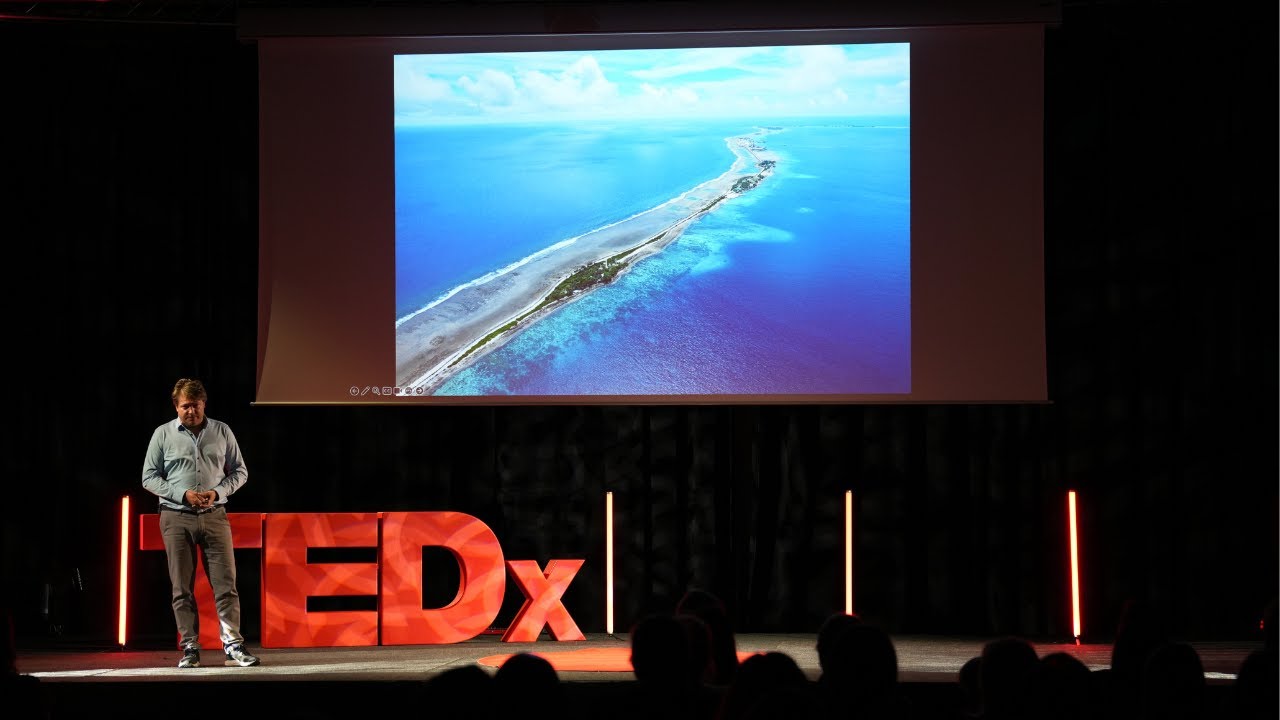
- The ocean connects all water on the planet, and island states, such as those in the Pacific, are facing existential threats due to rising sea levels, with some islands having their highest point at only 2-3 meters above sea level 2m6s.
- Islands like the Marshall Islands, Tuvalu, Nauru, and Kiribati are densely populated and are trying to survive by building seawalls to protect themselves from the ocean, but are also experiencing coastal erosion and salt water infiltration 2m6s.
- The ocean provides oxygen to the biosphere, but it also takes away land, and coastal erosion is a significant problem for these island states, with 1 cm of sea level rise making a big difference to the daily reality of the people living there 2m6s.
- The impact of climate change on these island states is disproportionate, with them contributing only 0.03% to emissions causing global warming, but facing 99% of the impact, and the problem is not just about the present, but also about the future generations 2m6s.
Adaptation and the Role of the Ocean
- Adaptation is a big question, and it is uncertain whether humans, plant species, and fauna will have the time to adapt to the changing climate, and understanding the ocean is crucial to solving this question 2m6s.
- The ocean is the source of life, and without a healthy ocean, there won't be a healthy planet, and therefore, marine research and scientific work are necessary to address the problems faced by the ocean and the planet 2m6s.
Marine Research and Scientific Efforts
- Researchers work daily to measure and understand the changes in the ocean by deploying instruments and looking for variables like temperature, salinity, conductivity, and currents, in order to cope with the ongoing crisis 10s.
- To achieve this, they take measures and samples from the ocean surface to the bottom using a CTD rosette, and record their findings in data sheets to conclude what is happening and how to address the issue 10s.
Preservation of Environmental Records
- In 2023, some of this work, including research on atoll states that are disappearing and work on the marine research vessel Belgica, was deposited in the Arctic World Archive, a vault that aims to preserve the past for the future using a sustainable, analog film that can last for a thousand years 42s.
- The purpose of this archive is to allow people in the future to see how researchers tried to understand the ocean, using which instruments and methods, and to witness the environmental and cultural changes that are occurring, such as island states that will soon be below sea level 42s.
- The work of recording and preserving this information is important, as it raises questions about whether people in the past knew about the environmental changes that were happening, and the answer is yes, they did know, but the power of photography and record-keeping can help to capture what is being lost and encourage others to become record keepers for the planet 2m6s.