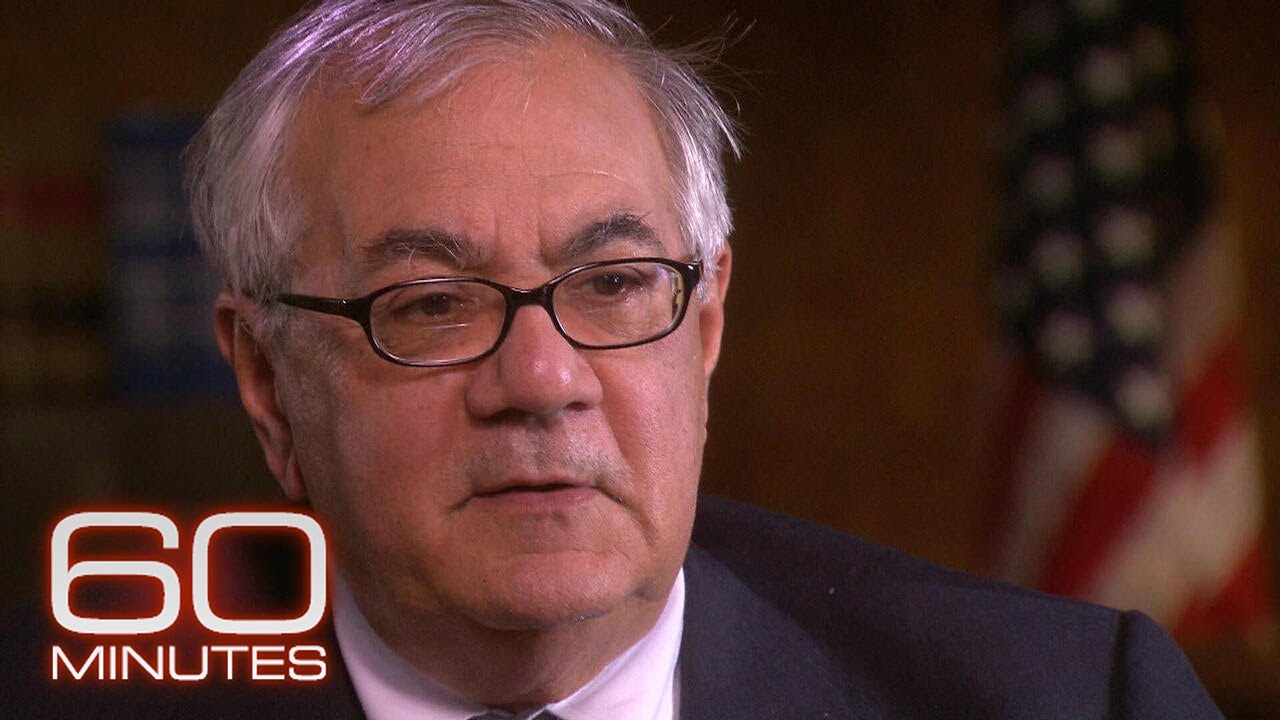


Barney Frank's Role in Financial and Automotive Industry Bailouts
- Barney Frank is a 14-term, 68-year-old Harvard-educated Democratic congressman from Massachusetts, who is chairman of the House Financial Services Committee, overseeing banks, housing, and the auto industry, and has been involved in the $700 billion rescue for financial institutions and the bailout attempt for car companies 10s.
- Frank worked to keep car makers out of chapter 11, but it is suggested that bankruptcy would allow companies to break their deals and make tough decisions, such as not paying small businesses or workers, which they cannot do outside of bankruptcy 2m6s.
- As chairman, Frank brought the heads of the big three auto companies before his committee, allowing anyone to vent, and expressed his fear that the companies would take the bailout money and continue making the same decisions that led to their current situation 4m30s.
- Frank argued that propping up companies is actually about propping up individuals, as the world consists of people, not just companies, and that letting companies fail would have a negative impact on the people who work for them 6m40s.
Frank's Approach to Auto Industry and Bankruptcy
- Frank worked to keep car makers out of chapter 11, but it is suggested that bankruptcy would allow companies to break their deals and make tough decisions, such as not paying small businesses or workers, which they cannot do outside of bankruptcy 2m6s.
- As chairman, Frank brought the heads of the big three auto companies before his committee, allowing anyone to vent, and expressed his fear that the companies would take the bailout money and continue making the same decisions that led to their current situation 4m30s.
Frank's Perspective on Company Bailouts and Human Impact
- Frank argued that propping up companies is actually about propping up individuals, as the world consists of people, not just companies, and that letting companies fail would have a negative impact on the people who work for them 6m40s.
- Frank met with mayors of towns affected by car factory layoffs and listened to their concerns, and he dismissed the idea that he publicly spanked the auto executives to cover himself, calling it an argument made by people who do not know what they are talking about 8m10s.
Frank's Personality and Communication Style
- Frank is known for being sharp-tongued and impatient, with many descriptions of him, including being antisocial, and he acknowledged being antisocial, but attributed it to the many people in Washington who try to waste his time with repetitive and stupid questions 10m0s.
- Frank can be fierce in his interactions, as seen in his use of the phrase "REGULAR ORDER" to silence an opponent, and he is a master of the put-down and dress-down, but also values nuance in discussion, which he believes is often lost on television 12m20s.
Frank's Political Influence and Reputation
- Barney Frank, a liberal Democrat, took over the committee that oversees banking, which led to concerns from Wall Street, but he has received good reviews from even hardened Republicans after two years, demonstrating his ability to cooperate and create a climate good for business, 10s.
- Frank describes himself as a liberal who is morally obligated to be pragmatic, rejecting the notion that he is liberal on social issues but a pragmatist on economic issues, and believes that being realistic about accomplishing something is essential to helping poor people, elderly people, and those discriminated against, 2m6s.
Frank's Pragmatism and Political Philosophy
- Frank describes himself as a liberal who is morally obligated to be pragmatic, rejecting the notion that he is liberal on social issues but a pragmatist on economic issues, and believes that being realistic about accomplishing something is essential to helping poor people, elderly people, and those discriminated against, 2m6s.
- Frank worked closely with Treasury Secretary Henry Paulson to write the rescue plan for the banks during the credit crisis, but their relationship has soured since Paulson has not used the rescue money to help struggling homeowners, 4m42s.
- Frank is criticized for writing a bill that allows the Secretary of the Treasury to have the power not to fulfill it in the way he wanted, with some arguing that reducing foreclosures would reward delinquencies, and Frank responds that there is no way to force people to do things, 6m15s.
Frank's Role in the Financial Rescue Plan and Criticism
- Frank worked closely with Treasury Secretary Henry Paulson to write the rescue plan for the banks during the credit crisis, but their relationship has soured since Paulson has not used the rescue money to help struggling homeowners, 4m42s.
- Frank is criticized for writing a bill that allows the Secretary of the Treasury to have the power not to fulfill it in the way he wanted, with some arguing that reducing foreclosures would reward delinquencies, and Frank responds that there is no way to force people to do things, 6m15s.
- Frank faces criticism from conservatives, including Bill O'Reilly, who blame him for the subprime mortgage mess, saying he enabled Fannie Mae and Freddie Mac to back riskier loans, 10m10s.
- Frank's support for affordable housing for the poor has led to accusations that he contributed to the financial collapse, but he defends his actions and believes that his efforts have been aimed at helping those in need, 12m20s.
Frank's Personal Life and Identity
- Barney Frank has been a target of criticism for years, not just because he is a liberal, but also due to his personal characteristics, including being gay, left-handed, and Jewish, and he has been reelected multiple times as an openly gay man in his Massachusetts district 10s.
- Frank grew up in a blue-collar community in Bayonne, New Jersey, where he was a Jewish kid in a predominantly Catholic community, and he realized he was gay at the age of 13, but kept it a secret until his 20s 2m6s.
- By 1986, enough people knew about Frank's sexuality that he felt compelled to tell Speaker of the House Tip O'Neal, who was disappointed and had hoped Frank might become the first Jewish Speaker 4m30s.
- Frank decided to take a step no one in Congress had taken by publicly outing himself, and when asked by a Boston Globe reporter if he was gay, he replied with a considered answer, "Yes, so what?" 6m15s.
Frank's Scandal and Resilience
- The lowest point of Frank's life came two years later when he was involved in a sex scandal, but an investigation concluded that he was not aware of the prostitution ring being run out of his apartment, and he was reprimanded and apologized on the floor of the House 8m45s.
- Despite the challenges he faced, Frank went back to work and became an authority on modern banking and Wall Street, and he expressed confidence that the financial crisis would end by 2009 or 2010 12m10s.
Frank's Criticism of Government Response to Financial Crisis
- Frank criticized Secretary Pollson for not leaning on banks to lend the rescue money, and he stated that the Treasury Department was not holding the banks accountable, which was a major part of the problem 15m20s.
- The initial perception of a particular individual's focus was that it was too much on the financial community, but now it seems the focus is almost exclusively on them 0s.
- This individual is also criticizing Barack Obama for not being assertive enough in addressing the credit crisis, and the current presidential transition is occurring at a very unfavorable time 42s.
Frank's Reflections on His Political Legacy
- Senator Obama had stated that there is only one president at a time, but it appears that there is a lack of leadership at the moment, with the current situation being particularly challenging 1m6s.
- Despite the challenges, Barney Frank is being looked to for his thoughts on the job he has done, and he acknowledges that in politics, one does not receive credit for preventing disasters, making it difficult to build a political platform around such accomplishments 2m6s.