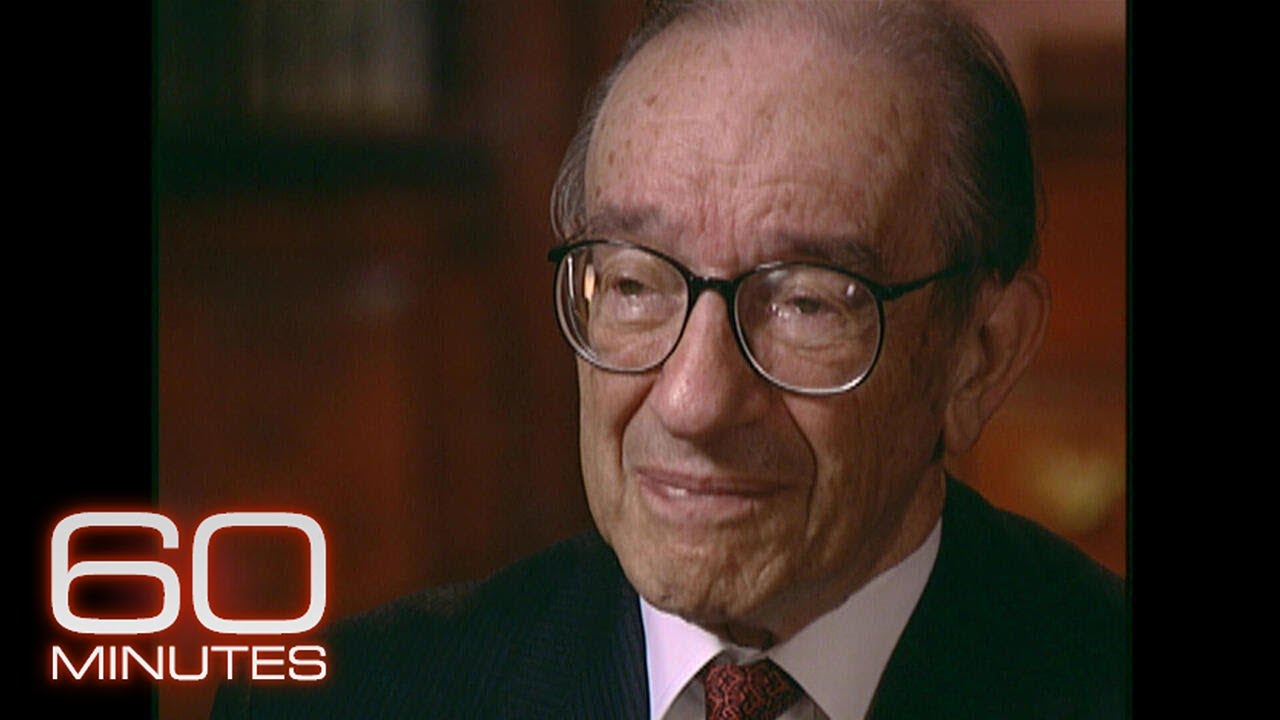


Alan Greenspan's Legacy and Early Career
- Alan Greenspan is considered one of the best chairman of the Federal Reserve in American history, with an 18-year tenure marked by unprecedented economic growth, budget surpluses, and a booming stock market, and he was praised for shepherding the economy through the shock of 9/11 10s.
- Greenspan has written his memoir, The Age of Turbulence, and has come under fire for his handling of the housing and lending crises, with critics saying he established a pattern of bailing out Wall Street investors, and he has admitted to missing the significance of subprime lending practices until very late in 2005 and 2006 2m6s.
- One of Greenspan's former Fed governors, Ed Gramlich, proposed that the Fed examine subprime lending practices, but Greenspan rejected the idea, thinking that the Fed would not be capable of dealing with the issue, and he insists that there's nothing he could have done to prevent the current housing crisis 4m30s.
- Some economists believe that Greenspan created the housing bubble and credit crunch by keeping interest rates too low for too long, but Greenspan argues that he raised interest rates at every meeting from June 2004 until he left office, and that keeping rates low was necessary to unfreeze the American banking system 6m40s.
Greenspan's Successor and the Ongoing Financial Crisis
- Greenspan's successor, Ben Bernanke, is facing calls to act quickly to address the current financial turmoil, with some investors thinking that Greenspan would have acted sooner and thrown more cash and liquidity into the system, but Greenspan says he's not sure that's true and thinks Bernanke is doing an excellent job 10m50s.
- The CEOs of major companies, such as Ford and Chrysler, are begging the Fed to lower rates, indicating the ongoing impact of the financial crisis on the economy 12m10s.
Greenspan's Economic Reputation and Retirement
- Alan Greenspan guided the economy through the jolt of 9/11 and presided over an unprecedented stretch of 10 years without a recession, earning him a reputation as almost infallible when he retired in 2006 at age 79 10s.
- After retiring, Greenspan was asked about his investment strategies, but he declined to comment on his investments in real estate or the stock market, citing that some questions were not meant to be answered 42s.
Greenspan's Personal Investments and Philosophical Views
- As an economist, Greenspan stated that he couldn't care less about the currency in which he is paid, as he can immediately convert it to any other currency, and he diversifies his assets, including in terms of currency, but did not specify which currencies he holds 2m6s.
- Greenspan's book, The Age of Turbulence, is a psychoanalysis of himself and was written mostly in longhand in the bathtub, with 80% of it completed in this unusual setting 4m30s.
Greenspan's Personal Life and Early Career Aspirations
- Greenspan met his wife, Andrea Mitchell, on a date in 1984, where he attempted to woo her by sharing an essay he had written on antitrust, specifically the Sherman Antitrust Act of 1890, which surprisingly worked 6m15s.
- Before becoming an economist, Greenspan had dreams of being a professional baseball player and later a professional musician, even being hired by the Henry Jerome Orchestra to play bebop jazz at the age of 17 8m50s.
- Alan Greenspan became an economist with his own forecasting firm in New York in the 1950s, during which time he became friends with philosopher Ayn Rand, author of Atlas Shrugged, and was one of her most famous disciples 10s.
- Ayn Rand advocated a doctrine of unfettered, unregulated capitalism, and Greenspan was later to become the nation's top banking regulator, with Rand giving him a nickname of "The Undertaker" due to his gloomy demeanor 42s.
Greenspan's Memoirs and Reflections on U.S. Presidents
- Greenspan has written a book revealing his personal feelings about the six presidents he knew and worked for, including Richard Nixon, who he describes as being extremely profane and having prejudices against various groups of people 2m6s.
- Greenspan's views on the other presidents include describing Gerald Ford as an extraordinary human being who was not the smartest but had a strong ethical base, and Ronald Reagan as having an odd form of intelligence that he used to improve the country's self-image 2m6s.
- He had a difficult relationship with the first President George Bush, who pressured him publicly on interest rates, which Greenspan saw as improper and a crossing of a line in terms of the independence of the Federal Reserve 2m6s.
- Greenspan served under Bill Clinton, who he describes as the smartest of all the presidents he knew, and with whom he had a good working relationship, with Clinton describing their relationship as the "odd couple" 2m6s.
- Greenspan also had a positive view of Hillary Clinton, describing her as very smart and capable of handling the presidency, and stating that they got along reasonably well 2m6s.
- Alan Greenspan, as the Federal Reserve chairman, had a close relationship with the Clinton administration, visiting the White House as often as once a month to serve as an economic consultant, which raised questions about the appearance of total independence 42s.
Greenspan's Communication Style and Public Perception
- Greenspan was known for using "Fedspeak," a dialect that sounded profound but was often indecipherable, to avoid directly answering questions from Congress about interest rates, which sometimes resulted in opposing headlines in different newspapers 2m6s.
- During the Clinton years, Greenspan was credited with the booming economy, budget surpluses, and soaring markets, earning him the nickname "Saint Alan" and making him a rock star, with people thanking him for the growth in their 401(k)s 2m6s.
Greenspan and the Bush Tax Cuts
- Greenspan's decision to support tax reductions at the start of George Bush's term was widely criticized, with some interpreting his testimony as an endorsement of Bush's massive tax cuts, which he later claimed was not his intention 2m6s.
- Greenspan had previously suggested that the surplus should be used to shore up Social Security and Medicare, but he came to favor a tax cut because he thought the surplus would get too large if not used, although he never explicitly stated that he was in favor of the Bush tax cut 2m6s.
- Greenspan denied succumbing to pressure from the White House, stating that they never spoke to him about the tax cut and that he would not change a word of his testimony, even knowing the outcome, which was the evaporation of the surplus and the return of deficits 2m6s.
The Bush Administration's Economic Policies and Greenspan's Disagreements
- The Bush administration's economic policy was based on proposals made during the campaign, which included tax cuts, and these policies continued despite changes in the surplus, a decision that was considered wrong 42s.
- Greenspan was especially surprised and disappointed by his old friend Dick Cheney's lack of focus on restraining spending, and he disagreed with Cheney's statement that deficits don't matter 1m6s.
Greenspan's Current Economic Predictions and Observations
- Greenspan has set up an economic forecasting firm, Greenspan Associates, and he predicts that the current fear in the markets will subside, although it's not clear yet what the deep lasting effect will be on the economy, jobs, and consumer spending 2m6s.
- The current economic issues are fundamentally caused by the flattening out of home prices, which are expected to fall further, and this is already affecting the job market for industries related to housing 3m10s.
- Despite the current credit problem, the economies around the world seem to be holding up, and it's unlikely that the situation will spiral into something deeper, as the US has an underlying strength 4m20s.
Greenspan's Long-Term Economic Concerns and Public Influence
- Greenspan sees clouds on the horizon, particularly the reemergence of inflation over the long run, which he believes will be a major problem, and he has expressed this gloomy outlook in his book 6m30s.
- As a former Federal Reserve chairman, Greenspan's public statements still have enormous impact, and his prediction of a one in three chance of a recession this year rattled the markets and forced the current chairman to calm things down 8m40s.
- Greenspan believes he has the right to speak out on global economic issues, including recession and inflation, as he is no longer commenting on monetary policy, and he sees no reason to impose restrictions on his speaking 11m10s.
Greenspan's Personal Interests and Leisure Activities
- In his free time, Greenspan relaxes by reading government reports and data, including the Bureau of Labor Statistics productivity and cost reports, which he finds interesting and enjoyable 13m20s.
- The individual has a strong interest in the details of the protein content of hard red winter wheat, which is evident from their fascination with the price differential between Kansas City and Chicago 10s.
- This fascination is described as romantic, indicating a deep passion for understanding the intricacies of the subject matter, particularly the price differences between the two cities 42s.
- The individual's love for delving into such details has remained consistent over time, as they still enjoy exploring and analyzing the nuances of the protein content of hard red winter wheat 2m6s.