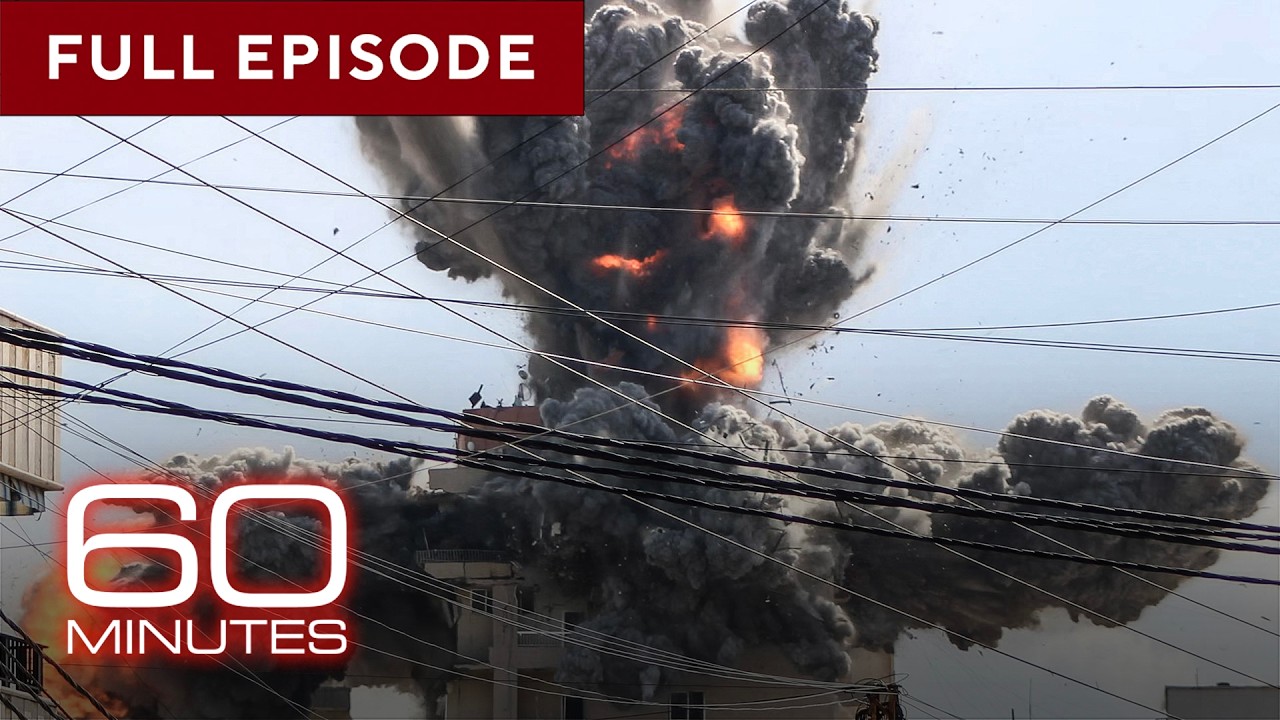


The Escalation of Conflict Between the US, Israel, and Iran
- The United States and Israel have conducted strikes on targets across Iran, resulting in the death of Iran's supreme leader, and Iran has retaliated with missile attacks on Israel, neighboring countries, and US military bases, killing at least three American service members 10s.
- Raza Pali, the 65-year-old son of the former king of Iran who was deposed in 1979, believes the Iranian regime is collapsing and is willing to lead a transition to make Iran safe for the world, having lived in exile for 47 years, mostly in the United States 10s.
- Pali describes the supreme leader of Iran as a "monster" responsible for the loss of many Iranian lives and the regime's atrocities, and he views the leader's death as an "earthshattering event" that could be an opportunity for change in Iran 42s.
- In January, Iranians marched in the streets, with Pali urging them on, but the regime responded by gunning down an estimated 20,000 citizens, and Pali now cautions people to stay safe at home but expects them to return to the streets to fight for liberation 2m6s.
Raza Pali's Vision for a Democratic Iran
- Raza Pali, the 65-year-old son of the former king of Iran who was deposed in 1979, believes the Iranian regime is collapsing and is willing to lead a transition to make Iran safe for the world, having lived in exile for 47 years, mostly in the United States 10s.
- Pali describes the supreme leader of Iran as a "monster" responsible for the loss of many Iranian lives and the regime's atrocities, and he views the leader's death as an "earthshattering event" that could be an opportunity for change in Iran 42s.
- In January, Iranians marched in the streets, with Pali urging them on, but the regime responded by gunning down an estimated 20,000 citizens, and Pali now cautions people to stay safe at home but expects them to return to the streets to fight for liberation 2m6s.
- Pali believes the Iranian people were prepared to fight the regime regardless of outside intervention and thanks President Trump for taking action, and he is committed to leading a transition to democracy in Iran, where he wants to give the people the freedom to make their own choices 2m6s.
- Pali does not want to be king but is willing to serve as a transitional leader to guide Iran towards democracy, and he imagines a future where Iran can have peace with Israel, citing the historical example of Iran providing refuge to Jews escaping the Nazis during World War II 2m6s.
Iran's Political and Social Landscape
- The core principles that unite people are Iran's territorial integrity, the clear separation of religion from state, equality of all citizens under the law, and a democratic process to allow the people to elect and decide their future system of governance 10s.
- The nuclear weapons program should be totally dismantled, as Iran has no need to pursue a military weaponizing of the nuclear program 2m6s.
- The last king of Iran, Muhammad Raza Pahlavi, was close to the United States but brutally suppressed opposition and was eventually overthrown in the 1979 revolution, led by Ayatollah Khomeini, which resulted in 52 Americans being held hostage for 444 days 2m6s.
- The current situation in Iran is a result of the people's desire for change, with many young people protesting against the current regime and seeking a new path to freedom, and some people believe that the son of the last king, Reza Pahlavi, could play a role in this transition 4m30s.
Reza Pahlavi's Role in the Transition
- Reza Pahlavi has been out of the country for nearly 50 years but claims that he is still connected to Iran and its people, and that he has been in touch with the Trump administration and members of Congress 6m0s.
- Reza Pahlavi's message to President Trump is one of gratitude for his courage to intervene in Iran and potentially change the course of the country's history, although President Trump has expressed some skepticism about Reza Pahlavi's ability to lead Iran 8m0s.
- Despite not having President Trump's wholehearted support, Reza Pahlavi believes that he has the support of millions of Iranians, both inside and outside of the country, who see him as a potential bridge to a more democratic future 10m0s.
- Unrest has been building in Iran for months, with protests and demonstrations against the current regime, and Reza Pahlavi sees himself as a potential transitional leader who can help guide the country towards a more democratic system 12m0s.
The Historical and Current Context of the Iranian Regime
- The US and Israeli forces attacked Iran's nuclear facilities in June, and in 2022, a large uprising occurred in Iran after a 22-year-old woman was killed in custody by the morality police, sparking crowds to demand an end to the regime, with security forces killing over 500 people, arresting 22,000, and blacking out the internet 10s.
- The courage of the Iranian people on the streets is considered heroic, with examples including a firefighter who was shot and killed while carrying a wounded person, and a lone Chinese student standing in front of a tank in Tiananmen Square 2m6s.
Military and Civilian Resistance in Iran
- There are units in the military and police who have signaled that they would turn on the hardline government, and many troops could be given amnesty in a process of national reconciliation, with a choice to join the people or stand with the government 4m42s.
- The Iranian people are being encouraged to have faith in themselves and their ancient civilization, and to start believing in a better future instead of just hoping for one, with a call to action to start working towards it 6m15s.
US Military Operations Against Iran
- The US military, with over 50,000 members involved, has struck 3,000 targets inside Iran as part of Operation Epic Fury, with Defense Secretary Pete Hegseth stating that the mission is on track and the US has overwhelming capabilities compared to Iran 8m30s.
- The US and Israeli air forces are considered the most powerful in the world, and the campaign against Iran is expected to showcase their capabilities, with the goal of achieving unconditional surrender, which means setting the terms and rendering Iran combat ineffective 12m0s.
- The concept of unconditional surrender is being redefined in the context of the conflict with Iran, with the possibility of different forms of surrender, and the terms being set by President Trump 15m40s.
Iran's Response to US Demands
- The president of Iran stated that the US demand for unconditional surrender is unrealistic, given Iran's history of not surrendering in the nearly 8-year war with Iraq 10s.
- The US approach to the war with Iran is focused on bringing the enemy to their knees, with the goal of advancing American interests and protecting American lives, and the possibility of a formal surrender ceremony in Tehran Square is up to Iran 1m42s.
Origins and Justification of the US-Israeli War
- There are varying accounts of how the war started, with some critics suggesting that Israeli Prime Minister Benjamin Netanyahu pulled the US into the war, which did not prioritize American interests, but it has been reported that the Israelis provided key intelligence on February 23rd about the whereabouts of Ali Hami and his inner circle 2m6s.
- The US confirmed the intelligence through the CIA and saw it as an opportunity to take action, with President Trump's approach being focused on advancing American interests from the beginning, and the fact that intelligence was gathered from various sources, including the Israelis, and always checked by US intel agencies 3m30s.
- Some have questioned whether the US action was in response to an imminent threat or just an opportunity, but the US views Iran as a ongoing threat due to their history of killing Americans and their unabated nuclear ambitions 5m40s.
The Iranian Nuclear Program and US Concerns
- Despite the US claim of obliterating Iran's nuclear infrastructure, international monitors estimate that Iran still has over 970 pounds of nearly bomb-grade uranium, and the US is exploring various ways to address this issue and prevent Iran from achieving its nuclear ambitions 8m10s.
- The US is not disclosing its plans for dealing with Iran's nuclear program, including whether it will take direct action to extract the highly-enriched uranium, and is reserving the right to take further action as needed to achieve its objectives 10m40s.
- The US is also not commenting on whether it has overt or covert forces inside Iran, with the secretary stating that the US reserves the right to take action as needed, and that the previous answer of "no" to this question is still the current answer 12m20s.
US Strategic Flexibility and Intelligence
- The US is reserving the right to take any option in the conflict with Iran, including boots on the ground or no boots on the ground, and is aware of Russia providing intelligence to Iran on US positions and movements 10s.
- The US has the best intelligence in the world and is tracking everything, with commanders aware of who's talking to who and how to mitigate risks, and the president has a knack for knowing how to mitigate those risks 42s.
- The American people can expect conversations with the Russians to stop the conflict, and President Trump has a unique relationship with world leaders that can help get things done through direct or indirect conversations 2m6s.
Casualties and Civilian Impact
- The Russian involvement does not put US personnel in danger, as the US is putting the other side in danger, and the only ones who need to be worried are the Iranians 2m6s.
- Six US Army reservists were killed in an Iranian drone attack in Kuwait, and President Trump and Secretary Hegsth attended the dignified transfer at Dover Air Force Base, with the president acknowledging that there will be casualties 4m10s.
- More than 1600 Iranians have been killed, including 168 people, mostly children, at a school in the southern part of the country, and the US is investigating whether it was involved in any military strike at the school 6m20s.
- The US never targets civilians, unlike its adversaries, the Iranians, and an investigation is ongoing regarding the school incident 8m30s.
Leadership and Succession in Iran
- Iran announced that a son of its slain leader would replace him, and President Trump stated that any leader picked without his approval is not going to last long 10m40s.
- The conflict is not a regime change war in the conventional sense, but rather a response to the current situation, with the US not attempting to remake Iranian society 12m50s.
US Policy on Regime Change and Reconstruction
- The US is not attempting to remake Iranian society from an American perspective, as President Trump has referred to previous wars as "dumb" and the American people have rejected such efforts 10s.
- President Trump has expressed a desire to protect certain individuals in Iran who could potentially rise to leadership positions, but the best way to protect them is through current efforts between the US and Israel, which is seen as a generational opportunity for the people of Iran 42s.
Iranian Military Threats and Regional Impact
- Iran has launched missiles and drones at nearly a dozen Middle Eastern countries, including American allies Qatar, Bahrain, and Saudi Arabia, and allies in the region are running low on interceptors, but the US is prepared to help them restock 1m30s.
- The US has planned for the possibility of depleted interceptors and has projections of munitions that are well beyond what is needed, with the ability to crossload for allies if necessary, while prioritizing the safety of US forces, troops, and bases 2m6s.
- Since the war began, oil shipments through the Strait of Hormuz have stalled, resulting in a significant increase in US gas prices, but the US is taking care of the situation through American firepower, having largely diminished the Iranian Navy's ability to project power in the area 3m20s.
The Strategic Importance of the Strait of Hormuz
- The war has entered its third week, with 6,000 Iranian military targets struck, including ballistic missile sites and air defense systems, and Iran's navy has been rendered combat ineffective, yet Iran still maintains control over the Strait of Hormuz 4m40s.
- The Strait of Hormuz is a crucial 21-mile-wide waterway for a fifth of the world's oil, with normally 130 commercial ships passing through it every day, but since the start of the war, those ships have ground to a halt, resulting in an unprecedented closure of one of the world's most vital chokepoints 6m10s.
- An estimated 20,000 crew members are stranded and under attack in the Strait of Hormuz, with some ships attempting to cross the strait being struck by projectiles from Iran, and most others have been at a standstill in the surrounding waters due to the danger 7m30s.
- The situation in the Strait of Hormuz was deemed too dangerous for ships to sail through very early on, as Iran had already threatened to attack any vessel passing through the strait, prompting the US to call off ships from attempting to cross 9m0s.
- Hundreds of ships, including 400 oil tankers holding 200 million barrels of oil, are currently sitting in the Persian Gulf, waiting to navigate through the Strait of Hormuz, which has come to a complete standstill due to the war, with ships being forbidden from navigating through the strait by Iran's Revolutionary Guard 10s.
- Six cargo ships carrying furniture, electronics, and clothing, were headed toward the strait as the war broke out, and Captain Lean Kuster ordered her crew not to proceed after hearing the message from Iran, with the crew now trapped and seeing drones flying by, explosions, and smoke 1m2s.
- Roughly 700 ships are currently sitting in the Persian Gulf, with the men on board having been ordered to stay below deck as much as possible, and Captain Kuster's biggest fear is what happened to two oil tankers off the coast of Iraq that were struck by Iranian explosives and set ablaze 2m6s.
- Since the war started, there have been 16 confirmed attacks on ships in and around the Persian Gulf, with Iran claiming responsibility for several of them, and at least eight crew members have been killed, with Matt Smith, an oil market analyst, monitoring ship activity in the strait 3m15s.
- Ship traffic in the Strait of Hormuz has dropped significantly, with only one or two tankers passing through per day, and the few ships that have moved are mostly from Iran, with Iranian vessels loaded with crude oil heading to China 4m30s.
- Iran has exported 100,000 more barrels of oil per day than it did before the war, with most of it going to China, and nine Iranian oil tankers have traveled through the Strait of Hormuz by turning off their transponders, with the country's new supreme leader stating that the leverage of blocking the strait must continue 6m40s.
- The Strait of Hormuz is a critical choke point, with Bob McN, an energy adviser, describing it as the "mother of all choke points", and predicting that if left unmolested, Iran would be able to make the strait unsafe for oil to flow 8m50s.
Economic and Market Implications of the War
- The goal of defanging the Iranian regime is considered principled, courageous, and correct, but managing the oil and gas market implications is crucial, and this includes attacking Iran's ability to disrupt the market, which has already led to a significant increase in gas prices 10s.
- Gas prices in the United States have increased by more than 65 cents per gallon since the war began, representing the fastest weekly spike in 20 years, and if the Strait of Hormuz is not opened soon, new records for gas prices may be set 2m6s.
- The cost of jet and diesel fuel has risen 25%, which is expected to lead to higher plane tickets and grocery prices, as the price of gasoline is set in a global oil market, and a supply disruption anywhere can lead to a price spike for consumers everywhere 2m6s.
- The situation in the Strait of Hormuz affects the entire supply chain, as the food grown and transported by oil will become more expensive, and these price increases will be passed along to consumers 2m6s.
- Despite assurances that the Strait of Hormuz is in good shape, most ships remain too wary to cross, and the US Central Command has taken out 30 mine layers, but it is unclear when the US Navy will offer escorts for protection 4m30s.
- The Trump administration has announced that it will temporarily lift sanctions on Russian oil and release 400 million barrels of oil from strategic reserves, but this process is expected to take at least three months 8m0s.
Iranian Drone Threats and US Countermeasures
- There are no policy solutions to a prolonged closure of the Strait of Hormuz, and the options available to the White House range from marginal to deeply unwise, with escorts and strategic stock releases being considered sideshows 10m0s.
- Even if the war were to end, there is no guarantee that Iran would open up the Strait of Hormuz, and restoring the flow of the strait is the only way to stop the economic bleeding 12m0s.
- Iran can demonstrate its ability to attack ships in the Strait of Hormuz by launching frequent attacks, which will be enough to exert pressure, and such attacks have continued, including one on a ship on Thursday 10s.
- The attacks have resulted in damage and loss, with an Iranian drone attack causing the first American casualties of the war, killing six soldiers in Kuwait, and the US is using anti-missile interceptors that cost millions to shoot down the drones 2m6s.
- Iranian drones, such as the Shahed drones, are getting faster, stronger, and can move in swarms, with the advantage of being cheap, often made of flimsy plastics, and costing as low as $20,000, making them a significant threat to the US and the Gulf States 2m6s.
- A possible solution to counter the Iranian drones is the use of lasers, which can change the economics of defending against these targets, with the cost per shot being less than $5, compared to $4 million for a Patriot missile 4m42s.
- Wahed Nawabi, CEO of American defense contractor Aervironment AV, has developed a laser system called Locust, which can be stationary or installed in the back of a truck, and has been deployed in multiple battles around the world, including against drones 6m15s.
- The US did not have a cost-effective solution ready to counter the drone threat, as they were prepared for other threats like missiles, but not for drones hitting soft targets, according to Mara Carlin, former assistant secretary of defense for strategy, plans, and capabilities 8m40s.
- Iran's actions, including the use of drones, are not surprising, as they are using asymmetric warfare, and the US and other countries are now looking for ways to counter this threat, with lasers being a potential solution 10m10s.
- Countries are looking for ways to counter drones, and one possible solution is the use of lasers, with companies like AV, Loheed Martin, and Rathon, as well as countries like Israel, Ukraine, and China, developing their own laser systems 10s.
- The Locust program, led by John Gared, is a laser system that can track and destroy enemy drones using AI, with the operator locking in on the drone using an Xbox controller, and the laser tracking the drone as it approaches 2m6s.
- The Locust system can find enemy drones up to seven miles away, and as the drone gets closer, the final step is destruction, with the laser creating enough heat to melt through the plastics or materials that the drone is made of 2m6s.
- The system was demonstrated by having a drone placed in a hanger, and the operator used the laser to destroy the drone, with the beam traveling at the speed of light and creating instant flames 2m6s.
- The benefit of a laser system is that it can keep lasing at a target until it goes down, and the Locust system is intended to counter drones like the Shahad drones that Iran is sending in 2m6s.
- However, laser technology is still relatively young and experimental, and ongoing military tests have raised concerns about performance, accuracy, and effectiveness in certain weather conditions, such as rain, humidity, sand, fog, and dust 2m6s.
Ukrainian Innovations in Drone Warfare
- The system's operator noted that traditionally, drones are not flying in rain, but the system's effectiveness in other weather conditions like sand, fog, and dust is still a concern 2m6s.
- The US military has actively deployed systems and placed them at their battle stations, and these systems have been used to shoot down drones operated by cartels along the Mexican border, with the army working in cooperation with Customs and Border Patrol 10s.
- Laser technology is considered a valuable element in the US arsenal, but it requires sufficient intelligence to figure out where the target is coming from, and the physics of the technology must also be taken into account, with Mara Carlin, a former Pentagon official, stating that investment in laser technology is not enough 42s.
- The US military is procuring locust laser-directed energy systems, with the United States Army requesting the delivery of approximately $100 million worth of these systems, and the lasers have been in use since last month in the war on drugs at home 2m6s.
- The use of locust systems near the Mexican border has raised concerns about interference with commercial airplanes, but tests have been conducted to demonstrate that the systems cannot harm commercial airliners, and the Federal Aviation Administration has shut down airspace near the border twice due to these concerns 2m6s.
- The sale of laser technology to the Gulf States would require approval from the Pentagon and the State Department due to national security aspects, and the production of these systems cannot be scaled up without a contract in place, with the company only being authorized to provide the technology to the US military 4m30s.
- The US military is learning lessons from Ukraine, where unmanned and remotely controlled drones have transformed the battlefield, inflicting around 80% of combat casualties on both sides, and the traditional front line has expanded to a roughly 10m wide strip called the kill zone, where anyone can be spotted by a drone operator and hunted down 6m40s.
- The technology used in Ukraine is evolving rapidly, and the US military is adapting to the new era by using laser-directed energy systems, such as locust, to counter the threat of drones, with the company conducting tests to demonstrate the safety and effectiveness of the technology 8m10s.
- Ukraine has developed various drones, including the "Ca Baby" sea drone, which can carry a payload of 2,000 kg of explosives, enough to take out a Russian warship, and has been used to sink or disable 11 Russian vessels, all for a production cost of around $300,000 2m6s.
- The Ukrainian military has also set up drone training facilities to teach soldiers how to use the new technology, with a focus on patience and practice, and has seen success with ground drones, such as one that held off a Russian attack single-handedly for 45 days straight 4m42s.
- Alexander Commission, the architect of Ukraine's drone program, has helped boost Ukraine's drone production from 2,000 a year to 4 million, allowing the country to level the battlefield against Russia, and views the war as a "numbers game" where the cost of killing every Russian is less than $1,000 6m15s.
- Ukraine's military has developed a range of drones, including remote-controlled armored evacuation drones, which have saved hundreds of lives, and can be adapted to mount different weapons, such as a 40 mm grenade launcher, and are designed in collaboration with soldiers on the front line 10m10s.
- The innovation cycle for drone technology is roughly one week, allowing for rapid shifts in tactics and continuous innovation, and Ukraine says it makes more than 95% of its own military drones, harnessing talent from unusual places, such as former brewery engineer Roman Teachenko 12m50s.
US Military Adaptation to Drone Warfare
- The use of drones has allowed Ukraine to draw Russia into a stalemate, despite Russia's territorial gains, with 10 retired US generals agreeing that Russia is not winning the war, and Ukraine's focus on protecting human life has led to the development of drones that can perform tasks without risking human lives 8m40s.
- The development and production of drones can occur rapidly, with the time from sending a drone to the front line, getting feedback, and creating a new version potentially taking as short as one week 10s.
- Both Russia and Ukraine are innovating in the drone arms race, with the current state being described as an equilibrium, where both sides are taking any help they can get, and companies like Air Logix are producing aerial surveillance drones for the Ukrainian military 42s.
- Air Logix has its production spread across more than 20 sites to minimize risk, having already been bombed twice by Russia, and has secured over a million dollars from an American investment fund specializing in Ukrainian drone technology, run by former US Marines William McNalty and Lenor Karafa 2m6s.
- The investment fund's investors are wealthy individuals who support Ukraine, with McNalty and Karafa motivated by a sense of service, patriotism, democracy, and mission, which they believe Ukraine embodies 2m6s.
- A NATO training exercise in Estonia last year demonstrated the vulnerability of the alliance to drones, with around a thousand NATO personnel being defeated in a drill by a group of drone operators, including some Ukrainians, highlighting the potential for a revolution in warfare 4m30s.
- The US military recognizes the importance of adapting to modern conditions on the battlefield, with the risk of losing military supremacy if it doesn't innovate, and is setting up drone innovation labs like the Forge at the Whispan garrison in Germany to tap into the passion for innovation 8m40s.
Iran's Nuclear Program and US Strategic Concerns
- The labs allow any service member with an idea or interest to request time to work on projects, aiming to add a culture of innovation, and it's possible that a soldier could walk into one of these labs with an idea that could be a breakthrough in drone technology 10m10s.
- Captain Ronan Septton, who was deployed to Germany to give basic training to Ukrainian soldiers, learned from them the importance of incorporating drones into training to add realism, and this feedback led to changes in the US military's approach to drone technology 12m20s.
- The US military is working to adapt to new technologies, such as drones, and integrate them with traditional firepower like howitzers and Abrams, in order to counter the drones developed by America's adversaries, and this adaptation is crucial to become ready for the next conflict 10s.
- The US military is learning its lessons in the conflict with Iran, where the first Americans killed were targeted with a drone, and the fate of the war hangs on Iran's stockpile of highly enriched uranium (HEU), a essential ingredient for nuclear weapons 2m6s.
- Iran currently has enough HEU to eventually make 10 atomic bombs, but international inspectors have not been allowed to verify the stockpile since last June, and President Trump has insisted that the US will take whatever is left, whether by force or by striking a deal with the Iranian regime 4m30s.
- There is a precedent for safely securing and removing a stockpile of HEU, as seen in the 1994 operation codenamed Project Sapphire, where the US removed a cache of highly enriched uranium from Kazakhstan, which was left behind by the Soviets, using diplomacy and a team of specialists 6m40s.
Historical Precedents for Securing Nuclear Material
- Andrew Weber, a young foreign service officer at the time, played a key role in building trust with the factory director in Kazakhstan and eventually securing the stockpile, which was protected by only a militia woman with a sidearm and a padlock, and the operation was carried out in utmost secrecy under the cover of a humanitarian mission 8m50s.
- A team of over 30 people worked for about five or six weeks to secure and load highly enriched uranium (HU) onto trucks, which were then flown back to the United States, specifically to a Department of Energy complex in Oakridge, Tennessee, for safekeeping, as part of Project Sapphire, which removed more than 1300 pounds of bomb-grade uranium from Kazakhstan 10s.
- The success of Project Sapphire has raised questions about whether a similar mission could be possible in Iran, but it is considered highly unlikely due to the need for a secure perimeter and thousands of US troops to secure the facility, as the HU is stored in deep tunnels at the Isvahan nuclear facility 2m6s.
Challenges in Securing Iran's Nuclear Facilities
- Satellite images have shown that the Iranians have blocked the tunnel entrances with dirt and set up roadblocks, suggesting they are concerned about a potential US or Israeli raid on the facility, and US special forces have been training for deep underground facilities for a long time 4m42s.
- Dr. Matthew Bunn, a former White House nuclear adviser, monitors Iran's nuclear activity and believes that while the US can see what's going on on the surface, it can't see what's going on inside buildings or underground facilities, and President Trump's statement that Iran's nuclear program was completely obliterated is not true 6m15s.
- UN inspectors believe Iran has close to 1,000 pounds of uranium enriched to 60%, which is nearly ready to be used in a nuclear weapon, and could be enough material for 10 to 11 nuclear bombs if enriched just a little bit more 10m10s.
The Future of US-Iran Nuclear Negotiations
- Nuclear analysts are concerned about another site in Iran known as Pickax Mountain, which is believed to be a massive nuclear facility deep under solid rock, and there are doubts about whether it's possible to bomb your way to Iran's stockpile and remove it 12m40s.
- Scott Roker, a former top official in the National Nuclear Security Administration (NNSA), believes that there is no lasting durable solution to Iran's nuclear program through military means, and that a deal between the US and Iran would be needed for the NNSA to lead an effort to remove the material 15m50s.
- The NNSA has removed more than 16,000 pounds of HU from countries around the world and shipped it to the US for safekeeping, using lessons learned from Project Sapphire, but only with agreements in place with the countries 18m20s.
- The importance of having a willing partner for cooperation is emphasized, and it is stated that an operation without such cooperation has never been seen, 10s.
Political and Military Implications of the Conflict
- President Trump claimed that Iran agreed to hand over its stockpile of nuclear material, but the Iranians later denied this, stating that their nuclear material was not going anywhere, 2m6s.
- Retired Vice Admiral Robert Harward, a former Navy Seal and Deputy Director of US Central Command, believes that an operation in Iran to retrieve nuclear material could take many weeks, require a large military footprint, and involve significant risks, including the need to occupy territory and confront Iranian forces, 2m6s.
- Vice Admiral Harward notes that the operation would require securing a full perimeter around any facility entered, potentially bringing in bulldozers to clear rubble, and building a landing strip, and that the most significant threat to the operation would be Iran's ability to respond with drones and missiles, 2m6s.
- Dr. Matthew Bun emphasizes that any nuclear agreement with Iran should be based on verification, not trust, given Iran's history of lying about its nuclear program, and that the US needs Iran to commit to no highly enriched uranium and in-depth international monitoring, 2m6s.
- The fragile ceasefire between the US and Iran is set to expire, and there are concerns about the potential for further hostilities, with suspected Iranian drone strikes in the Persian Gulf testing the ceasefire, 2m6s.
- Israeli Prime Minister Benjamin Netanyahu stated that the war with Iran is not over, as there is still nuclear material and enrichment sites that need to be addressed, as well as proxies and ballistic missiles that Iran supports, 2m6s.
- The removal of highly-enriched uranium from Iran is a crucial task, and it can be done physically if there is an agreement in place, with President Trump having expressed his willingness to take it out, but the method of removal is not being discussed 10s.
- If there is no agreement, the possibility of removing the uranium by force is not being considered, and a timetable for achieving this aim is not being provided, with the focus being on the importance of the mission 42s.
- Israel has targeted Iranian-backed Hezbollah terrorists in Lebanon, which is considered a second front in the war with Iran, and it is possible that the war with Iran could end but the war with Hezbollah could continue, with these being separate and divergent battlefields 2m6s.
- The prime minister is not willing to accept a ceasefire with Hezbollah, even if President Trump asks for it, due to the danger posed by the group to Israeli communities and cities, and the goal is to get rid of this danger 2m6s.
- The collapse of the Iranian regime could lead to the end of Hamas and the Houthis, as the terrorist proxy network built by Iran would collapse, but it is not possible to predict when or if this will happen, with the prime minister having presented a more optimistic case to President Trump before the war 2m6s.
Regional Alliances and Geopolitical Shifts
- The prime minister had suggested that Iran was ripe for regime change and that a joint US-Israeli mission could bring an end to the Islamic Republic, but this is being disputed, with the prime minister stating that the conversation was more nuanced and acknowledged the uncertainty and risk involved 2m6s.
- The conditions outlined by the prime minister and his team, which pointed to certain victory, including the regime being weakened to the point where it could not choke off the Strait of Hormuz, are being questioned, with the prime minister stating that the problem of the Hormuz Straits became understood as the fighting went on 2m6s.
- The Iranian military retribution against neighboring Gulf states and the damage it has caused were not foreseen, and there is concern among the Gulf monarchies that Israel will exercise strategic dominance over the Middle East 10s.
- The prime minister believes that some Arab states are interested in strengthening ties with Israel, and there is a possibility of expanding and deepening agreements with Arab states, which could lead to alliances that were previously unimaginable 42s.
- There are discussions among some Arab countries about strengthening their alliance with Israel, as they believe it could deter Iran, and they are interested in cooperating with Israel in areas such as energy, AI, and quantum technology 1m6s.
International Support and Financial Ties
- China, the world's largest importer of crude oil, is providing some level of military support to Iran, including components for missile manufacturing, which is a cause for concern 2m6s.
- American military aid to Israel, which is currently $3.8 billion per year, is subject to new political scrutiny, and the prime minister believes it's time for Israel to reexamine and possibly reset its financial relationship with the United States 3m8s.
- The prime minister wants to reduce the American financial support to zero over the next decade, starting now, as he believes it's time for Israel to wean itself off the remaining military support 4m10s.
Public Opinion and Social Media in the War
- The declining support for Israel in the US, with 60% of adults reporting an unfavorable view, is attributed by the prime minister to social media, which he calls the eighth front of the war, and he believes that Israel is at risk of losing this war on the social media front 5m40s.
- The deterioration of support for Israel in the United States is believed to correlate with the rise of social media, with several countries manipulating social media in a clever way to hurt Israel's image 10s.
- Israel has taken measures to minimize harm to innocent civilians in Gaza and Lebanon, including sending text messages, making phone calls, and distributing pamphlets and leaflets to warn them of potential danger 42s.
- The International Criminal Court has accused the Prime Minister of Israel of war crimes for the country's conduct in Gaza, which Israel and the US do not recognize, and the Prime Minister acknowledges that mistakes have been made in war, resulting in civilian casualties 2m6s.
Legal and Ethical Considerations in Warfare
- The Prime Minister believes that disarming and demilitarizing Gaza is necessary, and while he thinks it is the international community's obligation, Israel will take action if necessary, choosing the time and circumstances to do so 4m10s.
- The Prime Minister denies having a hunger for conflict, stating that he was previously considered one of the most restrained Prime Ministers in Israel's history, but the attack by Hamas on October 7th changed the situation, and he vowed to change the conditions in the Middle East to prevent Israel's annihilation 6m30s.
Emerging Trends in War and Prediction Markets
- A new feature of modern conflict is the emergence of betting on war, with over a billion dollars staked online on military decisions and outcomes, raising concerns about insider trading and the timing of attacks 10m0s.
- US special operations forces captured Venezuelan President Nicholas Maduro on January 3rd, and he was taken to the US to face drug trafficking and narco-terrorism charges, meanwhile, a US Army soldier, Ganon Ken Van Djk, who was involved in the planning and execution of the Venezuela mission, was charged with using classified intelligence to place bets based on when the surprise raid would unfold 10s.
- The allegations against Van Djk are considered one of the worst betrayals of trust, and he is accused of making a series of wagers totaling roughly $34,000, including a half-dozen the day before the raid, and ending up netting more than $400,000, according to the indictment 2m6s.
- The concept of insider trading is not limited to corporate executives, but also applies to prediction markets, where individuals with non-public information can trade on that information, and in the case of Van Djk, he is alleged to have traded on classified intelligence 4m42s.
Insider Trading and Military Operations
- Prediction markets, including Poly Market, offer wagers on the likelihood of future events, and have seen a spike in popularity, with some platforms allowing bets on military conflicts, dates of attack, and other sensitive information, which is prohibited in the US, but can be accessed through digital workarounds 6m15s.
- Researchers, such as Michelle Kendler Cret and her team at the Anti-Corruption Data Collective, have found that longshot wagers on military outcomes have a success rate of 52%, which is wildly disproportionate to conventional probability, and suggests systemic insider trading 10m10s.
- Another team of digital detectives, Bubble Maps, has also identified suspicious patterns of betting on war, with one cluster of traders showing a highly unusual pattern of activity, and the firm's head of investigations, who goes by the online handle Deeds, has asked to remain anonymous due to fears of retaliation 14m20s.
- A case of alleged insider trading has been uncovered, involving nine linked poly market accounts that collectively made $2.4 million betting on US military operations, with a 98% win rate, which is a higher amount than Ganon Ken van Dijk's $400,000, and this unusual winning streak has raised suspicions 10s.
- The linked accounts made dozens of winning bets on specific dates of pivotal moments in the war with Iran, including the first US strikes, the removal of Iran's supreme leader, and the announcement of a ceasefire, which cannot be explained by luck alone 42s.
Corruption and Market Manipulation in War
- A source in the defense department has stated that there are dozens more cases like Van Dijk's, and a former US military officer, Deeb, has spoken about the potential for corruption in military bets, given the number of people involved in planning and executing military operations 2m6s.
- The issue of insider trading is not limited to online prediction markets, but also occurs in heavily regulated commodities markets, where a former commodities trader, David Coll, has expressed suspicion about certain trades, including one that occurred on the morning of March 23rd 2m6s.
- On that morning, over $800 million was staked on the chance of oil prices dropping, 15 minutes before President Trump announced that the White House had productive conversations with Iran about ending hostilities, resulting in a significant profit, potentially tens of millions of dollars 2m6s.
- Federal investigators are probing these oil market trades, and identifying the person or entity responsible would be crucial in determining whether insider trading occurred, with possibilities ranging from someone inside the US to a foreign entity or enemy 2m6s.
Threats to Journalists and Truth in War
- The manipulation of war bets is not only limited to markets, but also affects truth, as seen in the case of Emanuel Fabian, a military correspondent who received threatening messages asking him to change his story about an Iranian missile strike, with the messages becoming darker and more personal 2m6s.
- An investigation found war bets on Poly Market, with $14 million initially being wagered on whether an Iranian missile would enter Israel on March 10th, which later increased to $22 million 10s.
- The person who wrote about the bets received death threats and pressure to change their story, but they did not give in, and instead reported the threats to the police and Poly Market, which banned the accounts involved 42s.
Regulation and Oversight of Prediction Markets
- Poly Market stated that threatening a journalist is unacceptable and that they work proactively to oversee suspicious activity, while the Commodity Futures Trading Commission (CFTC) is responsible for regulating such markets in the US 1m6s.
- The CFTC, led by Chairman Michael Seelig, has seen a drop in enforcement actions by more than two-thirds since 2024, and a sharp decline in staffing, but is hiring more staff and using AI to combat bad actors 2m6s.
- Government officials are aware of the potential for corruption in prediction markets, with the White House issuing a memo in March stating that using non-public information on these markets is a criminal offense 2m42s.
- Sources fear that insider trading scandals in prediction markets could lead to national security risks, as enemies may use this information to plan their strategies, potentially putting people's lives at risk 3m6s.
Future Risks and Consequences of Insider Trading
- Only one person, Sergeant Van Djk, has been charged with insider trading, but it is expected that such cases will multiply in the future 4m6s.