Performance and Introduction
- The music performance begins with the lyrics "praise yourself" and continues with various musical segments, including "spread for the sk," "make," and "me w make me," interspersed with applause from the audience 10s.
- The performance also includes the lyrics "i do i don't wann be great," followed by applause, indicating a significant moment in the performance 2m11s.
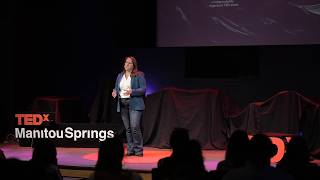
- The artist, Alkyone, introduces herself, stating that she is a songwriter and comes from the mountains of northern Greece, specifically from Edessa 4m6s.
- Alkyone expresses her joy at being part of the event and mentions that she has been following the talks for many years, which is something she loves 4m18s.
The Concept of Týchi
- She discusses the concept of "týchi" (τύχη), which initially means defense or protection, and how humans have a protective wall, the immune system, that has helped the human species survive 4m31s.
- Alkyone notes that the concept of "týchi" has taken on a negative meaning in recent years, evoking feelings of negativity and turmoil, and she wants to share a question with the audience: what if instead of focusing on "týchi," we focus on building doors to our challenges 5m41s.
Musical Interlude 1
- The performance concludes with Alkyone singing about birds and other themes, accompanied by music 6m17s.
- A song is performed with lyrics that include the lines "πάρα π μένα μωρέ ξένε μου και πάρα πόν εμένα η ξένη τια σας χαίρεται τα νιάτα τα γραμμένα μωρε ξένε μου τα νιάτα γραμμένα" 6m23s.
- The song continues with the lines "σο στενο μήλο έπεται κ δώνη μαρα νοιάζει μωρε ξένε μου δώνει" and "αράζει σου στέλνω και το δάκρυ μου σν χρυσό μαλμ ρέ ξενε μου σενα χρυσό μαλ το δάκρυ" 7m41s.
- The performance is followed by applause 7m34s.
- The music transitions to a new piece, with the lyrics "νακα αυτό και καίη το ο μαντλ μωρέ ξένε μου και καίει το ο μαντλ" 8m31s.
- The song continues with the lines "ξεντε μένα μου πουλιά και πάρα πνε" 8m50s.
- The performance is followed by applause again 10m49s.
Musical Interlude 2
- A new song is performed with the lyrics "hear your voice in my and get louder it seems like the world som gets" 11m1s.
- The music transitions to a new piece, with the lyrics "thee more weet so we the r in r r" 11m22s.
- The performance is followed by applause once more 12m46s.
The Unity of Music
- The artist explains that the songs performed may seem mismatched, but believes that all things can coexist in music, just like people coexisting in the world 12m58s.
- The artist notes that humans have a tendency to categorize things, but believes that music can bring together disparate elements 13m25s.
- The artist concludes that we live in a time where everything is interconnected, and music can reflect this complexity 13m38s.
Hypothetical Musical Collaboration
- A hypothetical scenario is presented where David Bowie and a classical musician meet, despite living in different eras and having different musical styles 13m47s.
- The idea is that even though they come from different musical backgrounds, they can still come together and create something new 13m54s.
Musical Interlude 3
- The music of David Bowie is featured, with lyrics from his songs being sung, including "Love" and "You" 14m51s.
- The performance transitions into a different song, with the lyrics "I can do" and "Floating" being sung 16m7s.
- The audience applauds after the performance 16m33s.
- The music continues, with the lyrics "Miles to go" and "I love her" being sung 16m50s.
- The performance includes a song with the lyrics "Know something, can you hear me?" and "Floating" 17m16s.
- The music is followed by applause from the audience 17m58s.
Music and Dreams
- It is believed that music opens doors easily because it is connected to a part of ourselves that has to do with dreams, wishes, and desires 19m6s.
- This connection to our desires and dreams is thought to be present from the moment we are born until the moment we die 19m29s.
- Even people who are close to death are believed to still have things they desire and dream of, and this is considered a magical aspect of human nature 19m36s.
- Music is thought to open the door to this part of ourselves, allowing us to be free when listening to and playing music 19m47s.
Musical Interlude 4
- A traditional Greek song is performed, with the lyrics "If I get sick, mother, I want you to come" and "Don't be late, come to my door" 20m2s.
- A song is performed, with lyrics that include a mother's love and protection, and the desire to be held and comforted by her, even in death 21m0s.
- The song also expresses the desire to be able to pass through the neighborhood without being seen, and to have the mother's presence felt even when she is not physically there 22m30s.
Opening Doors and Creating Opportunities
- The performance is followed by a message about the importance of opening doors and creating opportunities, rather than focusing on fate or destiny 23m44s.
- The idea of "demolition" is mentioned, and it is suggested that it can be a violent concept, and that instead, gentle persistence and determination can be more effective 24m1s.
- The importance of non-violence and gentle action is emphasized, and it is suggested that if enough doors are opened, fate will no longer be a significant factor 24m20s.
Emily Dickinson Quote
- The presentation is titled with a quote from Emily Dickinson, which translates to "not knowing when the dawn will come, I open every door" 24m33s.
- The quote is meant to convey the idea of taking action and creating opportunities, rather than waiting for fate or destiny to intervene 24m39s.