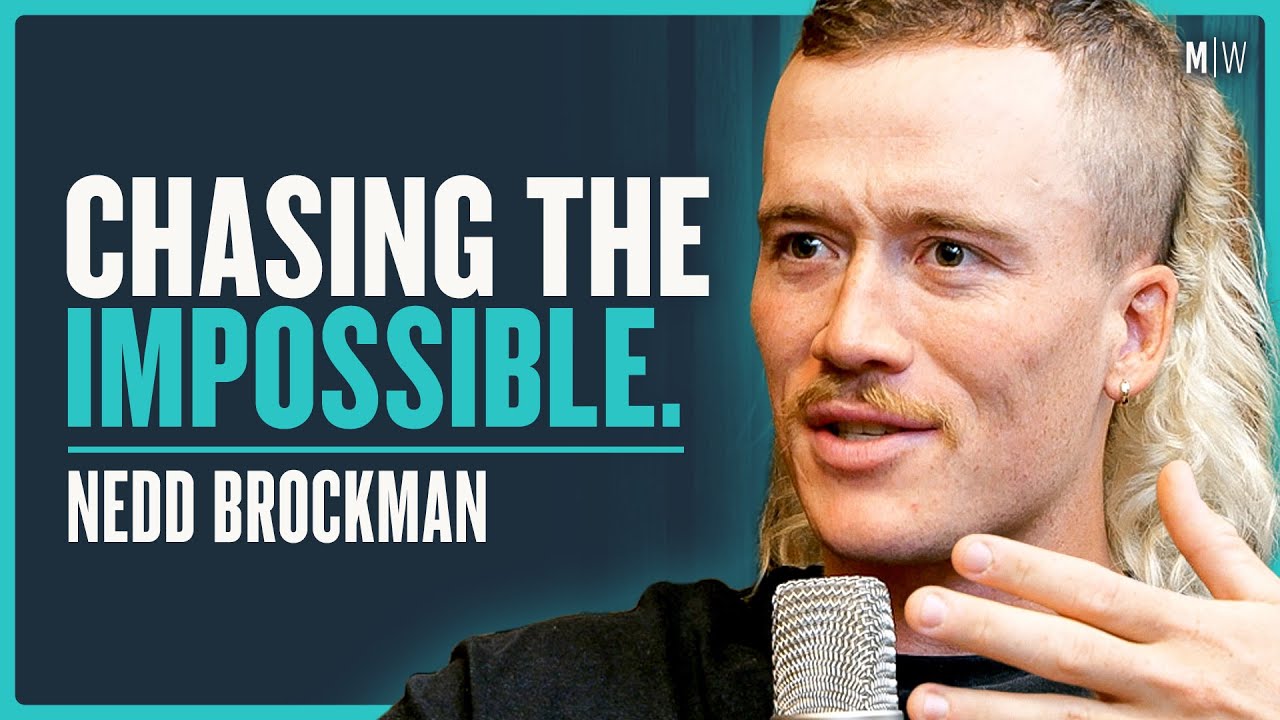


Nedd’s Most Recent Challenge 0s
- Ned Brockman recently completed a challenge of running 1,000 miles around a 400-meter athletics track in 12 and a half days, setting the fastest record for someone alive today, with an average of 130 kilometers per day 42s.
- The idea for this challenge came from a culmination of experiences, including running across Australia two years ago, which sparked a desire to continue pushing his body and testing his limits 1m16s.
- Brockman chose this particular event over running across the length of the UK, which he considered too hilly, and decided on the track challenge without much thought, attributing his naivety and stubbornness to his decision 1m49s.
- He started running only three and a half to four years ago and believes that his inexperience and youth, being only 25 years old, make him somewhat relatable to both younger and older people 2m4s.
- Brockman's training and preparation for the challenge involved a combination of physical and mental preparation, although he admits that he may not have been physically prepared enough, which is something he will continue to work on over the next 15-20 years 2m30s.
- For Brockman, running is not just about the physical act, but a tool he uses to feel and experience things, and to inspire others to take action, whether it's through helping homelessness or getting people to start moving 3m4s.
- The challenge was aligned with his work with homelessness, and he hopes to use his experiences to push for positive change and inspire others to take action 2m16s.
- A social change organization was created, masquerading as a fitness pursuit, with the goal of inspiring people to push their boundaries and take action 3m23s.
- The idea for this organization was born out of a desire to run across Australia, not just for the physical challenge, but to feel what it would be like to accomplish such a feat 3m41s.
- The decision to start this journey was made without waiting for the "right time," as it's believed that there is no perfect time to begin, and one must simply start 3m52s.
- After completing the Oz run, many people were inspired to take action, and the idea was formed to create a tangible challenge for others to participate in and experience the same sense of accomplishment 4m13s.
- Ned's Uncomfortable Challenge was created, allowing people to choose their own 10-day challenge and experience the feeling of pushing their boundaries 4m29s.
- The lead-up to this challenge was intense, as it involved training hard while also working and managing the organization, which aimed to help people move and raise money for mobilizing homelessness 4m43s.
- During this time, 50 marathons were completed in 50 days, all while working as an electrician and fulfilling other obligations 4m58s.
- The relatability of this achievement is higher because it was done while having other responsibilities, making it more accessible and inspiring to others who also have obligations 5m51s.
- The biggest lesson learned from completing 50 marathons was the importance of balancing work and personal life, as everyone has responsibilities and obligations that must be met 6m12s.
- The experience of completing 50 marathons in 50 days, while working and having other responsibilities, has been a valuable learning experience and has helped to create a sense of relatability and inspiration for others 6m31s.
- Preparation for endurance events like the Thousand Miles involves strategic planning, but some individuals may take a more spontaneous approach, pulling the "rip cord" and jumping into challenges without extensive planning 6m47s.
- There are structured and evidence-based methods for training, including apps and coaches that provide guidance on breaking down mileage per week, but some individuals may prefer a more informal approach 6m54s.
- The process of preparing for endurance events can evolve over time, with some individuals starting out with a "cowboy" approach and later incorporating more structured training methods 7m7s.
- Working with a coach and nutritionist can be beneficial, but there is also value in learning through personal experience and experimentation 7m18s.
- Strength training is an important part of preparing for endurance events, as it allows individuals to build up their endurance and tolerance for running on heavy legs 7m45s.
- Running on heavy legs and simulating back-to-back long days can help prepare individuals for the physical demands of endurance events, but nothing can fully replicate the experience of running 160k after 160k 8m8s.
- The physical and mental challenges of endurance events can be extreme, with the experience of running long distances day after day being "Next Level" and impossible to fully simulate 8m21s.
Typical Day on the Race 8m33s
- A typical day during the race involved running 160 kilometers per day for 10 days, with the goal of completing 10 kilometers every hour, but this plan didn't work out after day three or four due to injury 9m32s.
- To break down the run mentally, the process involved running two laps in each of the eight lanes, then repeating the process, with each set of laps referred to as a "master lap," and the goal was to complete 125 master laps 10m34s.
- This approach helped to add variety to the run and made it more consumable, as running 4,000 laps in a single lane would have been mentally unachievable 10m19s.
- The favorite part of the run was Lane four on the way out, as it marked a point where the remaining distance seemed more manageable, with only a few more lanes to complete 10m51s.
- At the end of each master lap, time was taken to eat, get a rubdown, or rest before starting the next lap, and the direction of the run was reversed after each master lap 11m20s.
- By day four, the mental challenge of the run became overwhelming, with the repetition of the master laps feeling like being stuck in a time loop, similar to the movie "Edge of Tomorrow" 11m38s.
- To cope with the exhaustion, a new routine was adopted, involving 12 hours of running, 2 hours of resting, and 2 hours of sleeping, but the rest time was often used for other activities like showering and eating, leaving only about an hour for sleep 12m11s.
- The mental and physical strain of the run made it feel like being stuck in a never-ending loop, with the only way to escape being to keep running and complete the challenge 13m1s.
Nedd’s Body State Throughout the Event 13m17s
- The event involved running for 16 hours, starting at 4 p.m. on day one, to avoid the heat, and then sleeping throughout the day, but sleep deprivation became a significant issue after day one 13m47s.
- The participant's training included trying to manage sleep, heart rate, and stress, but the stress of the event built up, and sleep became impossible, with the participant unable to sleep even two hours a night 14m9s.
- Sleep is considered one of the most important things for recovery, and without it, the participant's physical and mental state began to deteriorate 14m31s.
- By day five, the participant had reached 810 km, but was struggling to make decisions, had lost consciousness, and was unable to respond to basic questions 14m56s.
- The participant's mother intervened, giving them an ultimatum to either run or go to bed, and the participant chose to go to bed, but even while resting, their heart rate was high, and they experienced physical symptoms such as a pulsing throat and ears 15m29s.
- The participant's mother and team were concerned about their health and had crisis talks about getting them to bed and ensuring their safety, as the participant was pushing themselves too hard to achieve the record 16m38s.
- Nedd Brockman recalls a situation where he was exhausted and his mom intervened, helping him get some rest, which he acknowledges was crucial in preventing further harm 17m0s.
- Brockman emphasizes the importance of perseverance and finishing what one sets out to do, even if it means not achieving a record, as the lessons learned from the experience are more valuable 17m35s.
- He mentions Ross Edgley, an endurance athlete who failed twice before completing a long-distance swim, and praises Edgley's mindset, particularly his ability to depersonalize suffering and view it as strategically managed resilience 17m58s.
- Brockman notes that Edgley's approach is admirable because he doesn't tie his self-worth to his achievements, instead viewing himself as a science experiment, which allows him to make more objective decisions 18m30s.
- Brockman reflects on the challenges of making decisions when one's mental capacity is impaired, such as in situations of sleep deprivation, and how this can lead to poor decision-making and a lack of self-awareness 19m4s.
- He highlights the importance of recognizing one's limitations and being able to ask for help, even if it means acknowledging that one is not capable of making decisions for themselves 19m1s.
How Lack of Sleep Impacted Nedd 19m8s
- Ross's exceptional ability to digest food quickly is one of the reasons he excels in endurance events, as he can eat and then immediately be horizontal without issues, unlike others who need time to digest 19m16s.
- The idea of an elite sleeper who can train to sleep more effectively and potentially win competitions by doing so is proposed, drawing a parallel with Ross's ability to digest at any point 19m56s.
- Sleep deprivation can lead to a state of heightened focus and clarity, where the only thing that matters is the task at hand, and this state can be beneficial for certain activities 20m29s.
- Even after finishing a challenging event, the mental state of being "wired" to complete the task can persist, making it difficult to switch off and relax 21m14s.
- The importance of holistic health is emphasized, and a product called AG1 is recommended as a way to support overall health and wellness, with a 90-day money-back guarantee 21m22s.
- The goal of working on an 18-hour work period with 6 hours of rest is mentioned, with the aim of getting 3-4 hours of sleep during that rest period 22m28s.
- The original plan was to take 168 hours to complete the challenge, with 6-8 hours of sleep each day, but due to stress and lack of sleep, the plan had to be adjusted, resulting in 18 hours of sleep in total 22m49s.
- Despite the challenges, the goal was to still average over 120-130k per day, which was achieved for the next five days 23m20s.
- Normally, there would be moments of fun and reprieve during such events, but this time, there was no time for laughter or joy, making it particularly hard 23m41s.
- The only moment of joy and realization of the importance of the challenge came when a million dollars was raised on one of the days, and the impact of the event on society was felt 24m2s.
- Even after raising a significant amount of money, the final day was still a struggle, with 26 hours of non-stop effort required to complete the remaining 100k 24m55s.
- Crossing the finish line was an emotional experience, with feelings of anger and disheartenment, but also a sense of accomplishment and excitement for the lessons learned 25m7s.
- The anger and frustration stemmed from losing the usual happy and jovial personality during the challenge, and the pressure put on the support team 25m47s.
- The experience of completing a challenging run was marked by a mix of emotions, including anger, pride, and the overwhelming feeling of it being extremely hard, with the pain and difficulty overshadowing the sense of accomplishment at times 26m11s.
- Physical pains and challenges during the run included suffering from tenosynovitis in both shins, which is fluid around the tendon sheath, and an issue with the anterior tibialis muscle 26m44s.
- To alleviate the pain, a device called an addictus band was used, which is typically used for people with drop foot, and it worked by taking pressure off the affected area when pressing off with the foot 27m6s.
- The device was used on the right leg on day three of the run and another one was packed in case the left shin also became affected, which it did on day eight or nine 27m1s.
- Weak shins were identified as a problem area, but it was noted that over time, doing certain exercises and activities can help strengthen them 27m55s.
- Another issue experienced during the run was a right knee problem, caused by lost hip mobility, which resulted in an altered gait and pain when landing, requiring a walk-run approach for the last 400 kilometers 28m3s.
- Despite the challenges, the experience was not without its humorous moments, such as having to explain the walk-run approach to people who came to run with them 28m34s.
- After the run, an injection was received to ease the knee pain, and blood tests showed that everything was fine apart from a gluten response and high inflammation markers, likely due to the high carb intake and pain medication 28m53s.
- Hormone levels, including cortisol, were found to be relatively fine, despite the physical and mental demands of the run, which was an interesting finding given the expected hormonal changes 29m13s.
- The limited access to information about one's internal state, such as hormone levels, was noted, with the only available information being one's thoughts 29m35s.
- Blood test results showed relatively normal levels, indicating the power of mental framing in overcoming physiological challenges 29m50s.
- The results suggest that the individual's mental state had a significant impact on their physiology, despite potential untested areas 30m12s.
- The blood tests were taken seven days after a significant event, and it is likely that the results would have been different if taken immediately, due to the added stress of the test itself 30m31s.
- The individual is intrigued by the idea of taking regular blood tests to monitor physiological changes and is considering doing so in the future 30m46s.
- The goal of pushing mental toughness is not to prove anything to others, but rather a personal challenge to attack life's uncertainties and overcome obstacles 31m6s.
What the Ultra-Running Community Think of Nedd? 31m15s
- The concept of purists in various fields, including running, boxing, and swimming, is discussed, highlighting how some individuals may not have the traditional background or resume to participate in certain events, drawing a comparison to Jake Paul inurance racing 31m50s.
- The speaker reflects on their personal experience of receiving criticism and negativity, noting that it can be shocking at first, but ultimately, it's essential to focus on one's own path and not try to please everyone 32m0s.
- The natural human desire for love, approval, and acceptance is acknowledged, but it's also emphasized that trying to please everyone can lead to losing one's identity and backbone 32m59s.
- The importance of having people who don't like you is highlighted, as it allows for personal growth and the development of a strong sense of self, while also acknowledging that having people who violently love and support you is crucial 33m29s.
- The speaker notes that the majority of people in the running world accept and appreciate their unconventional approach, despite some criticism, and expresses a desire to continue pushing boundaries and inspiring others to live life to the fullest 33m52s.
- The key takeaways from the speaker's experiences and philosophies are to live life, give without expecting anything in return, and intentionally put oneself in uncomfortable situations to learn and grow 34m24s.
- The speaker emphasizes the value of living a rewarding existence by giving time, energy, or resources to others without expecting anything in return, and encourages others to adopt a similar mindset 34m34s.
- The goal is to spread a message through various activities such as running, swimming, kayaking, and rock climbing, regardless of the criticism from some individuals who may not agree with the approach or the sponsorships involved 35m9s.
- The message is not about competing with elite athletes, but rather about inspiring others and showing that it's possible to achieve great things with dedication and hard work, even if it takes years to reach the top level 35m39s.
- The approach may ruffle some feathers, especially among those who are traditionalists in their respective sports, but the hope is that people can appreciate the message and the effort put into achieving the goals 35m45s.
- Will G is a friend and an inspiration, known for his endurance feats such as running a marathon in each county in the UK and running across America in 55 days 36m16s.
- Will G's approach to endurance sports is seen as trendy and may not appeal to everyone, but his achievements are undeniable, and he deserves recognition for his hard work and dedication 37m13s.
- The response to Russ Cook's achievements has been relatively positive, possibly due to his likable personality and his ability to connect with people 38m2s.
- Russ Cook's beard and bubbly personality have contributed to his positive image, making him hard to dislike, and his achievements, such as running the length of Africa, are a testament to his endurance and determination 38m12s.
- Russ, an individual known for his mental toughness, was observed dealing with suffering and food poisoning during a challenging situation, yet he continued to push through with a smile, which is seen as noble and cool 38m40s.
- This behavior is considered attractive and draws people in, as it showcases authenticity and being unapologetically oneself 39m40s.
- Many people struggle to be themselves, and Russ's ability to do so is inspiring and sets an example for others 39m42s.
- The importance of being true to oneself and dealing with suffering in a positive manner is highlighted, as it can impact not only one's own life but also the lives of others 39m55s.
- The idea of setting an example and showing others how to deal with challenges in a positive way is discussed, and it is suggested that this can be just as important as achieving a goal or completing a task 40m22s.
- The concept of suffering with a smile and going through challenges with levity is explored, and it is noted that this approach can be a powerful way to inspire and motivate others 40m26s.
- The importance of not just achieving a goal, but also how one achieves it, is emphasized, as the approach and attitude taken can have a significant impact on the outcome and the message conveyed 40m39s.
- The use of social media platforms, such as TikTok, to share one's experiences and inspire others is discussed, and it is noted that this can be a powerful way to convey a message and connect with others 40m53s.
- The idea that achieving a record or completing a task is not as important as the message conveyed and the example set is explored, and it is suggested that the true value lies in the impact on others and the inspiration provided 41m11s.
- The partnership with Function, a company that provides comprehensive health testing and monitoring, is announced, and it is noted that this partnership has been a game-changer in understanding one's body and health 41m40s.
- Function offers a service that tracks energy and performance over the course of a year, providing actionable insights to improve them, and typically costs thousands, but is available for $500 42m9s.
- The service includes lab testing and expert blood work analysis, which can help individuals make their lives better by identifying areas for improvement 42m16s.
- Function has a 300,000-person waiting list, but opens a few spots for Modern Wisdom listeners, allowing them to bypass the wait list 42m22s.
- To access the service, individuals can head to the link in the description or visit functionhealth.com/wisdom 42m33s.
Being Present in an Experience 42m44s
- The recent tour in Australia involved three shows with increasing audience sizes, from 1,000 to 2,000 people, and each show was the biggest one done so far, with the first show having a lot of nervous energy to ensure it didn't go wrong, but ultimately all shows went perfectly. 42m44s
- Preparation for the shows involved running half of the show 20 times last year and doing work-in-progress shows in Austin this year to refine the material, test what worked and what didn't, and make adjustments. 44m1s
- Despite being well-prepared, there was still a sense of being on edge and wanting to make sure everything was precise, but it's challenging to balance being focused on the performance while also taking in the experience. 44m24s
- A conversation with Chris Bumstead highlighted that it's not just about achieving a goal, but also about the story you tell yourself and the experience you have along the way, and how you feel during and after the event. 45m11s
- Before one of the shows, a friend offered propranolol, or beta blockers, to help with nerves, but the decision was made to feel the terror and nervous energy of performing in front of a large audience, as that was part of the reward. 45m48s
- The experience of performing in front of a large audience, including the feeling of terror and nervous energy, is considered valuable and worth embracing, rather than trying to eliminate it with medication. 46m0s
- Achieving incredible feats, such as raising a lot of money, may not necessarily translate to a fulfilling internal experience, and recognizing this disparity can be a crucial step in personal growth 46m19s.
- It's essential to acknowledge that success is not solely defined by winning, losing, or completing a task, but also by how one approaches the challenge both outwardly and inwardly 46m45s.
- Taking on challenges can be driven by personal intentions, such as doing good and inspiring others, but it's also important to reflect on why one is undertaking a particular endeavor 47m12s.
- Embracing the experience and being present in the moment can help individuals find meaning and purpose, even in difficult or trying circumstances 47m32s.
- Recognizing the journey that has led to a particular point in life can be a powerful tool for self-reflection and growth, and acknowledging the choices that have been made can be a source of pride and motivation 47m51s.
- Having the ability to make those around you enjoy the experience and breaking it down into manageable moments of reflection can be a key aspect of personal growth and development 48m30s.
- Embracing the ups and downs of life, both within and outside of specific events or challenges, can provide a broader perspective and help individuals appreciate the good days more 49m35s.
- Broadening one's time horizon and recognizing that some events or days will be better or worse than others can help individuals develop a more nuanced understanding of their experiences and find value in the journey 49m51s.
- Negative events can make positive events feel better, and it's essential to learn from these experiences to grow and become better 50m4s.
- One must prepare and steel themselves for challenges that may arise in personal or professional life, or from external factors such as press stories or physical events 50m11s.
- Without experiencing difficulties or setbacks, one may not be able to survive or learn valuable lessons, as life can only be understood in retrospect 50m32s.
- The story of the farmer's son who gets a horse illustrates the idea that fortune and misfortune can be subjective and dependent on perspective, and that what seems unfortunate at first may ultimately lead to a positive outcome 50m49s.
- Over time, people generally get what they deserve due to their repeated patterns and habits, and reality will ultimately give them what they deserve without the need for karma or spiritual energy 51m13s.
- Having faith that good people will ultimately end up on top is essential, as it allows individuals to trust that their actions and decisions will lead to a positive outcome 51m34s.
Moving Forward Without a Clear Path 51m43s
- The concept of having multiple options and opportunities can be both a blessing and a curse, as it creates pressure to make the right choices and can lead to feelings of uncertainty and indecision 52m32s.
- People with many options often receive less sympathy than those with limited choices, as their problems are seen as "problems of abundance" rather than scarcity 52m52s.
- Having too many options can lead to analysis paralysis, making it difficult to decide which path to take, and can also create pressure to choose the most virtuous or worthy option 53m5s.
- Long-term planning can be challenging, especially in rapidly changing situations, and it's often more effective to focus on principles and rules rather than rigid plans 54m23s.
- Following curiosity and instinct can be a guiding principle for making decisions and navigating uncertainty, and it's essential to stay true to one's interests and passions 54m29s.
- Life can be seen as an intellectual buffet, with many different topics and interests to explore, and it's essential to satisfy one's curiosity and keep learning 55m6s.
- The job of someone in a position of influence is to keep satisfying their curiosity and exploring new ideas, and if they do so, everything else will fall into place 55m22s.
- The guiding principle for making decisions and navigating uncertainty is to focus on doing things that are interesting and meaningful, rather than trying to follow a specific plan or path 55m31s.
Chris’s Experience With Bullying 55m39s
- Bullying interventions are often focused on kids, as most bullying occurs in schools due to the social networks and hierarchies that form over time, allowing for the establishment of pecking orders 56m7s.
- There is a lack of discussion around helping adults who were bullied as kids to overcome their past experiences, with many still carrying emotional scars and feeling driven by the negative experiences 56m37s.
- The speaker notes that being bullied as a child can have long-lasting effects, including feelings of social exclusion, low self-esteem, and difficulty trusting others 57m47s.
- The speaker shares their personal experience of being bullied in secondary school, describing it as mundane social exclusion that stuck with them for a long time 57m33s.
- The speaker believes that being bullied may have aided in their pursuit of success, as it taught them to be resilient and driven 58m21s.
- The idea is proposed that bullying can be a form of "hard love" that can ultimately lead to personal growth, but this is a difficult concept to accept when going through the experience 58m30s.
- The speaker notes that their greatest growth has come from their lowest points, but acknowledges that this is a difficult message to convey to someone who is currently experiencing bullying or hardship 59m8s.
- Tracy Vine, the head of the Canadian Anti-Bullying Association, and Tony Vul, an evidence-based bullying intervention expert, are mentioned as friends who are working to address bullying 55m47s.
- Difficult life experiences can be ruthless, and the things people are most ashamed of, such as their dark sides, insecurities, and fears, are often the other edge of the strength they love most in themselves 59m30s.
- Resilience and agency can be born out of the need to rely on oneself, and the ability to keep going without the support of others can be a result of having to overcome difficult situations 59m55s.
- The things people are proud of can be the light side of the dark stuff, and the dark stuff wouldn't have come about without going through difficult experiences, which can lead to being grateful for those experiences and the people involved 1h0m32s.
- Retrospective storytelling, such as saying "it was meant to be," can remove the agency people had in a situation and take away the lessons learned from overcoming challenges 1h1m18s.
- Instead of waiting for difficult situations to arise, people can take agency and throw themselves into challenging experiences to learn lessons and grow without being forced by external circumstances 1h2m10s.
- The importance of taking ownership and agency in one's life is emphasized, and the idea of "bullying oneself" into growth and self-improvement is discussed 1h2m5s.
- The use of supplements, such as tonat Ali, can have impressive effects, but it's essential to be aware that most supplements have limited research backing their claims 1h2m41s.
- Momentus makes the only NSF certified Tonat Ali on the planet, which means it's tested rigorously enough for Olympic athletes to use it, and this is why a partnership was formed with them 1h2m45s.
- Momentus is considered to make the most carefully tested and highest quality supplements on Earth 1h2m58s.
- Tonat Ali is a fantastic, research-backed place to start for those looking to improve their testosterone naturally 1h3m6s.
- There is a 30-day money-back guarantee for Tonat Ali, allowing customers to buy it completely risk-free 1h3m10s.
- Momentus ships internationally and offers a 20% discount on all their products by using the code "modern wisdom" at checkout on liv.com/od wisdom 1h3m20s.
The Drive to Do the Thing 1h3m37s
- Experiencing and doing something is unique to the individual, and no one else can replicate that experience, regardless of the opportunity or achievement, such as getting a promotion, running across a country, or swimming around a continent 1h3m40s.
- To be the absolute best in the world at something, one may need to make sacrifices, including health, life enjoyment, relationships, family, bank accounts, and reputation 1h4m23s.
- However, if the goal is not to be the best in the world, but rather to participate or achieve a personal goal, there may be room for compromise and balance, allowing for a bit of "give" at the top, such as sacrificing 0.5% performance for 50% presence 1h4m55s.
- Authenticity is something that needs to be practiced, and it's strange that being genuine requires work, but it's a valuable aspect of personal growth and self-expression 1h6m59s.
- Reflecting on past experiences and thoughts can be a valuable learning experience, and being able to articulate those thoughts and feelings in a way that resonates with others is a skill that can be developed over time 1h6m4s.
- Engaging in activities such as writing, speaking, and sharing experiences with others can help individuals process and understand their thoughts and feelings, and can also serve as a form of personal growth and self-reflection 1h6m6s.
- Being open and honest about one's thoughts and feelings can be a powerful way to connect with others and build relationships, and it's okay to be vulnerable and authentic, even if it means being imperfect or uncertain 1h6m49s.
- Many people find it easier to conform to societal norms rather than being their authentic selves, often due to the pressure of social expectations and the fear of being judged 1h7m8s.
- A significant portion of social interactions involve brief conversations, and people rarely have in-depth discussions, even with family and friends, with the average conversation lasting around 20 minutes 1h7m21s.
- To improve communication skills and self-awareness, recording conversations, such as a fake podcast, can be a helpful tool, as it forces individuals to think rigorously and be precise in their thoughts 1h7m45s.
- Authenticity can only be discovered by stripping away layers of social expectation, decorum, and past traumas, allowing individuals to uncover their true selves 1h8m15s.
- It is often easier to be untruthful or inauthentic due to the comfort of conforming to social norms, rather than taking the risk of being genuine and potentially facing judgment 1h8m40s.
- Running can be used as a tool for self-discovery and personal growth, allowing individuals to find their authentic selves and push beyond their boundaries 1h8m53s.
- Embracing individuality and being true to oneself can be jarring for others, as it challenges their expectations and traditional ways of doing things 1h9m0s.
- Removing external influences and expectations is necessary to discover one's true self and find personal growth and excitement 1h9m10s.
PTSD After a Race 1h9m27s
- After completing the 26-hour track run, the recovery process was challenging, both physically and psychologically, with the individual experiencing a massive blister on their foot and a cooked knee 1h9m38s.
- The individual drove home from the track, a six-hour journey, and upon arrival, they were in shock, sitting for about two hours, staring, and trying to process the experience 1h10m20s.
- The first breath taken after the run was a sigh of relief, with no post-run euphoria, just pure relief that it was over 1h10m55s.
- The individual experienced a "tweaking out" stage for 12 hours after the run, with food in front of them, but they would fall asleep and wake up frequently 1h11m15s.
- For the next seven days, sleep was difficult, with the individual napping a lot, but feeling the need to move every day and do at least an hour of physical activity to feel better 1h11m27s.
- The individual has a hard time turning off and relaxing after intense physical activity, making it challenging to sleep at night 1h11m57s.
- During the run, the individual experienced hallucinations, including seeing road trains, which continued to haunt them even after the run, causing them to jump and feel traumatized 1h12m23s.
- The individual has experienced a period of intense emotional highs and lows, knowing that a crash was inevitable after achieving a significant goal, such as raising $5 million, and is embracing this downtime as a necessary part of the process 1h12m54s.
- This person has learned to appreciate the emotional lows, recognizing that they cannot be avoided and are a natural counterpart to the highs, and is intentionally leaning into these feelings to process and understand them 1h13m38s.
- The individual believes that people often try to push away negative emotions, but thinks that it's essential to acknowledge and explore them, just as one would with positive emotions 1h13m56s.
- Shopify is being promoted as a platform that allows businesses to focus on designing and selling products, rather than dealing with technical aspects like coding and inventory management 1h14m12s.
- Shopify is highlighted as a leading e-commerce platform, with a checkout process that is 36% better on average compared to other platforms, and the ability to boost conversions by up to 50% with shop pay 1h14m41s.
- Shopify's award-winning support is also mentioned as a benefit, and a $1 per month trial period is being offered to new customers who sign up through a link in the description or at shopify.com/mowis 1h14m59s.
Getting to the Root of Emotions 1h15m13s
- Meditation is a daily practice that can be challenging to maintain, especially when on tour, but it's a valuable tool for mental toughness 1h15m13s.
- People have various modalities for coping with emotions, such as weightlifting, running, meditation, or breathwork, which can be used to alchemize negative emotions into something positive 1h15m40s.
- These coping mechanisms can be effective in managing emotions, but they may not address the root cause of the emotion, and therapy can help identify the underlying issues 1h16m26s.
- Some emotions and experiences don't require assessment or analysis, and it's essential to recognize what can be left alone and what needs to be explored 1h16m51s.
- Engaging in intense, long-term activities can lead to an existential crisis after completion, but it's a natural part of the process 1h17m14s.
- Mundane patterns and assumptions about oneself and the world can be more challenging to address than intense experiences, and recognizing these patterns is crucial for personal growth 1h17m25s.
- The fear of losing a useful coping mechanism can hold people back from addressing the underlying issues, but it's essential to recognize that this fear is often rooted in a fear of novelty and change 1h17m43s.
- The idea that getting rid of a negative emotion might also eliminate a positive coping mechanism is a common concern, but it's essential to address the root cause of the emotion rather than relying on the coping mechanism 1h17m56s.
- Life is better when balanced, but having a need for control can make it difficult to achieve this balance, and being more free-flowing might be useful in certain situations 1h18m13s.
- People are constructed differently and find solutions that work for them, which is why one-size-fits-all answers to success or mindfulness may not be effective 1h18m40s.
- Successful individuals often find a specific way that works for their mental pathology and construction, which is influenced by their environment and experiences 1h18m57s.
- The example of tennis champions Novak Djokovic, Rafael Nadal, and Roger Federer is given, who all have different training styles but have achieved great success, illustrating that what works for one person may not work for another 1h19m9s.
- It's essential to consider that people may be 98% right, but the remaining 2% can still be valuable and worth listening to, as certainty on uncertain topics can be misleading 1h19m40s.
- Being open to different perspectives and acknowledging the uncertainty of certain topics is a valuable approach to finding the truth 1h19m57s.
Reacting to the Toxic Article About Nedd 1h20m1s
- Nedd Brockman was asked about his thoughts on an article written by Jill Stark, which he believes was opportunistic and clickbait, but has allowed people to start conversations about the topic of mental toughness and emotions 1h20m1s.
- Brockman thinks that the article portrayed him as a toxic human being, which is not true, and suggests that Jill Stark should speak to his mother to get a different perspective 1h20m26s.
- The article implied that men's mental toughness is just toxic masculinity rebranded, and that doing hard physical things is a way of denying emotions, which Brockman disagrees with 1h21m41s.
- Brockman believes that the modern world has multiple problems, including victimhood and a lack of resilience, and that people need to find a balance between pushing themselves and taking care of their emotions 1h21m55s.
- He thinks that horses for courses is the best approach, where people should find what works for them, whether it's pushing themselves to do hard things or taking time to relax and reflect 1h22m22s.
- A study from the US and Taiwan found that men who suppress positive emotions have worse mental health outcomes than those who suppress negative emotions, highlighting the importance of acknowledging and expressing positive emotions 1h22m35s.
- Brockman emphasizes the importance of achieving mastery and feeling proud of one's accomplishments, and suggests that this can be a positive force in people's lives 1h23m5s.
- He disagrees with the idea that certain activities, such as listening to heavy metal music or engaging in fitness, are inherently right-wing or toxic, and instead suggests that people should focus on what makes them happy and fulfilled 1h23m15s.
- Brockman believes that pursuing hard challenges and pushing oneself can be a positive and growth-promoting experience, regardless of gender, and that this should not be framed as toxic masculinity 1h24m3s.
- He suggests that people should be encouraged to take on uncomfortable challenges and push themselves outside of their comfort zones, as this can lead to personal growth and development 1h24m10s.
Nedd’s Focus on Homelessness 1h24m26s
- A challenge was undertaken to sleep on the street for 10 days to experience what it feels like and to raise awareness about homelessness 1h24m26s.
- Homelessness is a significant issue because it is often outside of an individual's control, and many people do not have the same access to resources and support as others 1h24m48s.
- The goal is to bring awareness to the issue of homelessness and to encourage people to see each other as human beings, regardless of status or wealth 1h25m49s.
- In Australia, there are approximately 126,000 people sleeping rough, which includes those living in cars or couch surfing 1h26m27s.
- A documentary featuring Prince William aimed to show the UK how to prevent homelessness, but he was criticized for not leaving it to the experts 1h27m0s.
- A charity is working to mobilize support and create noise around the issue of homelessness, which has led to government involvement and funding 1h27m22s.
- The ultimate goal is to create a movement that gets people off the streets and into safe housing, and provides support for families and children in need 1h27m45s.
- The campaign is an example of bottom-up social change, where a movement is created to address an issue that everyone broadly agrees with, but has not yet been adequately addressed 1h27m59s.
- Homelessness is an issue that affects both homeless and housed people, and it's something that no one wants, but it's a worthwhile effort to address it, even if it takes a lot of work, as seen in the impact of a minimal amount of work causing a significant change 1h28m12s.
- The goal is to end homelessness and see real-time change, which is why the focus is on this issue, rather than just being an ultra-runner who raises money for a cause of the month 1h29m6s.
- The approach to addressing homelessness involves working with everyone who is already helping, rather than trying to fix it alone, and providing funding to facilitate their efforts 1h29m24s.
- The funding comes from donations and support from big companies, with no red tape or government involvement, allowing for direct support to those in need 1h29m48s.
- The idea is to create an annual event in October, called "Noctober Needs Uncomfortable Challenge," where people take on uncomfortable challenges to raise money for those in need, similar to Movember 1h30m2s.
- The goal is to make this event ingrained in the national psyche, and while it may be an impossible challenge, the pursuit of it is seen as a positive and worthwhile effort 1h30m27s.
- The approach to addressing homelessness and creating this annual event is centered around getting people moving, living uncomfortably, and facilitating change through collective effort 1h28m58s.
Where to Find Nedd 1h30m42s
- To keep up with Nedd Brockman's charities and other activities, people can follow him on Instagram at "Ned Brockman Ned's Uncomfortable Challenge" 1h30m55s.
- Nedd views social media as a necessary evil for raising money and inspiring others, but would prefer not to use it if possible 1h30m56s.
- Despite the drawbacks, Nedd believes being on social media is worth it for the benefits it provides 1h31m23s.
- For more content, viewers can check out a full-length conversation with David Goggins 1h31m33s.